
Market Overview
The US Dollar Index (DXY) is trading at around $99.50, supported by better-than-expected labor figures. For the week ending January 10, the US initial jobless claims figure dropped to 198K. Its beating the 215K forecast and down from 207,000 the previous week.
The economic figures are signaling a resilient labor market despite high interest rates, which is reinforcing expectations that the US Federal Reserve may keep rates unchanged at its January 27–28 meeting. The Fed funds futures now price in a 95% probability of no rate change, with the next cut expected around June.

Fed Stability and Trade Deal Boost Dollar Sentiment
On the political uncertainty front, President Donald Trump has confirmed that the Fed Chair Jerome Powell will remain in place which has eased concerns over central bank leadership. Moreover, a US–Taiwan trade agreement aimed at boosting semiconductor production and lowering tariffs improved investor confidence.
These developments helped the dollar gain against major currencies, as traders favored US assets amid steady policy and improving trade dynamics.
US Dollar Index (DXY) Technical Analysis: : Rising Channel Holds Above $99.00
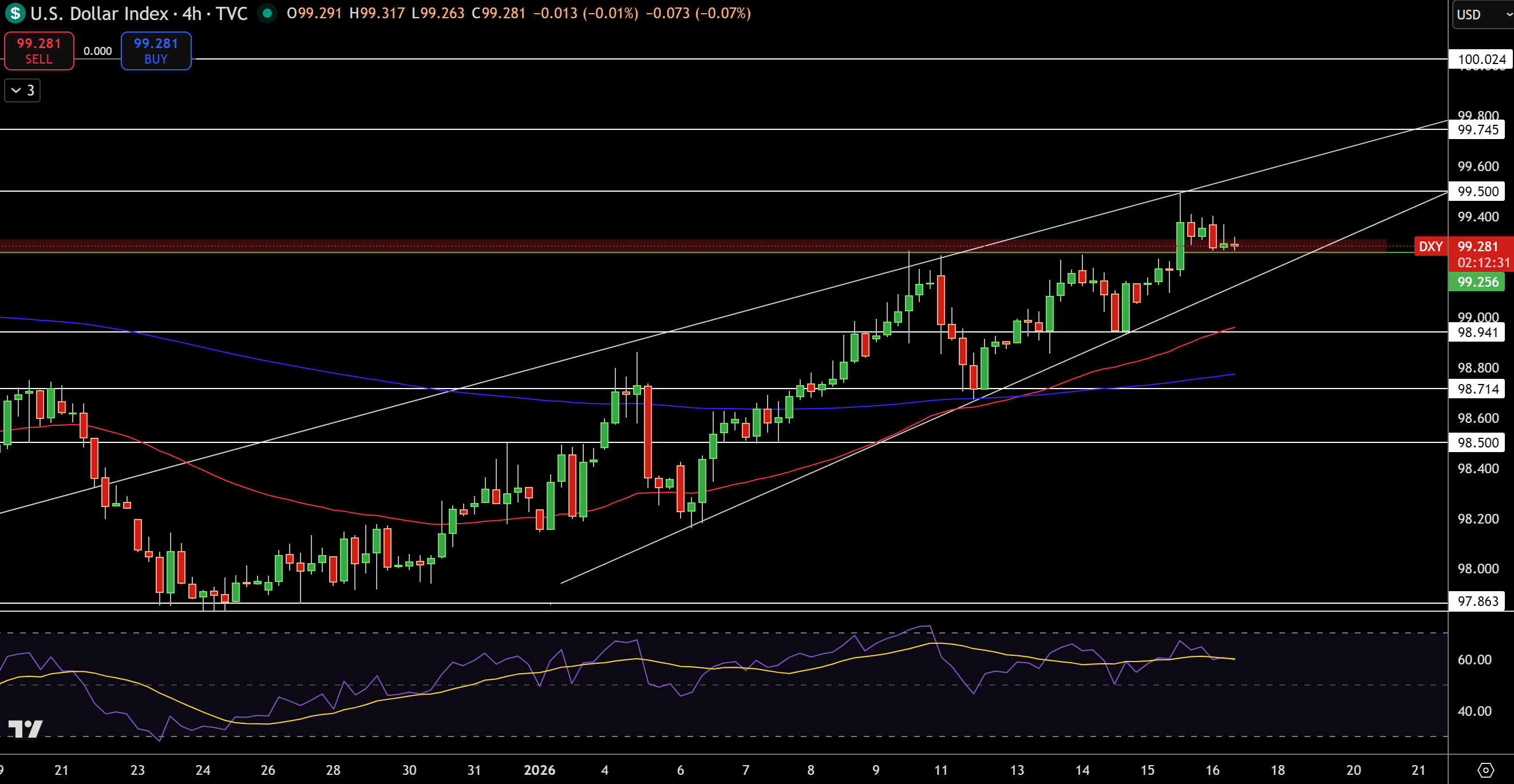
The U.S. Dollar Index (DXY) is trading around 99.28 level, and DXY is holding within a rising channel on the 4-hour chart. The price action is showing bullish momentum, and it’s supported by both short- and long-term moving averages. However, consolidation near the upper trendline suggests hesitation. RSI levels are neutral, indicating room for continuation if momentum picks up.
On the technical levels front, key resistance is holding at 99.745 and 100.024, whereas, support levels are likely to be found near 99.000 and 98.714. A breakout above resistance could signal further upside, while a drop below 99.000 may trigger a bearish move. Traders should watch for volume confirmation and macro catalysts to guide short-term positioning.
EUR/USD Price Forecast
Every new EUR/USD analysis as it publishes, today's technical signal and key levels, live price — on one page.
See all EUR/USD forecastsGBP/USD Technical Analysis: Watching $1.33612 Support
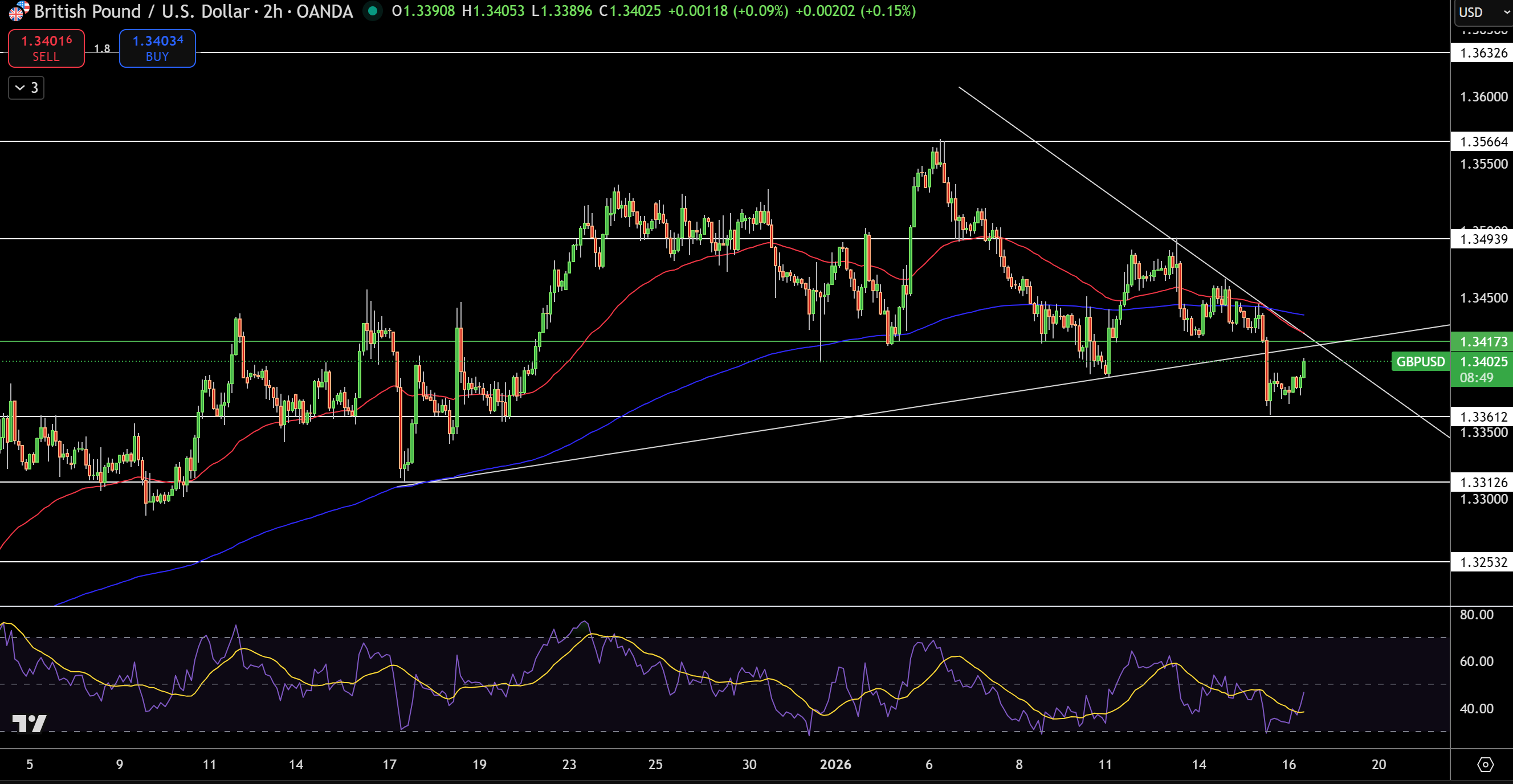
The British Pound is trading near $1.34025 vs the US Dollar, and it’s showing mild consolidation after a recent dip in price. The GBP/USD price action remains below a descending trendline, suggesting continued bearish pressure.
The leading technical tool, RSI, is neutral, indicating potential for further movement. Whereas, key resistance is holding at $1.34173 and $1.34939, while support is seen at $1.33612 and $1.33126. A break below support could trigger further downside, while a move above the trendline may signal a short-term reversal.
EUR/USD Technical Forecast: Bearish Bias Below $1.16815
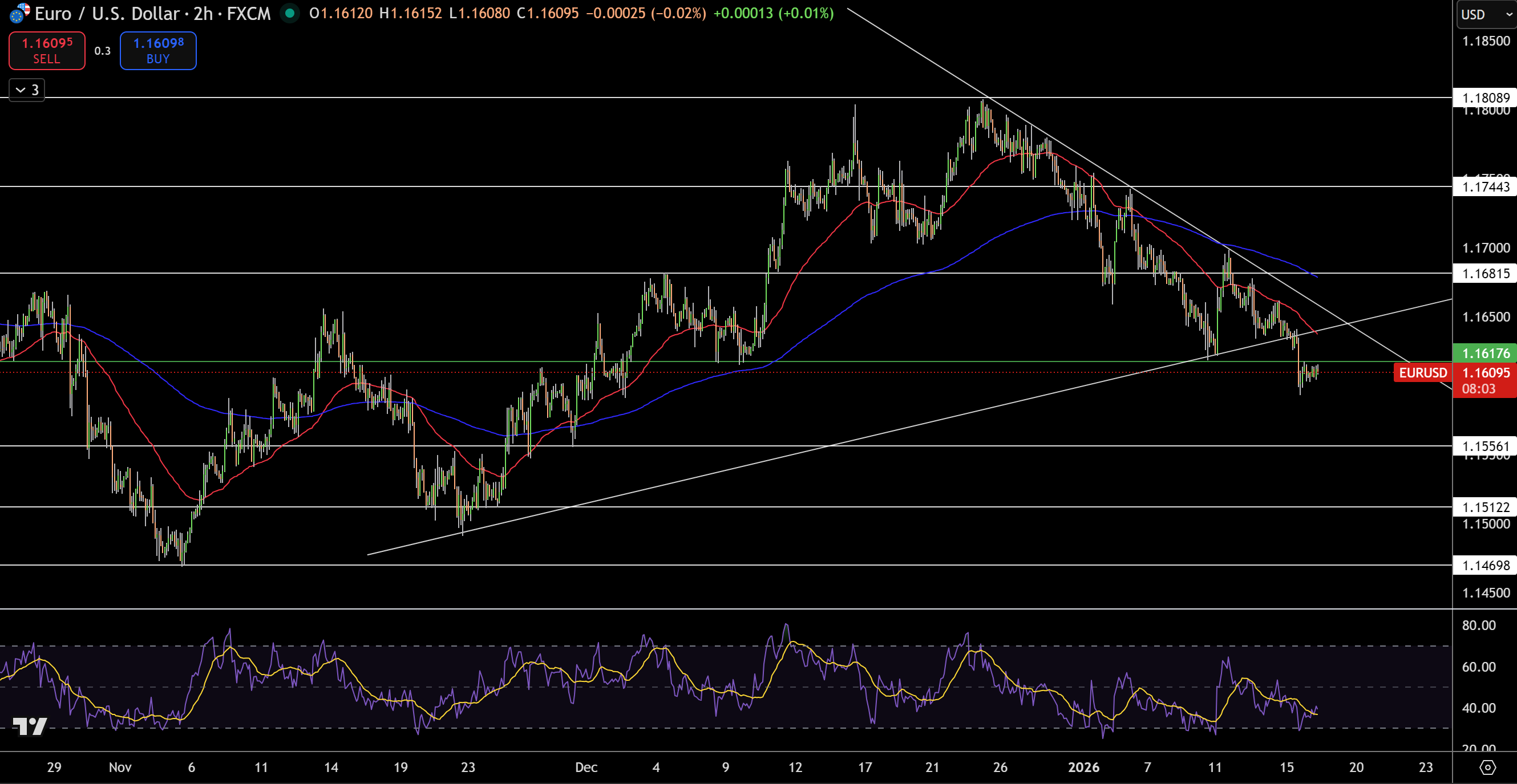
The EUR/USD pair is trading around $1.16109, showing mild consolidation after a recent downtrend. Price remains below a descending trendline, signaling continued bearish pressure. Both moving averages point lower, with the short-term crossing below the long-term—confirming downside momentum.
RSI is neutral, leaving room for further movement. Key resistance levels are at $1.16815 and $1.17443, while support sits at $1.15561 and $1.15122. A break below support could trigger further downside, while a move above the trendline may suggest a short-term reversal.