Market Overview
The US Dollar has been trading in a tight range near 98.20, as investors continue to factor in expectations of two more Federal Reserve rate cuts in 2026. These rate cuts would narrow the interest rate gap with other major central banks, putting upward pressure on the Dollar to weaken.
Fed Rate Cut Expectations Weigh on the Dollar
Investors are keeping a close eye on the Federal Reserve after it lowered rates by 25 basis points at its December meeting, bringing the target range to 3.50%–3.75%. And yes, that was the 3rd-rate 75 bps cut last year, coming as the labor market was cooling and inflation was still lingering. The Fed is still being watched closely as a result.
The CME FedWatch tool shows that investors now think there’s an 85.1% chance the Federal Reserve will leave rates unchanged at its January meeting, up from 84.5% just a week ago. On the other hand, the likelihood of a 25-bp rate cut fell slightly to 14.9%. This is likely because the market is still trying to weigh the impact of the latest economic data, and there’s been no clear indication from Federal Reserve officials when, or if, they’ll lower rates next time.
But there’s another factor at play here: Donald Trump is going to nominate a new Fed chair to replace Jerome Powell when his term ends in May, and that could significantly impact monetary policy and, therefore, the value of the dollar. Many people expect the new chair to be more dovish and thus more likely to cut rates, further weighing on the dollar.
US Dollar Faces Mixed Support
On the other hand, there is still some support for the dollar stemming from its status as a safe-haven currency, and investors remain cautious about the global economy. However, the expectations of further rate cuts in the US and the potential change in leadership at the Federal Reserve continue to cap any gains in the dollar, and it’s trading near recent lows.
GBP/USD Price Forecast
Every new GBP/USD analysis as it publishes, today's technical signal and key levels, live price — on one page.
See all GBP/USD forecastsThe focus will be on upcoming US employment data and any comments from Federal Reserve officials, which could give us a better idea of where the dollar is headed in the short term.
US Dollar Index (DXY) – Technical Analysis
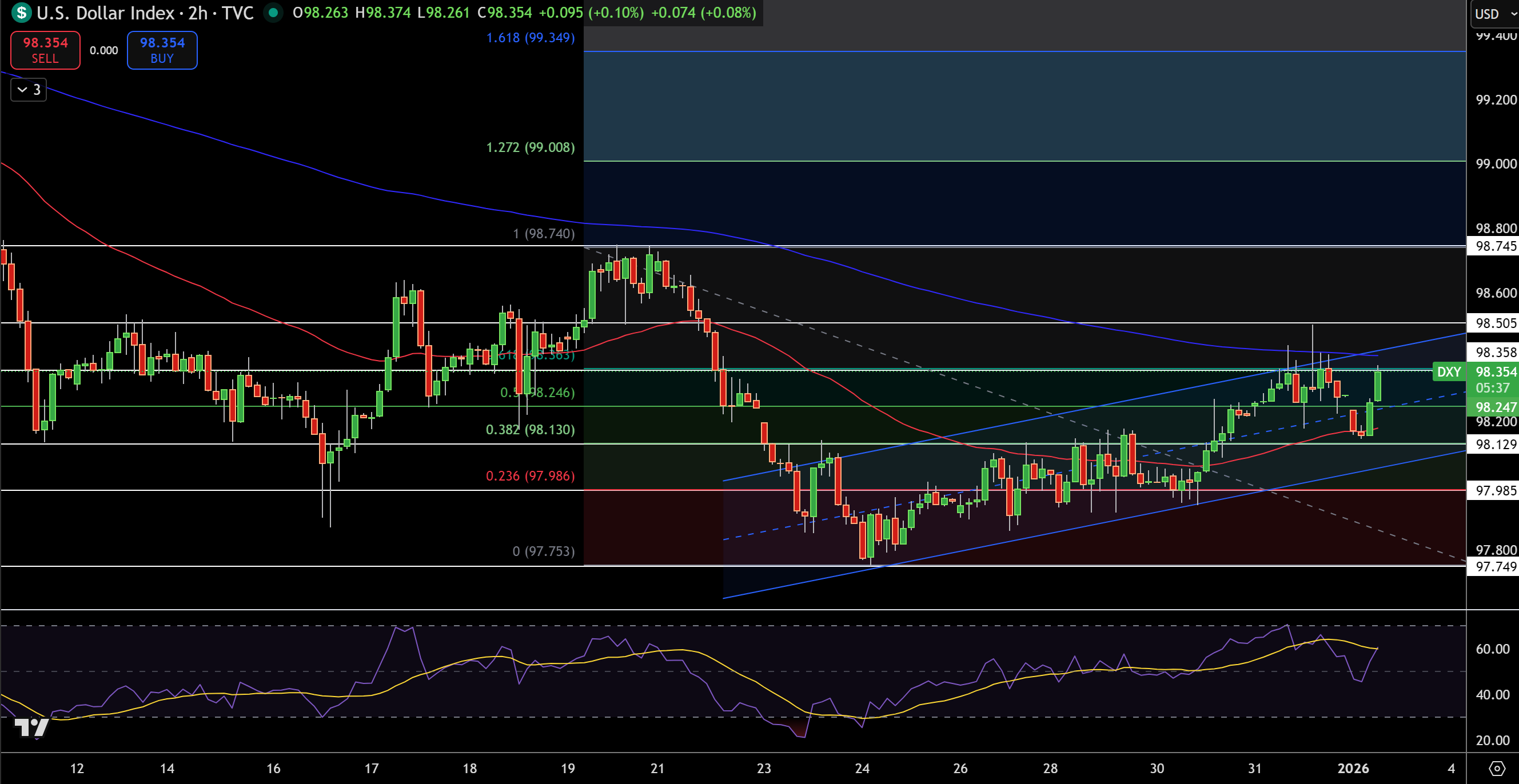
The US Dollar Index (DXY) has been stabilizing near 98.30 and is currently holding within a short-term ascending channel. After rebounding from the 97.75 low, it has been consolidating around the 98.25–98.35 zone, which is also a 38.2% Fibonacci retracement level. This zone is providing some near-term support.
The 50-period MA is flattening out, while the 200-period MA near 98.50 is still capping upside. RSI near 55 still suggests momentum is improving without getting overbought. If the dollar can break above 98.50, it could open the door to 99.00–99.35, but if it breaks below 98.25, it could pull back towards 98.00.
GBP/USD Technical Analysis
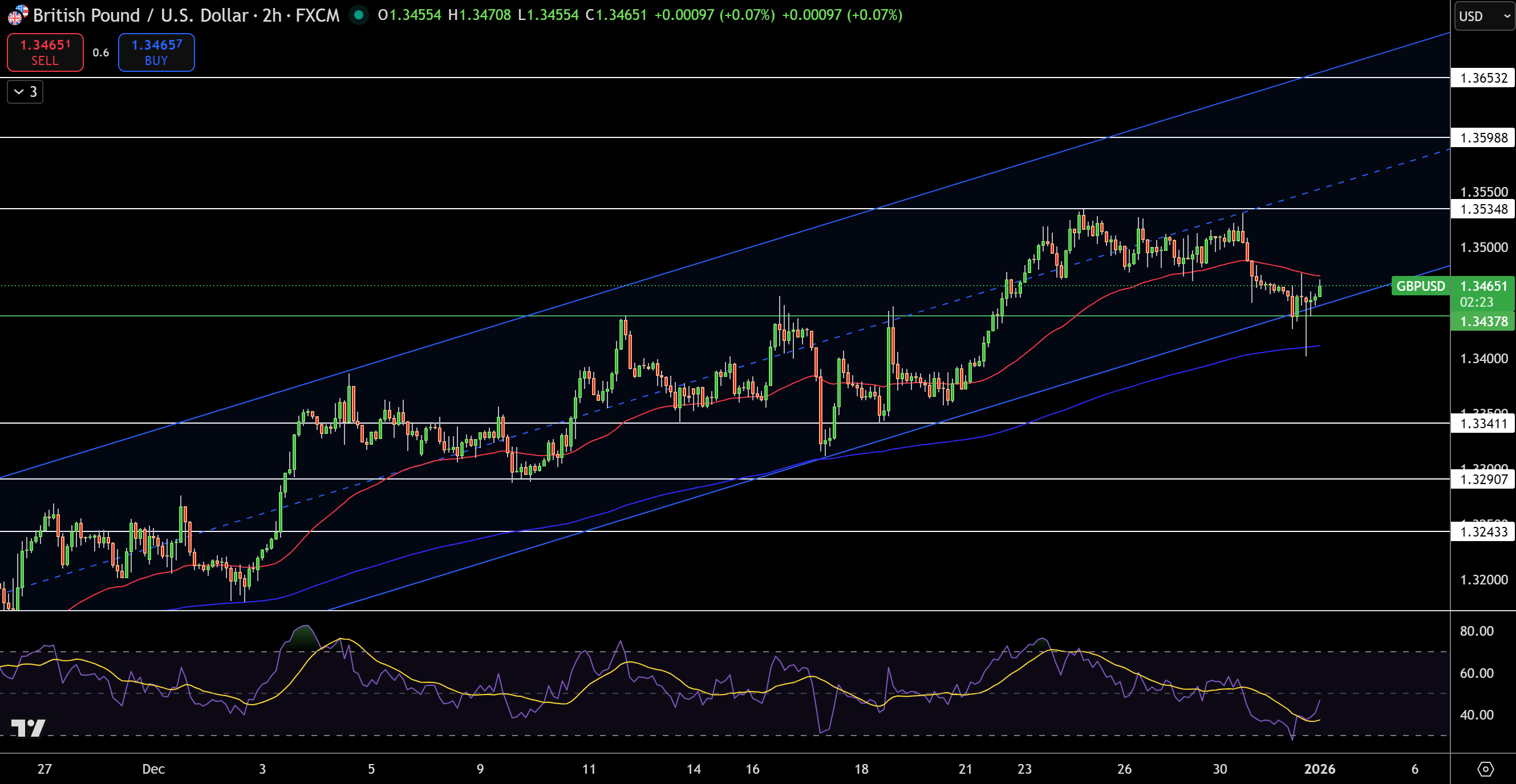
The GBP/USD pair has been stabilizing near $1.3465, holding above short-term support after a modest pullback from recent highs. The price remains within a well-defined ascending channel on the 2-hour chart, with the 50-period moving average near $1.3480 acting as near-term resistance.
The 200-period MA around $1.3400 remains a solid support level. Immediate support is seen at $1.3430, followed by $1.3340. If the pair can break above $1.3500, it could open the door to $1.3535. RSI near 45 suggests that momentum is neutral but stabilizing.
EUR/USD Technical Forecast
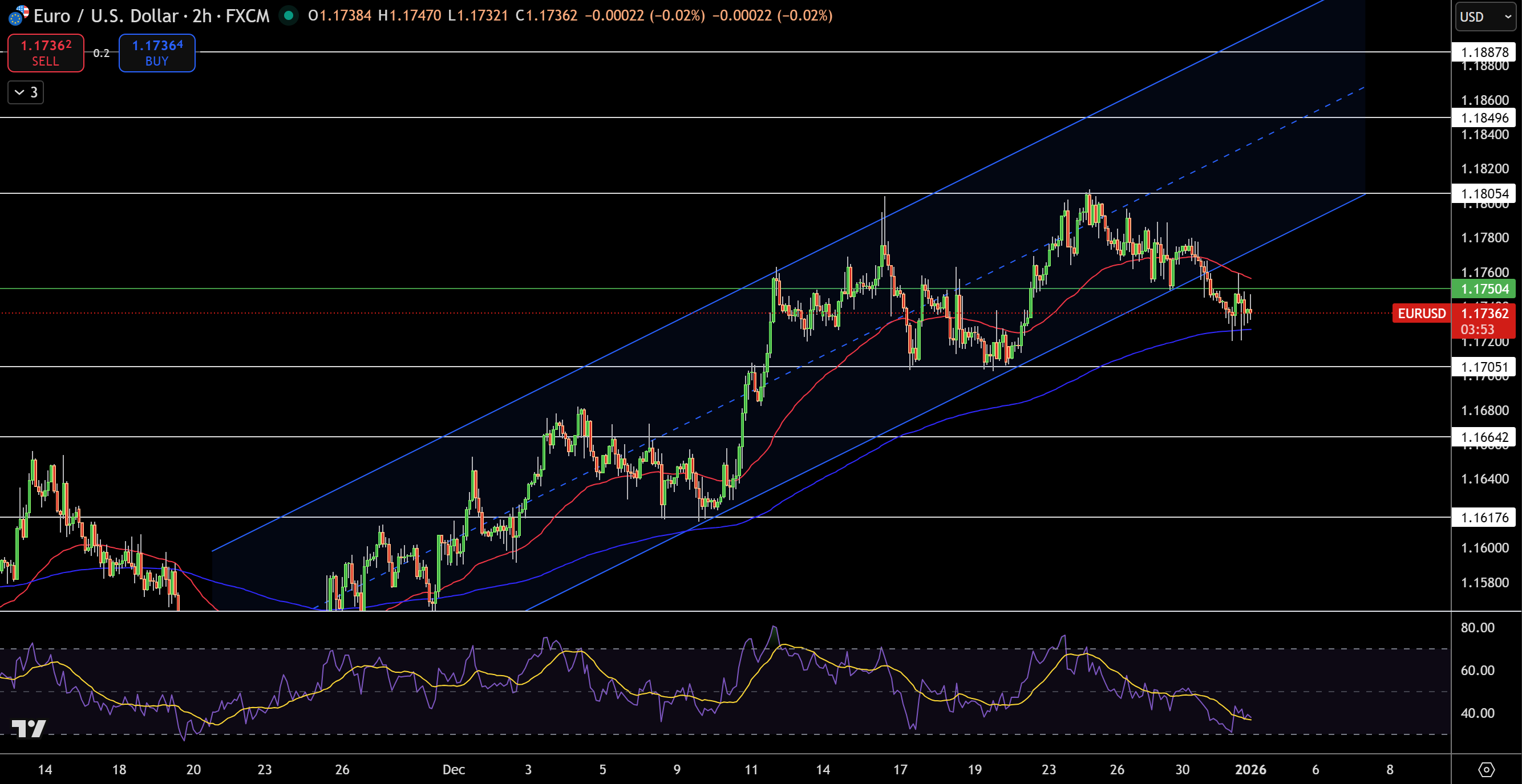
The EUR/USD pair is consolidating near $1.1735, easing from recent highs while holding within a broader ascending channel on the 2-hour chart. The price has slipped below the 50-period moving average, a sign of short-term pressure, but the 200-period MA near $1.1700 remains key support.
The $1.1750 level remains pivotal, having marked prior resistance-turned-pivot. RSI near 40 is still reflecting cooling momentum without reaching oversold conditions.
But a sustained hold above $1.1700 will keep the broader uptrend intact, while a break lower could expose $1.1665. The price should break back above $1.1760 for the uptrend to resume.