
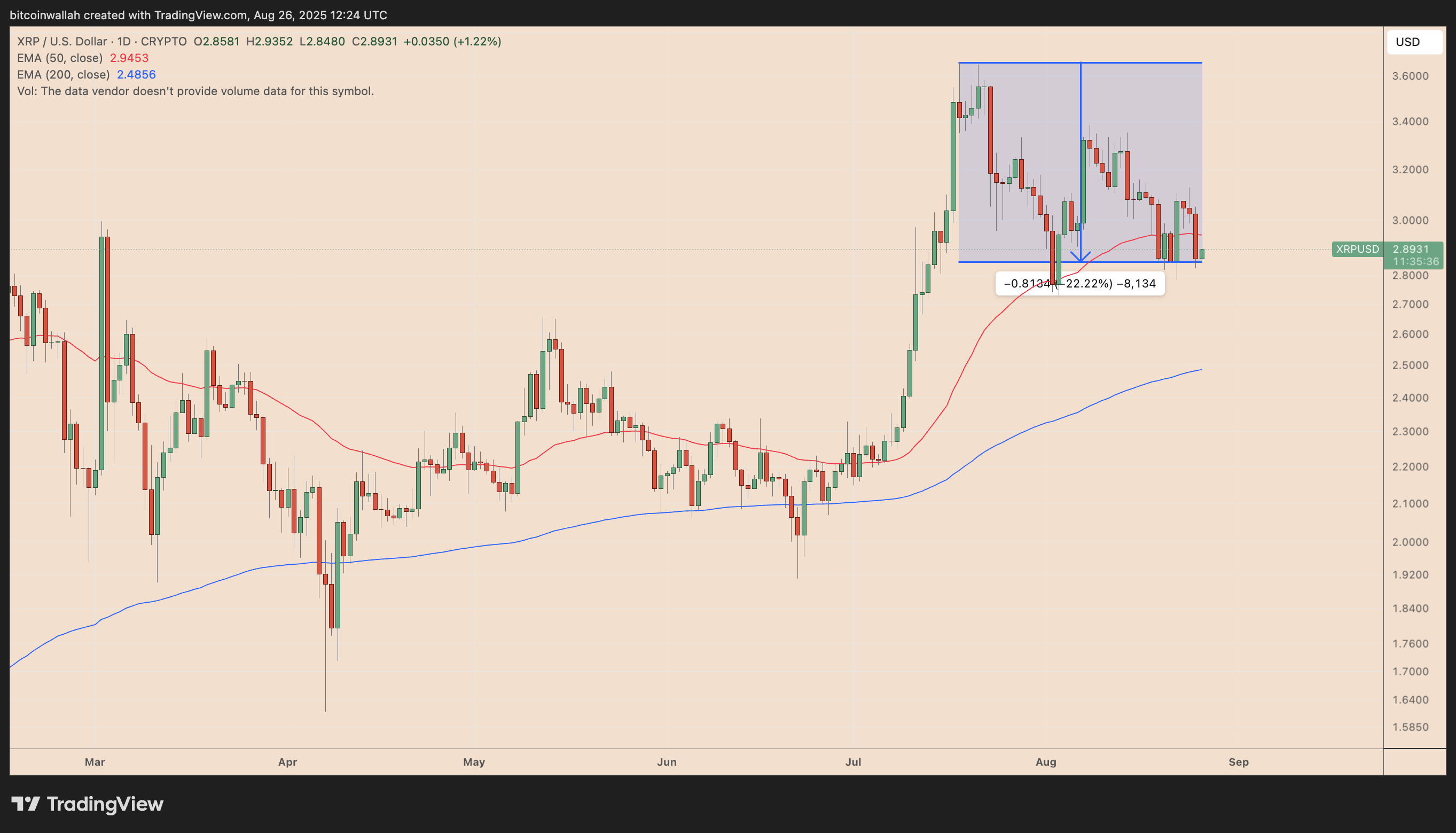
XRP’s (XRP) 20%-plus drawdown from the $3.66 multiyear high has triggered chatter about a cycle top, but onchain data says otherwise.
Long-term holders remain firmly in profit without signs of euphoria, while short-term traders are capitulating, a setup that may pave the way for price recoveries in the coming weeks.

XRP’s Long-Term Holders Are Unfazed by Price Drop
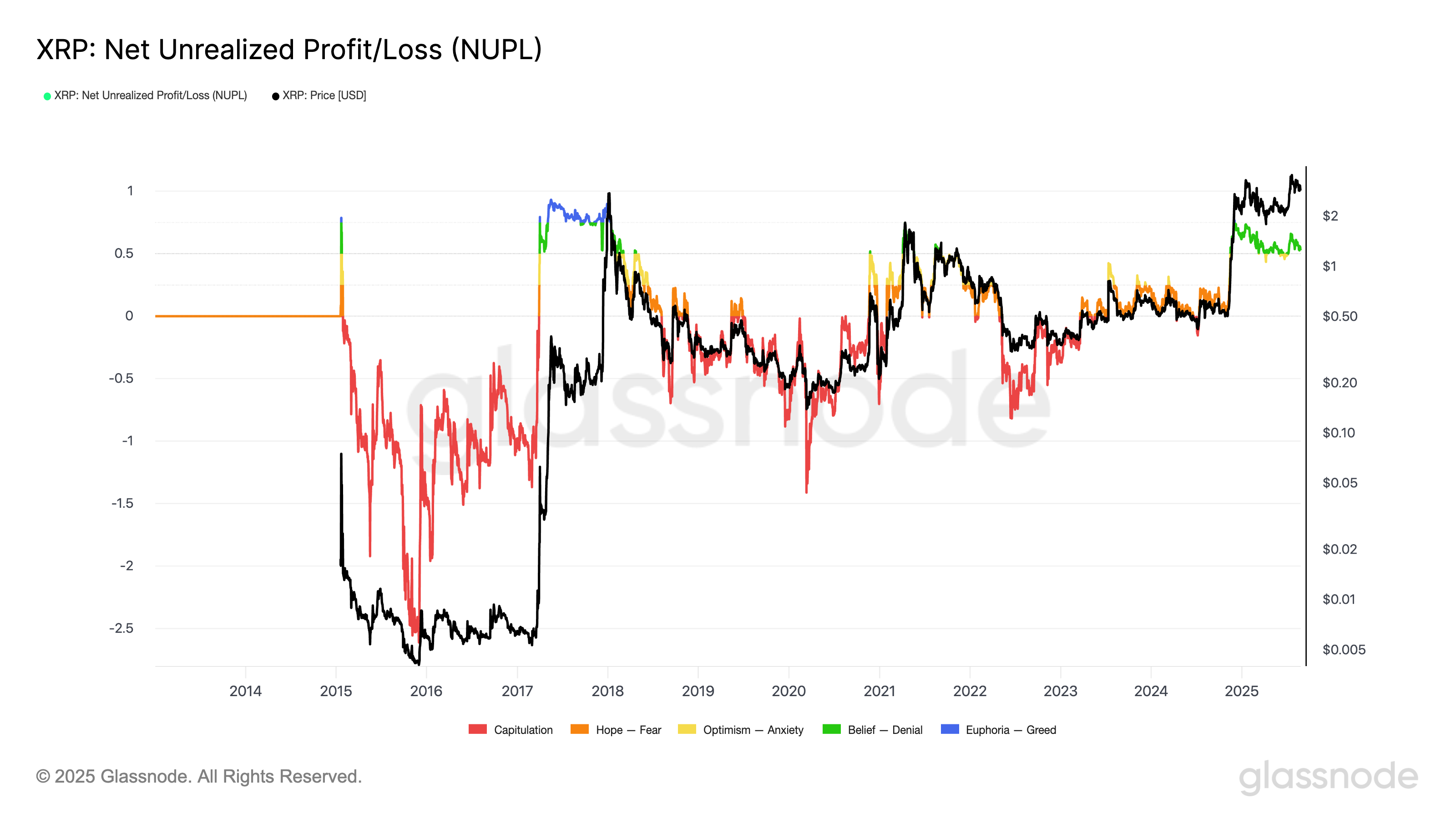
Glassnode’s Net Unrealized Profit/Loss (NUPL) splits XRP holders into long-term (LTH) and short-term (STH) camps, giving a cleaner read on market psychology.
As of Tuesday, Long-term holders were sitting with a NUPL around 0.65–0.70, squarely in the belief/denial zone.
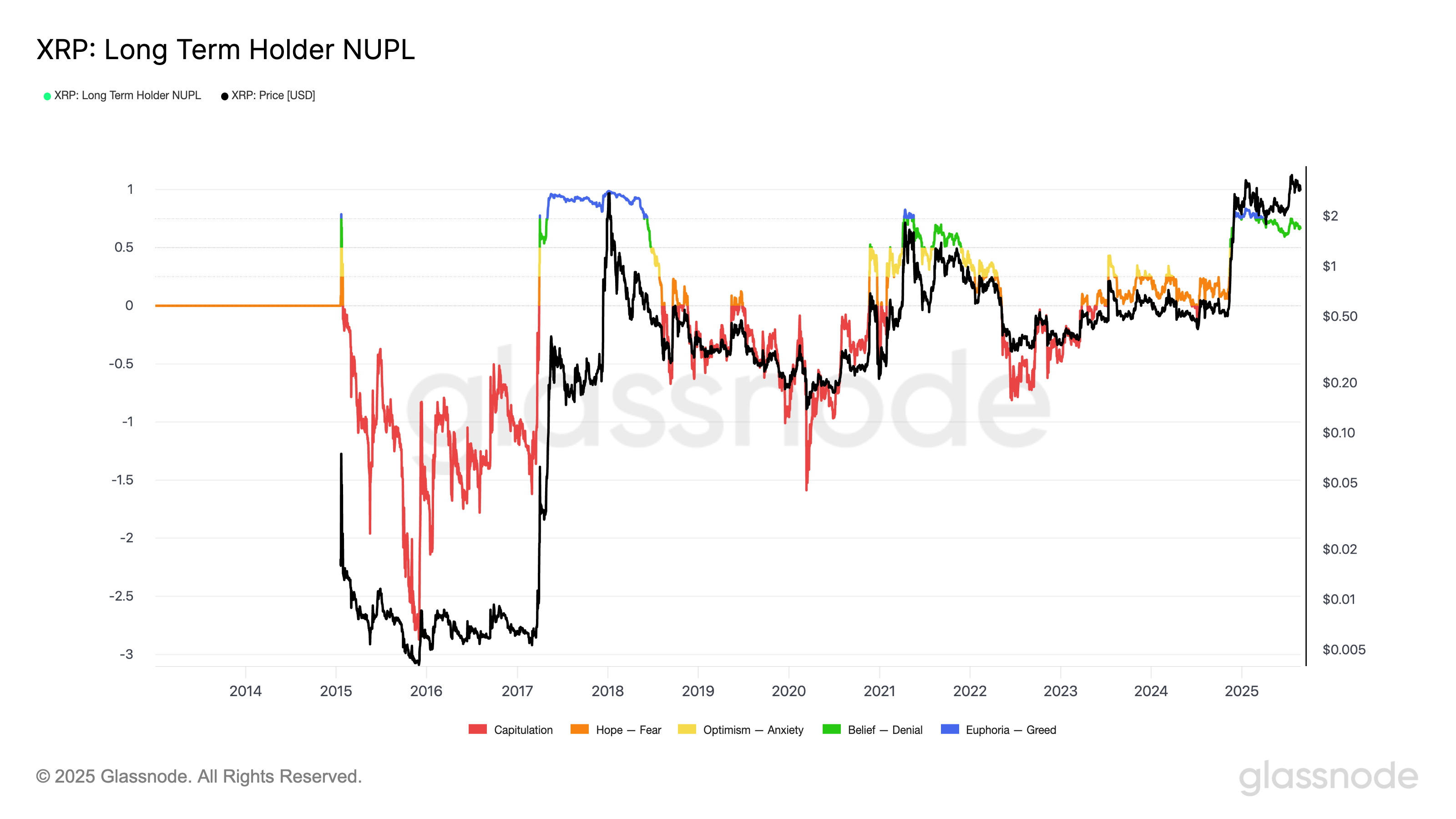
That means the “smart money” cohort, i.e., coins held through past volatility, is highly profitable, but not yet in the overheated euphoria/greed band above 0.80 where cycle peaks often occur.
Short-term holders, by contrast, have seen their NUPL collapse back to near zero or slightly negative after spiking into euphoria earlier this year. In other words, many recent buyers are underwater or near breakeven, facing fear and capitulation.
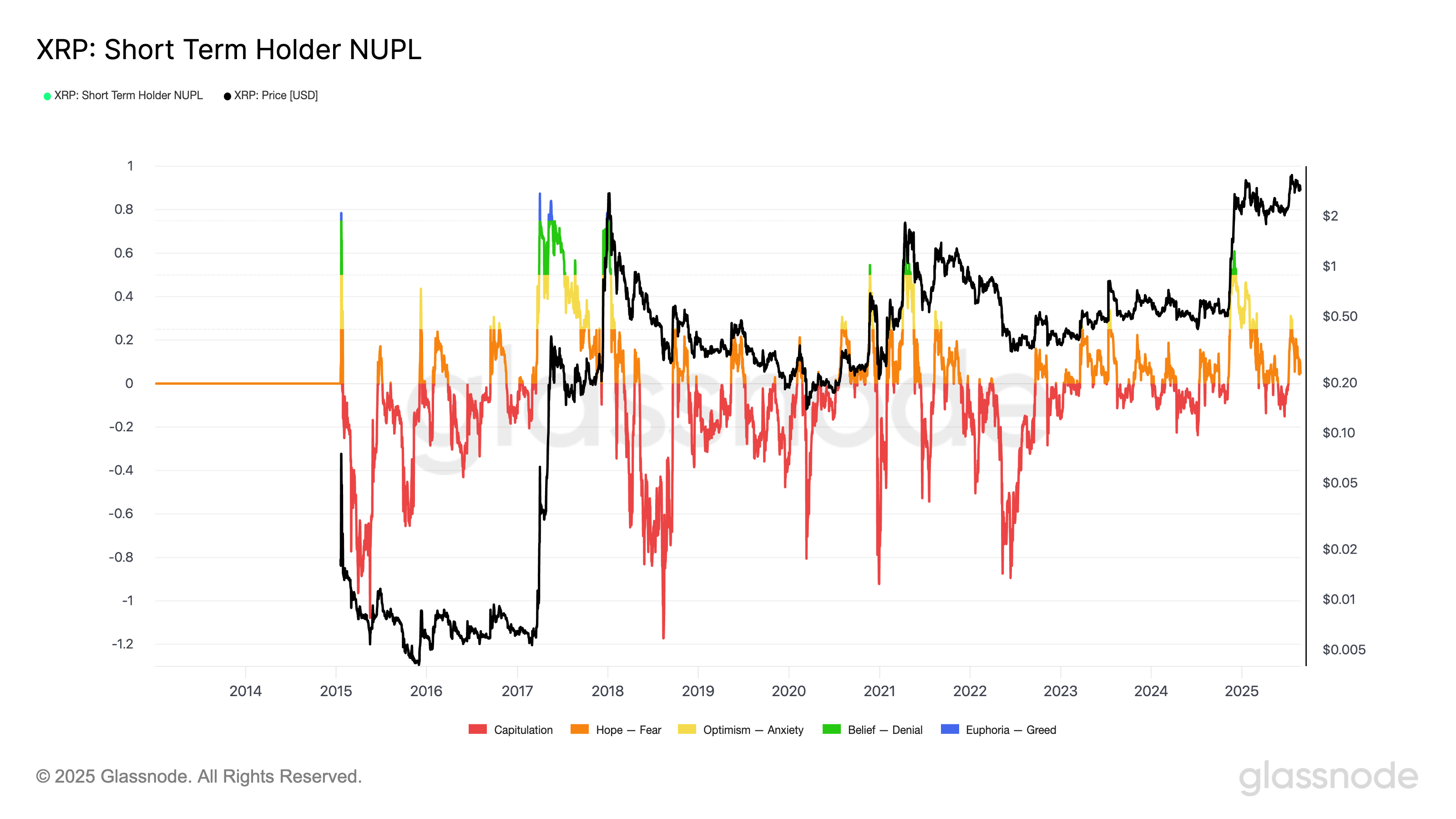
The divergence is key: long-term conviction vs. short-term pain. Historically, this pattern has preceded healthy consolidations that eventually resolve higher, rather than signaling a final top.
Ripple Price Forecast
Every new Ripple analysis as it publishes, today's technical signal and key levels, live price — on one page.
See all Ripple forecastsWhy XRP’s Cycle Top Potential Appears Weak
For a macro peak, two things usually align. First, the LTH NUPL crosses above 0.80, indicating long-term holders in euphoria, and the STH NUPL crosses above 0.30–0.40, hinting at short-term holders in sustained profits.
That was true for Bitcoin in 2017 and Ethereum in 2021.
MVRV Z-Score Back Bullish XRP Case
The MVRV Z-Score compares XRP’s market cap with its realized cap, essentially a stress test of whether price has outrun onchain fundamentals.
Historically, cycle tops occur when MVRV Z-Score blows past the red overvaluation band (>7–10). That happened in XRP’s parabolic run in late 2017. As of Tuesday, the metric sits in the 2–4 range, elevated but nowhere near prior extremes.
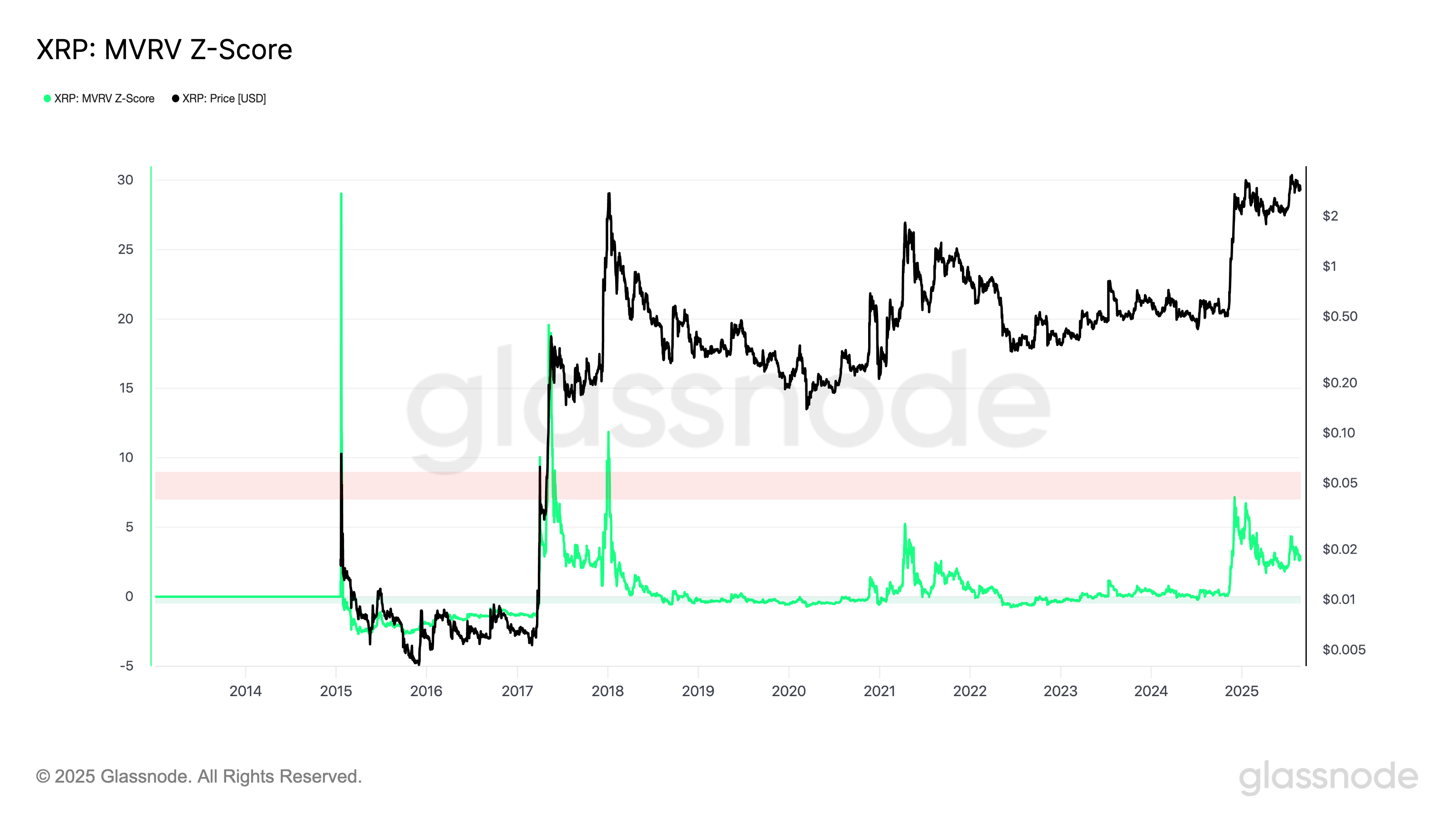
This suggests XRP is not in danger of a frothy blow-off top, reinforcing the idea that the market remains underpinned by genuine demand rather than mania.
XRP Realized Price Shows Old Coins Are Not Selling
Another useful lens is realized price by age bands, which breaks down the average cost basis of coins depending on how long they’ve been held.
When older cohorts begin cashing out, their realized price curves tend to rise above those of younger cohorts, a sign of long-term distribution into strength.
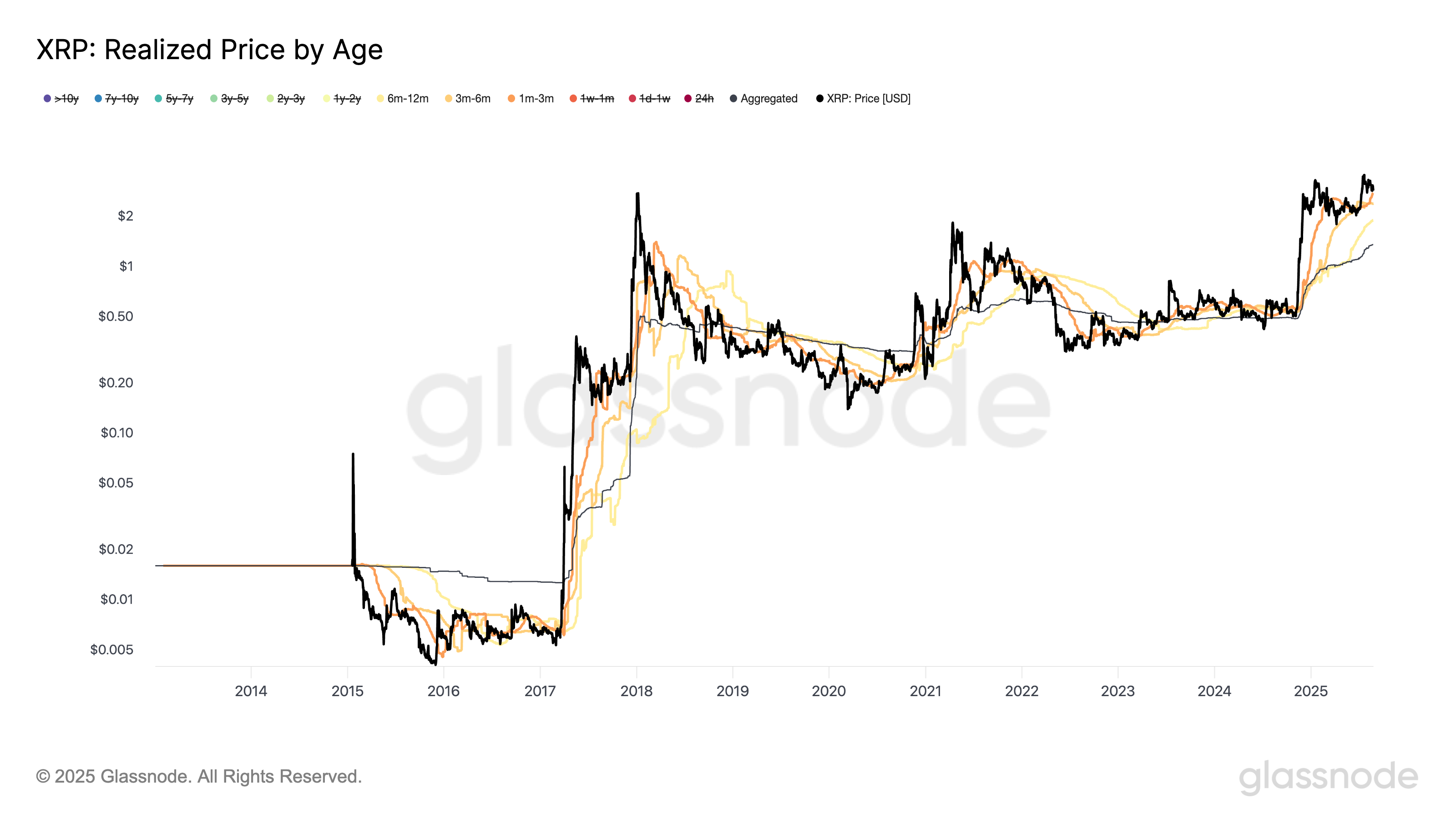
In contrast, older cohorts remain flat, signaling that veteran holders aren’t moving much supply.
This creates a textbook case of “weak-hand churn”: short-term traders exiting, while long-term investors continue holding. With the aggregate realized price still below spot, most XRP is sitting comfortably in profit.
That means the market isn’t facing heavy sell pressure from old money. The main burden, therefore, is simply whether new demand can absorb the weak-hand turnover.
Will XRP Price Continue Rising?
Put together, these signals frame the current XRP market as a consolidation phase, not a blow-off:
- LTHs are profitable but not euphoric.
- STHs are capitulating, resetting leverage and sentiment.
- MVRV Z-Score shows no red-zone excess.
- Realized prices show old holders staying put.
That combination usually precedes trend continuation once short-term churn clears, especially if STH NUPL can recover sustainably above 0.20 while LTH NUPL stays below 0.80.
If LTH NUPL surges into euphoria while STHs chase momentum, XRP could enter late bull cycle territory, potentially crossing the $4 resistance zone. Conversely, repeated STH capitulation without recovery could flip sentiment bearish.