
It was a busy morning on the Asian economic calendar. While New Zealand wholesale inflation and Japan trade data drew interest, Australian employment numbers were of significance.
After the hotter-than-expected wage growth numbers, the employment numbers garnered plenty of interest.
Employment fell by 4.3k in April versus a forecasted 25.0k increase, with full employment down by 27.1k. In March, full employment surged by 72.2k.
While the participation rate fell from 66.8% to 66.7%, the Australian unemployment rate increased from 3.5% to 3.7%. Economists forecast the unemployment rate to hold steady at 3.5%.
According to the Australian Bureau of Statistics (ABS),
- The modest decline in employment followed a positive first quarter, where employment increased by an average of 39,000 per month.
- Hours worked increased by 2.6%, supported by fewer people working reduced hours over Easter.
- Considering trends over the last six months, people are working more hours to meet the demand for labor.
- Compared with April 2022, hours worked increased by 7.4%.
- The participation rate and employment-to-population ratio remained well above pre-COVID levels despite the weaker-than-expected numbers.
Market reaction to the employment figures reflected the likely influence of the stats on the RBA. While a pickup in wage growth supports a more hawkish RBA, deteriorating labor market conditions could be early signs of the effects of monetary policy tightening, which could give the RBA some breathing space to monitor incoming data over the nearer term.

AUD/USD Reaction to Australian Employment Numbers
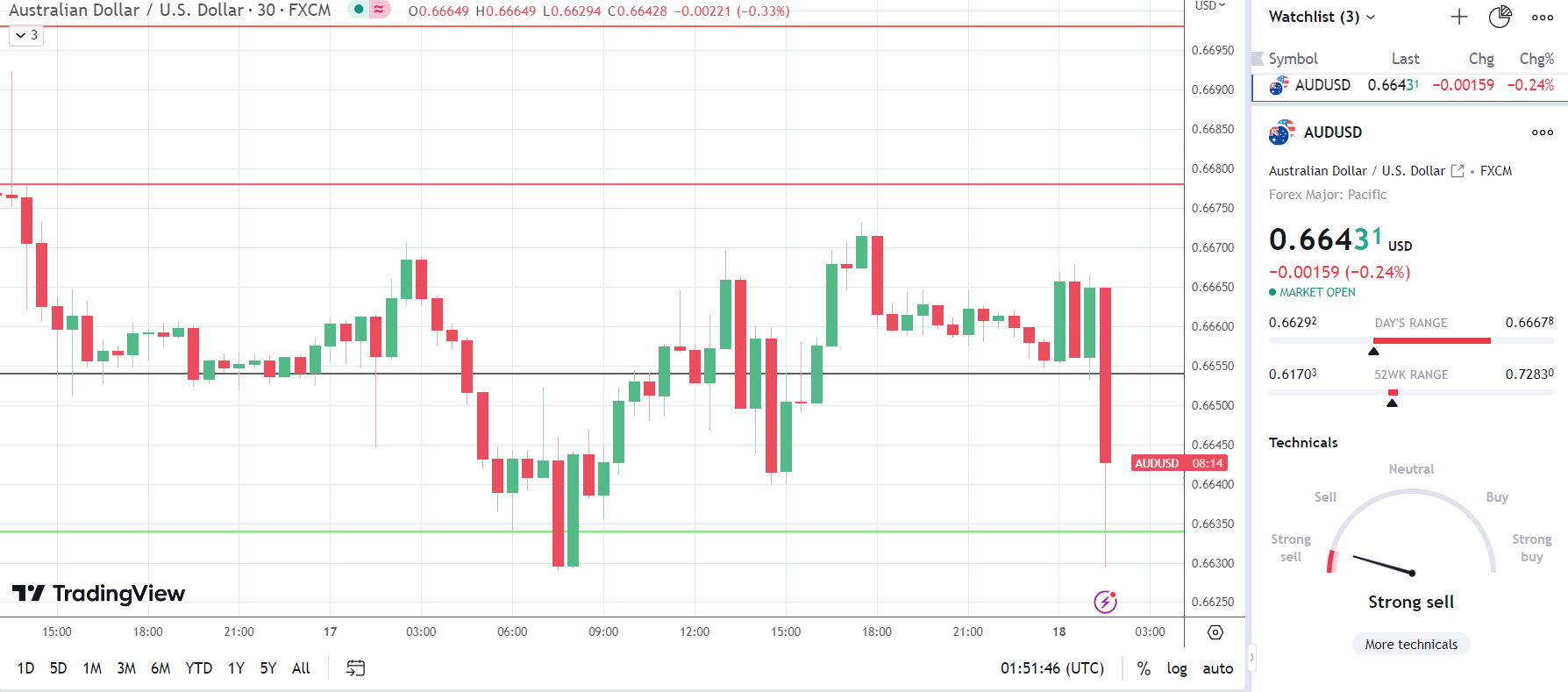
Ahead of the employment numbers, the AUD/USD fell to a pre-stat low of $0.66546 before rising to a high of $0.66678.
However, the AUD/USD responded to the numbers, falling from $0.66649 to a session low of $0.66294.
This morning, the AUD/USD was down 0.24% to $0.66431.
US Dollar Index Price Forecast
Every new US Dollar Index analysis as it publishes, today's technical signal and key levels, live price — on one page.
See all US Dollar Index forecastsNext Up
Elsewhere, the New Zealand annual budget will draw interest.
However, looking ahead to the US session, it is a relatively busy day on the US economic calendar. US jobless claims and the Philly Fed Manufacturing Index and sub-components will draw interest.
An unexpected slide in the Philly Fed Manufacturing Index would fuel recessionary fears. However, the devil will likely be in the details. Investors should consider the Philly Fed Prices, New Orders, and Employment sub-components.
While the economic calendar is busier, the markets should monitor FOMC commentary. Fed members Jefferson, Barr, and Logan will speak today.
Beyond the economic calendar, US debt ceiling-related news will move the dial.