



Highlights
- It was a busy Thursday morning, with service PMI numbers from Japan and Australia drawing interest.
- However, the China Caixin Manufacturing PMI had more influence.
- Later today, US jobless claims and the all-important ISM Non-Manufacturing PMI will have the final say.
It was a busy morning for the Asian markets, with the private sector in the spotlight for a second time this week. Australian trade data and service sector PMIs from Japan and Australia drew early interest.
However, service PMI numbers from China had more influence. On Tuesday, the Caixin Manufacturing PMI fueled recessionary jitters. Weaker service sector activity would force Beijing to reconsider its stimulus plans.
However, the Caixin Services PMI unexpectedly rose from 53.9 to 54.1 in July. Economists forecast a decline to 52.5.
According to the July survey,
- At the start of the third quarter, new business accelerated, with firms citing firmer market conditions and rising client numbers.
- However, the weak global economic environment weighed on new export business, which rose at a less marked pace.
- The rise in demand forced firms to increase payrolls, with the pace of hiring the most marked in four months.
- Despite the increase in domestic new business, optimism fell below the series average, with firms raising concerns over the global economic environment.
AUD/USD Reaction to the China Caixin Services PMI
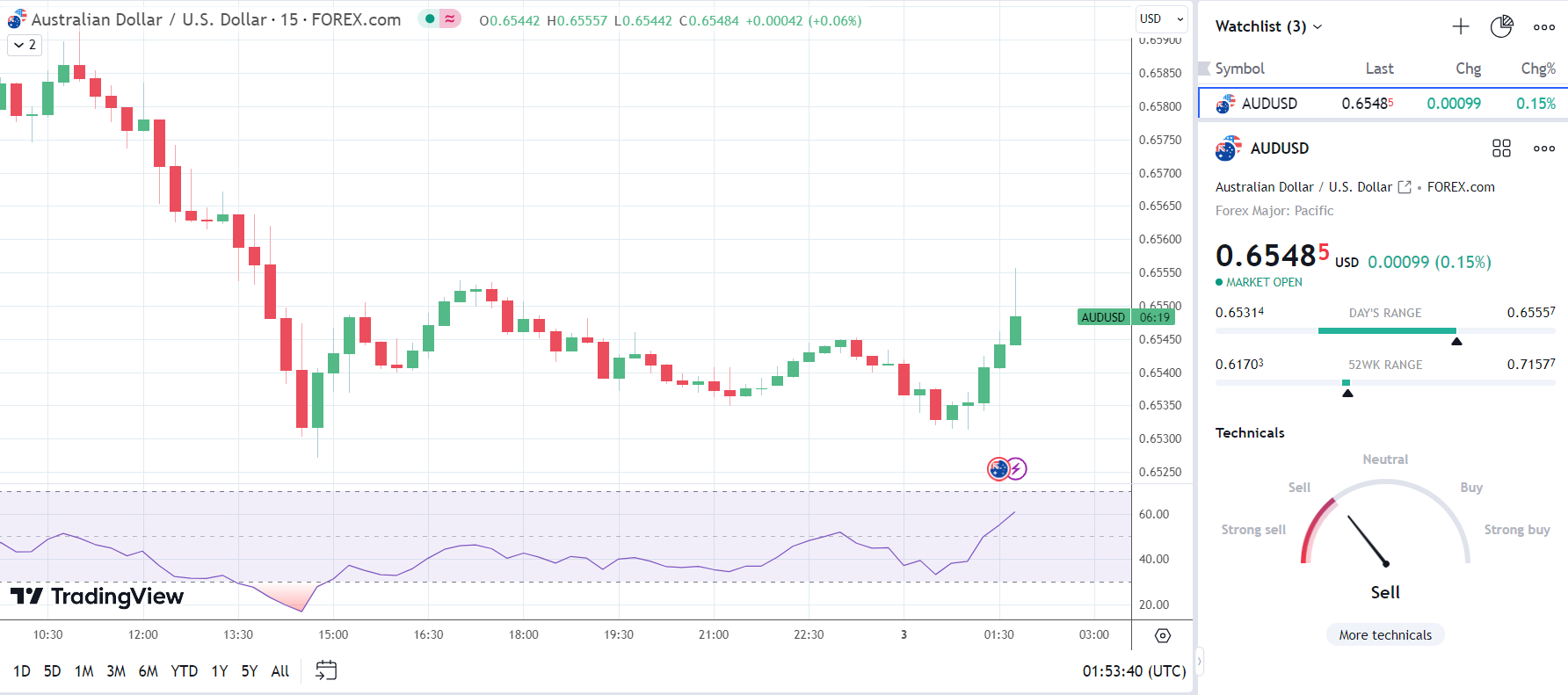
Before the China Caixin Services PMI, the AUD/USD fell to a pre-stat low of $0.65314 before rising to a high of $0.65462.
However, in response to the Caixin Servies PMI, the AUD/USD rose from $0.65442 to a post-stat high of $0.65557 before easing back.
This morning, the AUD/USD was up 0.15% to $0.65485.
US Dollar Index Price Forecast
Every new US Dollar Index analysis as it publishes, today's technical signal and key levels, live price — on one page.
See all US Dollar Index forecastsNext Up
It is a busy day on the economic calendar. Euro area service PMI numbers will need consideration ahead of the US session. After the disappointing manufacturing PMIs, a marked fall in service sector activity would align with expectations of a Eurozone recession.
Later in the day, US initial jobless claims and the all-important ISM Non-Manufacturing PMI will have the final say. Economists forecast the ISM Non-Manufacturing PMI to fall from 53.9 to 53.0. However, investors must consider the sub-components. These include employment, new business, and prices. A sharp decline in the ISM PMI could test the theory of a soft landing.
Other US stats include finalized Markit survey-based service PMI, nonfarm productivity, unit labor costs, and factory orders. However, these stats should play second fiddle to the initial jobless claims and ISM survey-based numbers.