
China Defies Tariff Pressures With Q1 GDP Beat, but Trade Tensions Cloud Outlook
The US-China trade war heightened market scrutiny of China’s economy on April 16. A suite of key economic indicators gave insights into the potential effects of rising tariffs.
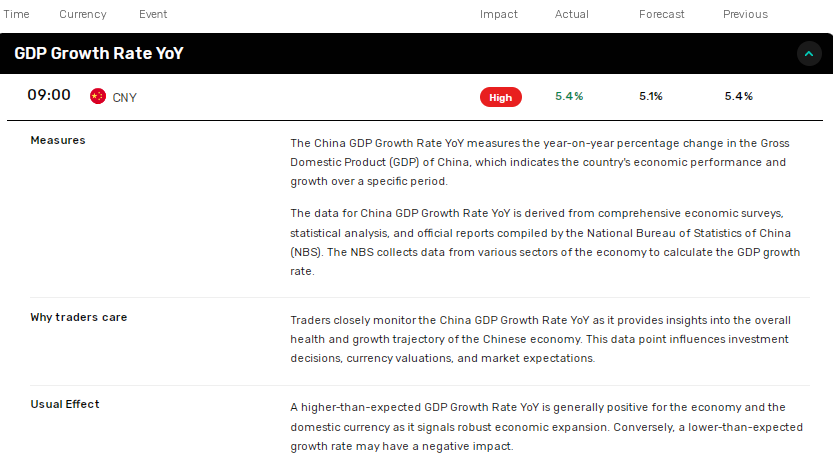
In Q1 2025, China’s economy grew by 5.4% year-on-year, mirroring GDP growth in Q4 2024. Economists expected the GDP growth to slow to 5.1%. Crucially, key domestic economic indicators pointed to Beijing’s stimulus measures gaining traction, boosting labor market conditions and domestic consumption.

Retail Sales and Unemployment Signal Economic Resilience
Unemployment and retail sales data supported Beijing’s 5% GDP growth target for 2025 and ongoing push to transition to a consumption-driven economy.
- Retail Sales: +5.9 YoY in March, up from 4.0% in January and February.
- Unemployment Rate: Unexpectedly dropped from 5.4% in February to 5.2% in March.
- Industrial Production: +7.7% YoY in March, up from 5.9% in January and February.
The industrial production figures suggested possible front-loading of shipments ahead of punitive US tariffs. Nonetheless, falling unemployment and stronger domestic consumption may help offset some of the adverse effects of rising tariffs.
Market Reactions Mixed
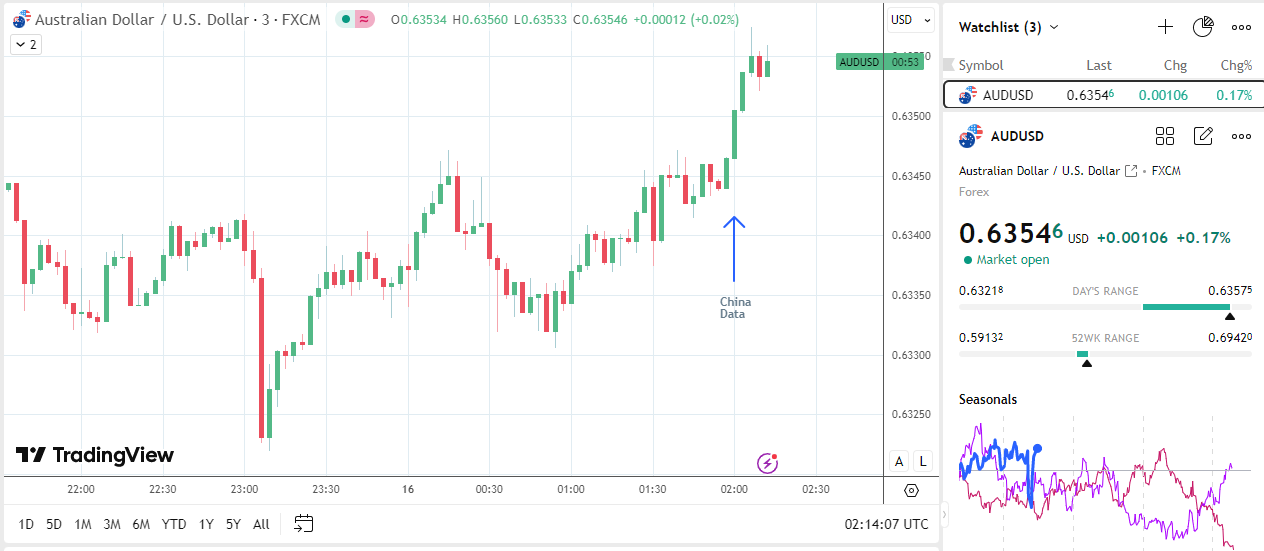
The Hang Seng Index (HSI) and AUD/USD had mixed reactions to China’s economic indicators.
Ahead of China’s data, the Hang Seng Index initially fell 1.61% to 21,121. However, in response to the data, the Index dropped to a post-data low of 21,072. On Wednesday, April 16, the HSI was down 1.72% to 21,098.
AUD/USD Price Forecast
Every new AUD/USD analysis as it publishes, today's technical signal and key levels, live price — on one page.
See all AUD/USD forecasts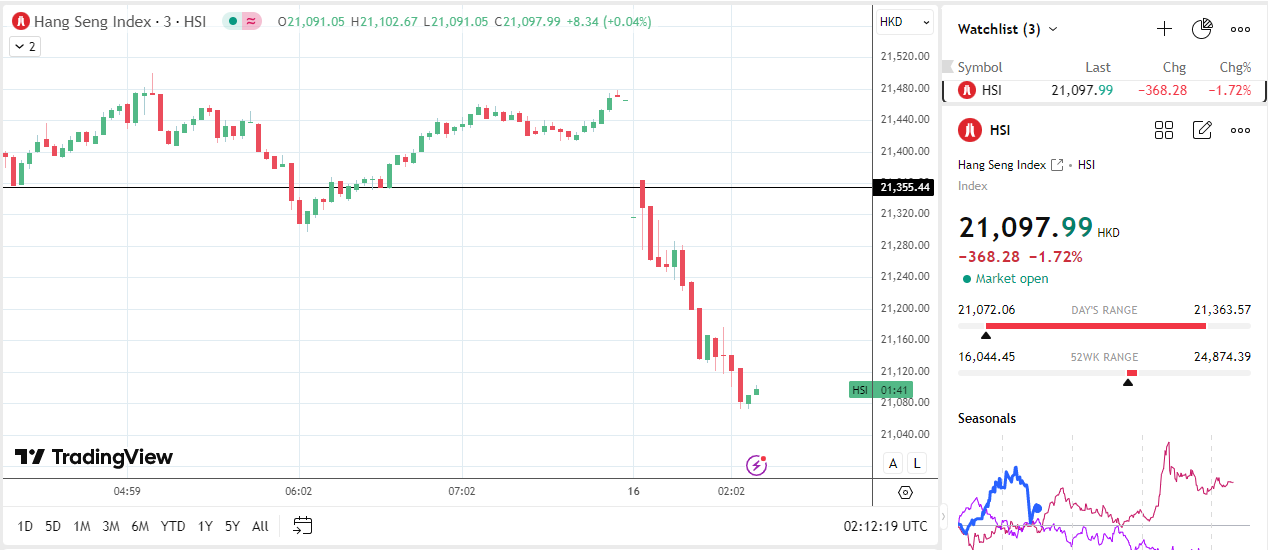
Meanwhile, in the forex markets, the Aussie dollar rallied on the data. The AUD/USD climbed from $0.63465 to a morning high of $0.63575 before easing back. At the time of writing, the AUD/USD pair was up 0.17% to $0.63546.
Looking Ahead: Tariff Developments and Stimulus Moves Remain Key
The latest economic indicators suggest Beijing’s stimulus measures are bolstering the economy. However, the intensifying US-China trade war remains a threat to the labor market, domestic demand, and GDP growth. In April, the US raised tariffs on Chinese goods to 145%, prompting China to retaliate with 125% tariffs on US imports.
Economists have revised their growth forecasts downward. Morgan Stanley projects 2025 growth of 4.2%, down from 4.5%, factoring in further stimulus from Beijing and a gradual easing of tariffs. UBS painted a gloomier outlook, projecting China’s economy to grow by 3.4% in 2025, assuming current tariffs persist and additional stimulus is rolled out.
Investors should closely monitor trade developments, economic data releases, and stimulus-related news here. Given the ongoing tariff conflict and downward revisions to growth forecasts, a cautious outlook remains warranted.