Highlights
- German producer prices slid by 1.1% in July and declined by 6.0% year-over-year.
- Falling energy prices led producer prices south, with natural gas prices falling year-over-year for the first time since December 2020.
- However, producer prices were still down 0.4% in July when excluding energy prices, reflecting the ongoing weak demand environment.
German Producer Prices
It is a relatively quiet day on the European economic calendar today. However, German producer prices for July garnered interest this morning. The ongoing weak demand environment has weighed on producer prices, delivering more recessionary jitters.
Today’s numbers provide little relief, with the worse-than-expected figures dashing hopes of a pickup in demand.
German producer prices fell by 1.1% in July (June: -0.3%), while producer prices were down 6.0% (June: +0.1%) year-over-year. Economists forecast a 0.2% decline in July and a 5.1% fall year-over-year.
According to Destatis, the surge in producer prices in July 2022 because of the Ukraine war weighed on the year-on-year figure.
Looking at the numbers,
- Energy prices slid by 2.5% in July and were down 19.3% compared with July 2022.
- Significantly, electricity prices tumbled by 4.1% in July and fell by 30.0% year-over-year.
- Natural gas prices saw a first year-over-year decline since December 2020, falling by 16.2%.
- Excluding energy prices, the producer price index rose by 2.0% year-over-year while declining by 0.4% in July.
However, the sector breakdown delivered mixed signals.
- Prices for intermediate goods declined by 1.0% in July and were down 3.4% year-over-year.
- In contrast, non-durable consumer goods prices increased by 8.1% year-over-year, while flat for July. Food prices contributed to the year-on-year increase.
- Prices for durable consumer goods were also flat in July, while prices increased by 5.8% year-over-year.
- Capital goods prices gained 0.3% in July and increased by 5.5% year-over-year.
- Motor vehicle, trailer, and semi-trailer prices increased by 5.1% year-over-year, contributing to the rise in the headline number.
While the year-over-year figure was bearish, the ECB will be mindful of the base effect stemming from the war in Ukraine. However, the larger-than-expected monthly decline was bearish, suggesting a deteriorating demand environment.
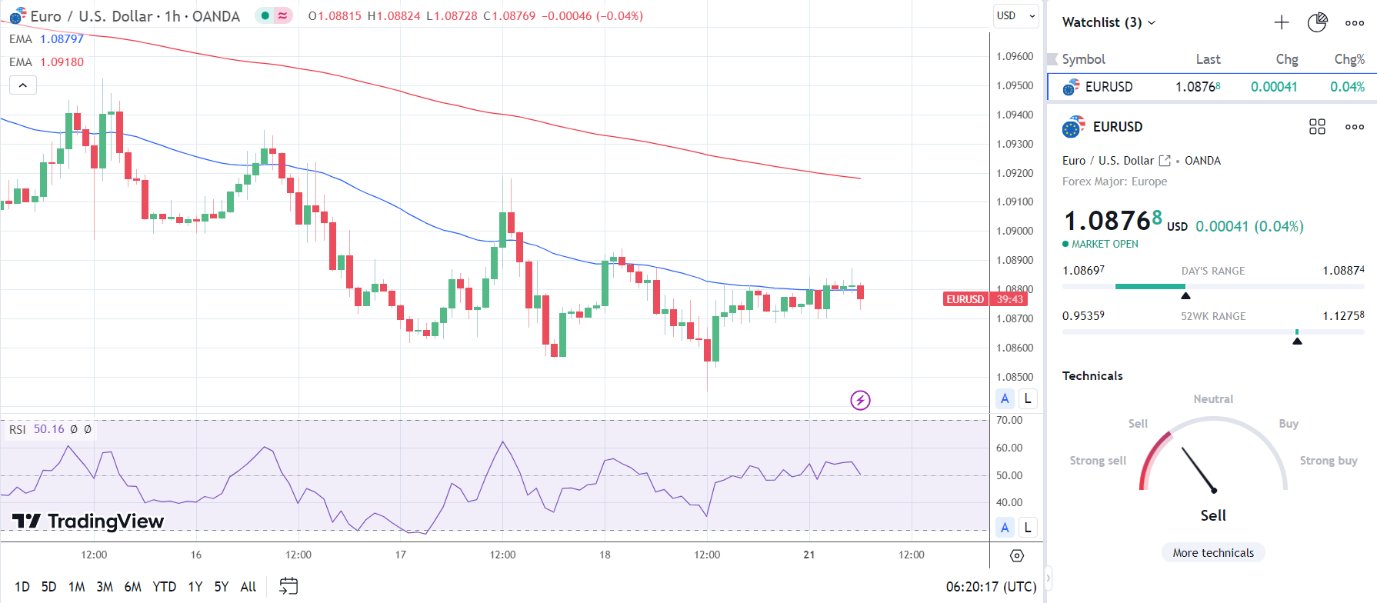
EUR/USD Reaction to German Producer Prices
Before the German producer price figures, the EUR/USD fell to a pre-report low of $1.08697 before rising to a high of $1.08874.
However, in response to the numbers, the EUR/USD rose to a post-stat high of $1.08824 before falling to a low of $1.08728.
This morning, the EUR/USD was up 0.04% to $1.08768.