



U.S. Jobless Claims Drop Below Expectations, Continuing Claims Hit Multi-Year High
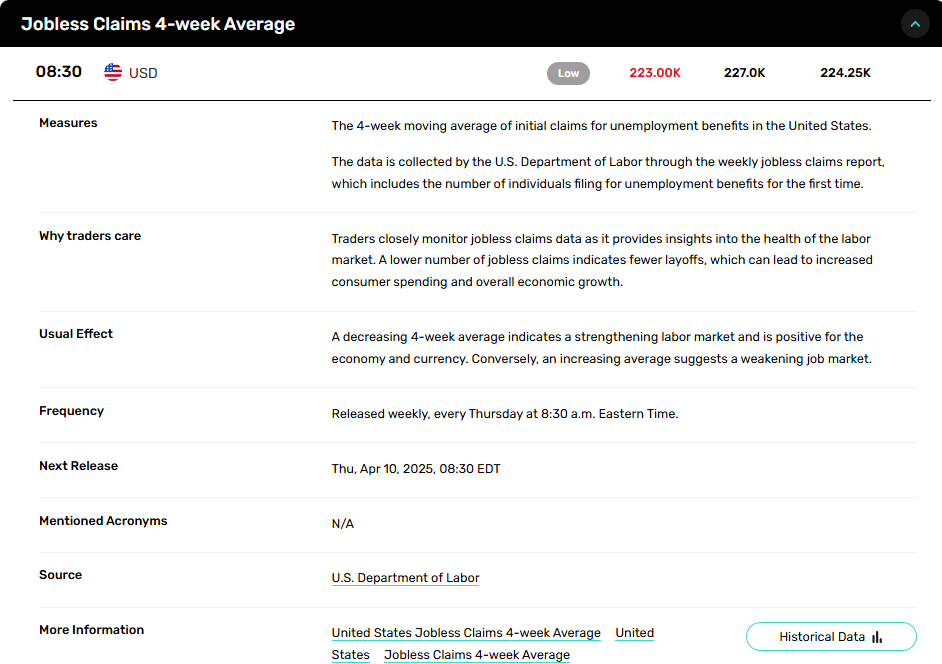
Initial jobless claims in the United States decreased by 6,000 to 219,000 for the week ending March 29, coming in below market expectations of 225,000. This data point maintains the historically low levels of new unemployment filings that have characterized the labor market in recent months.
Continuing Claims Reach November 2021 Levels
Despite the positive news on initial claims, continuing claims rose significantly by 56,000 to 1,903,000 in the previous week. This figure represents the highest level of recurring unemployment claims since November 2021 and substantially exceeded market forecasts. The divergence between initial and continuing claims suggests potential challenges for workers in finding new employment after initial job loss.
Federal Employee Claims Decline Amid DOGE Activity
Claims filed under programs for Federal government employees decreased by 257 to 564 in the latest reporting period. These figures have drawn particular market attention due to the ongoing staff reductions implemented by the Department of Government Efficiency (DOGE). However, the decline in claims doesn’t necessarily reflect the full impact of federal workforce reductions, as reports indicate many DOGE-initiated terminations included severance packages that prevent immediate benefit claims.
Market Outlook
The mixed signals from this jobs report paint a complex picture for traders monitoring employment trends. The lower-than-expected initial claims suggest the labor market remains resilient at the entry point, with businesses showing continued reluctance to lay off workers. However, the substantial rise in continuing claims to a multi-year high points to potential structural issues in labor market efficiency and reemployment rates.
For traders, these conflicting indicators warrant close attention to upcoming labor data releases, particularly the next monthly jobs report. The Federal Reserve will likely interpret this data as showing both strength and potential stress in the employment sector, which could impact the timing and magnitude of expected interest rate adjustments through the remainder of 2025.