
UK Inflation Casts Doubt on a March BoE Rate Cut
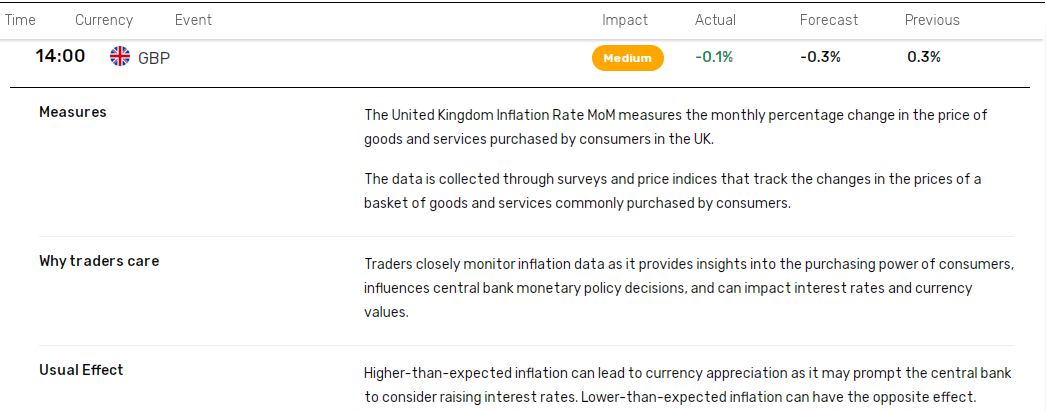
On Wednesday, February 19, January’s UK Consumer Price Inflation Report cast doubt on expectations for a March Bank of England (BoE) rate cut.
The UK’s annual inflation rate accelerated from 2.5% in December to 3.0% in January, surpassing the BoE’s 2% target. January’s pickup in inflationary pressures could raise concerns about the sustainability of disinflation, suggesting a more cautious BoE approach to rate cuts.
Key Data from the Office for National Statistics included:

- The Consumer Prices Index, including owner-occupier housing costs (CPIH), rose by 3.9% in the 12 months to January, after increasing 3.5% in December.
- Transport, and food and non-alcoholic beverages had the largest positive contribution to the CPIH and CPI annual rates.
- Meanwhile, the largest downward contribution came from housing and household services.
- The Core CPIH (excluding energy, food, alcohol, and tobacco) increased by 4.6% in the 12 months to January, compared with 4.2% in December.
- Core CPI (excluding energy, food, alcohol, and tobacco) accelerated from 3.2% in the 12 months to December to 3.7% in the 12 months to January.
- The CPI services annual rate rose to 5.0% in January, up from 4.4% in December.
Bank of England’s Outlook on Inflation and Monetary Policy
This week, Bank of England Governor Andrew Bailey acknowledged that inflation is gradually easing, saying:
“We are still seeing the gradual disinflation going on. The after effects of what happened two or three years ago are wearing off, but it is a gradual process.”
However, January’s inflation figures aligned with the BoE’s forecast of higher inflation in 2025, driven by rising energy costs. Bailey noted that colder winter conditions could influence inflation trends but downplayed concerns over second-round inflationary effects:
“When we look at the underlying state of the economy, which is an important context for judging the persistence point, we have had a period of low growth and we think the labour market is softening. So, the context is not really supporting the view that we will get more persistence, so we looked through that.”
Yet, January’s labor market data may challenge BoE Governor Bailey’s perspective. The UK unemployment rate held steady at 4.4%, while average earnings, including bonuses, rose from 5.5% in November to 6.0% in December. Rising wages and higher inflation could complicate the BoE’s plans to loosen monetary policy further.
Expert Views on the BoE’s Monetary Policy Conundrum
Bob Elliott, Chief Investment Officer at Unlimited Funds, warned that wage growth is keeping services inflation elevated. Services inflation makes it harder for core inflation to decline:
GBP/USD Price Forecast
Every new GBP/USD analysis as it publishes, today's technical signal and key levels, live price — on one page.
See all GBP/USD forecasts“Continued elevated wage growth has kept services prices in the economy elevated as well, and with it core inflation above target. There was some hope that this would moderate further, but that looks increasingly less likely given the recent wage data releases.”
Elliott added that despite inflation concerns, the BoE recently cut rates. Two policymakers pushed for a 50bps move to support economic growth. Markets have priced in another 50-60bps in rate cuts for 2024.
Meanwhile, UK economic growth further complicates the BoE’s outlook. The economy expanded 0.4% month-on-month in December, up from 0.1% in November. The UK data is muddying the monetary policy waters. A pickup in economic activity, rising wages, low unemployment, and higher inflation make the case for rate cuts less straightforward.
GBP/USD Response to Inflation Data
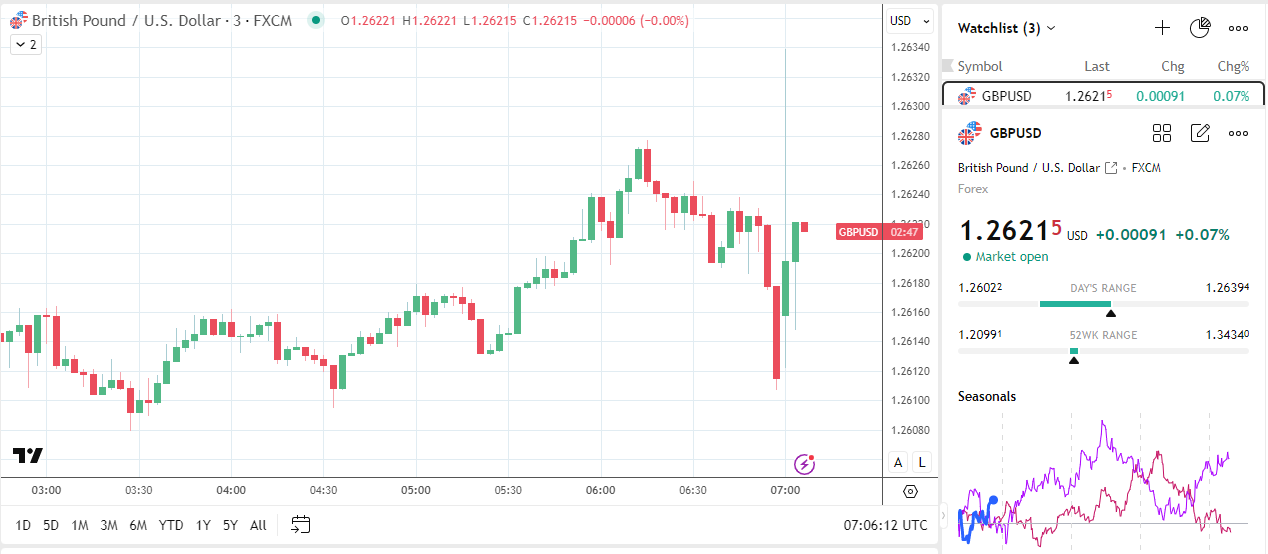
Ahead of the UK inflation report, the GBP/USD dropped to a low of $1.26022 before climbing to a high of $1.26394.
However, after the inflation report, the GBP/USD fell to a low of $1.26122 before rising to a high of $1.26339.
On Wednesday, February 19, the GBP/USD was up 0.07% to $1.26215.
Stay ahead of market shifts here with real-time updates and expert insights into global economic trends.