UK Inflation Surges Ahead, Challenging the BoE’s Rate Path
On Wednesday, December 18, UK Inflation data for November could significantly impact the Bank of England’s policy outlook.
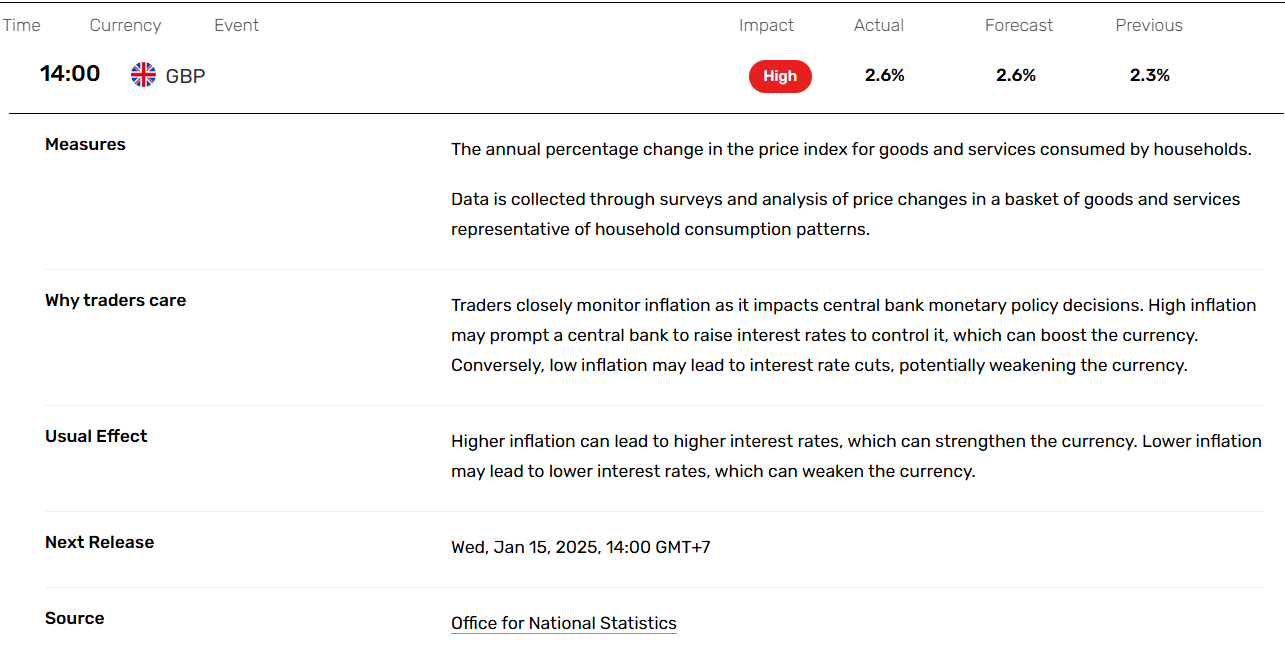
The UK’s annual inflation rate rose to 2.6% in November, aligning with economists’ forecasts and up from 2.3% in October. Notably, the headline inflation moved further from the BoE’s 2% target.
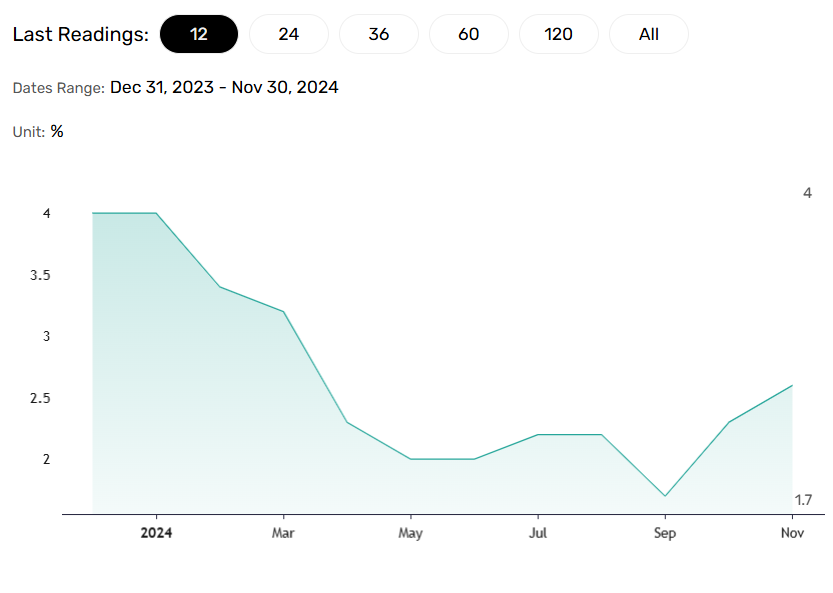
Key Data from the Office for National Statistics included:

- The Consumer Prices Index, including owner-occupier housing costs (CPIH), rose by 3.5% in the 12 months to November, up from 3.2% in October.
- Housing and household services and transport had the largest positive contribution to the CPIH and CPI annual rates.
- Meanwhile, restaurants and hotels had the largest downward contribution.
- The Core CPIH (excluding energy, food, alcohol, and tobacco) advanced by 4.4% in the 12 months to November, compared with 4.1% in October.
- Core CPI (excluding energy, food, alcohol, and tobacco) increased from 3.3% in October to 3.5% in the 12 months to November.
- The CPI services annual rate remained steady at 5.0%, while the CPI goods rate rose from negative 0.3% to positive 0.4%.
How Will Inflation and Wages Affect the BoE Rate Path?
The inflationary surge follows Tuesday’s UK Labor Market Overview Report, which reported wage growth at 5.2% and a steady unemployment rate.
Rising wages could fuel consumer spending and demand-driven inflation, potentially prompting the BoE to delay rate cuts. The combination of higher wages and headline inflation may leave the Bank of England in a holding pattern through Q1 2025.
However, reports of businesses reacting to the UK Budget by increasing wages while cutting jobs could complicate the outlook. Significant job cuts could dampen consumer confidence, offsetting the impact of wage growth on consumption. The BoE may require additional time to assess labor market shifts before making a move.
Expert Views on the BoE Rate Path
The New Economics Foundation (NEF) remarked on November’s wage growth data on Tuesday, underscoring the BoE’s potential policy hold, stating,
GBP/USD Price Forecast
Every new GBP/USD analysis as it publishes, today's technical signal and key levels, live price — on one page.
See all GBP/USD forecasts“These wage rises are sorely needed after a long period of wage stagnation, and years of rapid price rises. This can help us grow out of our economic slump. But because of our broken monetary policy framework, it might result in the Bank of England keeping interest rates high.”
The NEF added,
“The Bank is overly worried about a wage-price spiral, but real wages are still just catching up to where they were in mid-2021.”
The Bank of England will announce its monetary policy decision on Thursday, December 19. While markets expect the BoE to keep rates at 4.75%, the inflation and wage data add uncertainty to the Bank’s outlook.
GBP/USD Response to Inflation Data
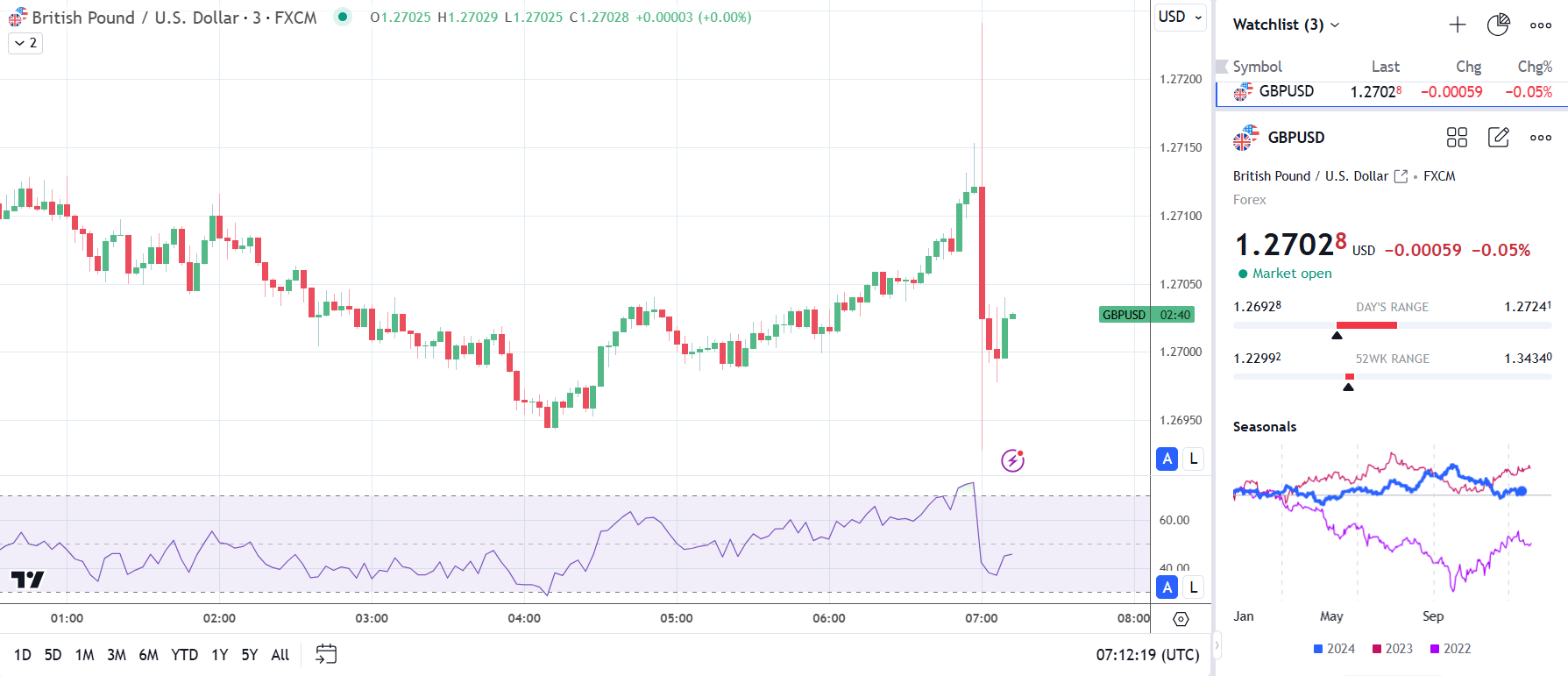
Ahead of the UK inflation report, the GBP/USD briefly climbed to a pre-report high of $1.27134 before falling to a low of $1.26493.
However, following the inflation report, the GBP/USD rose to a high of $1.27241 before dropping to a low of $1.26928.
On Wednesday, December 18, the GBP/USD was down 0.05% to $1.27028.