



It was a busy morning on the UK economic calendar. The UK Labour Market Overview for April 2023 was in focus this morning. With the Bank of England focused on wage growth and inflation, hotter-than-expected wage growth figures would have more influence.
In February, average earnings + bonus increased 5.9% year-over-year versus a forecasted 5.1% increase. A sharp increase in employment was also bullish, while claimant counts and an unexpected rise in the UK unemployment rate were bearish.
According to the Office for National Statistics,
- Average UK regular pay growth was 6.9% for the private sector from December 2022 to February 2023 and 5.3% for the public sector.
- The UK employment rate was 75.8% (est.) from December 2022 to February 2023, up 0.2 percentage points compared with September 2022 to November 2022.
- From January to March 2023, the estimated number of vacancies declined by 47,000 to 1,105,000. Vacancies fell for the ninth successive period, with firms citing economic pressures as a contributory factor.
- On a 3-month rolling basis, employment increased by 169k in February, while claimant counts increased by 28.2k in March.
- The UK unemployment rate increased from 3.7% to 3.8% in February.
The larger-than-expected wage growth figure may pressure the Bank of England to deliver a more hawkish interest rate hike in May. However, deteriorating labour market conditions will be food for thought.
GBP/USD Reaction to UK Wage Growth
Ahead of the Labour Market Overview Report, the GBP/USD fell to an early low of $1.23678 before rising to a pre-stat high of $1.23929.
However, in response to the labour market numbers, the GBP/USD fell to a post-stat low of $1.23867 before striking a high of $1.24048.
This morning, the GBP/USD was up 0.23% to $1.24045.
US Dollar Index Price Forecast
Every new US Dollar Index analysis as it publishes, today's technical signal and key levels, live price — on one page.
See all US Dollar Index forecasts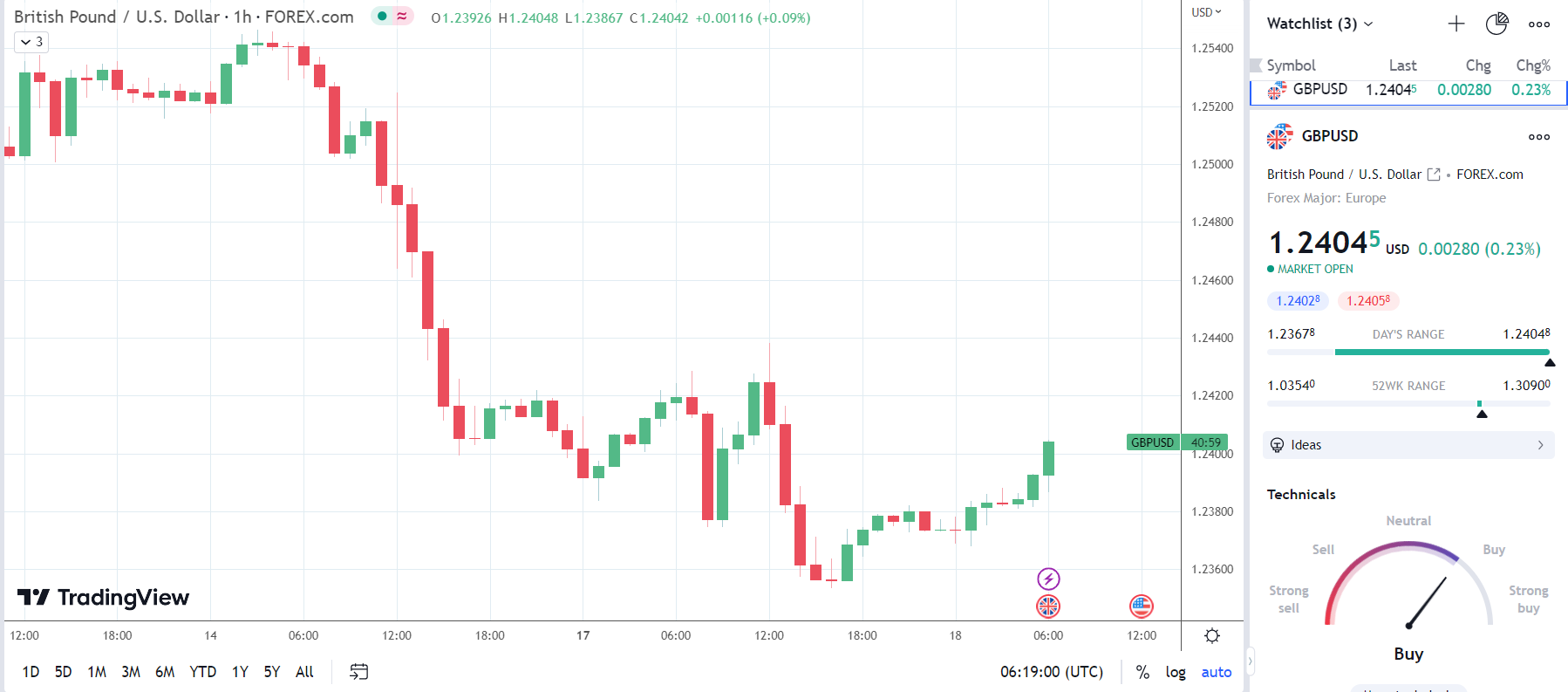
Next Up
Investors should monitor Monetary Policy Committee member commentary. UK Labour Market stats and inflation numbers (Wed) could materially shift sentiment toward BoE monetary policy. However, no Monetary Policy Committee members are on the calendar to speak today, leaving chatter with the media to move the dial.
Looking ahead to the US session, it is a relatively quiet day on the US economic calendar. Housing sector data for March will draw interest, with housing starts and building permits due out. However, the US housing market appears to be off the Fed’s radar vis-à-vis monetary policy decisions. The numbers should have a limited the influence on sentiment toward Fed policy plans.
Fed chatter on monetary policy and the US economy would move the dial. We expect increased sensitivity to FOMC member commentary as the markets respond to guidance beyond May.