



Expert Forecasts for Major U.S. Stock Indices in 2026
As Wall Street looks toward 2026, strategists broadly expect U.S. equities to post another year of gains, though forecasts are noticeably more restrained than in recent years. While optimism is supported by earnings growth and expectations for easier monetary policy, concerns around valuation, artificial intelligence sustainability, and broader economic uncertainty temper enthusiasm. The prevailing view points to positive but more normalized returns across major U.S. indices.
What Are Strategists Expecting for the S&P 500?
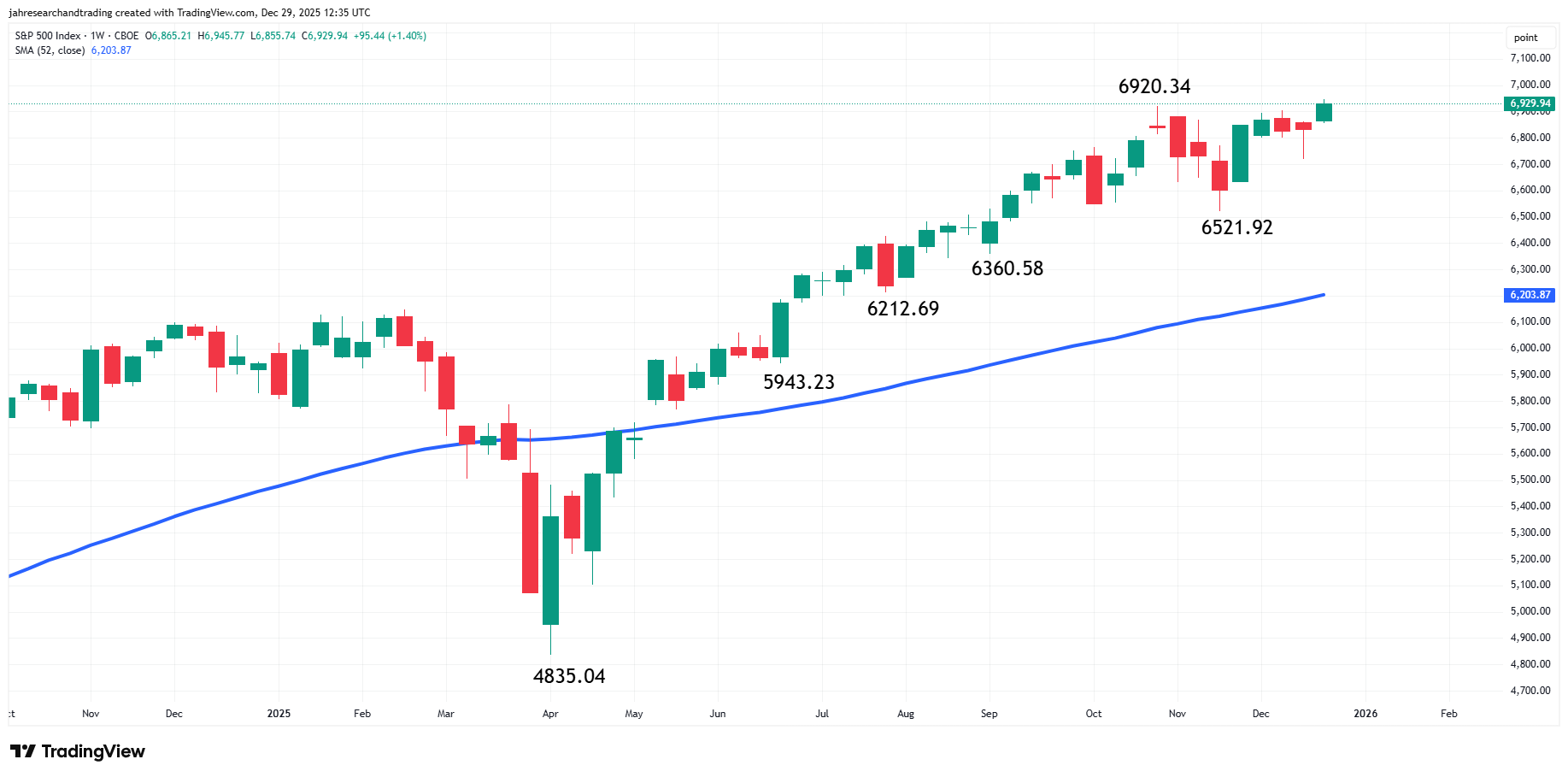
The S&P 500 sits at the center of 2026 forecasts, with all major Wall Street firms projecting gains. Among thirteen published outlooks, year-end targets cluster between mid- to high-single-digit returns, though dispersion remains wide.
Morgan Stanley is among the most bullish, projecting the index at 7,800 by the end of 2026, roughly 14% above current levels. The firm points to a rare alignment of fiscal support, monetary easing, and deregulation, arguing that these conditions allow markets to refocus on company-level growth stories, particularly those tied to AI adoption.
J.P. Morgan also anticipates double-digit gains, forecasting upside of 13% to 15%. Its thesis centers on solid earnings growth, lower interest rates, and expanding AI use across sectors. The firm notes that further Federal Reserve easing could push the index above 8,000.
Goldman Sachs takes a more measured stance, targeting 7,600, implying roughly 11% upside. While the bank expects S&P 500 earnings per share to rise about 12% to $305, it anticipates some multiple compression. Technology earnings are still projected to grow sharply, driven by AI investment alongside steadier expansion in non-AI businesses.
Bank of America stands out as the most cautious, projecting the S&P 500 at 7,100, or about 4% above current levels. The firm expects valuation pressure as market concentration remains elevated and warns that widespread AI adoption could weigh on employment and consumer demand, ultimately limiting equity upside.
UBS and Deutsche Bank fall between these views, with targets ranging from 7,700 to 8,000. Taken together, the average forecast sits near 7,600, closely matching the index’s long-term annual return and signaling expectations for normalization after outsized recent gains.
S&P 500 Price Forecast
Every new S&P 500 analysis as it publishes, today's technical signal and key levels, live price — on one page.
See all S&P 500 forecastsWill Market Leadership Broaden Beyond Mega-Cap Technology?
A common theme across forecasts is the expectation that gains will spread beyond a narrow group of mega-cap technology stocks. Analysts argue that economic resilience and easier financial conditions could support more cyclical and rate-sensitive sectors.
Goldman Sachs highlights Industrials, Materials, and Consumer Discretionary as likely beneficiaries. Industrials earnings growth is projected to accelerate sharply, while Real Estate and Consumer Discretionary are also expected to see improved profit momentum. This contrasts with recent years, when a small group of technology leaders accounted for a disproportionate share of index gains.
Despite record highs for the S&P 500, the median stock remains well below its own peak, underscoring how concentrated returns have been. Several strategists believe that 2026 could mark a shift toward broader participation, assuming rate cuts filter through the economy and AI-driven productivity gains extend beyond the technology sector.
Can the Nasdaq Maintain Its Momentum?
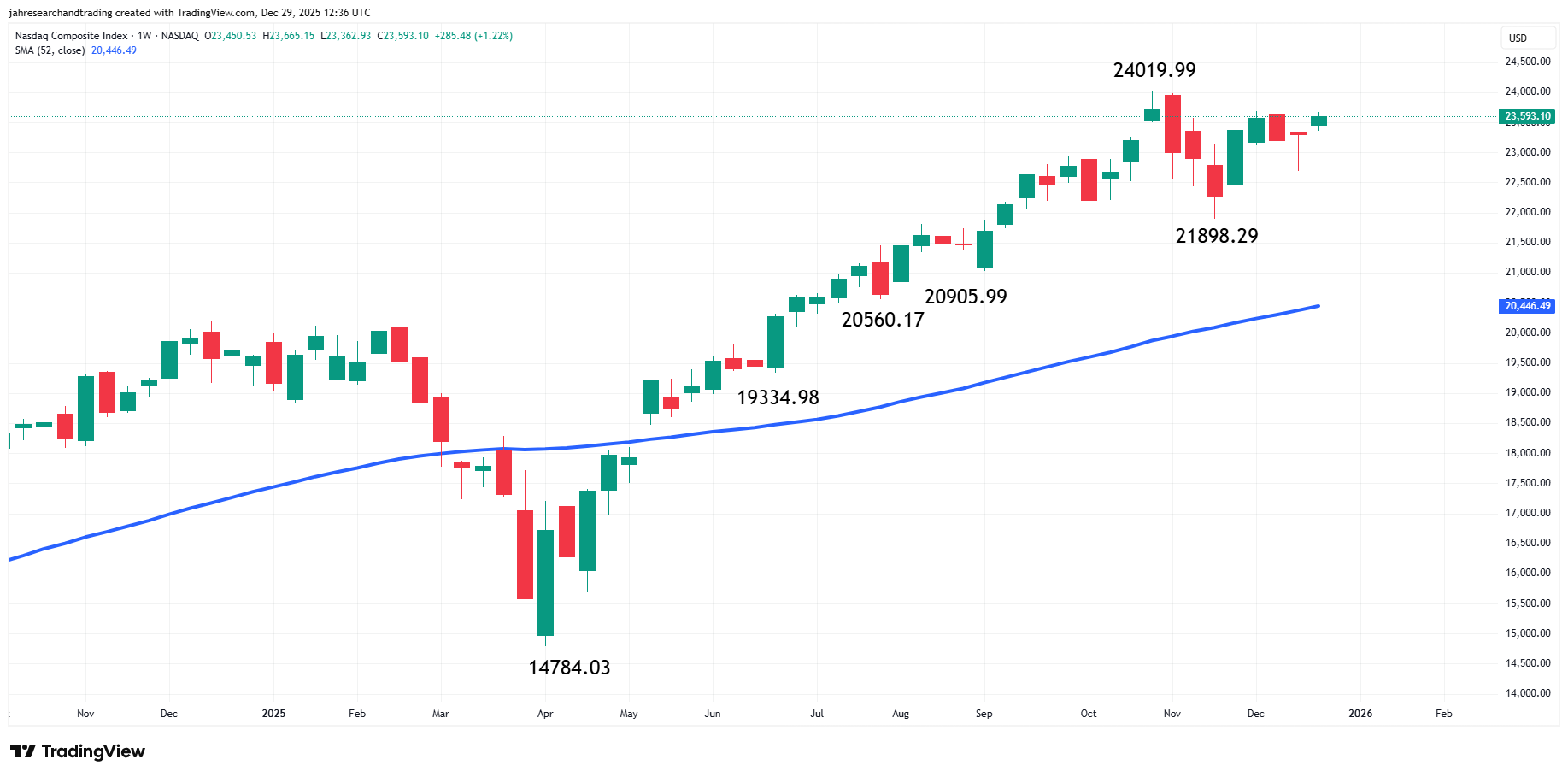
Forecasts for the Nasdaq Composite are more contested. After strong gains driven by AI enthusiasm and semiconductor strength, analysts debate whether technology valuations can continue to expand.
Optimistic scenarios see the Nasdaq delivering returns in the low-to-mid teens if AI adoption remains strong and infrastructure spending translates into revenue growth. Capital expenditures by major technology firms are expected to approach $520 billion in 2026, reflecting continued commitment to AI and cloud expansion.
Supporters argue that these investments will drive long-term productivity gains and justify current valuations. Skeptics, however, caution that near-term monetization may lag expectations. Some warn of a period where revenue growth fails to keep pace with investor optimism, creating downside risk even without a full reversal in AI spending.
More conservative outlooks suggest the strongest opportunities may lie outside growth-heavy technology. Several asset managers expect U.S. growth stocks to deliver muted returns over the next five to ten years, favoring value-oriented equities, high-quality fixed income, and international markets instead.
What Does 2026 Look Like for the Dow?
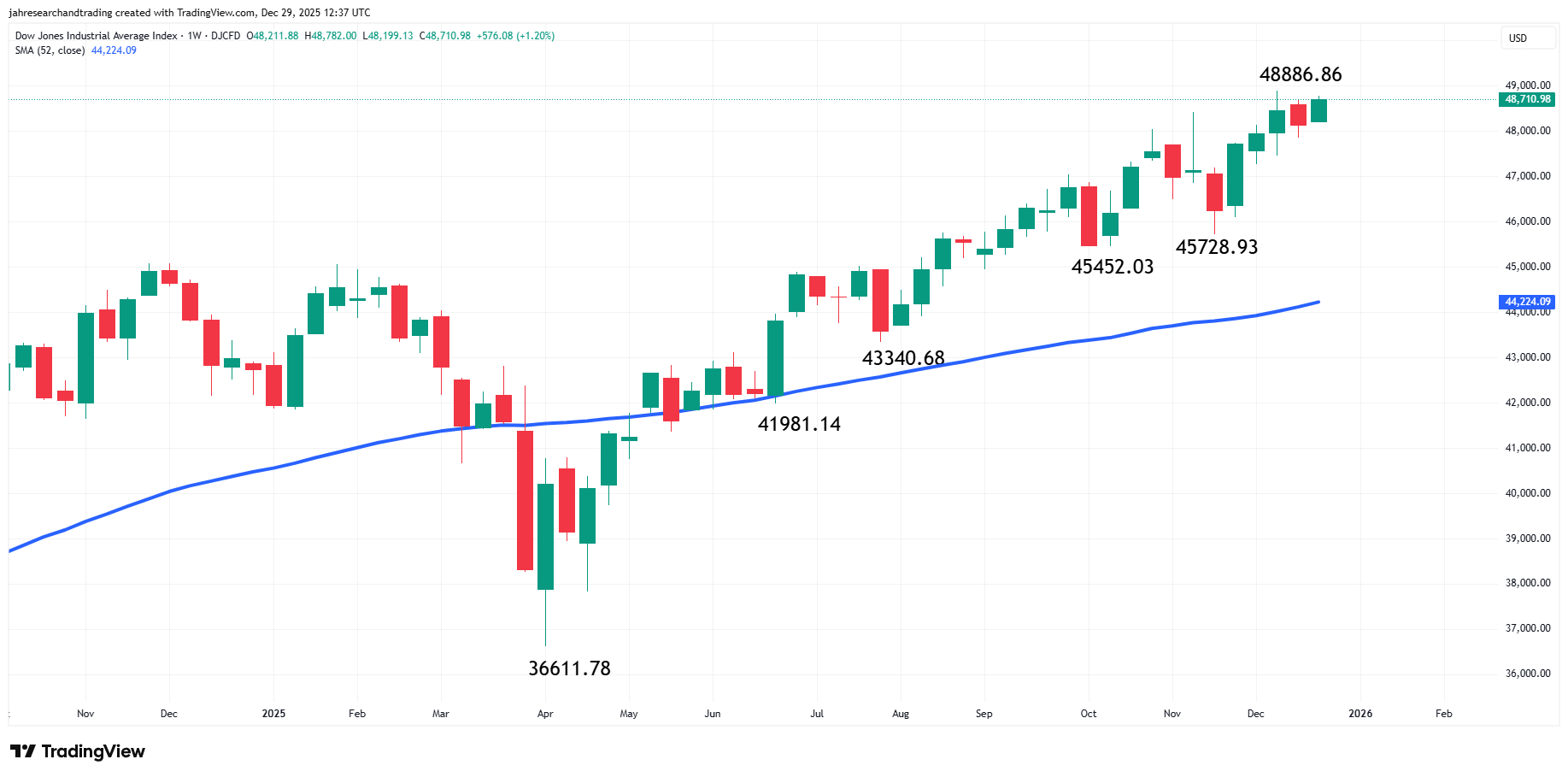
The Dow Jones Industrial Average is expected to deliver steadier, more modest gains than the S&P 500 or Nasdaq. Forecasts generally call for high-single-digit to low-double-digit returns, reflecting its heavier exposure to cyclical and industrial companies.
Performance will depend on interest rates, manufacturing activity, global trade policy, and consumer spending. Unlike technology-focused indices, Dow components face more traditional pressures related to margins, pricing power, and cost control.
Which Key Factors Will Shape Markets in 2026?
Several key drivers will shape market outcomes in 2026.
Earnings growth remains central. Most bullish forecasts assume mid- to high-single-digit earnings expansion for the broader market, with technology-related sectors delivering stronger gains. After multiple expansion contributed meaningfully to recent returns, earnings are expected to shoulder more of the burden next year.
Federal Reserve policy is another critical variable. While further rate cuts are widely expected, the pace and magnitude remain uncertain. Leadership changes at the Fed in mid-2026 could add policy uncertainty, particularly if long-term Treasury yields approach levels that historically pressure equity valuations.
Inflation also remains a risk. Although price pressures have moderated, progress toward the Fed’s target has been uneven. Persistent labor tightness or higher import costs could complicate the policy outlook and weigh on valuations.
Geopolitical developments, including trade tensions and U.S. midterm elections, could introduce episodic volatility. Valuation concerns linger as well, with markets priced for strong execution. Any disappointment in earnings growth could prompt repricing.
What Are the Contrarian Risks?
More cautious observers point to declining buybacks, rising capital expenditures, and stretched valuations as warning signs. Reduced buyback activity removes a key source of equity demand, while heavy AI investment pressures near-term cash flow. If returns on these investments disappoint, equity multiples could come under pressure.
Are International Markets More Attractive?
After years of U.S. outperformance, several strategists argue that international equities may offer better value in 2026. Earnings growth outside the U.S. has improved, valuations remain lower, and select markets, particularly Japan, are benefiting from structural reforms and renewed domestic investment.
What Does This Mean for Investors?
The consensus view suggests another positive year for U.S. equities, but with returns likely closer to historical averages. Diversification appears increasingly important, both across sectors and geographies. Volatility is also expected to remain elevated, driven by shifting policy expectations and rotation within equity markets.
Fixed income may play a larger role as well. If rates continue to ease, high-quality bonds could provide income and diversification benefits alongside equities.
Bottom line: 2026 is shaping up as a year of opportunity tempered by realism. Markets may continue to rise, but leadership, return drivers, and risk profiles are likely to look very different from the years that preceded it.
More Information in our Economic Calendar.