
Fed Walks Into 2026 With a Split Committee and a Messy Data Picture
The Fed walks into 2026 with a split committee and a data set even policymakers aren’t fully confident in. Three cuts last year brought the federal funds rate to 3.5%–3.75%, but December’s meeting delivered an unusual trio of dissents — two officials wanted to hold, one wanted a 50bp cut. You don’t see that kind of disagreement unless the committee truly doesn’t share a clear view of the road ahead.
The 43-day government shutdown only adds to the uncertainty. October unemployment wasn’t measured, CPI components skewed strangely, and the household survey barely met collection thresholds. Powell knows he’s steering through fog. Traders know the Fed is steering through fog. And until the data is clean enough to trust, nobody wants to overreact to one month’s print.

ECB Starts the Year Comfortable Holding Steady
The ECB begins 2026 from a position the Fed would probably take if it could: stability. After eight cuts between mid-2024 and mid-2025, the deposit rate has sat at 2.0% for four straight meetings. Lagarde keeps repeating that policy is in a “good place,” and she has the numbers to back it up — inflation near target, growth stabilizing, and no leadership turnover until 2027. There’s no internal push to tweak rates, no messy data complications, and no political noise driving expectations. Traders expect the ECB to stay parked for a while, and the bank isn’t signaling otherwise.
Q1: Fed Stays Patient While Markets Wait for Cleaner Data
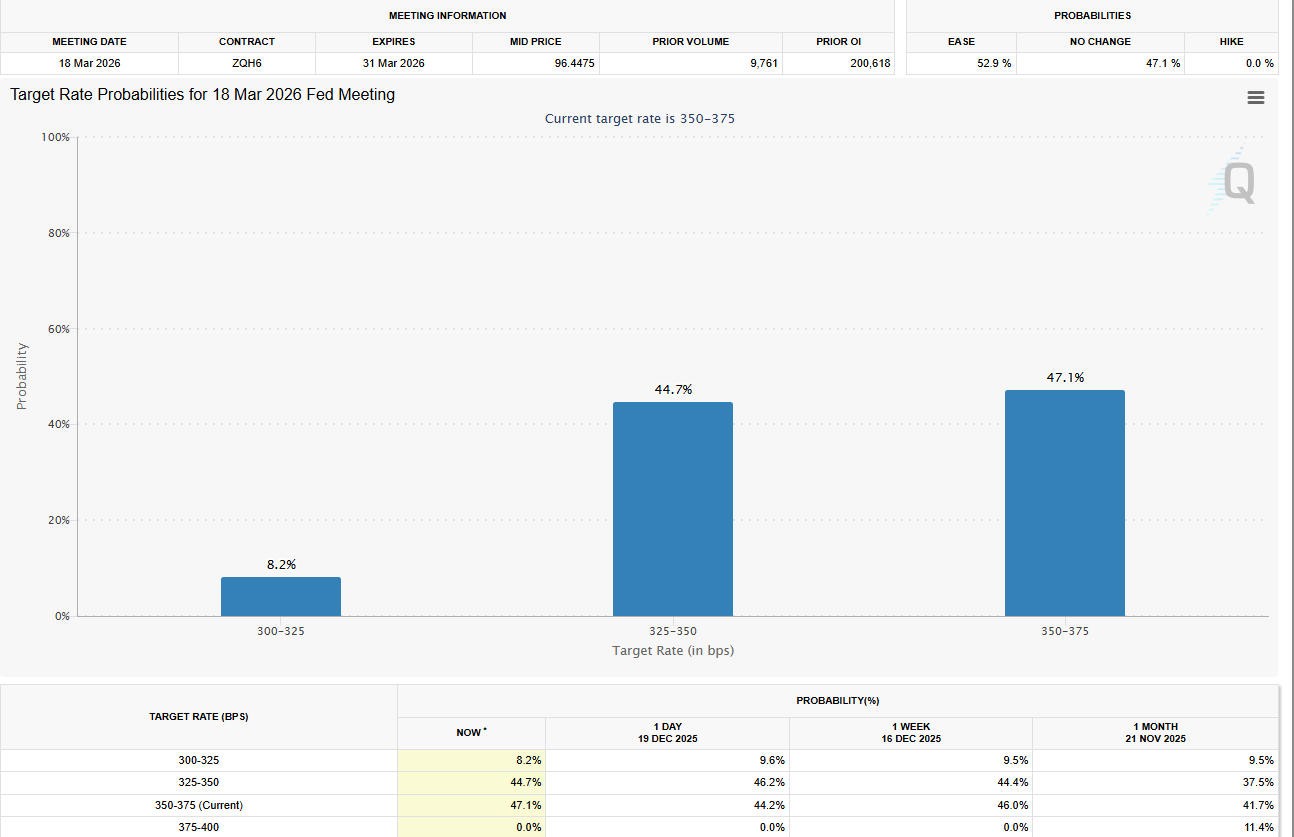
Even with unemployment hitting 4.6% and headline CPI cooling to 2.7%, markets still price an 80% probability the Fed holds in January. That tells you how much weight policymakers are putting on the data-quality issue. Powell’s “well positioned” comment was deliberate — he knows the numbers are soft, but he doesn’t trust them enough to justify another move.
As a U.S. rates strategist at Barclays put it this week: “The Fed is not trading the last CPI print; it’s trading the quality of the data.”
EUR/USD Price Forecast
Every new EUR/USD analysis as it publishes, today's technical signal and key levels, live price — on one page.
See all EUR/USD forecastsTraders keep quoting the same line:
Despite inflation cooling to 2.7% and unemployment hitting a four-year high, markets still price an 80% chance the Fed holds steady in January.
That’s not a central bank itching to cut — that’s a central bank waiting for clean proof.
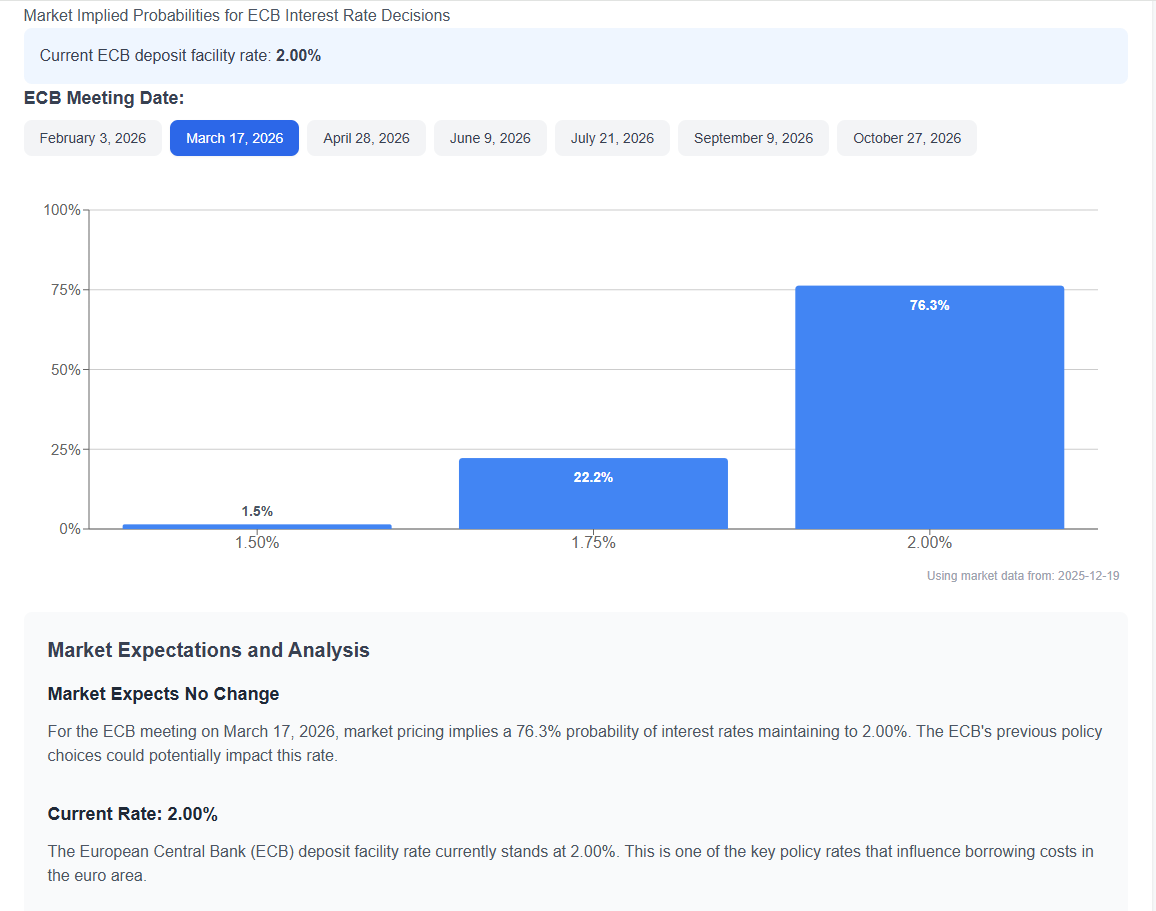
The ECB’s Q1 is uneventful by comparison. Inflation is where the Governing Council wants it, growth is holding, and nobody expects a move before spring.
Q2: Powell’s Exit Turns Into the Main Event
Q2 is the hinge of the year. Powell’s term ends May 15, and President Trump has been clear he wants a chair who will cut faster. Kevin Hassett is the frontrunner, and he’s already said he’d be cutting based on the current data. That alone shifts how traders think about the Fed’s reaction function.
Goldman said it plainly on a recent client call: “Leadership turnover matters as much as the data in the first half of 2026.”
There’s also the possibility that Powell stays on the Board through 2028. If that happens, both the outgoing and incoming chairs sit on the same committee — something the modern Fed has never navigated. It doesn’t guarantee conflict, but it guarantees uncertainty. Markets don’t wait for clarity; they price uncertainty ahead of time.
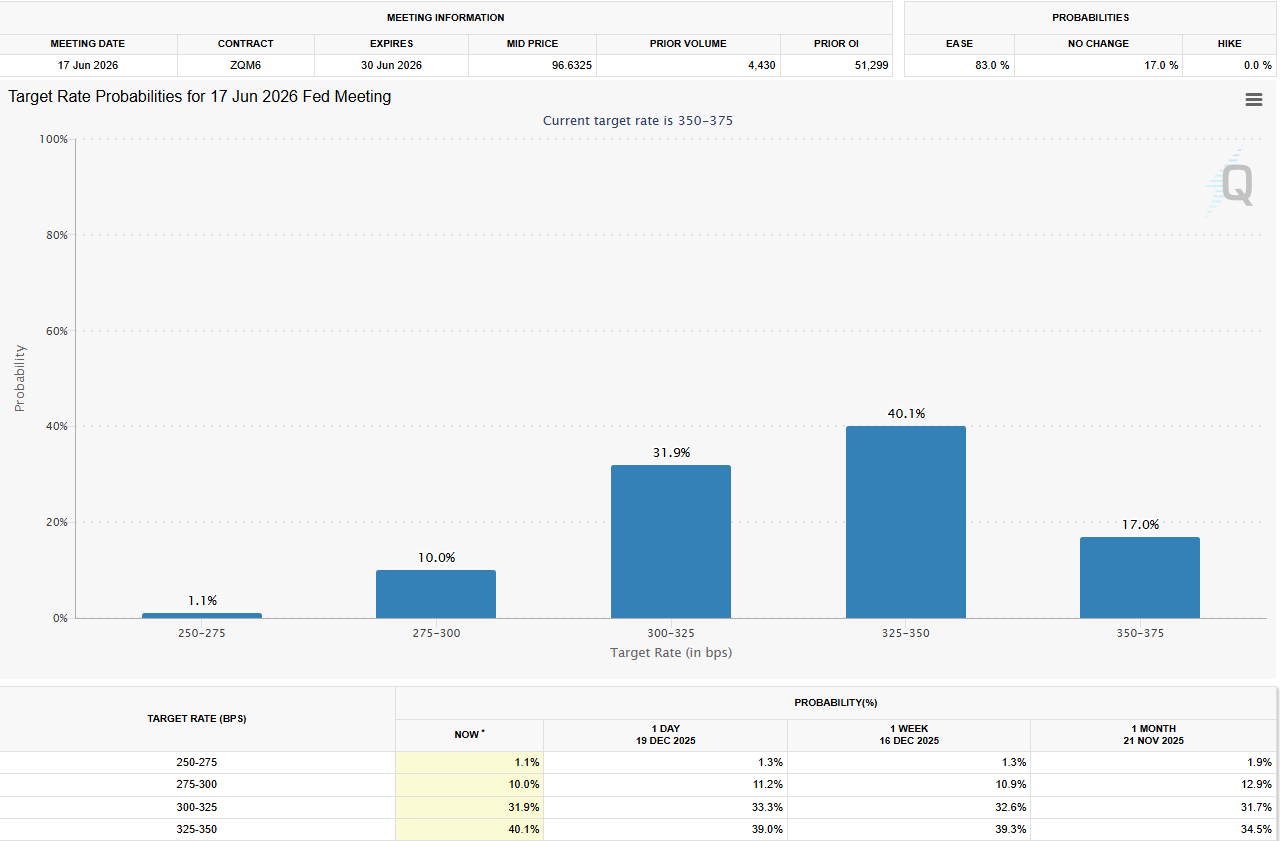
Most desks still see room for a June cut, assuming the labor market continues to cool. But those forecasts carry more caveats than usual. The confirmation process itself could move markets, especially if the nominee signals a sharply different approach.
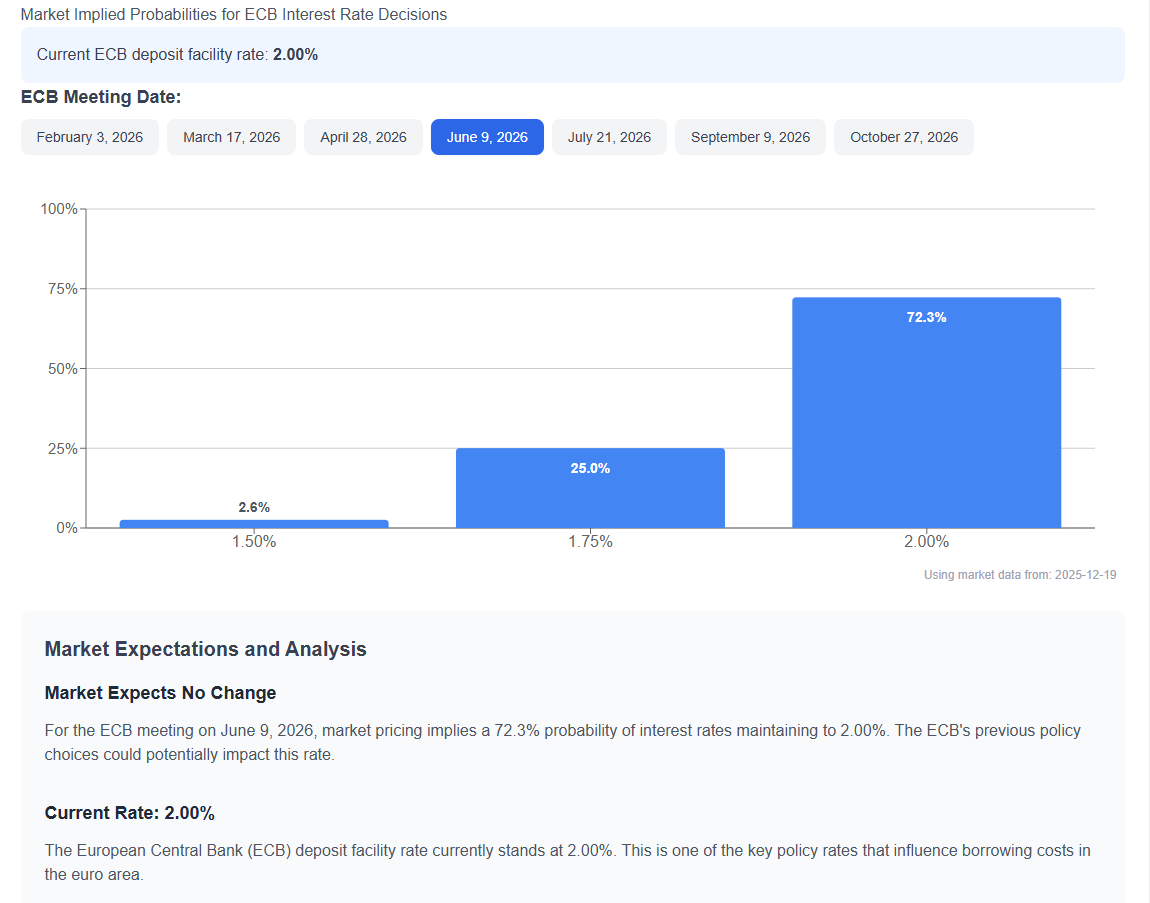
The ECB doesn’t have any of this noise. Lagarde’s mandate extends to 2027, and German fiscal spending — the biggest since reunification — gives the region a tailwind. As long as inflation holds near 2%, the ECB is content to sit on its hands.
Q3: Tariffs, the Supreme Court, and the New Chair’s First Real Test
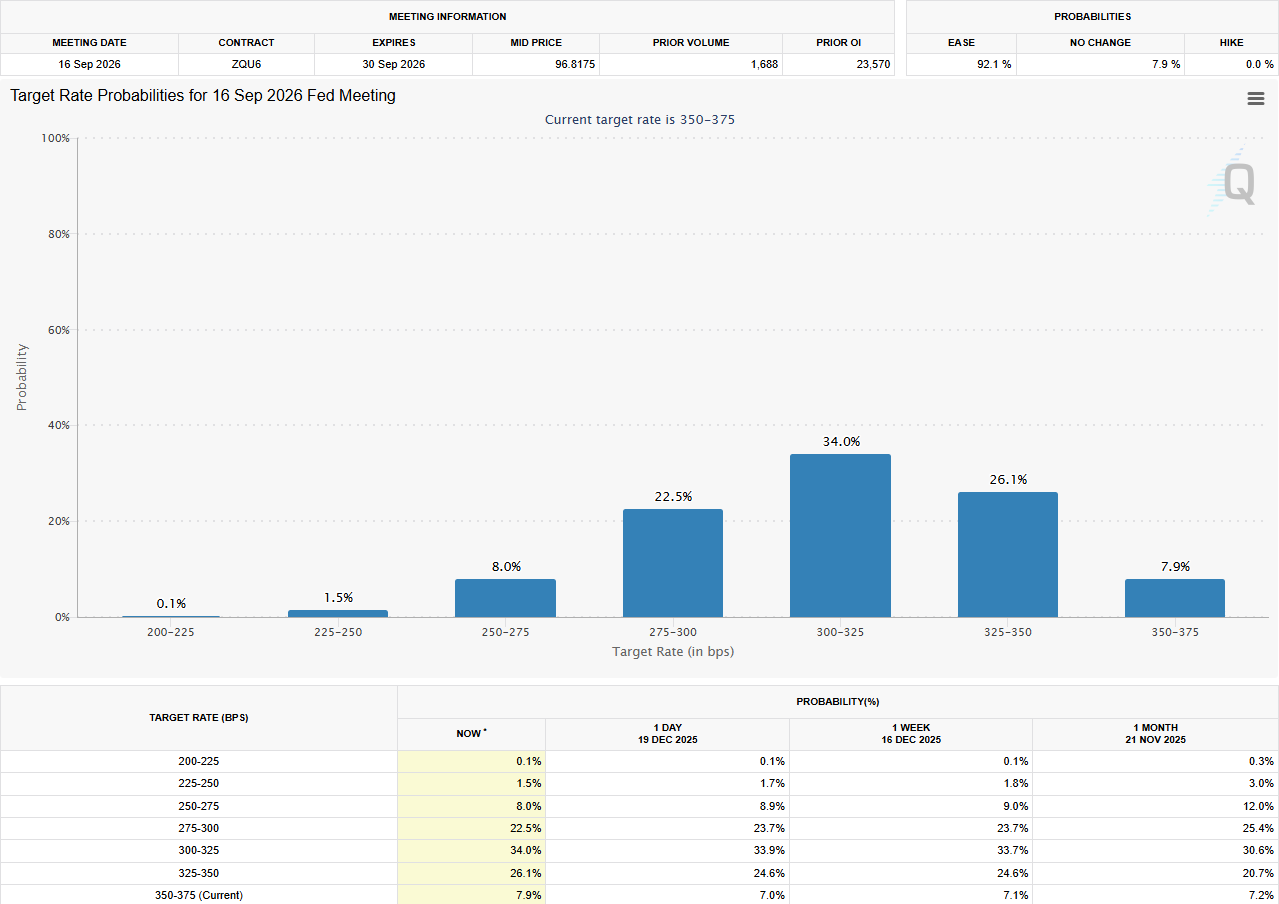
Q3 is where tariff policy and monetary policy finally cross. Tariffs added roughly 0.7 percentage points to inflation in 2025, but most economists think that effect fades by mid-2026. If they’re right, it removes one inflation headwind. But if inflation sticks closer to 2.8–3%, the new chair faces a credibility test immediately — especially if markets suspect political pressure is shaping decisions.
Then there’s the Supreme Court decision on the legality of emergency powers used to impose tariffs. The ruling is expected early in the year, but the market reaction plays out in Q3. A forced rollback would send a disinflationary shock through the system, giving the Fed cover to ease further — assuming the real economy cooperates.
J.P. Morgan’s economists have warned that “tariff pass-through could fade sooner or later than modeled,” and that’s exactly what traders are preparing for.
Most desks are pricing in a range of outcomes wider than usual for this stage of the year.
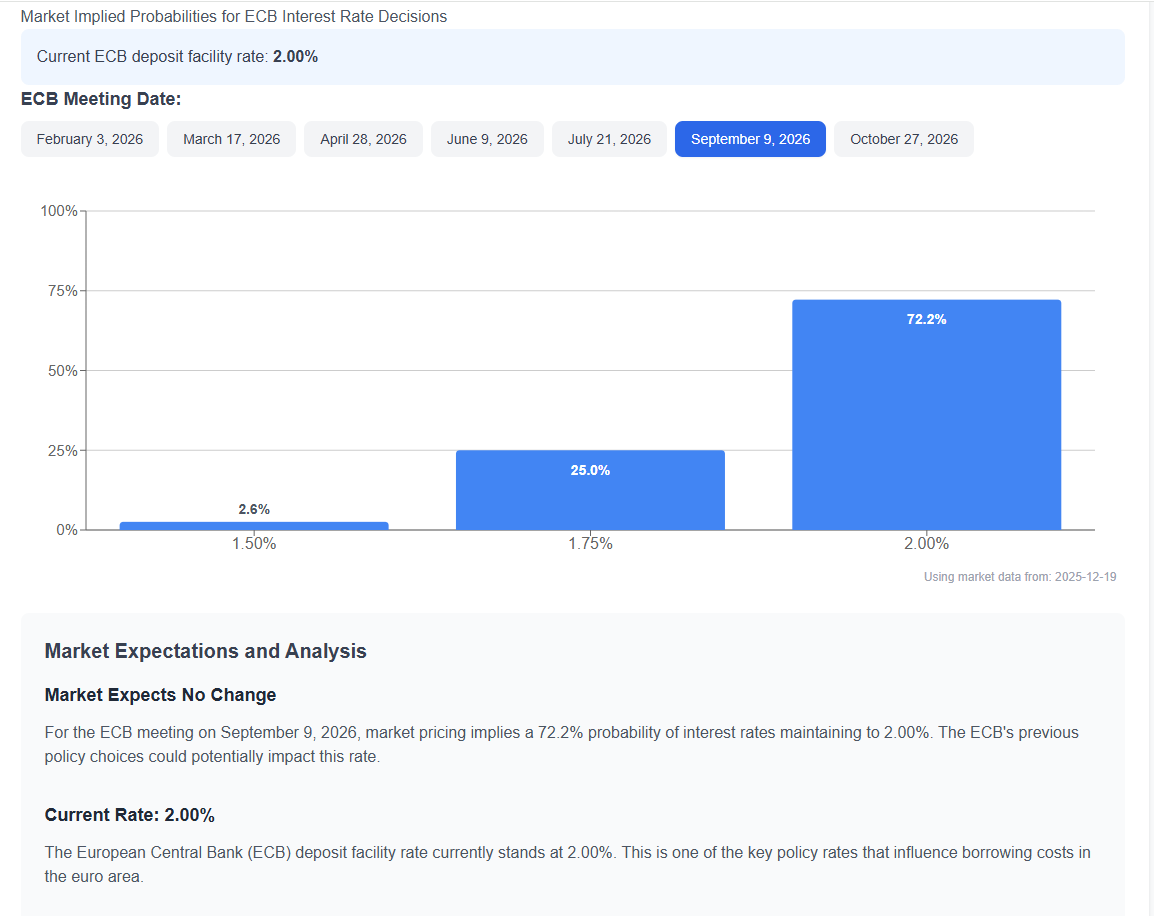
For the ECB, Q3 is a natural reassessment point. If growth holds near 1.2% and inflation stays close to target, the deposit rate likely stays put. Some analysts think the next ECB move might be a hike if German fiscal expansion lifts demand. Cuts return only if inflation underperforms.
Q4: The Fed’s First Chance to Show Independence Under a New Chair
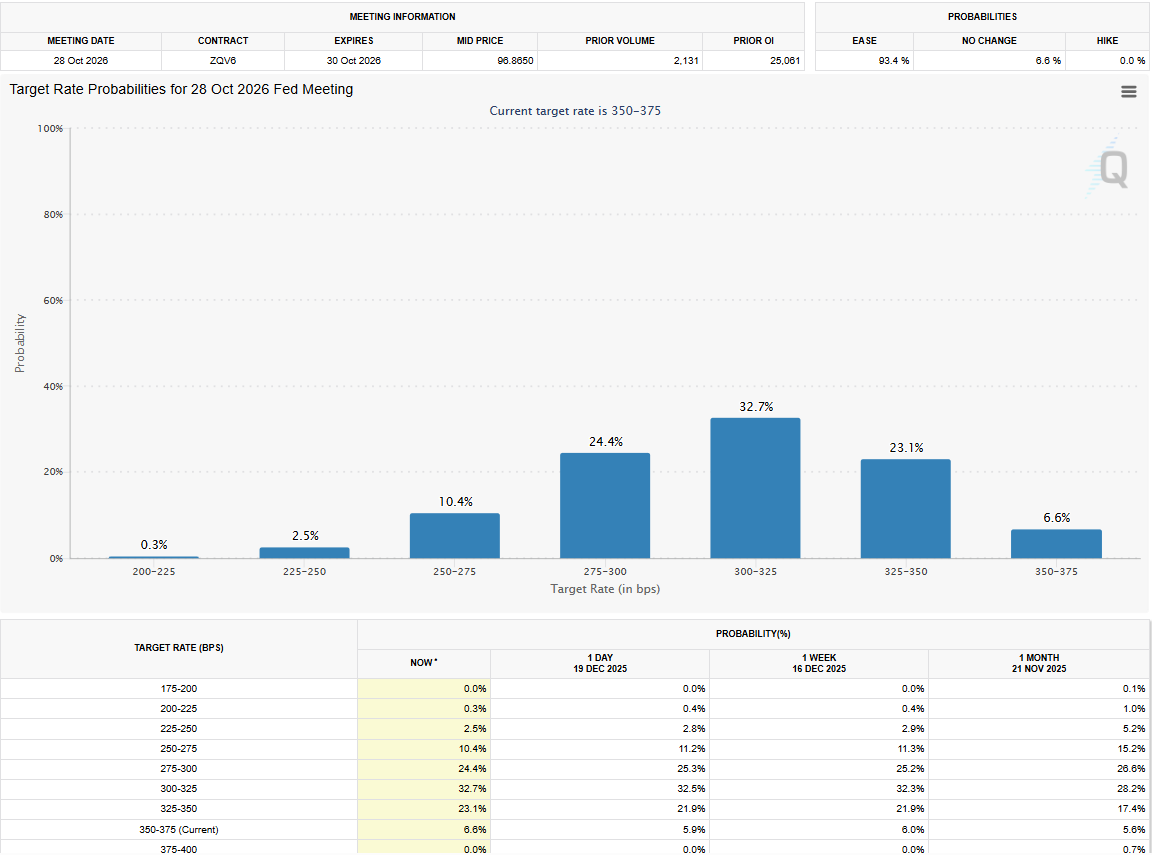
Q4 is where the Fed shows whether it can stay independent under pressure. Powell’s final dot plot projected just one cut for 2026 — a conservative stance. But if unemployment rises or the new chair leans more dovish, markets will test how much that projection still means.
At the same time, growth looks better than expected — boosted by AI investment, tax-lowered fiscal support, and possibly faster fading of tariff-driven inflation. If inflation softens more quickly, the Fed gets some room to maneuver. If not, the new chair may have to defend a firmer stance in front of a President who wants cuts. Either way, Q4 is where credibility gets priced.
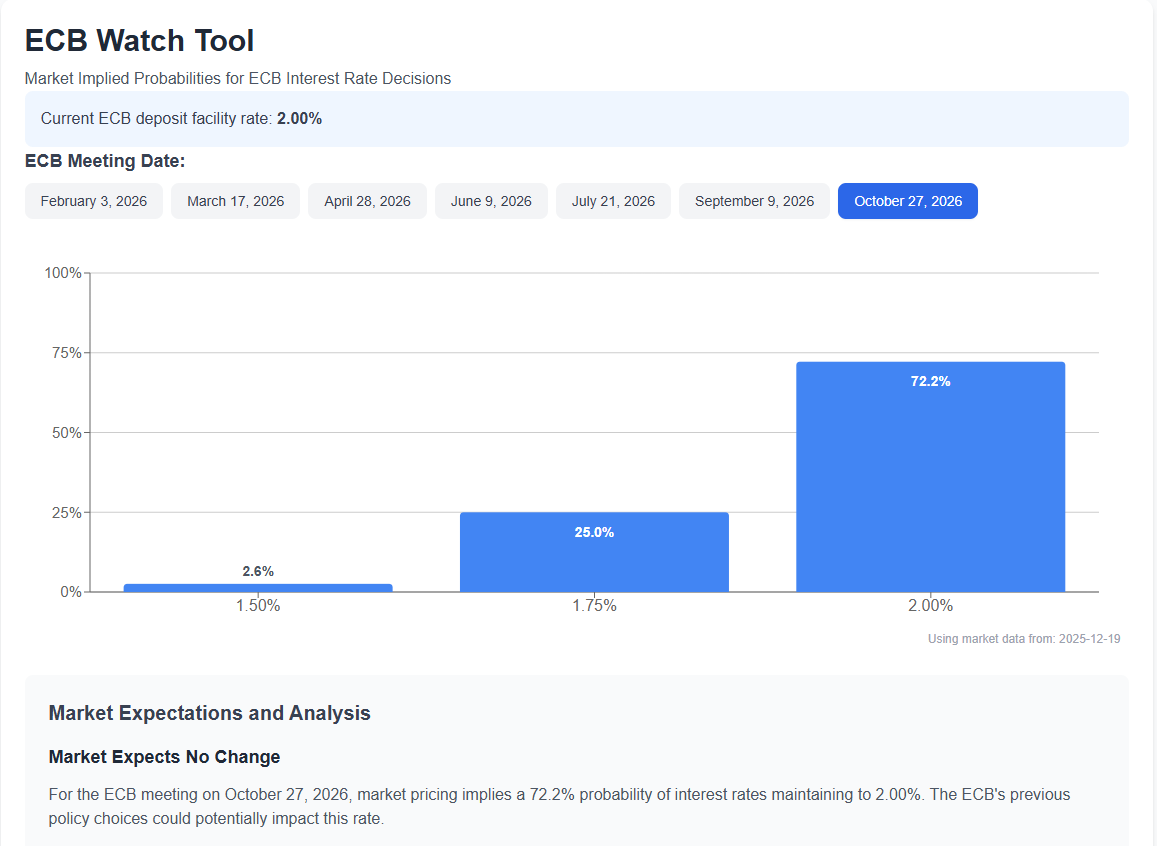
The ECB’s path into year-end is much steadier. Most forecasts call for the deposit rate to stay at 2.0% through December, with only a small chance of a trim to 1.75% if growth disappoints. Fiscal spending across Europe — especially defense and infrastructure — helps the ECB remain patient.
What Could Break the Outlook
A few catalysts could shift the rate path quickly:
- The Supreme Court tariff ruling could dramatically alter inflation expectations.
- German fiscal stimulus hits full effect and may lift eurozone demand.
- The AI capex boom — nearly $600B expected in 2026 — could support growth or expose overextension.
- Banking or sovereign stress in the U.S. or Europe could jump ahead of inflation as the priority.
- Geopolitical shocks could hit supply chains, commodities, or risk appetite without warning.
Bottom Line for Traders
The Fed enters 2026 with uncertainty on two fronts: the data and the leadership. The ECB enters with neither. That’s the split. Markets expect a January hold, a cautious Q1, a noisy Q2, and a Fed that must prove its independence in the back half of the year.
The ECB? It’s holding steady unless the data gives it a clear reason not to.