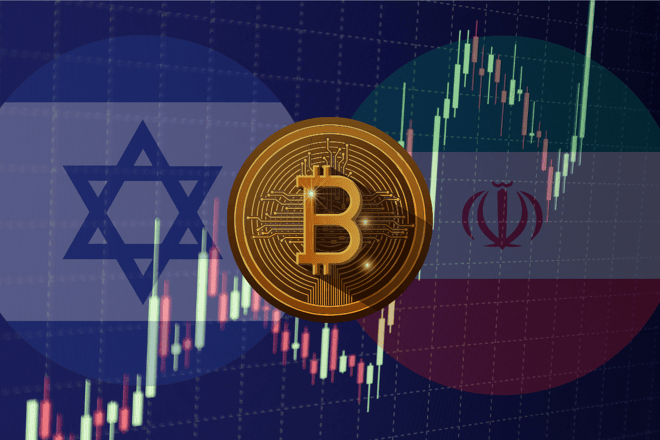
Bitcoin (BTC) has recovered sharply from the sell-off that occurred on June 13, when the latest Israel-Iran conflict began. The cryptocurrency is up by over 6.50% since then, wobbling between intraday gains and losses, and was trading for as high as $107,775 as of June 17.
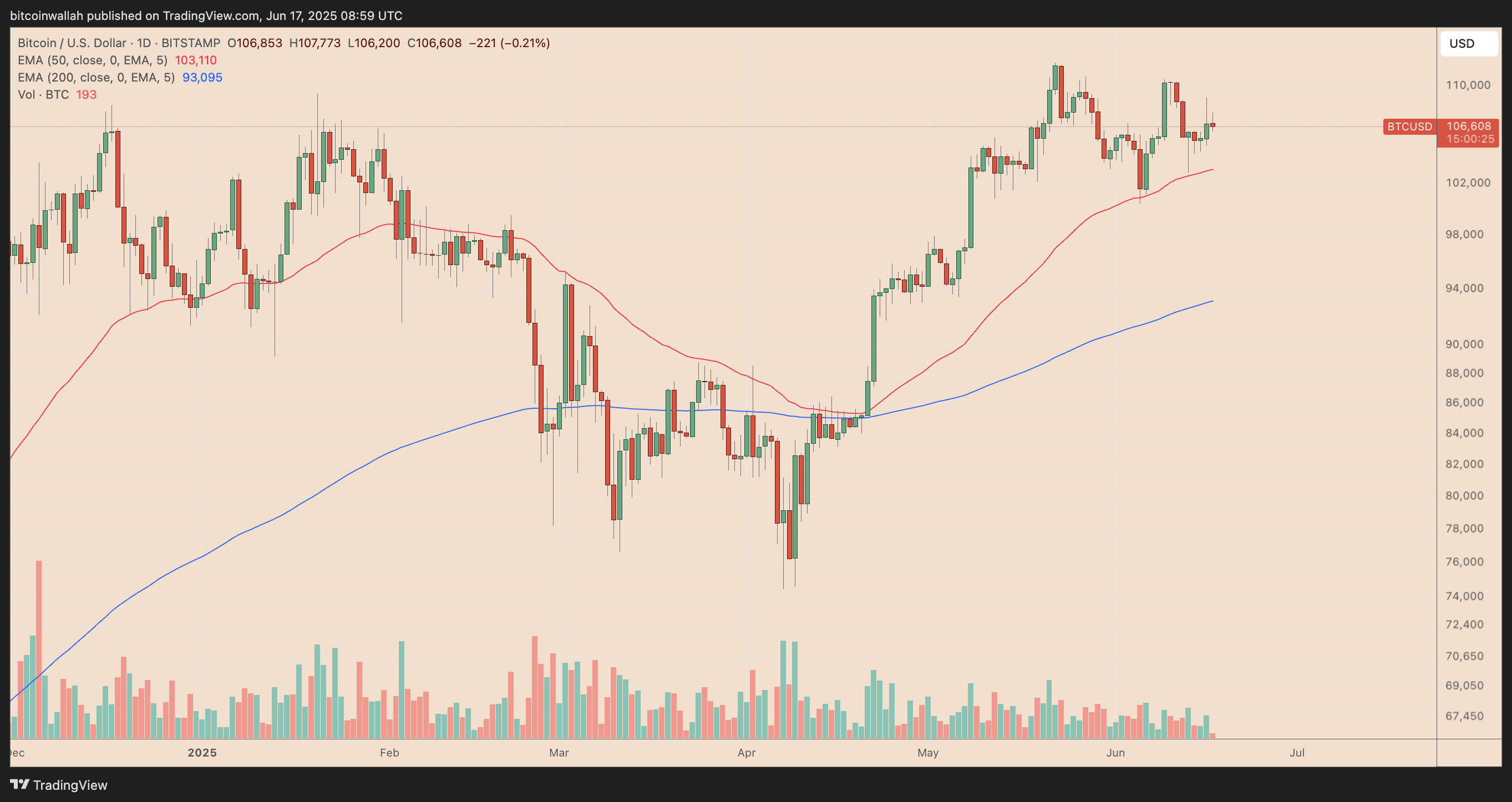
That said, Bitcoin traders appear unfazed by the escalating military tensions between Israel and Iran, with fresh onchain and derivatives market data furthering a bullish outlook.
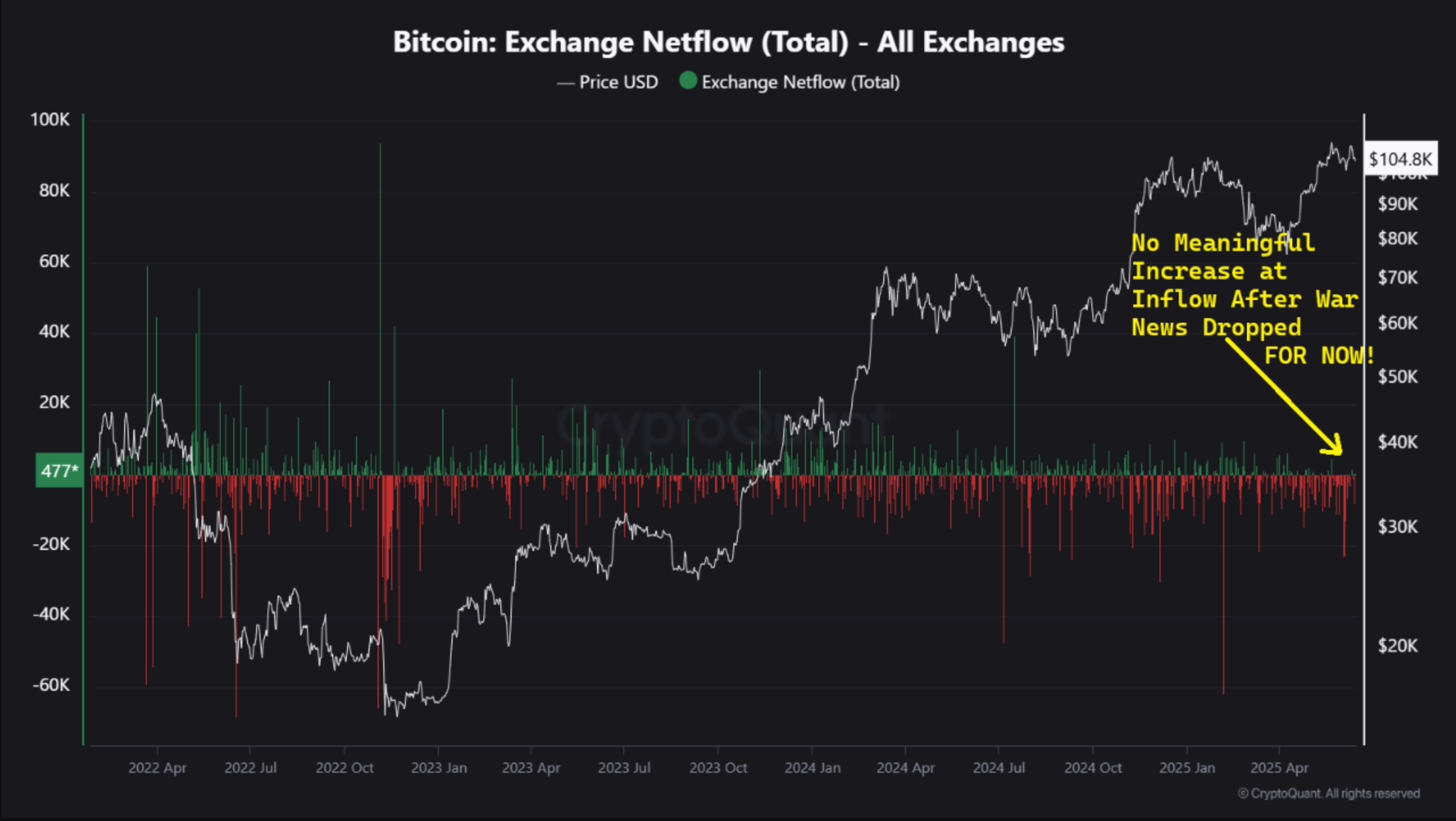
But data from CryptoQuant shows that netflows have remained negative or neutral since the headlines emerged, suggesting no wave of sell-side pressure has arrived, at least for now.
Open Interest Holds Despite BTC Price Pullback
Open interest across all exchanges has also remained resilient. While Bitcoin’s price briefly dipped below $100,000 following the initial war headlines, total open interest only declined modestly, still holding around $33.5 billion at the time of writing.
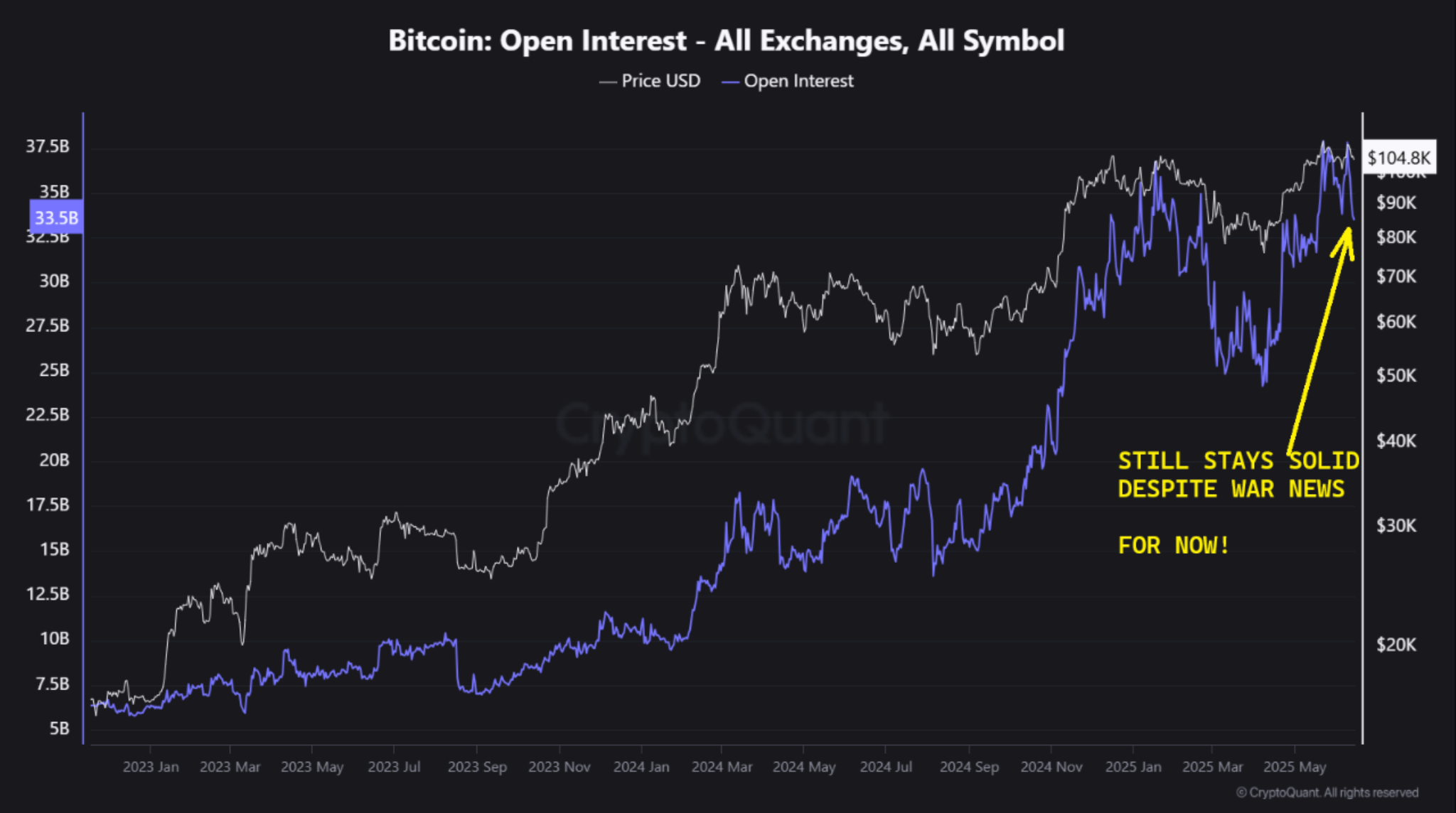
The absence of sharp liquidations or a mass closure of long positions suggests that traders are maintaining conviction in BTC’s broader uptrend, even amid geopolitical uncertainty.
Bitcoin Price Forecast
Every new Bitcoin analysis as it publishes, today's technical signal and key levels, live price — on one page.
See all Bitcoin forecasts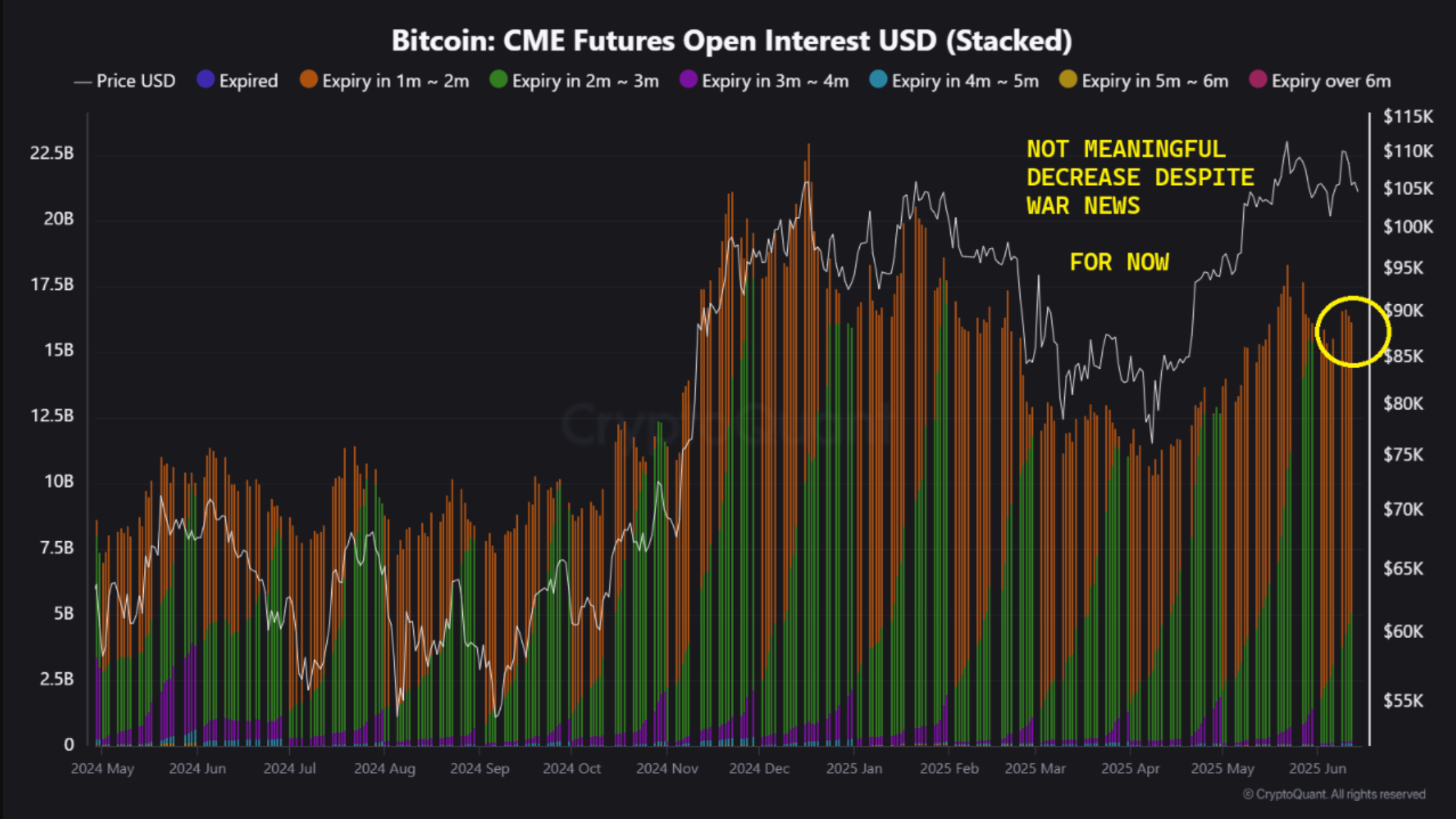
That suggests fund managers and large speculators are reducing short-term exposure, but not exiting the market in size.
BTC Market Reaction Signals Calm For Now
Across spot and derivatives markets, there is no sign of mass panic or capital flight. Onchain flows remain contained, and both retail and institutional participants are keeping risk on the table.
This mirrors similar episodes from the past, where local geopolitical flare-ups led to short-term price wobbles, but no major structural damage to Bitcoin’s market.
Still, CryptoQuant analyst CryptoMe warns that this could change quickly if the conflict escalates into broader regional instability.
“It’s UNCERTAIN whether this will continue, whether the WAR and tension will escalate, or whether the markets will react NEGATIVELY LATER […] The smartest move right now is to use the “WAIT AND SEE” approach.”