


Advertisement
Advertisement
Australian Dollar Forecast: AUD/USD Eyes 0.7186 Breakout as RBA Hike Clashes with FOMC Hawkish Hold
By:
Key Points:
- The RBA raised interest rates to 4.10% in a 5–4 vote, citing a "material risk" of oil-driven inflation hitting 5% following the Middle East conflict.
- The Federal Reserve is expected to keep rates steady today, prioritizing price stability as crude inventories build up and the US-Iran war enters its 19th day.
- AUD/USD bulls are targeting a 0.7142 breakout; success would shift the focus to the 0.7186 multi-year highs and beyond.
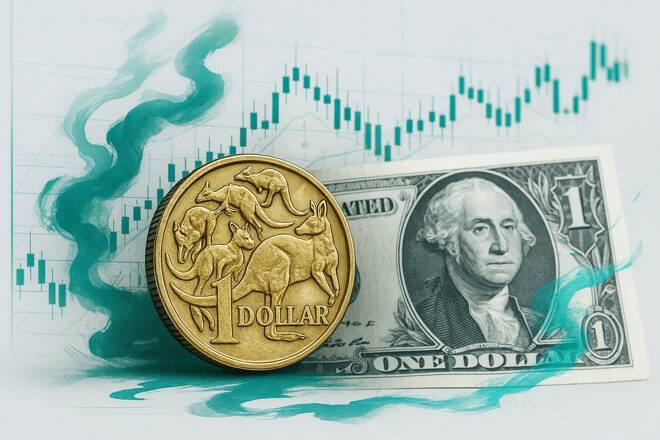
The AUD/USD pair is trading around 0.7114 today on a typically tense day, March 18, 2026. Coming hot on the heels of the Reserve Bank of Australia’s (RBA) bold rates hike to 4.10% yesterday, the Aussie is now trying to make a comeback to its multi-year highs – despite all the unstable global politics around it.
With Iran’s blockage of the Strait of Hormuz and oil prices floating around $100–$103 dollars a barrel, the markets are now shifting their focus over to the FOMC decision later today and what the Federal Reserve has to say about all the brewing trouble in the US economy.
They’re expected to hold firm but with a real “hawkish” tone to show the world just how serious they are about that nasty stagflationary threat looming.
RBA’s 4.10% Hike: A Narrow 5–4 Split Amid “Hormuz Panic”
The RBA hiked up interest rates by a quarter of a percent on March 17, 2026 for the second time in a row. It’s clear the central bank is fighting to contain a new wave of inflation triggered by all the chaos of the US-Iran war.
The Split Vote: Five of the RBA members voted for a 25-basis-point hike with four against – a very narrow margin indeed. When asked about it, RBA Governor Bullock explained that the members who voted to hold rates actually wanted to keep interest rates quite high – its just a matter of choosing when the next hike should really happen.
Inflation Alarm: The current inflation rate of 3.8% is looking pretty worrying with some economists predicting it could hit a whopping 5% if national petrol prices keep on climbing from $1.71 to over $2.20 per litre.
Policy Divergence: The RBA’s aggressive stance is creating a clear rift between the Aussie’s financial policy and the US Fed’s, which is still struggling with a US labour market that shed a staggering 92,000 jobs not too long ago.
FOMC Preview: Balancing a “Dual-Mandate Nightmare”
As the Federal Open Market Committee (FOMC) signs off on its meeting today (March 18, 2026), Chairman Jerome Powell is staring down a very tough “wait-and-see” situation.
99% Odds of a Hold: The markets are pretty sure that rates are going to remain in that 3.75% to 4% bracket – albeit they’re not thinking that’s a done deal just yet.
Hawkish Hold: The dot plot and Summary of Economic Projections (SEP) are going to reflect higher inflation expectations and a possible delay on any rate cuts that might happen in 2026 till 2027 at least.
War Uncertainty: The whole situation in Iran is causing prices to go up (inflation) even as it’s slowing down the labour market (unemployment is still 4.4% so its still an issue) – making it a whole lot riskier to start easing.
AUD/USD Technical Analysis: Descending Trendline Test at 0.7114 as Fibonacci Confluence Signals Breakout Risk
On the 2-hour chart, AUD/USD is consolidating a key technical points between 0.7110 and 0.7142. Therefore, a descending trendline which is meeting at around 0.618 and 0.786 Fibonacci retracement points. The AUD/USD pair is now trading near 0.7114 after rebounding with solid momentum from the 0.6979 low mark. And now it’s trying to regain short term momentum.
However, the recent recovery in AUD/USD pair is looking positive as technical indicators are supporting it. The price levels has moved back over the 50 days moving average and is now trading above the 200 days MA at around 0.7058. By the way, these are points to a short-term bullish trend. The RSI, leading technical indicator, is above 60. It’s showing that momentum is building to the upside, not just a weak bounce.
Still, the descending trendline is holding for now. If price closes above 0.7142 on the 2-hour chart, it would break the pattern of lower highs and could lead to gains toward 0.7186 and then 0.7240. This would signal a breakout from the larger corrective phase.
If the trendline holds and price fails to break above it, we could see a move down toward support at 0.7083 and possibly 0.7028. This is an important turning point, so waiting for confirmation is more important than trying to predict the next move.
About the Author
Arslan AliTechnical Analysis Expert
Arslan is a finance MBA and also holds an MPhil degree in behavioral finance. An expert in financial analysis and investor psychology, Arslan uses his academic background to bring valuable insights about market sentiment and whether instruments are likely to be overbought or oversold.


