



Bitcoin (BTC) is starting to resemble one of its most bearish post-peak structures from the 2021 bull market, increasing the risk of a more pronounced decline toward the $40,000 level in the coming months.
The 2021 Bitcoin Macro Top Structure is Playing All Over Again
The weekly chart displays a clear fractal: a double-top formation near cycle highs, followed by a sharp decline into a major support zone, a brief rebound, and then a secondary “bull trap” that fails to regain momentum.
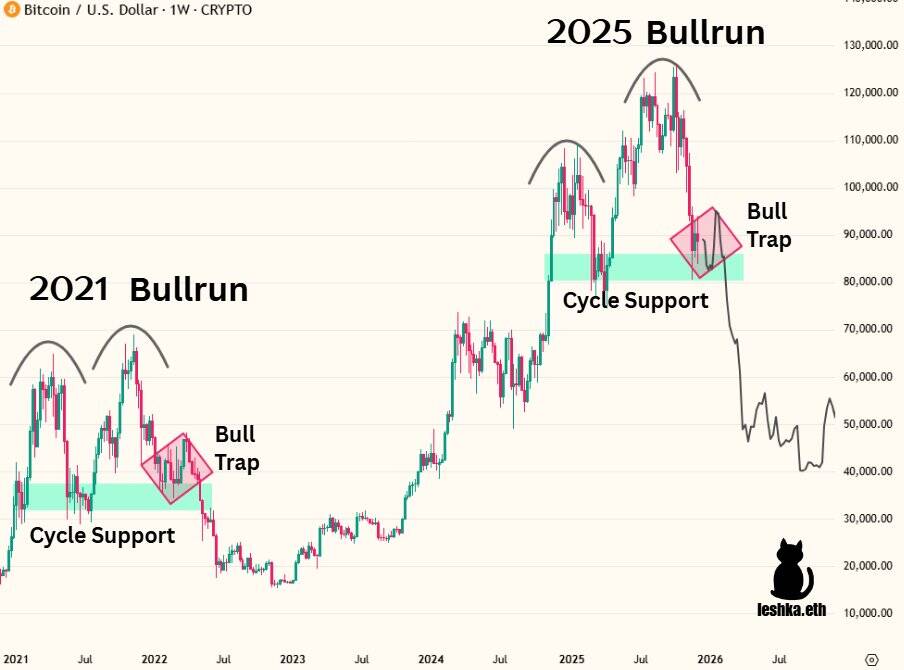
This same pattern, as highlighted by analyst Leshka, unfolded in late 2021, when Bitcoin’s recovery above cycle support around $40,000 was quickly rejected, triggering a prolonged downtrend toward $30,000 and eventually $20,000.
In 2025, Bitcoin has traced a similar trajectory. After peaking above $126,000, BTC slid back into its cycle support area, ranging from around $82,000 to $88,000. The subsequent bounce has so far behaved like a textbook bull trap, with momentum stalling below $95,000, precisely where sellers regained control during the comparable 2021 setup.
If this fractal continues to play out, Bitcoin risks breaking below its support floor and entering a sharper corrective phase.
The measured downside structure initially points toward the $55,000–$50,000 zone, with an extended target near $40,000, mirroring the scale of the 2021 drawdown after its failed bull-trap rally.
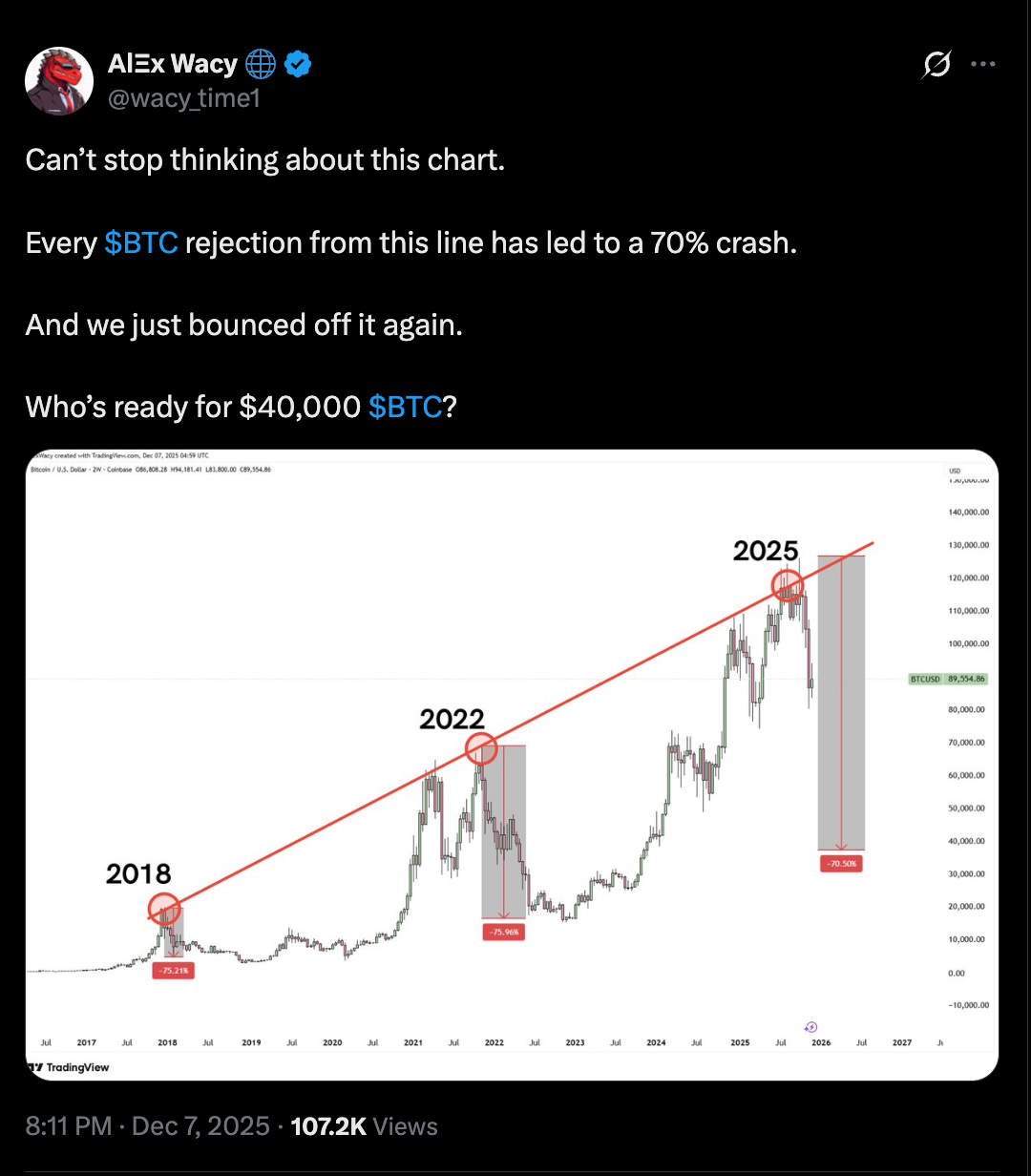
Analyst Alex Wacy also predicted Bitcoin would decline to $40,000, citing its bearish rejection from a multiyear ascending trendline resistance that typically preceded 70% corrections.
Their price targets typically rely on Bitcoin’s four-year cycle formula, which reflects BTC price patterns driven by halving events, i.e., supply cuts trigger boom-bust phases roughly every four years.
Some analysts argue that Bitcoin’s cyclical trends are over, following the cryptocurrency’s institutional overhaul over the past two years. Hunter Horsley, the CEO of Bitwise, said:
Bitcoin Price Forecast
Every new Bitcoin analysis as it publishes, today's technical signal and key levels, live price — on one page.
See all Bitcoin forecasts“Since the launch of the Bitcoin ETFs and new administration, we’ve entered a new market structure: new players, new dynamics, new reasons people buy and sell. I think there’s a pretty good chance that we’ve been in a bear market for almost 6 months now and are almost through it. The setup for crypto right now has never been stronger.”
Binance Inflows Show Unusual Holder Calm Amid Deep Correction
Onchain data adds a surprising twist to the otherwise bearish setup: despite a 36% pullback, total cryptocurrency inflows to Binance remain extremely low.
Historically, mid-cycle corrections, such as April 2024 (post-$73,800 ATH) and December 2024 (post-$100,000 breakout), triggered massive inflow spikes exceeding 140–200 million coins, signaling widespread preparation to sell.
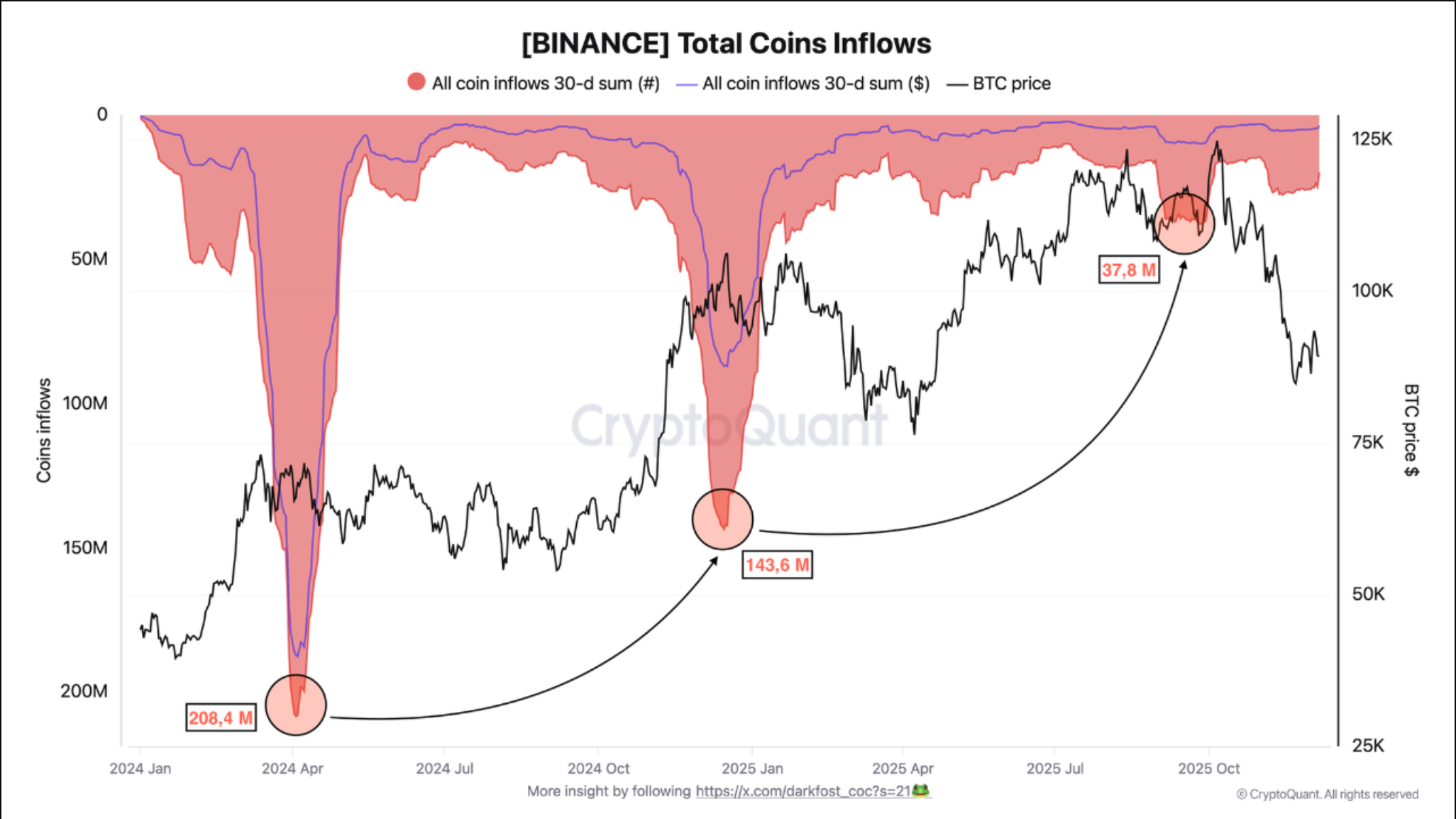
This time, inflows are nearly five times smaller and strikingly stable, even during a deeper correction.
The lack of exchange deposits suggests investors are not eager to exit. Instead, holders appear content to ride out the decline, withholding selling pressure rather than adding to it.
This unusual calmness may ultimately act as a constructive undercurrent. With little evidence of panic distribution, the market could be quietly setting the stage for a more durable recovery once BTC completes its structural retest of cycle support.