Bitcoin (BTC) is losing its risk-on momentum as stalled US–Iran peace talks and a bearish chart setup put the $53,000 area back in focus.

US–Iran Peace Delay Hits Bitcoin Sentiment
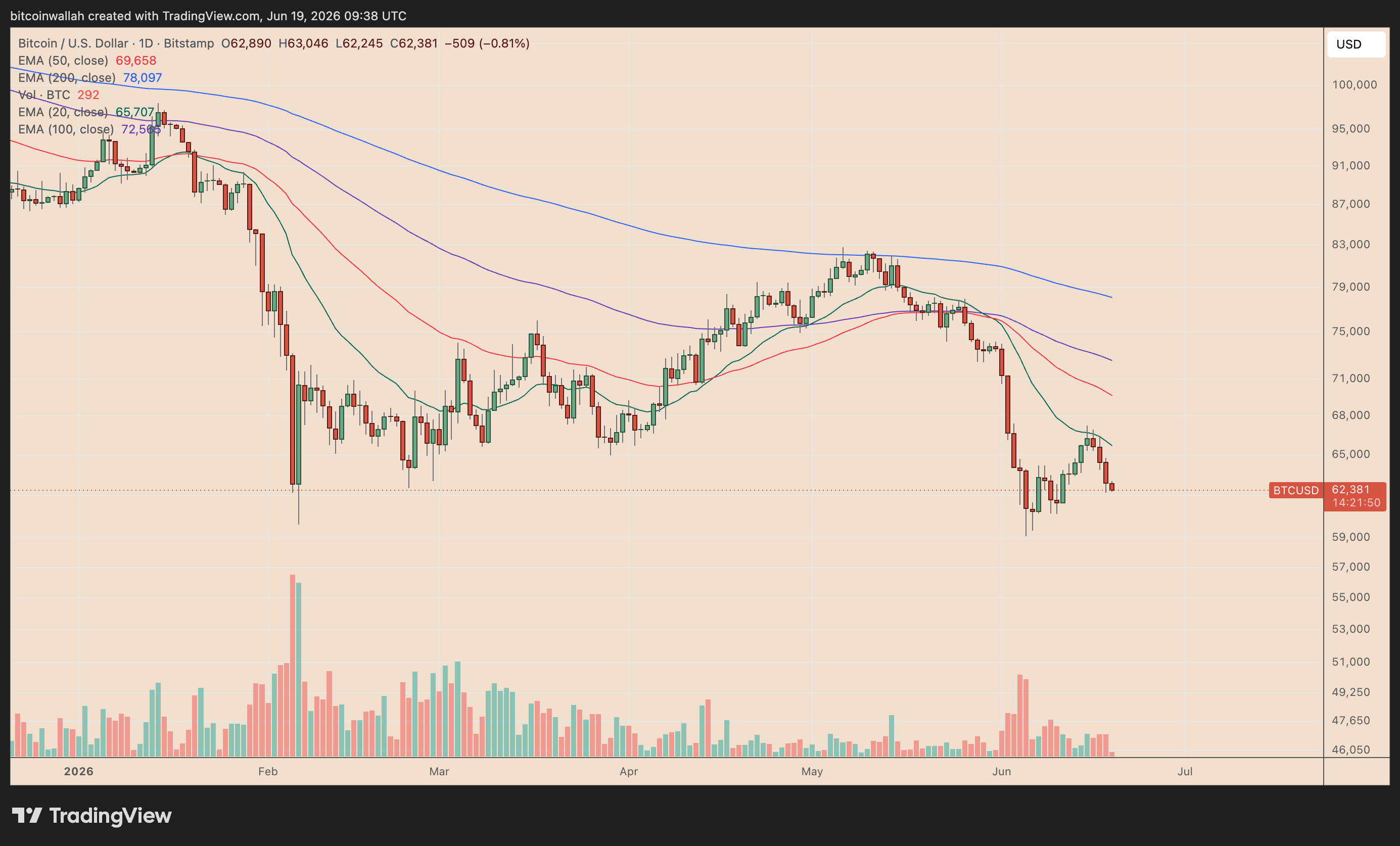
Bitcoin fell below $63,000 on Friday, extending its retreat from this week’s recovery high as traders moved back into defensive mode.
BTC was trading near $62,400, down almost 3% on the day, after sliding from an intraday high near $64,360. The decline kept Bitcoin under pressure near the $60,000–$62,000 support zone, an area that has repeatedly attracted buyers during the June correction.
The latest weakness came as global markets turned cautious following a delay in US–Iran peace talks.
The postponed discussions reduced hopes for a durable truce in the Middle East and revived concerns over energy-market volatility, inflation pressure and broader risk-off positioning.
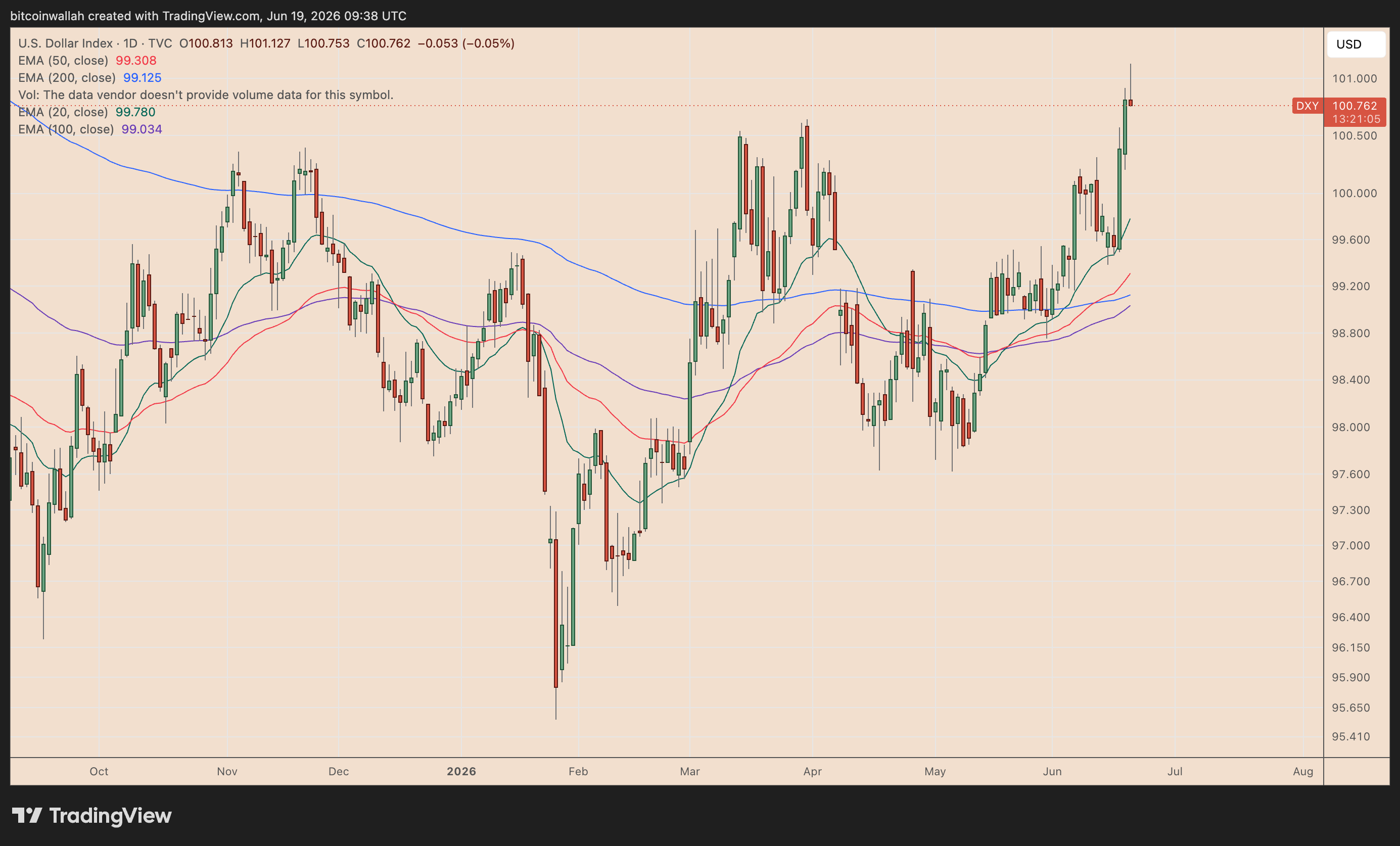
Bitcoin has been trading like a high-beta macro asset. When geopolitical stress rises, traders often rotate toward cash, the US dollar and short-duration government bonds instead of speculative assets.
The Federal Reserve backdrop is adding to that pressure.
The central bank kept interest rates steady this week but signaled that tighter policy remains possible if inflation stays firm. Higher-for-longer rates typically weigh on Bitcoin by strengthening the dollar and making yield-bearing assets more attractive than non-yielding crypto.
Institutional demand has also failed to provide a strong offset.
US-based spot Bitcoin ETFs have witnessed $2.26 billion in outflows so far in June, suggesting large investors are not yet aggressively buying the dip that leaves BTC more exposed to short-term selling pressure.
Bitcoin Price Forecast
Every new Bitcoin analysis as it publishes, today's technical signal and key levels, live price — on one page.
See all Bitcoin forecasts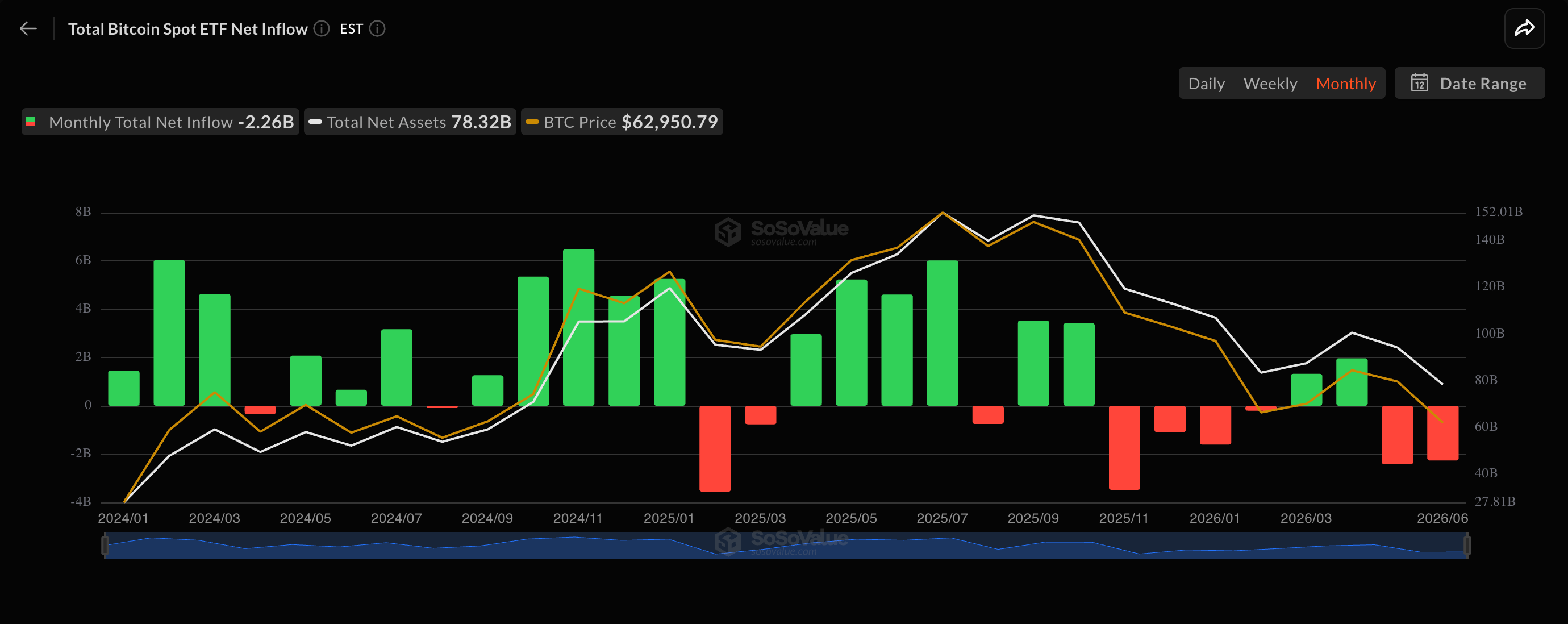
Bitcoin Bear Flag Points Toward $53,000
Bitcoin’s daily chart is also flashing a bearish continuation signal.
BTC appears to have broken down from a bear flag, a pattern that forms when price rebounds inside a narrow rising channel after a sharp decline. In Bitcoin’s case, the flag developed after the early-June selloff toward $60,000, with the rebound stalling below key moving averages.
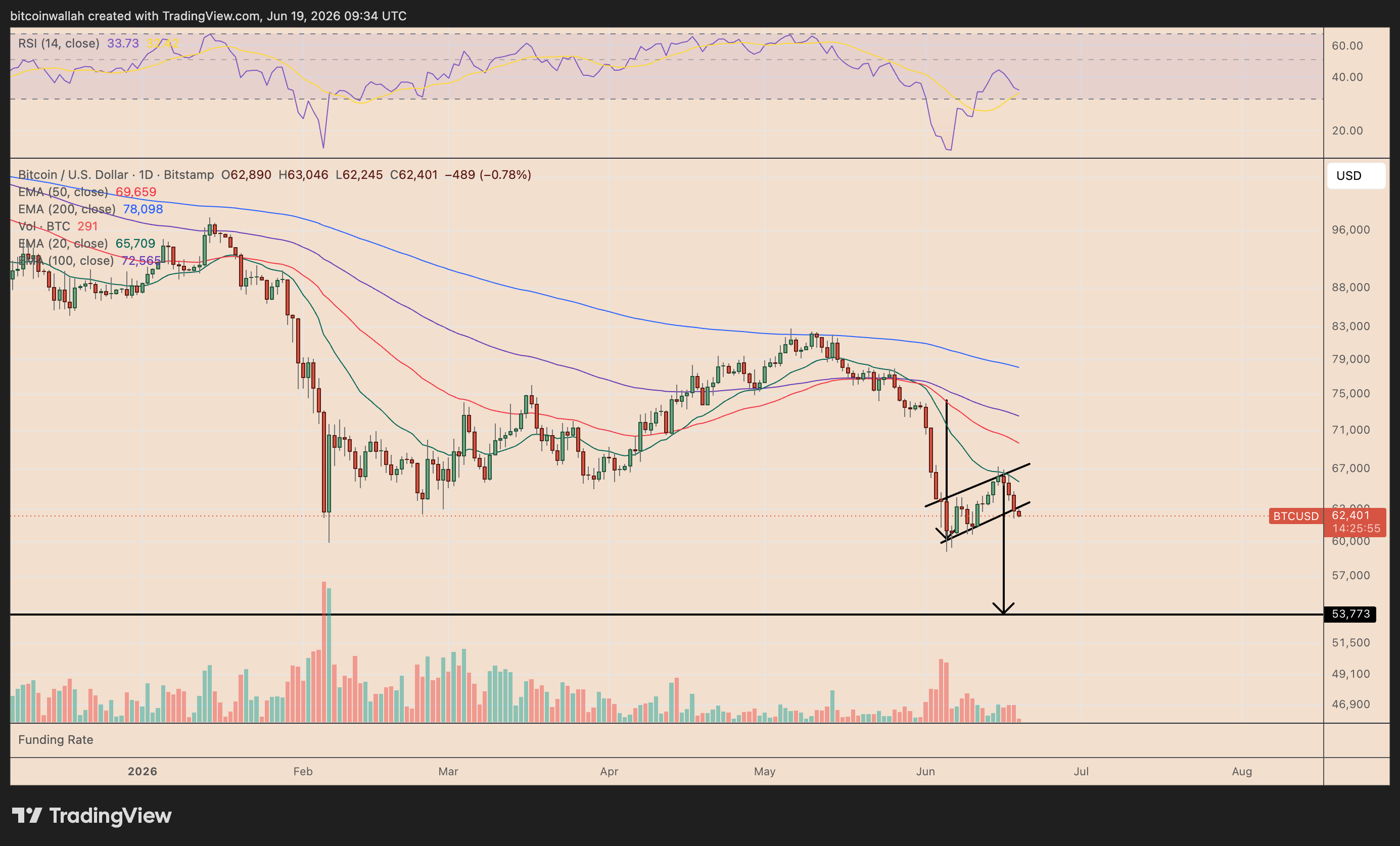
The recovery failed near the 20-day (green) EMA, while BTC remains below its 50-day (red), 100-day (purple) and 200-day (blue) EMAs. That shows sellers are still defending major resistance levels rather than allowing a clean trend reversal.
The breakdown below the flag’s lower trendline signals that bearish momentum may be returning. Based on the height of the prior decline, the measured downside target sits near $53,700.
A daily close back above $65,700 would weaken the bearish setup. Until then, Bitcoin risks extending its decline toward the $53,000–$54,000 support range.