



Chinese economic data spooked investors on Monday, December 15. The loss of economic momentum challenged Beijing’s 5% GDP growth target for 2025. Housing sector woes added to the negative sentiment, leaving Mainland China’s CSI 300 and the Shanghai Composite Index with losses.
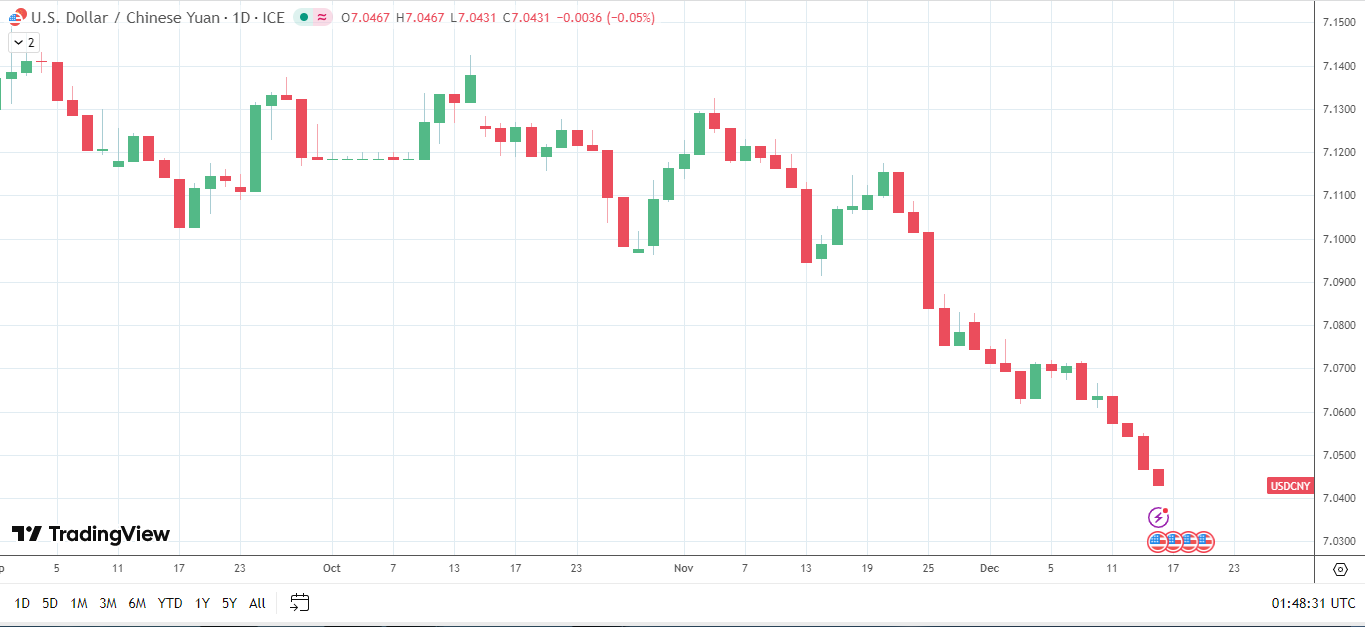
However, the prospects of further stimulus measures from Beijing and monetary policy easing cushioned the downside. Nevertheless, a weakening USD/CNY, combined with levies on Chinese goods, may counter the effect of fresh stimulus. Ineffective policy measures and waning external demand support a bearish near-term outlook for Mainland Chinese equity markets.
Below, I will explore the key drivers behind recent gains, the medium-term (3-6 months) outlook, and the key technical levels traders should watch.
Domestic Consumption Weakens Further
On Monday, December 15, Chinese economic data fueled concerns about Beijing achieving its 5% GDP growth target for 2025. Key economic data included:
- Retail sales data underscored the ineffectiveness of Beijing’s policy measures, aimed at boosting domestic demand. Retail sales growth slowed from 2.9% year-on-year (YoY) in October to 1.3% in November, the slowest since the COVID-19 pandemic.
- House prices fell 2.4% YoY in November after declining 2.2% in October.
- Industrial production rose 4.8% YoY in November, down from 4.9% in October, with fixed asset investment falling at a sharper pace in 2025.
Monday’s weaker figures for November contrasted sharply with November’s trade data, suggesting the rebound in external demand may be temporary. Chinese exports rose 5.9% YoY in November after falling 1.1% in October, while imports increased 1.9% YoY (Oct: 1%).
Structural Imbalances and Policy Challenges
Natixis Asia Pacific Chief Economist Alicia Garcia Herrero commented on the Chinese economic data, stating:
“The Chinese economy is not rebalancing but rather digging deeper into its export dependence. If 2026 brings more protectionism, China’s deflationary trends will be even more entrenched unless a big stimulus is launched, which is not yet in the cards.”
Crucially, the strengthening Yuan will likely affect sentiment, with manufacturers facing intensifying profit margin squeezes. Margin squeezes have intensified as manufacturers lower prices to boost sales. However, lower margins would affect wage growth, the labor market, consumer sentiment, and domestic consumption.
Hong Kong Hang Seng Price Forecast
Every new Hong Kong Hang Seng analysis as it publishes, today's technical signal and key levels, live price — on one page.
See all Hong Kong Hang Seng forecastsLast week, the International Monetary Fund (IMF) lifted its 2025 growth forecast for China from 4.8 to 5.0%, aligned with Beijing’s target. The IMF attributed the revision to macroeconomic stimulus and lower-than-expected tariffs. However, the IMF also stressed the need to address imbalances in the Chinese economy and prioritize a transition to a consumption-led economy.
November’s retail sales figures and a continued reliance on external demand underscore the need for effective stimulus. The housing sector crisis remained another headache for Beijing. Falling house prices, softer wage growth, and margin squeeze-induced job cuts would likely weigh on consumer sentiment.
Weakening consumer confidence would likely weigh on domestic demand, setting the stage for a gloomy end to 2025 in the absence of targeted stimulus and policy easing measures.
Policy Signals and Market Expectations
This month, Chinese President Xi Jinping chaired a Politburo meeting, describing the economy as generally stable. Lawmakers also pledged looser monetary policy and fiscal measures aimed at stabilizing the labor market and boosting domestic demand.
Addressing price wars, reducing borrowing costs, and supporting the housing market would be quick fixes for the economy. Rising margins and lower borrowing costs would likely stabilize the labor market and lift sentiment. An upswing in sentiment would drive domestic consumption and ease reliance on external demand.
On Monday, December 15, Chinese lawmakers reportedly increased the scrutiny of price wars. CN Wire reported:
“China has proposed new curbs on car discounts, signaling tougher oversight of excessive competition in the auto industry after earlier efforts failed to halt price declines. Draft guidelines would bar automakers from selling below cost and restrict dealer discounts that push prices under production costs.”
While timely, markets are likely to demand monetary policy easing and more stimulus to fuel demand for Mainland-listed stocks.
Medium-Term Outlook: Cautiously Bullish as Year-End Rally Falters
November’s mixed economic indicators signal a challenging end to 2025. The housing sector crisis, waning domestic demand, margin squeezes, and levies on Chinese shipments raised concerns about the economic outlook.
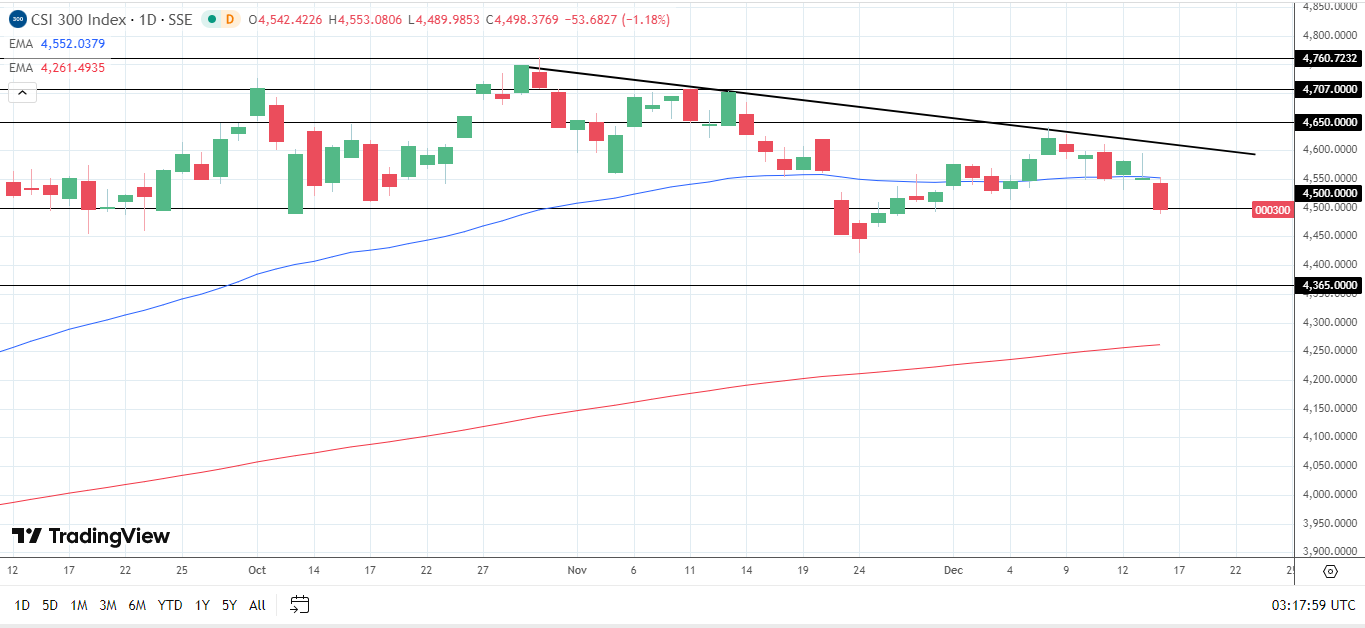
Crucially, the absence of major stimulus from Beijing sent the CSI 300 down from its October 30 and calendar year high of 4,762 to a Tuesday, December 16, low of 4,490, a 5.7% drop.
Despite the latest retreat, the CSI 300 is up 14.47% year-to-date. Effective stimulus measures would likely send the Index to its 2025 high, bringing its January 2021 all-time high of 5,931 into view.
Technical Signals Favor Lower Short-Term CSI 300 Levels
Bearish fundamentals align with technical indicators for the CSI 300. Looking at the daily chart, the CSI 300 dropped below its 50-day EMA, while holding above the 200-day EMA. The EMAs indicated a bearish near-term but bullish longer-term outlook.
Failure to break above the 4,500 resistance level would open the door to retesting the 4,365 support level and the September low of 4,328. Crucially, a sustained fall below the 4,365 support level would expose the 200-day EMA, potentially invalidating the bullish medium-term outlook.
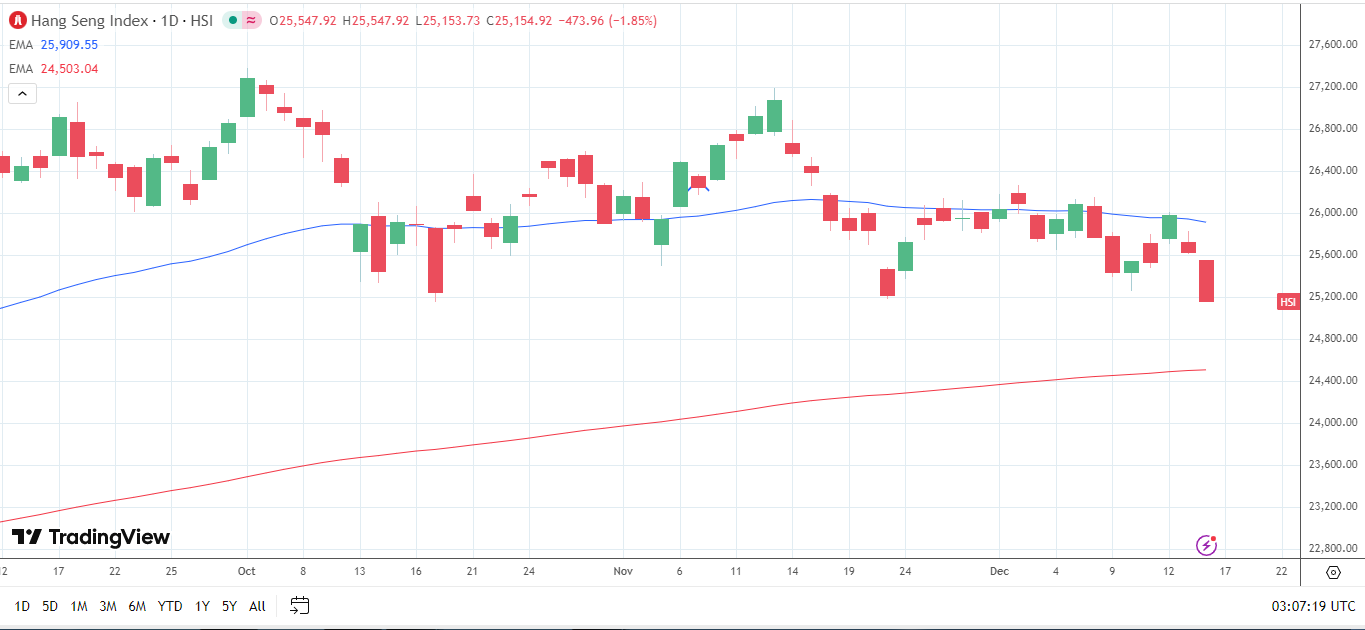
Meanwhile, the Hang Seng Index slid 1.85% in morning trading, breaking below its 50-day EMA, while holding above the 200-day EMA. The EMAs signal a bearish near-term, but a bullish longer-term outlook. Avoiding a drop below the 200-day EMA will be key.
Key Downside Risks to Monitor
Amid rising concerns about the Chinese economy, several scenarios could derail the bullish medium-term outlook, including:
- Beijing delays the rollout of fresh stimulus and monetary policy support.
- Rising US-China trade tensions.
- Weakening demand, intensifying margin squeezes, and higher unemployment.
- China Vanke debt crisis spreads.
Considering these downside risks, the medium-term bullish structure would be invalidated if the CSI 300 drops below the 200-day EMA.
Conclusion: Cautiously Bullish Heading into 2026
In summary, the short-term outlook has turned cautiously bearish, while the medium-term outlook remains constructive.
Easing US-China trade tensions and stimulus pledges will continue to lift sentiment.
Nevertheless, Beijing will need to roll out fresh stimulus and monetary policy measures to address weak domestic demand, the housing market crisis, and a cooling labor market.
Effective measures would likely send the CSI 300 to its 2021 all-time high of 5,931.
Discover strategies to navigate this week’s market trends here.