Copper (XCU) prices increased significantly in 2025 following an explosive rally in gold (XAU) and silver (XAG). In my opinion, this divergence marks the beginning of a catch-up rally in copper, aided by structural supply shortages, the weak U.S. dollar and accelerating demand in the AI and energy sectors. This article presents the macro catalysts, technical structure, and related market confirmations that set the stage for further upside in copper in 2026.
Macro Drivers Align: Dollar Weakness, Rate Cuts, and Metals Surge
Gold and Silver Explode Higher, Leaving Copper Undervalued
The year 2025 was a turning point in history for the precious metals complex. The Federal Reserve lowered interest rates, which depressed the U.S. dollar and set off a massive rally in all hard assets. Gold rose more than 70% in 2025 and reached a price of more than $4,500 an ounce. On the other hand, silver price beat gold and went over 140%, trading above $70, after peaking near $84 in 2025.
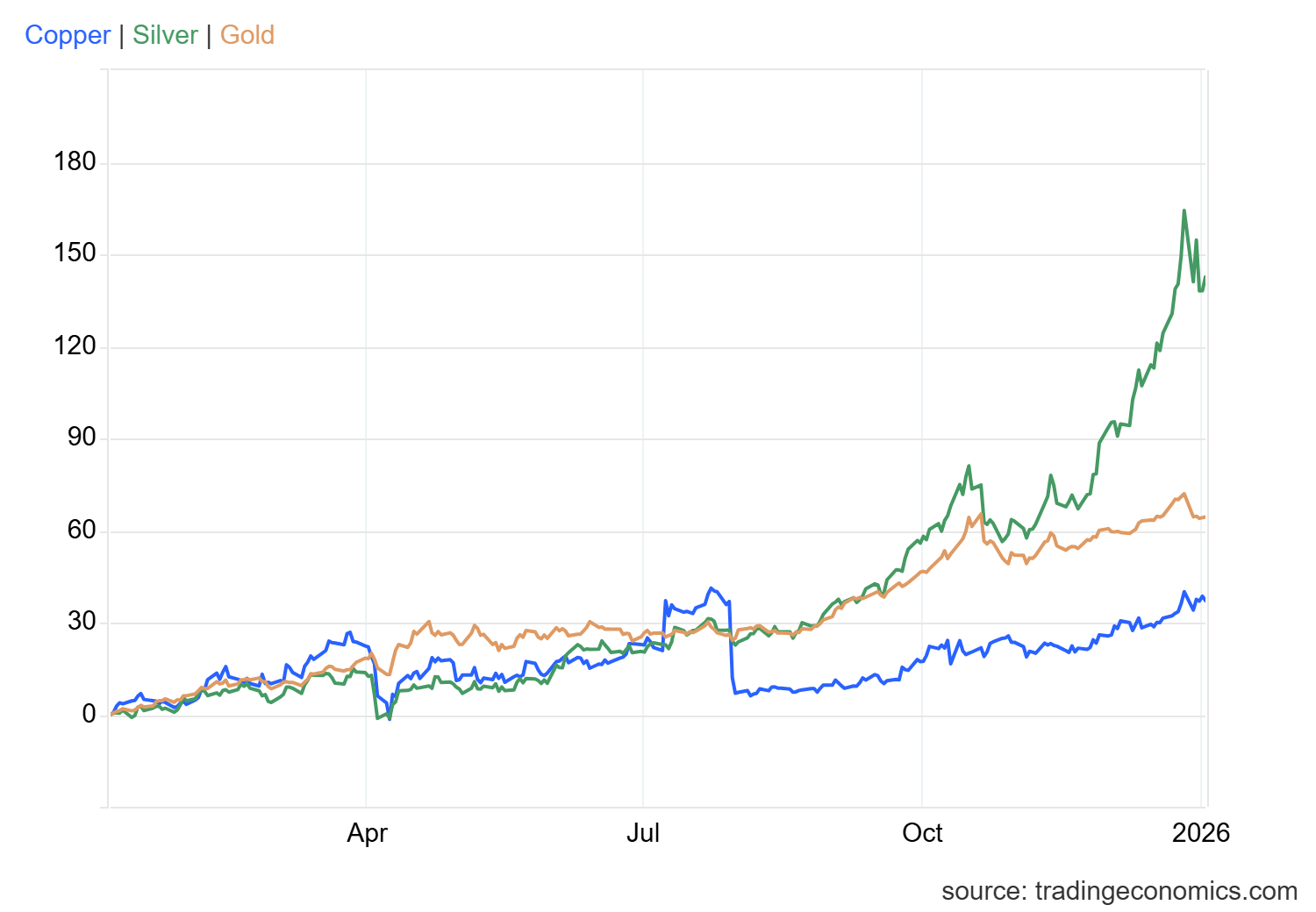
This great surge brought the gold-to-silver ratio to historically low levels, indicating a great momentum across the precious metals space into 2026. The explosive move saw a rush into metals, with new capital chasing parabolic gains. However, despite this frenzy copper is notable for a different reason. It hasn’t broken record highs yet and continues to trade around the $5.70 per pound level leaving it relatively undervalued compared to its peers.
Copper Starts Catch-Up Rally as Macro and China Tailwinds Strengthen
The price of copper has increased by more than 40% in 2024-25 to become the best year since 2009. This rally is fueled by a number of macro and structural forces. These forces are U.S. dollar weakness, tightening supply, and rising global demand associated with energy transition and AI.
Copper Price Forecast
Every new Copper analysis as it publishes, today's technical signal and key levels, live price — on one page.
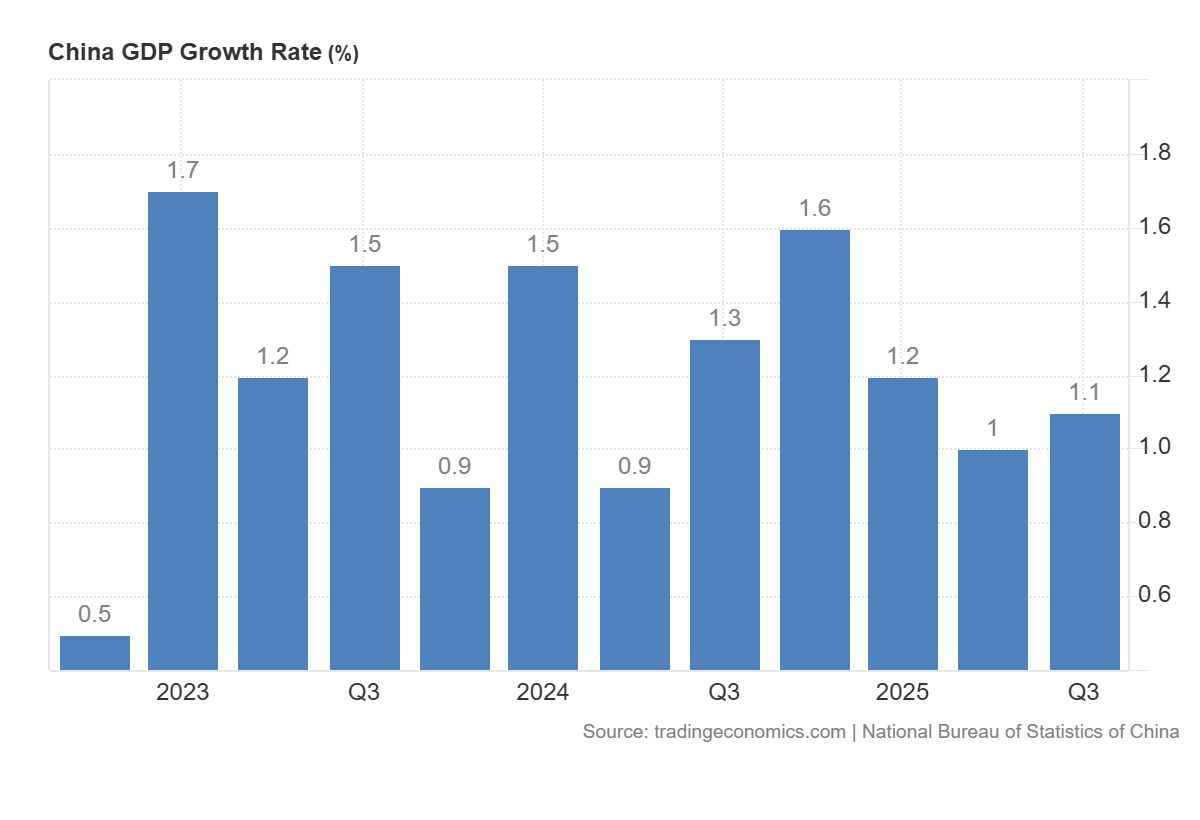
See all Copper forecastsThe Chinese economy is contributing to the soaring copper prices. Q3 GDP beat expectations for a 1.1% increase quarter over quarter. Moreover, the government injected liquidity, supported credit markets and promised future rate cuts. These actions fixed demand and helped boost copper prices in 2025.
In addition, U.S.-China trade tensions are now coming off. The Chinese government has stressed its economic strength, describing the economy as “a vast ocean capable of withstanding storms” despite the challenges in the global economy.
AI Boom and Green Energy Shift Redefine Copper Demand
Traditionally, copper prices follow the economic cycle around the world. This link is now changing as gold and silver are at record levels but copper is also trading close to record levels. This surge in copper prices is being caused by a new price insensitive buyer, the AI sector.
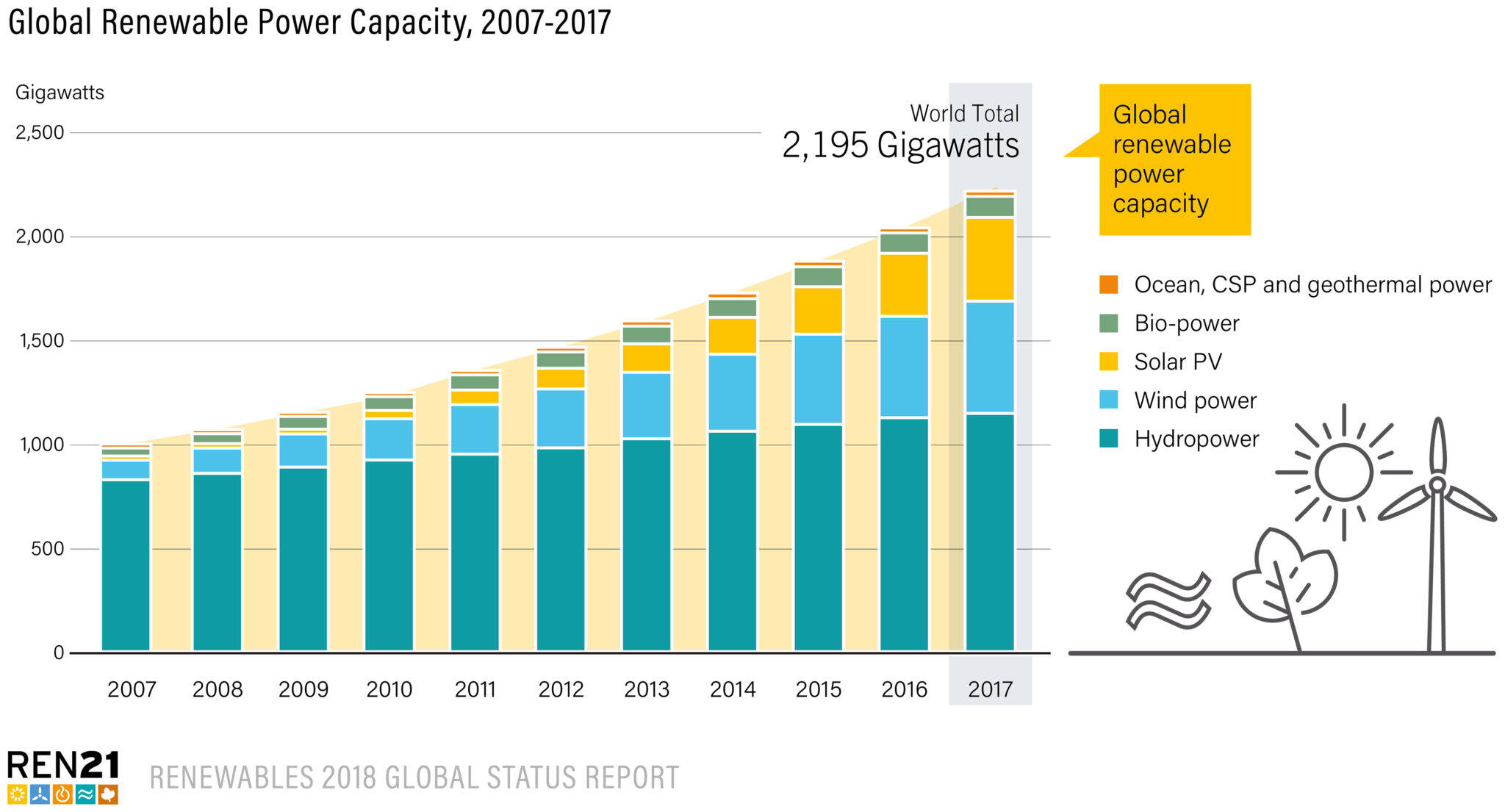
Modern data centers require a lot of copper for power distribution and cooling. As a result, copper demand from data centers could reach more than 572,000 tonnes. In addition, the deployment of green energy is still growing in 2025. EVs, solar, wind and grid upgrades all rely on copper. These trends are creating a new demand base that is sticky and accelerating which could lead to further upside in copper prices.
According to Statista, the demand for copper, lithium, Cobalt, and Nickel is likely to skyrocket by 2040.
Copper Faces Structural Deficits Amid Supply Constraints
The growing demand for copper is running into an inflexible supply chain. New copper mines take more than 15 years to develop. Existing mines are faced with declining ore grades, and there are few large scale projects in the pipeline.
Wood Mackenzie is projecting a refined copper deficit of 304,000 tons for 2025 to 2026. This shortfall is structural and not cyclical. Demand can spike rapidly, but supply cannot follow in a timely manner. This imbalance provides a floor for copper prices. It also turns the narrative on its head – copper is no longer an economic barometer, it is a constrained asset that is critical to global technology, energy and infrastructure changes.
Copper Technical Analysis: Breakout Patterns Signal More Upside
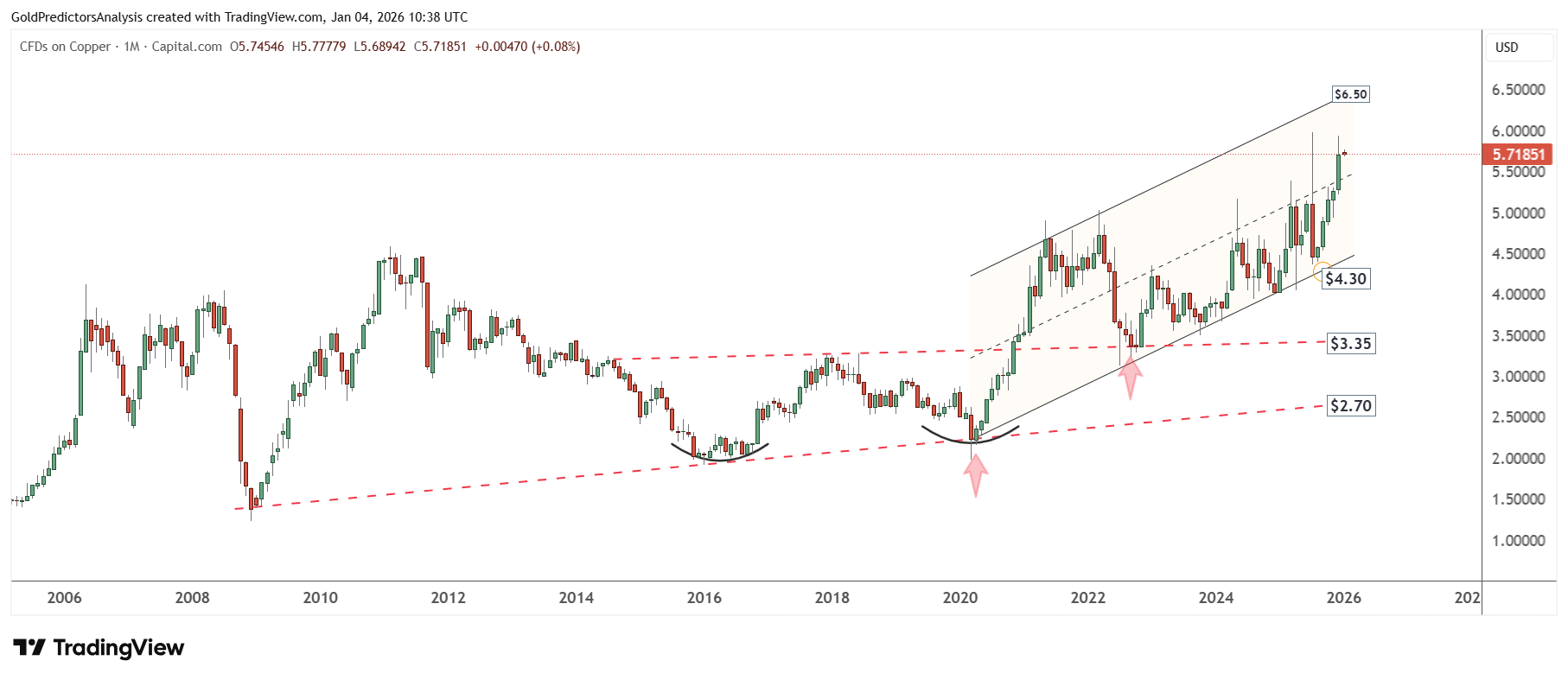
The long term prospect for copper prices continues to be bullish, as seen from the monthly chart below. The price has built a strong bottom in the form of a double bottom pattern in the $2 area. After making the double bottom, the price also broke the neckline at the $3.35 level.
After breaking out from this neckline the price has been trading within the ascending channel pattern. The real target of this channel is still the $6.50 level. Moreover, the price is exhibiting huge volatility after July 2025. The higher volatility around the $3.35 level shows renewed momentum. The ascending channel pattern shows further upside in copper prices in 2026.
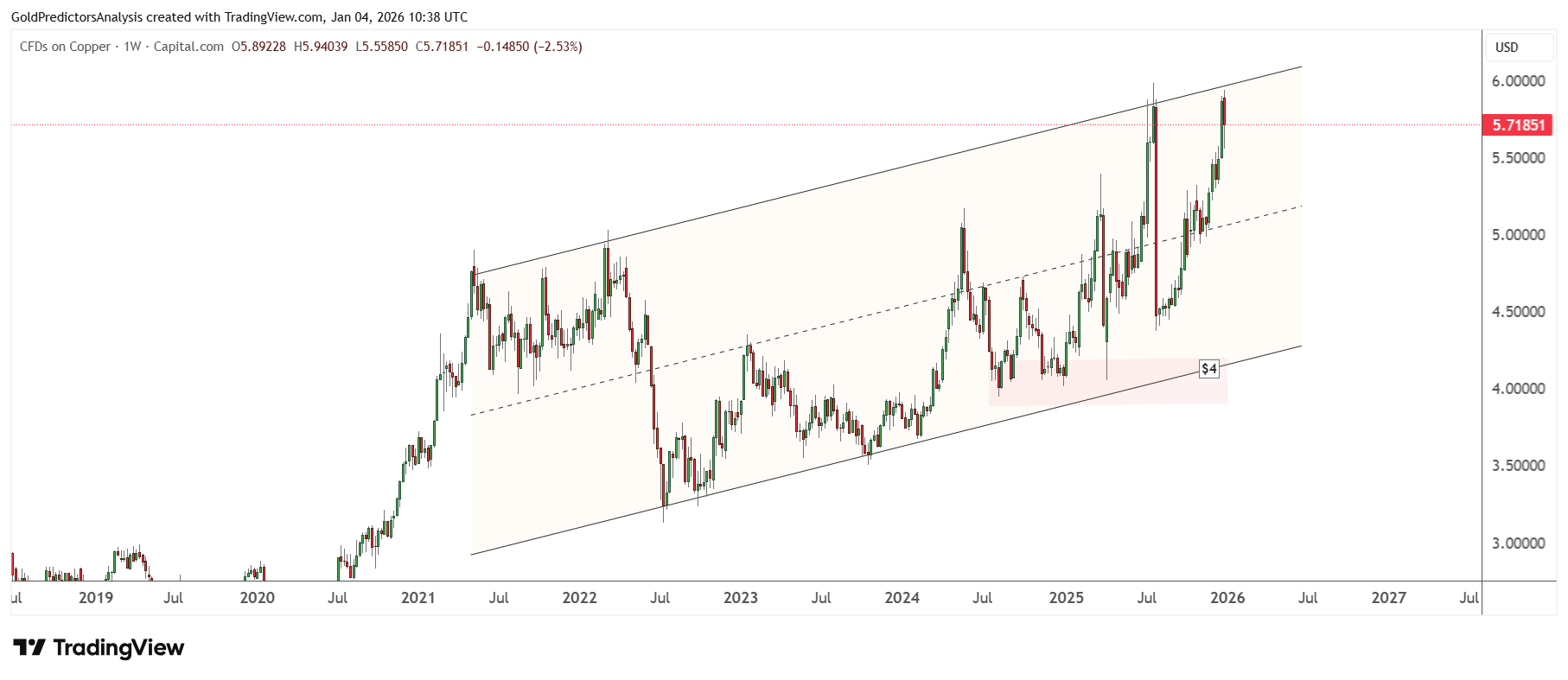
Moreover, the formation of the ascending channel is also seen on the weekly chart. The chart below shows that the copper prices have bottomed around the $4.50 level and shot higher in the last quarter of 2025. The price is nearing the strong resistance area in the vicinity of the $6 level. However, a breakout above this level looks probable. Due to strong volatility, investors can consider buying on dips around the $4 to $4.50 zone, which may be the key support area for the next move higher in 2026.
Related Markets Confirm Bullish Copper Setup
Copper Rallies as U.S. Dollar Weakness Adds Tailwind
The comparison between copper and the USD Index is shown in the chart below on a monthly timeframe. The chart shows that the copper price has been in a bullish trend since the early 2000s. Each major low in copper prices has given a bottom and the price has continued to rise.
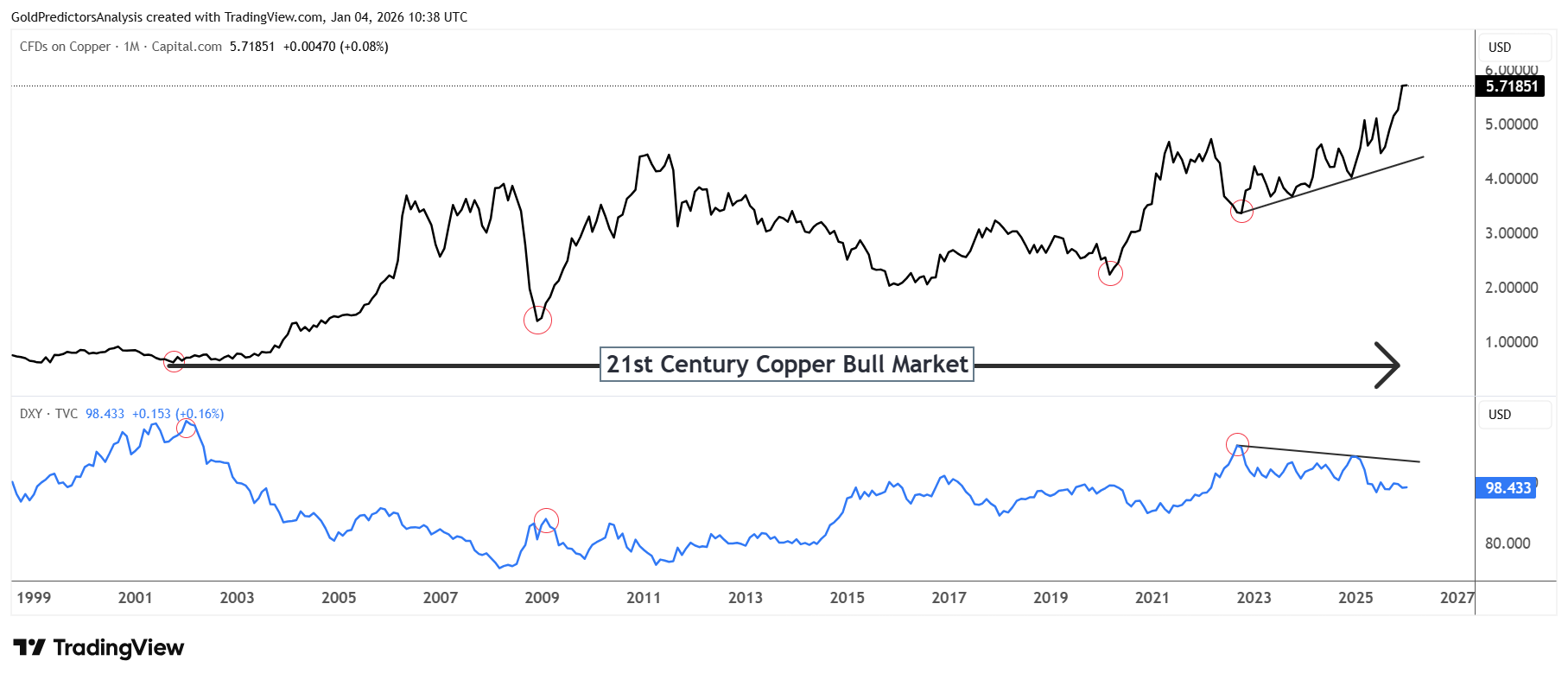
The current breakout above $5.70 level is the continuation of a bullish trend in this 21st century copper bull market. On the other hand, the USD Index has experienced lower highs since its peak in 2022, which shows underlying weakness in the dollar.
The chart shows the negative divergence between copper and the US Dollar, which reinforces the bullish thesis for copper in 2026. As the dollar continues to weaken, it removes headwinds on metals and adds to upside in copper.
Copper-to-Gold Ratio Signals Rotation Toward Industrial Metals
The chart below shows that the copper to gold ratio has been falling in a well-defined descending channel since 2011. This continued underperformance of copper against gold has reached a historical extreme. The ratio is now testing the lower boundaries of this long-term channel, signalling a possible reversal from this level.
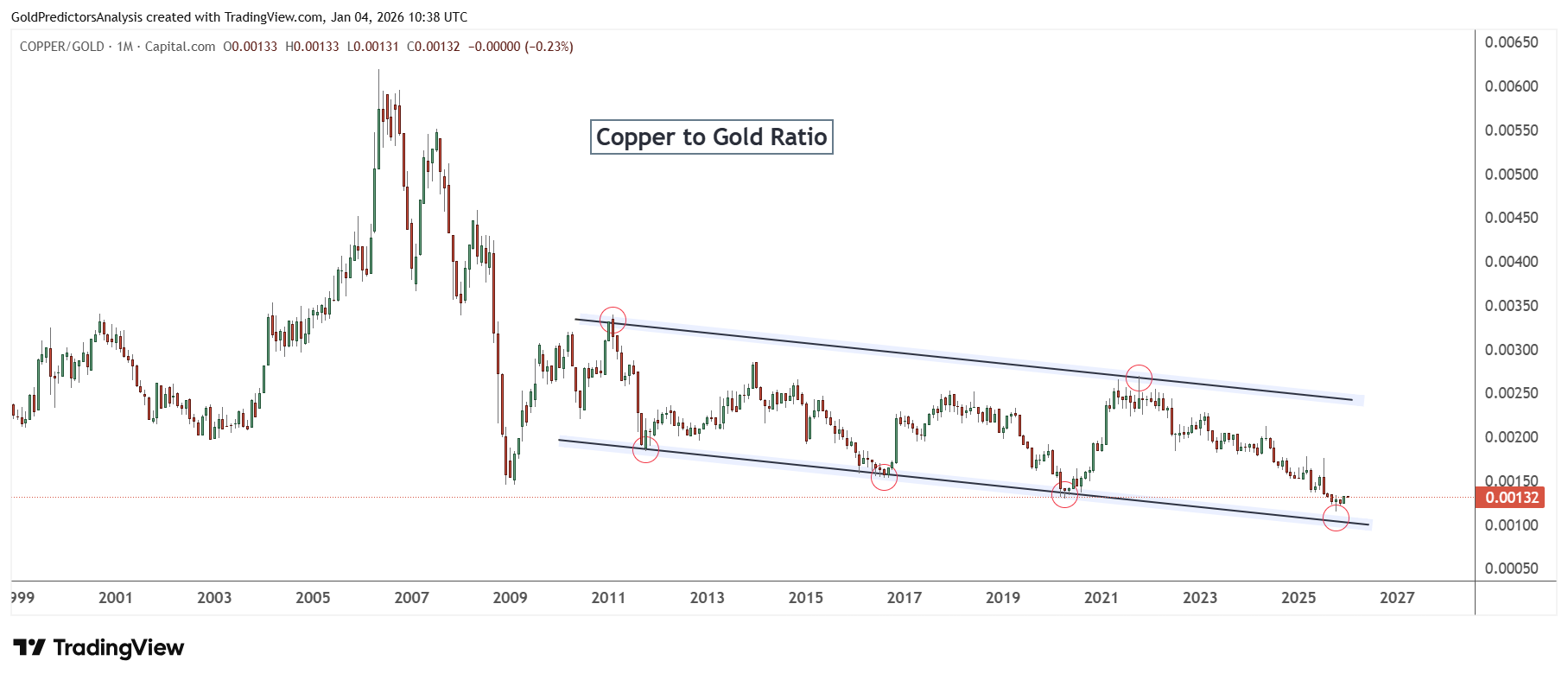
Historically, copper prices have fared better than gold during expansionary cycles and commodity booms. AI, electrification and supply stress are strengthening copper fundamentals. As a result, the ratio has a strong chance of support and turning higher in 2026.
A confirmed bottom in the ratio could lead to a catch-up rally in the price of copper and wider commodity strength. This ratio can also be used to see the rotation of capital since gold and silver have already been in a huge rise. Copper is still undervalued in relation to gold and silver. Its price action around key support levels indicates that it could be the leader of the next leg of the commodity cycle.
Final Thoughts: Catch-Up Rally to Extend in 2026 and Beyond
In conclusion, copper breaking out above $5.70 confirms the start of a new bullish phase. This move has a base case path up to $6.50 in early 2026. It is backed by a devaluing U.S. dollar, increasing demand from the sectors of AI infrastructure and energy transition, and well-documented structural supply deficits.
In the long term, the copper story is still bullish. The metal is no longer just a cyclical barometer – it is now a crucial input into global technology and electrification. In the short term, the price shows volatility and it may provide a pullback towards the $4 to $4.50 zone. A confirmed break below $4 would challenge the bullish outlook. However, copper is well-placed to catch up with the gold and silver rally in 2026 and beyond.