Dow Futures Drop 600 Points as Trump Targets Apple and EU with Tariffs

U.S. stock futures took a sharp dive early Friday after President Donald Trump reignited tariff tensions, this time setting his sights on Apple and the European Union. Dow Jones Industrial Average futuresDow Jones Industrial Average futures plunged 601 points, or 1.4%, while S&P 500 and Nasdaq 100 futures lost 1.5% and 1.8%, respectively.
The market retreat came after Trump announced via Truth Social that iPhones sold in the U.S. but manufactured abroad would be hit with a 25% tariff. Apple shares dropped 3% in premarket action. This marked the first time Trump has singled out a specific company for tariffs this year. Adding to investor concerns, he also proposed a sweeping 50% tariff on all EU imports starting June 1, citing stalled negotiations and a deepening trade deficit.

How Are Tariff Fears Impacting Major Indexes and Bond Yields?
Friday’s market reaction follows a turbulent week already pressured by rising bond yields. The S&P 500 is down nearly 2% through Thursday, the Dow by 1.9%, and the Nasdaq by 1.5%. Long-term yields climbed as the 30-year Treasury hit 5.161%, its highest since October 2023, while the 10-year briefly breached 4.6%. Yields eased slightly on Friday but remain elevated as concerns grow that the renewed tariff push could reignite inflation pressures.
Dow Jones Price Forecast
Every new Dow Jones analysis as it publishes, today's technical signal and key levels, live price — on one page.
See all Dow Jones forecastsWhat Does the Tariff Announcement Mean for Apple and the Tech Sector?
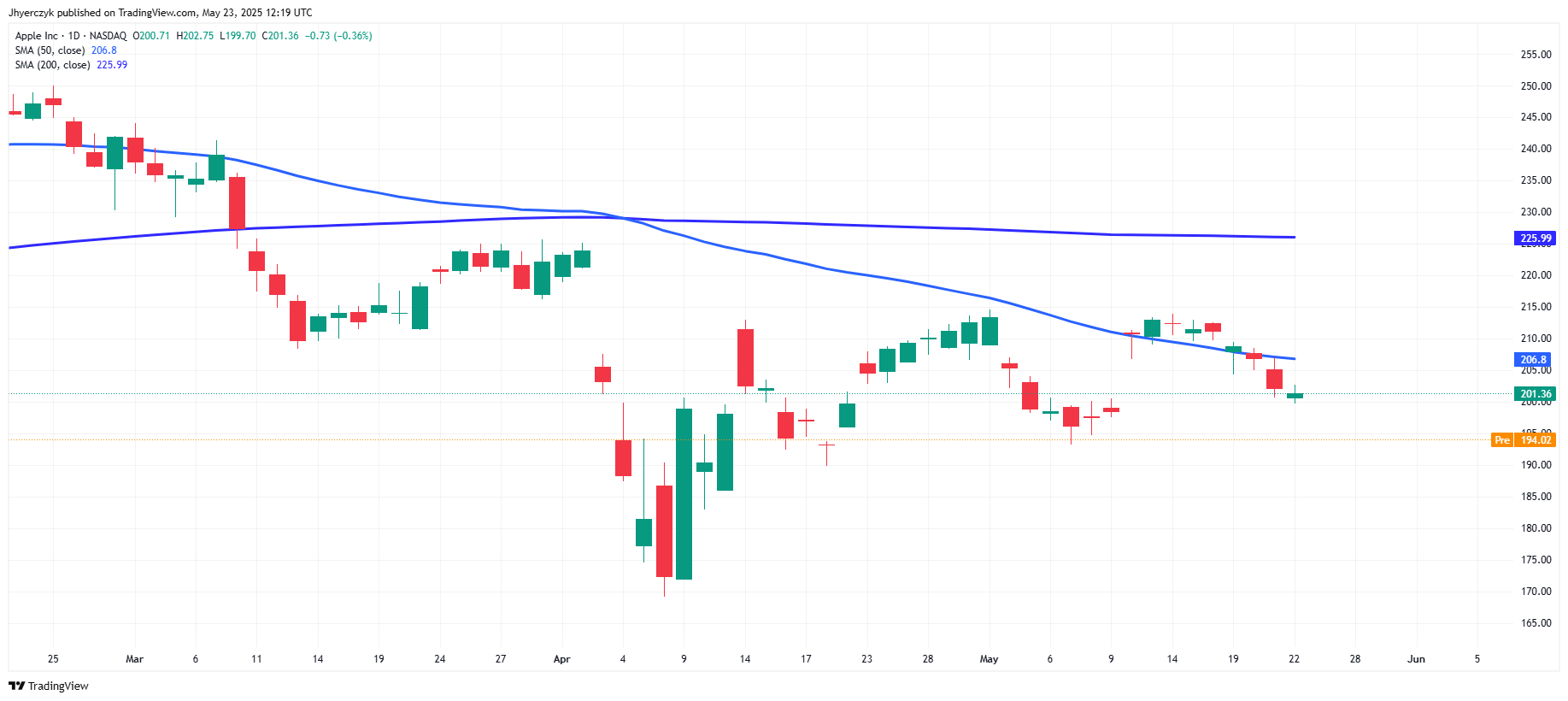
Apple, a bellwether in tech and the broader market, faces renewed cost and supply chain risks if Trump’s tariff threat materializes. The mandate that iPhones be domestically produced or face heavy levies represents a significant challenge to the company’s global manufacturing model. With Apple accounting for a significant portion of the Nasdaq’s weight, further downside in the stock could drag the entire tech sector.
Is the Broader Trade Policy Shift Raising Inflation Risks Again?
Investors had been hoping that a 90-day pause in tariff hikes would lead to trade resolutions, but Trump’s latest comments suggest otherwise. The proposed tariffs on the EU and Apple add to inflation concerns, especially after Moody’s recent downgrade of the U.S. credit rating over fiscal health worries. Higher import taxes could flow through to consumer prices, complicating the inflation outlook and influencing Federal Reserve policy decisions.
Market Outlook: What Should Traders Watch Next?
The latest tariff salvo revives trade war risks just as markets were stabilizing. Traders should keep a close eye on further responses from the EU and Apple, developments in the U.S. Senate on Trump’s tax bill, and any Federal Reserve commentary on inflation pressures linked to trade policy. Yields and tech stocks remain key sentiment drivers in the near term.
More Information in our Economic Calendar.