The US stock market shows strength, but the strength is not without risks. The uncertainty from tariffs, mixed labor data and weakness in the technology stocks keep the investors cautious. Moreover, the strength in the transportation stocks, positive momentum in overtime hours and the improvement in the temporary hiring suggest that the economy is still holding up. This environment creates mixed setup for the Dow Jones and S&P 500. The Dow Jones benefits from the rotation into value and cyclical stocks. But the S&P 500 needs stronger technology leadership to break higher.
Tariff Risks Keep Stock Market Volatility High
Tariffs are one of the biggest threats to the stock markets. The sharp selloff in US stock market in March 2026 indicates how investors react when the policies about trade turn more aggressive. Following the tariff announcement, the S&P 500 plummeted and momentarily came into the bear market zone.
This indicated that investors were not only concerned about profits but also about the course of economic growth. As tariff risks increase, businesses are left with uncertainty in their supply chains, in pricing and in demand. This environment results in a less positive sentiment in stocks.
The market recovery from the partial tariff rollback also showed that investor psychology can turn around in a matter of moments due to a policy change. Investors thought that tariffs might not be as severe as they had first thought and buyers came back in full force. Mega-cap technology stocks have rallied since they are very sensitive to global supply chains and import costs.
But the tariff issue is not completely removed from the stock market. Investors now understand that the news on policy can trigger sharp price movements in either direction. This ensures that volatility remains high for industries that rely on foreign production, consumer demand or foreign income. So, the stock market could continue to respond dramatically to any new tariff news.
S&P 500 Price Forecast
Every new S&P 500 analysis as it publishes, today's technical signal and key levels, live price — on one page.
See all S&P 500 forecastsLabor Market Data Shows Slowing Jobs but No Recession Signal
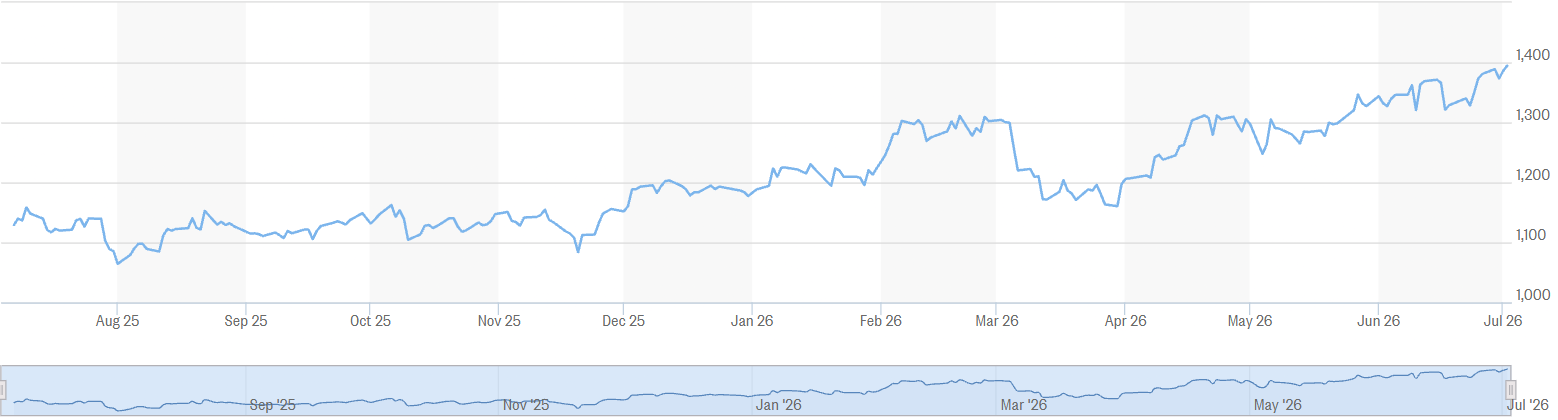
The chart below shows that the US economy added 57,000 jobs in June 2026. This was lower than the 129,000 jobs in May. This drop indicates a sign of slowing job growth. The slower labor market can lead to lower confidence as fewer hiring may suggest that the economy is not as strong as people had thought.
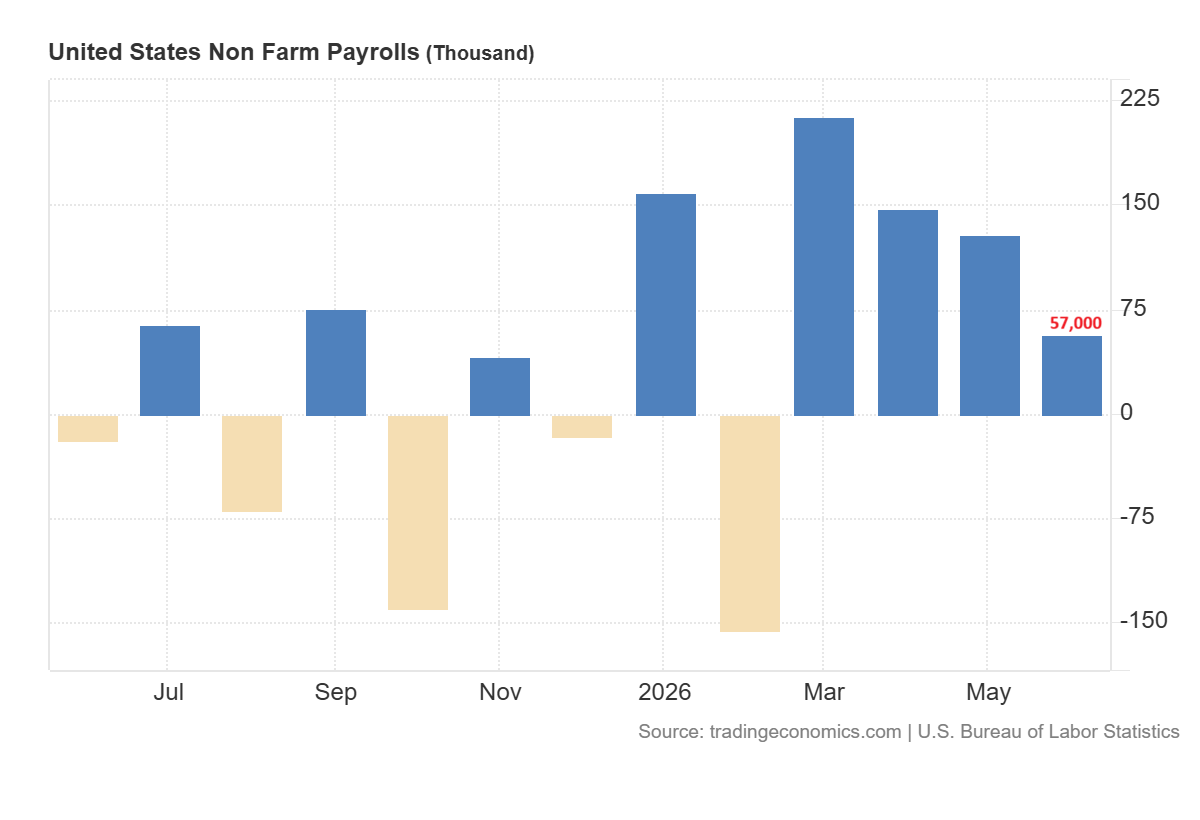
But the report wasn’t all bad news. The unemployment rate dropped to 4.2%, but the continued job claims surged higher to reach 1.81k.
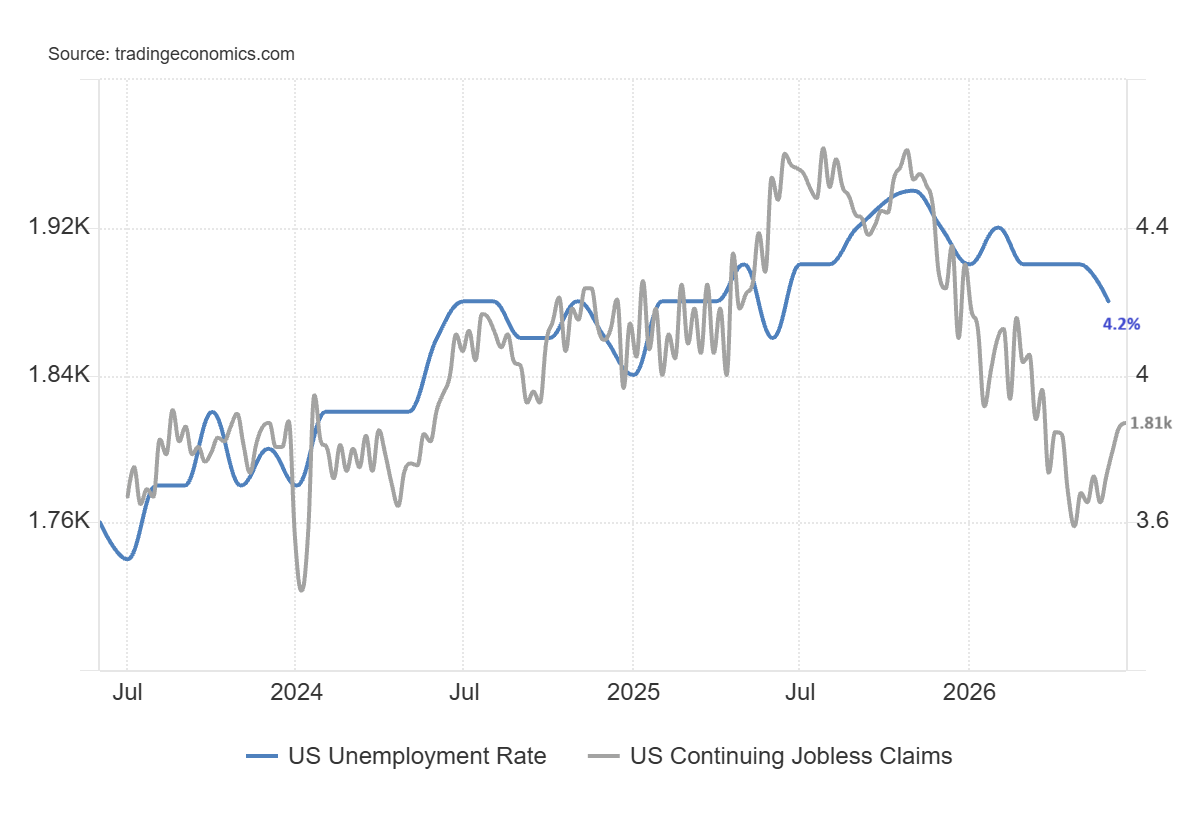
Despite the increase in continued claims, the initial jobless claims remain low at 215k. This indicates that layoffs are still limited but it is taking longer for unemployed workers to find new jobs.
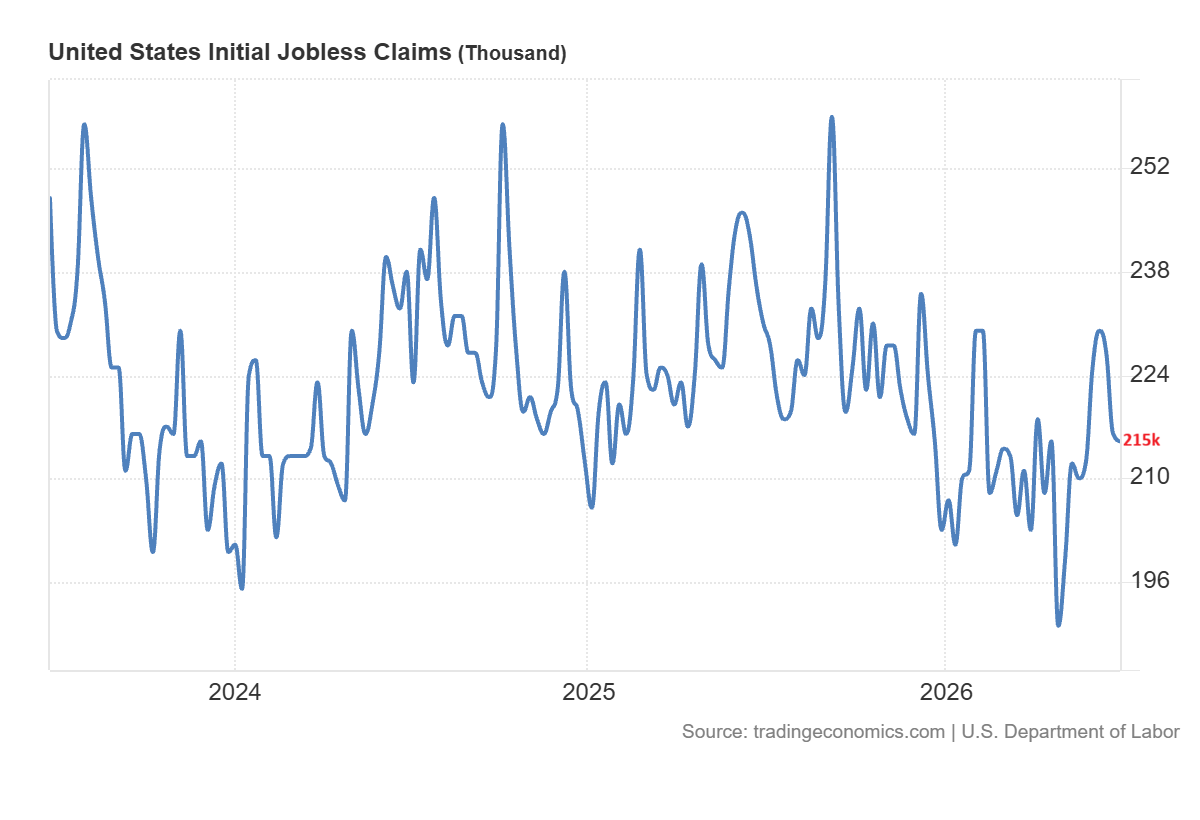
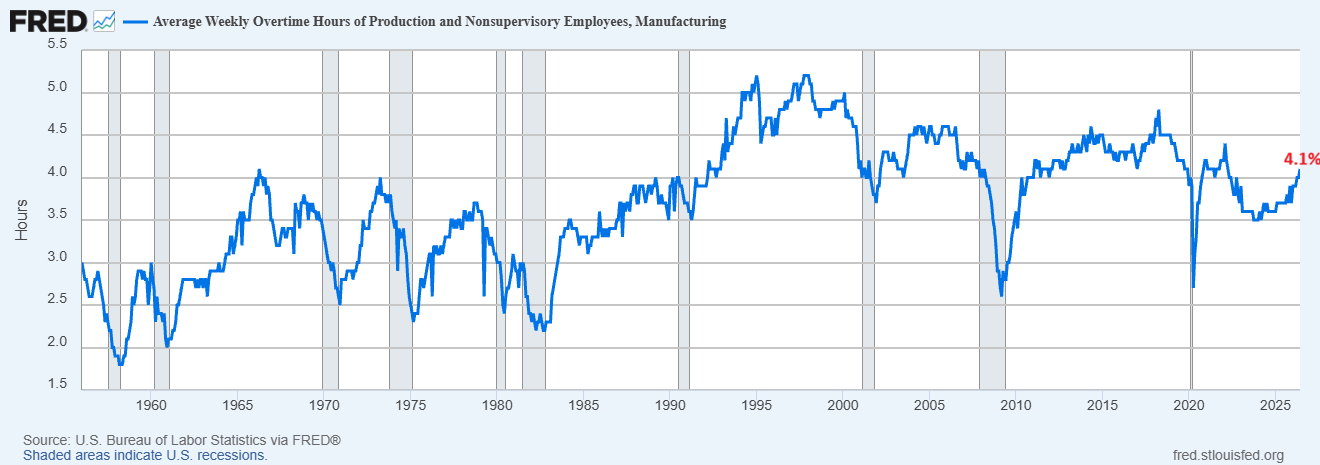
The chart below shows that the average weekly overtime hours for production and nonsupervisory employees increased to 4.1 hours. As overtime increases, it’s a sign that firms are still needing more workers but may not be willing to take on full-time staff due to a high level of uncertainty. This scenario indicates a warning but not a recession.
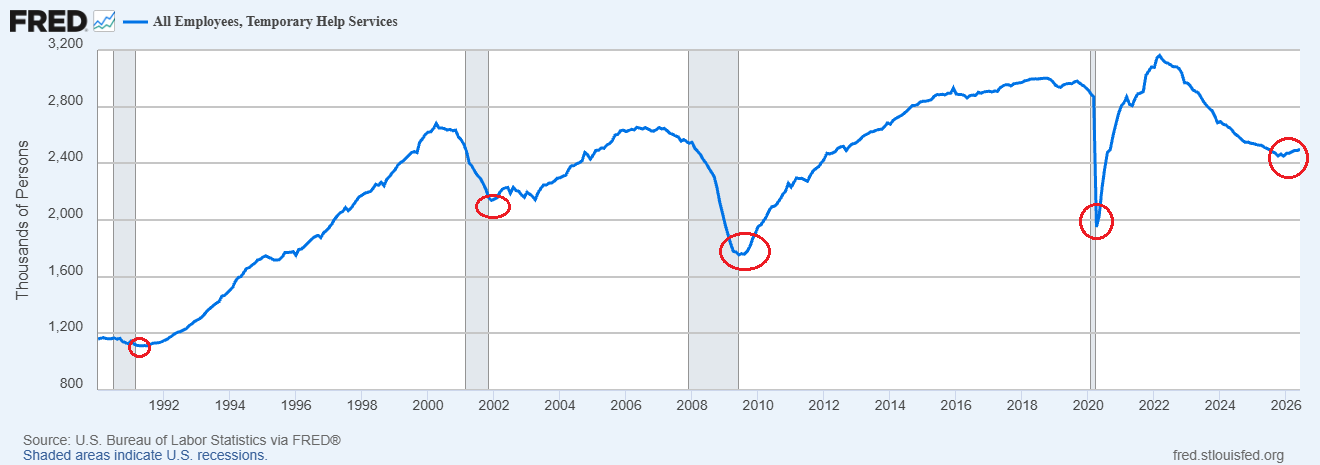
The temporary help services also start to increase from the low levels. This is important as temporary hires can often boost before the full-time hiring strengthens. Employers hire temporary workers initially when they feel that there is going to be an uptick in need but they need flexibility.
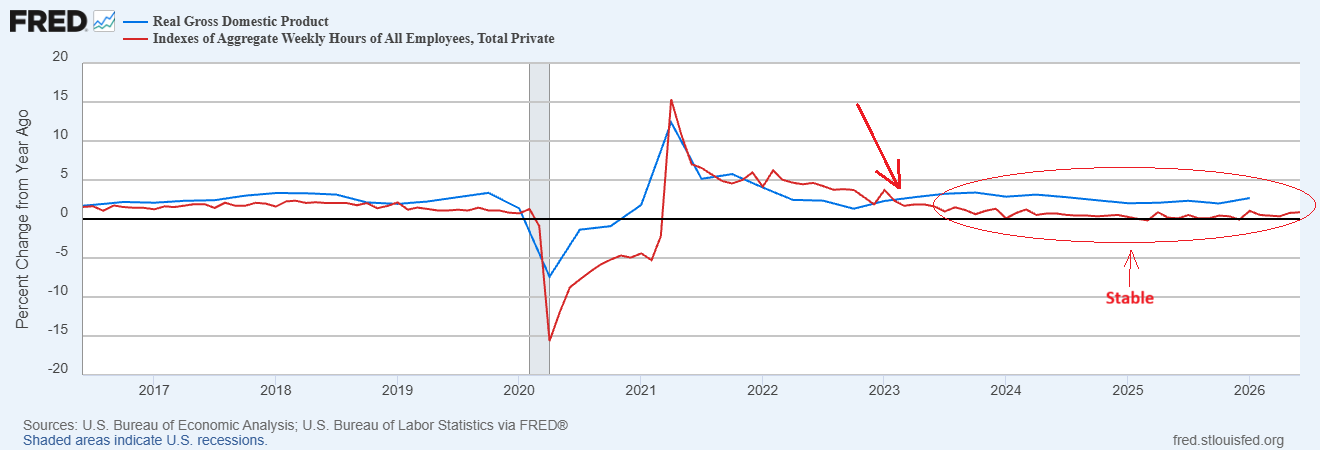
A modest increase in the number of hours worked across the aggregate last year was matched by a larger increase in real GDP as seen in the chart below. This indicates that productivity is on the rise. When the wage pressures are not that great and companies can produce more, margins may not suffer. This is a positive for stocks, but still slow job growth is a cap on aggressive upside.
Market Rotation Supports Dow Jones as Big Tech Slows
Financial markets are giving mixed signals. Bitcoin (BTC) has recovered above the key level of $60,000 which indicates that risk assets have relief in the short term. A break below this would indicate deeper distress in the speculative markets.
The S&P 1500 transportation index remains in a strong uptrend. This is good news as the transport sector is a good indicator of the real economy. The increase in the transportation stocks indicates improvements in goods movement and freight activity. This indicates that the broader demand is increasing.
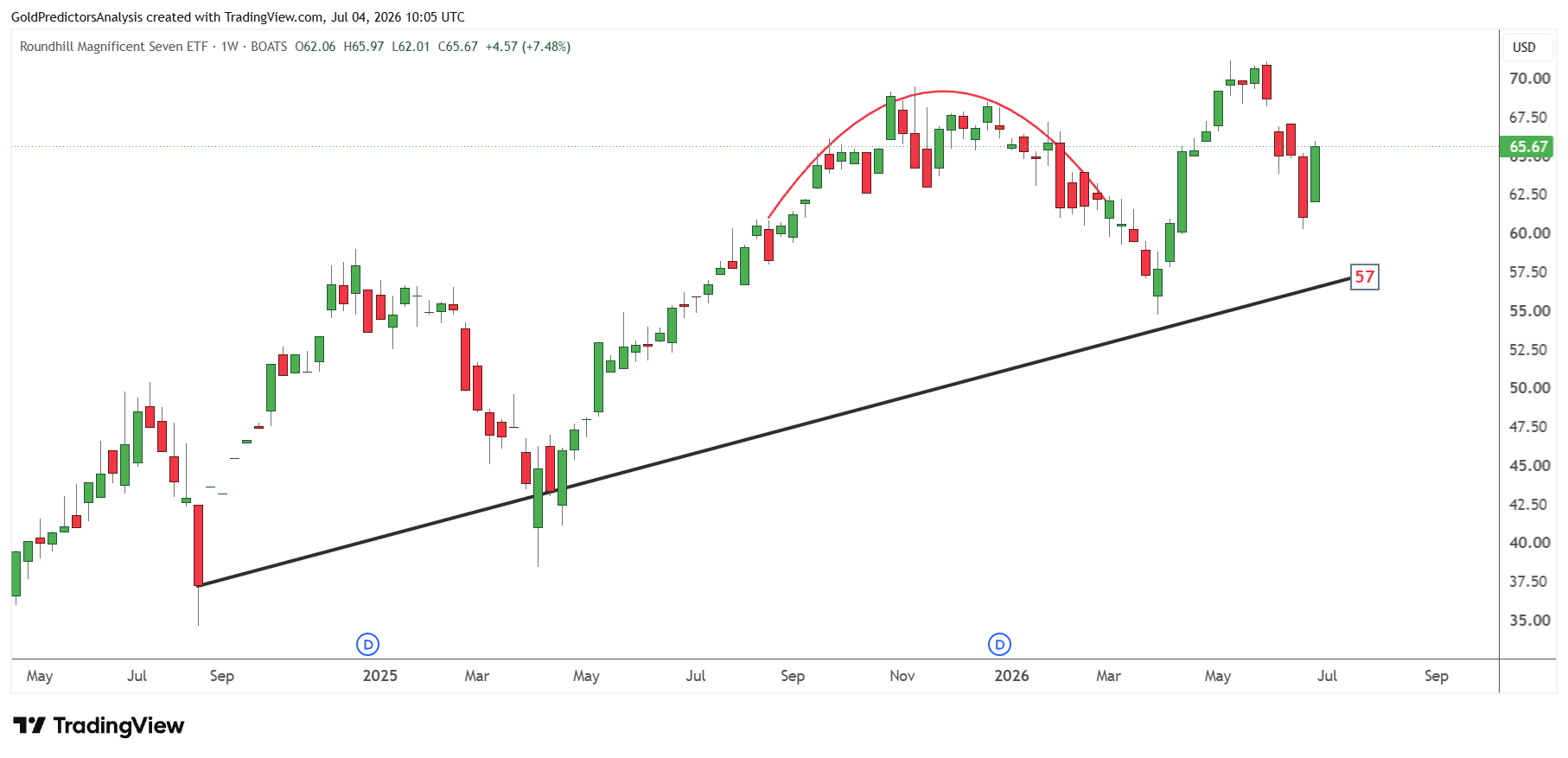
The Magnificent 7 ETF has retested resistance at the 67 level. This is important as these stocks have driven much of the rally over the past few years. The S&P 500 could still struggle to rally if other sectors are strong and these stocks continue to decline. A break above the 71 level will indicate a continued rally in S&P 500.
Dow Jones Forecast: Rotation and Transport Strength Support New Highs
Rotation Into Value Stocks Supports the Dow Jones
The Dow Jones Industrial Average hit a new all-time high last week. This indicates that investors have an appetite for buying economically sensitive and value stocks. The strength in transportation stocks also supports Dow Jones as it indicates that broader business activity remains strong.
The Dow could continue to outperform as investors shift holdings from expensive technology stocks. Industrials, financials and other cyclical stocks could see more capital flows. This rotation can allow the Dow to strengthen even if the S&P 500 faces pressure due to slowdown in technology.
But the tariff risk is important for the Dow Jones. Many Dow companies have global supply chains and also have international exposure. If tariff uncertainty escalates, it may trigger profit taking from the record level. Stable trade policy and better earnings support are required to maintain strength in the Dow Jones.
Dow Jones Bullish Pattern Points to 55,000
The long term outlook for the Dow Jones remains strongly bullish as the index formed an inverted head and shoulders pattern in 2022 and 2023.
The breakout in November 2023 triggered another strong surge by forming broadening wedge pattern from 2023 to 2026.
The strong consolidation patterns within this wedge and the formation of support around 45,000 indicate that the index is targeting 55,000 after breaking 50,000.
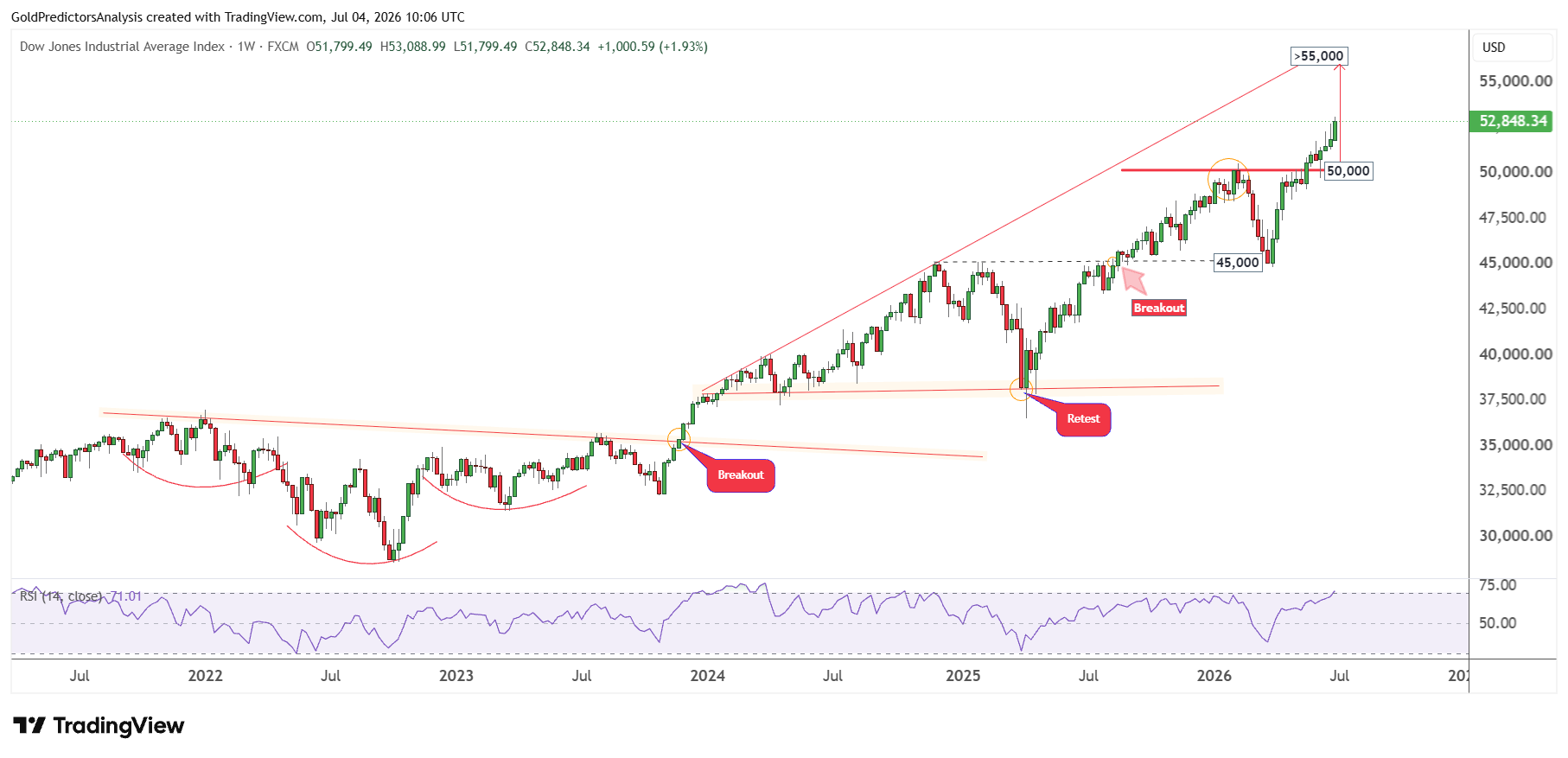
As long as the 50,000 level holds, the next move in the Dow Jones will likely be towards 55,000 as discussed in previous updates.
This bullish structure is also observed on the daily chart as the drop in March 2026 produced a perfect buy signal at the 45,000 level and triggered a V-shaped recovery.
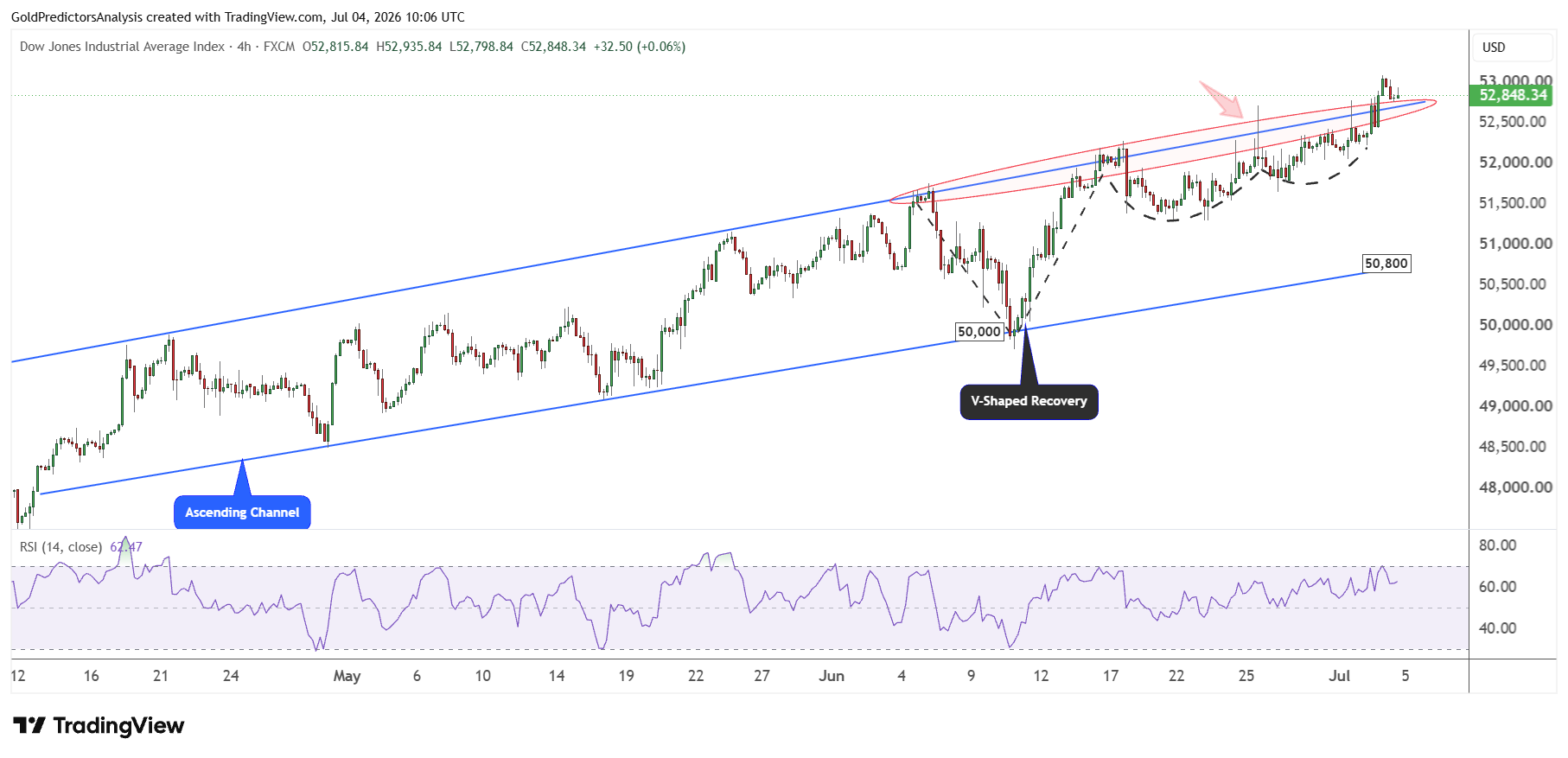
After forming the V-shaped recovery, the price broke the 50,000 area. After the breakout, the index has been trading within an ascending channel pattern. The index is currently overextended in the short term near 53,000.
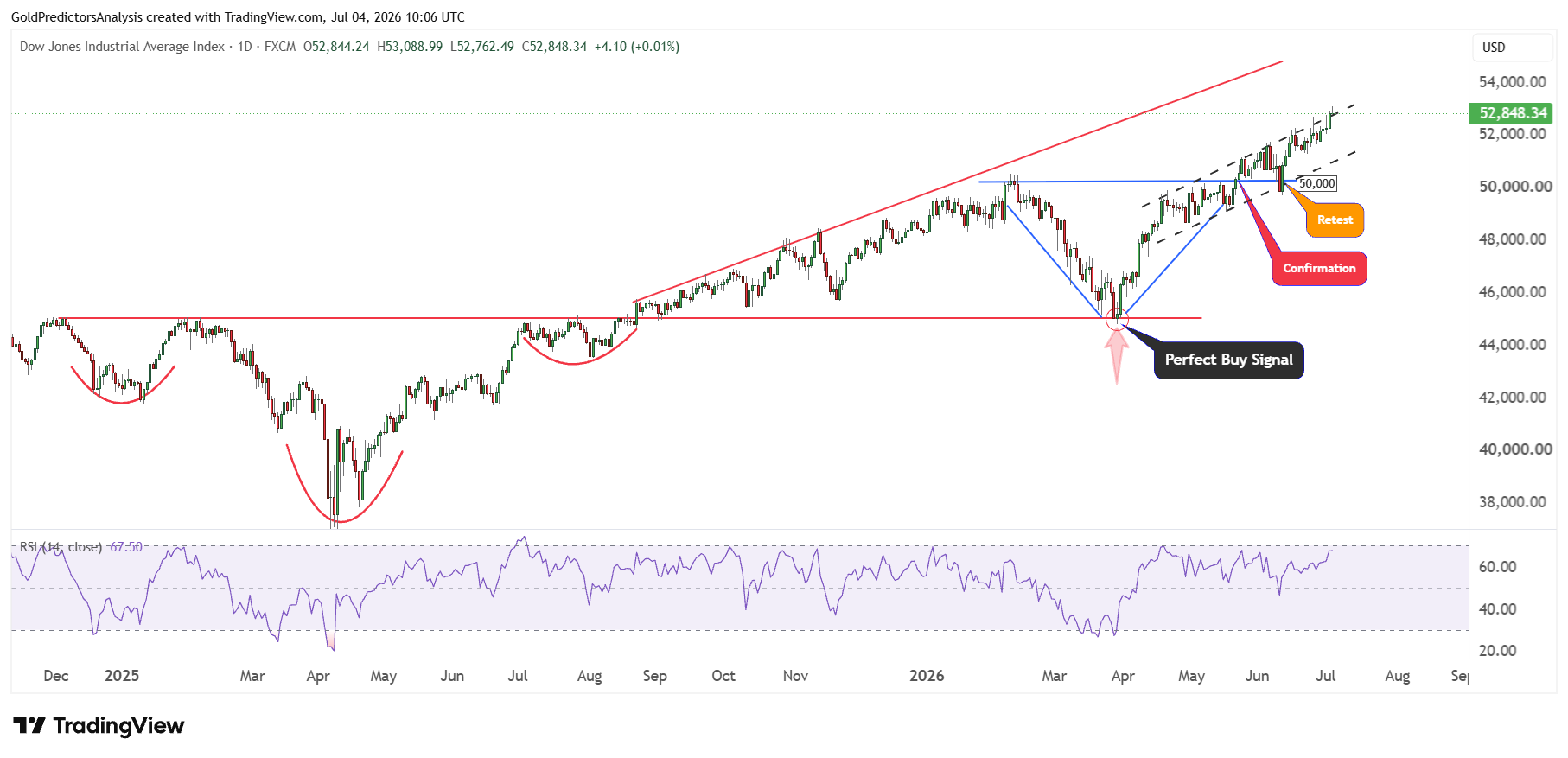
The formation of the inverted head and shoulders pattern suggests that the next move in Dow Jones will likely be towards 55,000. This ascending channel pattern is also confirmed on the 4-hour chart. The chart shows a V-shaped recovery from 50,000 within the support of the channel.
After the formation of the V-shaped recovery, the index formed a rounding bottom pattern. This indicates a strong bullish price action in the short term. The price is now attempting to break the ascending channel pattern which suggests that the next move in the Dow Jones may be even stronger than the recent rally. But any correction back towards 50,800 will likely form another bottom for the next move towards the 55,000 area.
S&P 500 Forecast: Big Tech Weakness Keeps 7,600 Breakout in Focus
Mega-Cap Technology Weakness Slows the S&P 500 Rally
S&P 500 has recovered strongly from the March 2026 selloff. But the mega-cap technology stocks have been dropping in June, which keeps the index under consolidation below 7,600.
If the technology stocks continue to pull back from their resistance, it may create challenging environment for the S&P 500. Nvidia Corp. (NVDA), Microsoft Corp. (MSFT), Amazon Inc. (AMZN) and Alphabet Inc. (GOOG) have significant shares in the S&P 500. If these stocks remain in a correction mode, the index may consolidate further before the next move to 8,000. Even if the economy remains strong, the poor tech leadership would slow the path forward.
But the downside could be relatively limited as long as the economy keeps improving. The strong transportation stocks, rising overtime hours, and improving temporary employment suggest that the economy is not breaking down. The outlook is cautiously positive for the S&P 500 as strength in the broader market may offset the weakness in mega-cap technology stocks.
S&P 500 Bullish Pattern Points to 8,000
The S&P 500 shows a strong bullish pattern as seen in the daily chart below. The index formed a strong inverted head and shoulders pattern in 2025, which was broken at the 6,000 level. After breaking from the 6,000 level, the index formed an ascending broadening wedge pattern from July 2025 towards the recent highs.
The formation of a V-shaped recovery in March 2026 and a breakout above 7,000 have opened the door for a strong move towards the 8,000 level in the S&P 500.
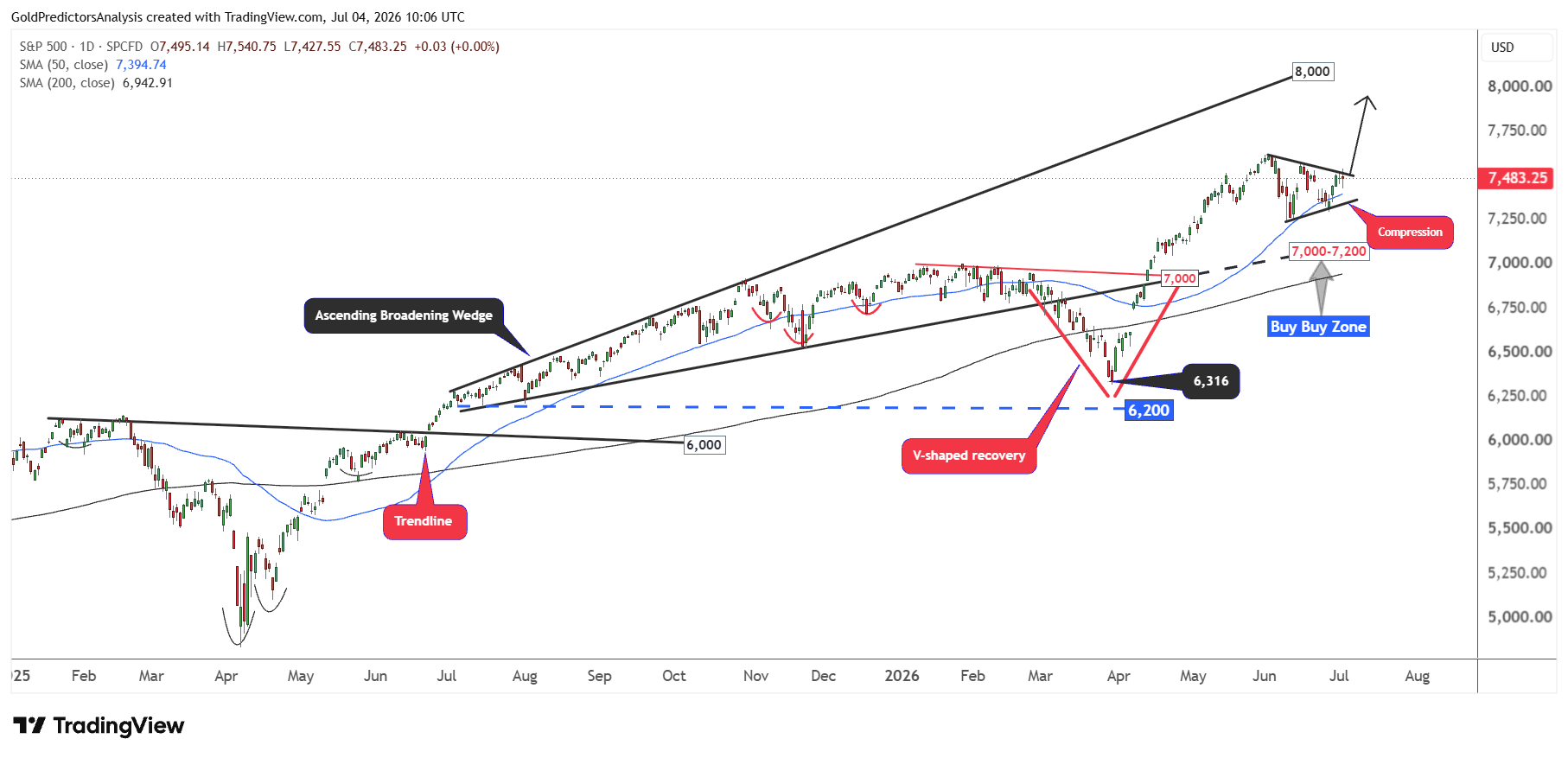
Now, strong support remains at 7,000 to 7,200, which is considered a strong buy zone for investors. But the index has now formed a triangle pattern in June, which indicates price compression. This triangle pattern indicates that a break above 7,600 will likely trigger strong upside move in the S&P 500 in July 2026.
But a break below 7,300 will likely push the index towards the 7,000 to 7,200 area, which is considered a buy zone for the index.
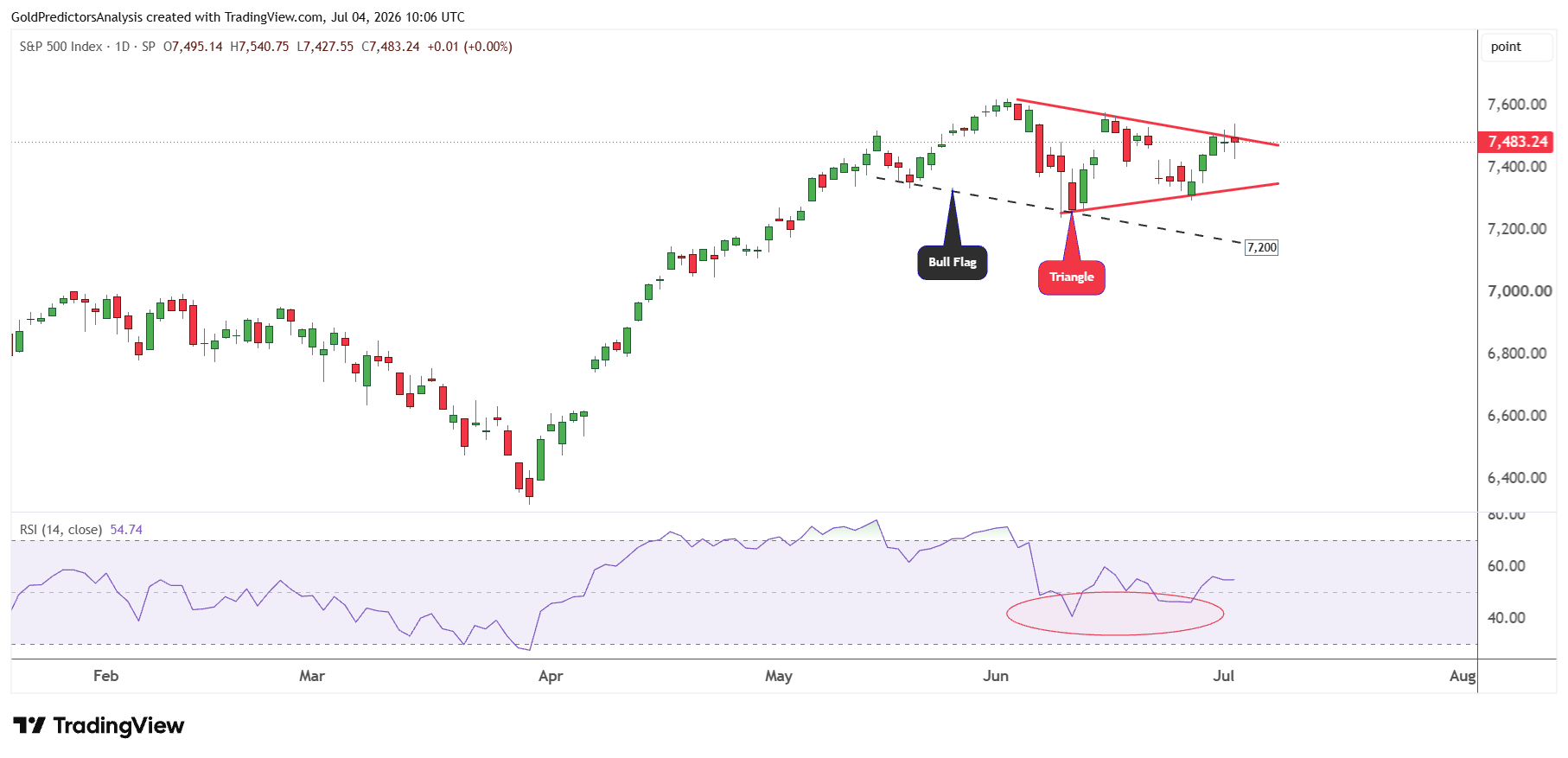
The short-term price action also shows that the S&P 500 is constructing a strong bullish pattern. On one hand, the index is forming a triangle pattern by consolidating from the June 3 highs towards the recent highs. A break above 7,600 will indicate a strong surge in the index towards 8,000.
On the other hand, if the index drops towards 7,200, this will likely act as a bull flag pattern. This correction will likely trigger another move towards the 8,000 level as a strong rally.
But the RSI remains above the mid-level, which indicates that any correction in the S&P 500 will likely strengthen the next move in the S&P 500.
Final thoughts
The US stock market maintains its strength, but investors need to watch the risks. The uncertainty from tariffs can quickly change the sentiment and trigger sharp moves in any direction. The labor market sends mixed signals. The job hiring has slowed, but the low initial jobless claims, rising overtime hours and improving temporary hiring indicate that the economy is not breaking down.
The Dow Jones may continue to benefit from rotation into value, industrial and cyclical stocks. If the index holds above 50,000, the next move in Dow Jones will likely be to 55,000. The S&P 500 also remains constructive, but it needs a stronger technology leadership to break above 7,600 and move towards 8,000. As long as the 7,000 to 7,200 support area holds, any correction may remain part of the broader bullish trend.
Read more: S&P 500 and Dow Jones Face Inflation Risk Despite Trade Relief