
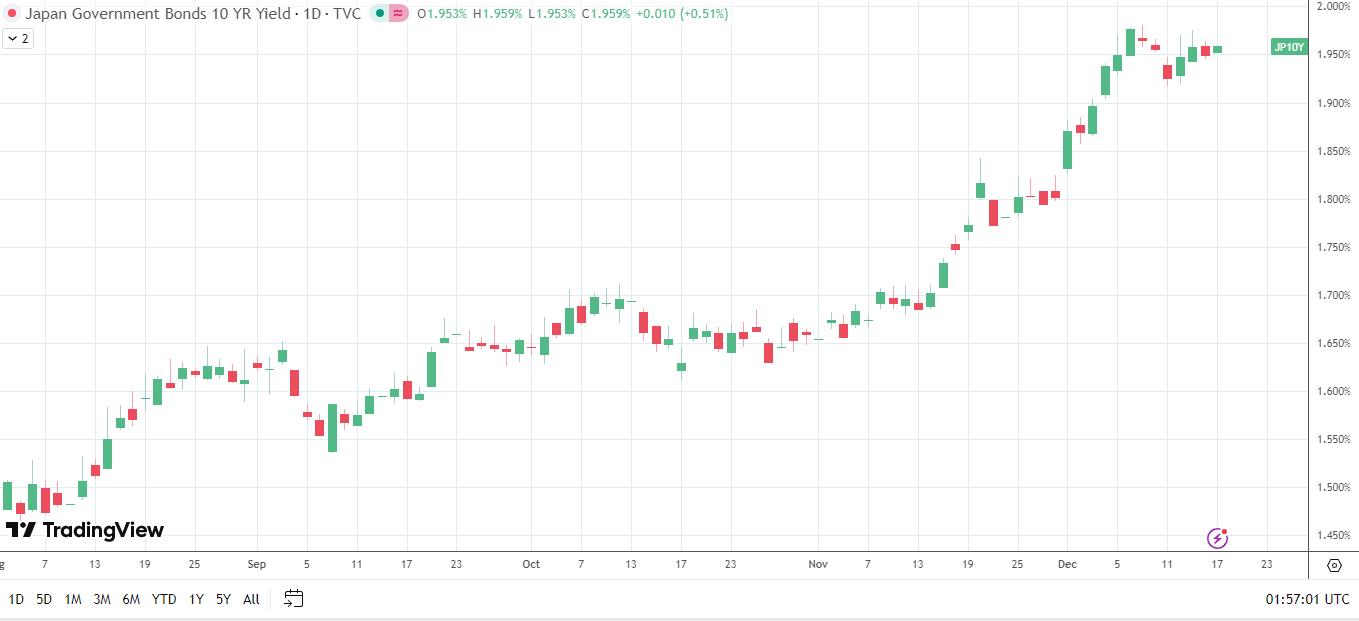
Japanese trade data boost Bank of Japan rate hike bets, sending Japanese Government Bond (JGB) yields higher and USD/JPY briefly lower, weighing on risk sentiment.
US stock futures faced selling pressure early in Asian trading on Wednesday, December 17. Stronger Japanese exports clashed with a weak US jobs report, signaling a narrowing of US-Japan rate differentials, favoring the yen.
Despite the ongoing threat of a yen carry trade, the short- to medium-term outlook remains cautiously bullish for US equity futures. A rebound in US retail sales would ease concerns about the US economy, while recent jobs data raised bets on a March Fed rate cut.
Below, I’ll outline the key market drivers, the medium-term outlook, and the key technical levels traders should watch.

Japanese Exports Boost BoJ Rate Hike Bets
On Wednesday, December 17, Japanese exports rose 6.1% year-on-year in November, up from 3.6% in October, while imports increased 1.3% YoY (October: 0.7%). A rebound in demand from the US boosted Japanese exports, easing US tariff risks. Japanese exports to the US rose 8.8% YoY in November after declining 3.1% in October.
Last week, BoJ Governor Kazuo Ueda signaled an imminent rate hike, citing wage growth and diminishing US tariff risks. November’s trade data reinforced the Governor’s view and bets on a rate hike.
USD/JPY responded to the data, falling to a session low of 154.512 before recovering. Crucially, the upbeat data could signal a more hawkish BoJ rate path. A more hawkish BoJ policy stance raises yen carry trade unwind risks.
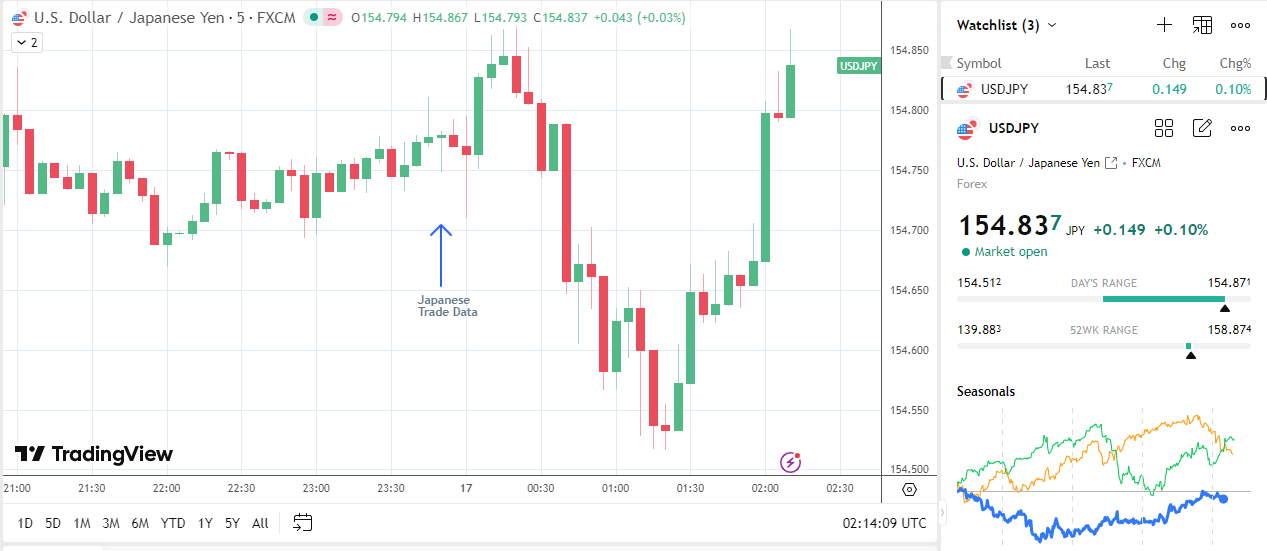
For context, the Nasdaq 100 E-mini futures slid from 19,648 on July 31 to 17,351 on August 5. The BoJ raised interest rates by 25 basis points and cut JGB purchases, narrowing the US-Japan rate differential. USD/JPY plunged below 140, forcing traders to exit leveraged positions in US assets to repatriate yen-denominated loans.
Dow Jones Price Forecast
Every new Dow Jones analysis as it publishes, today's technical signal and key levels, live price — on one page.
See all Dow Jones forecasts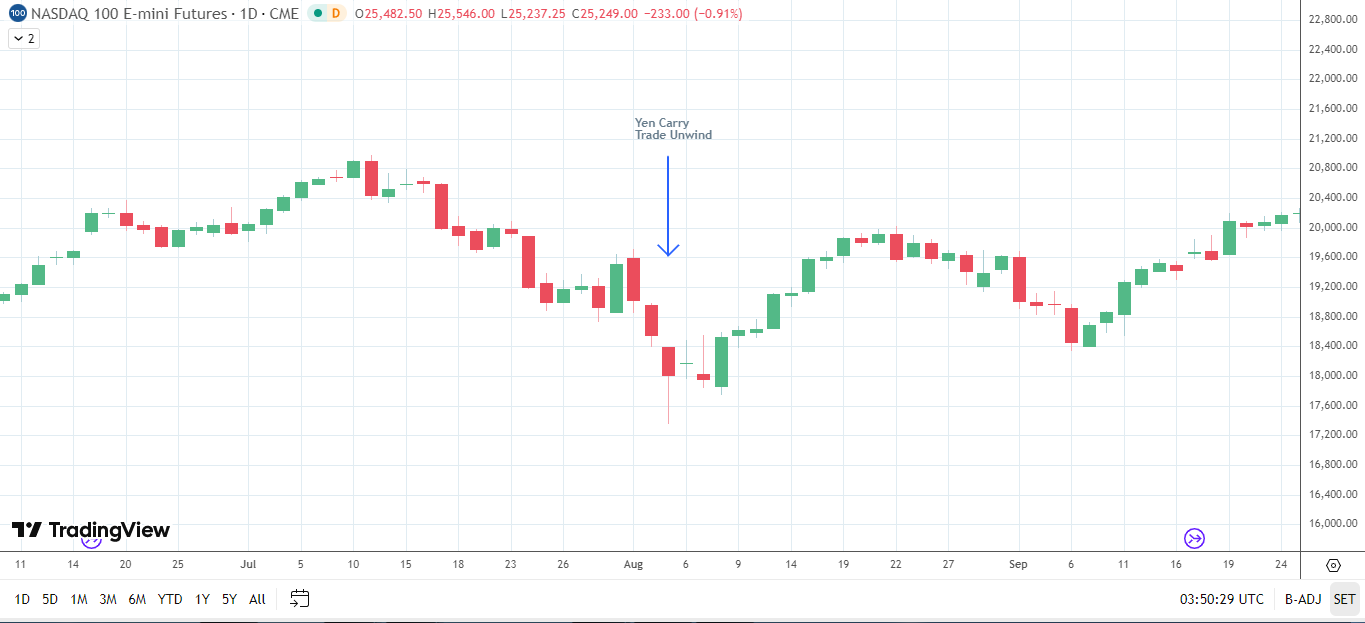
US Retail Sales and Stagflation Risks in Focus
US futures declined in early trading on Wednesday, December 17. The Dow Jones E-mini slipped 20 points, the Nasdaq 100 E-mini declined 50 points, while the S&P 500 E-mini fell 5 points.
Later on Wednesday, US retail sales figures will influence sentiment toward the US economy. Economists expect retail sales to rise 0.3% month-on-month in November, after a flat October. A rebound in consumer spending would bolster the US economy, given that private consumption accounts for around 65% of GDP.
Better-than-expected retail sales figures would likely ease concerns about the US economy and boost demand for risk assets. November’s US jobs report fueled stagflation jitters as rising unemployment and cooling wage growth clashed with expectations of sticky inflation.
Renewed stagflation risks could derail the cautiously bullish short- to medium-term price outlook, underscoring the significance of today’s retail sales data and tomorrow’s US CPI report.
Key Technical Levels for Dow Jones, Nasdaq 100, and S&P 500
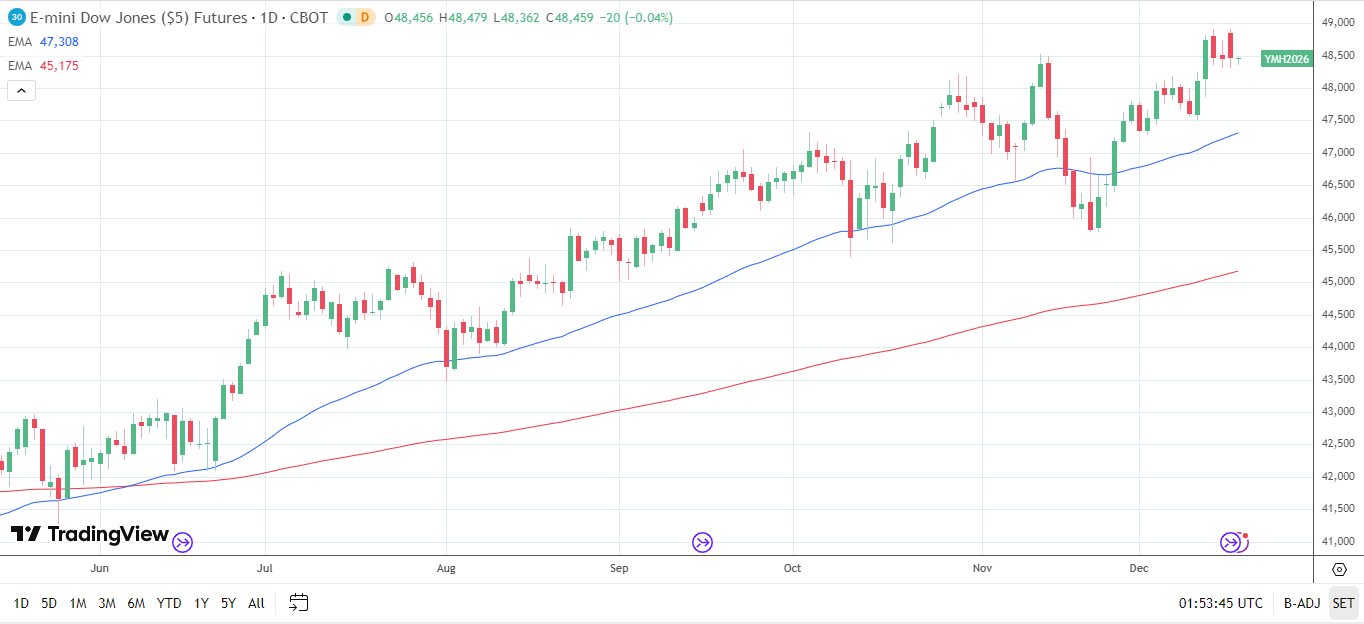
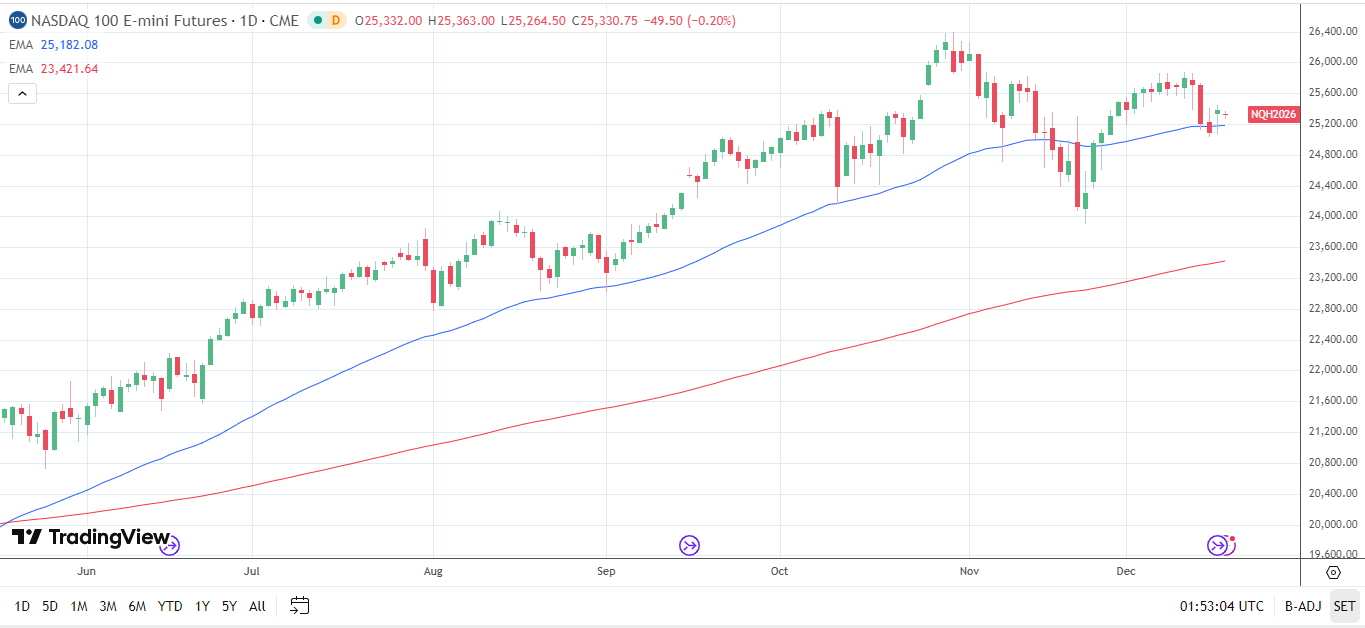
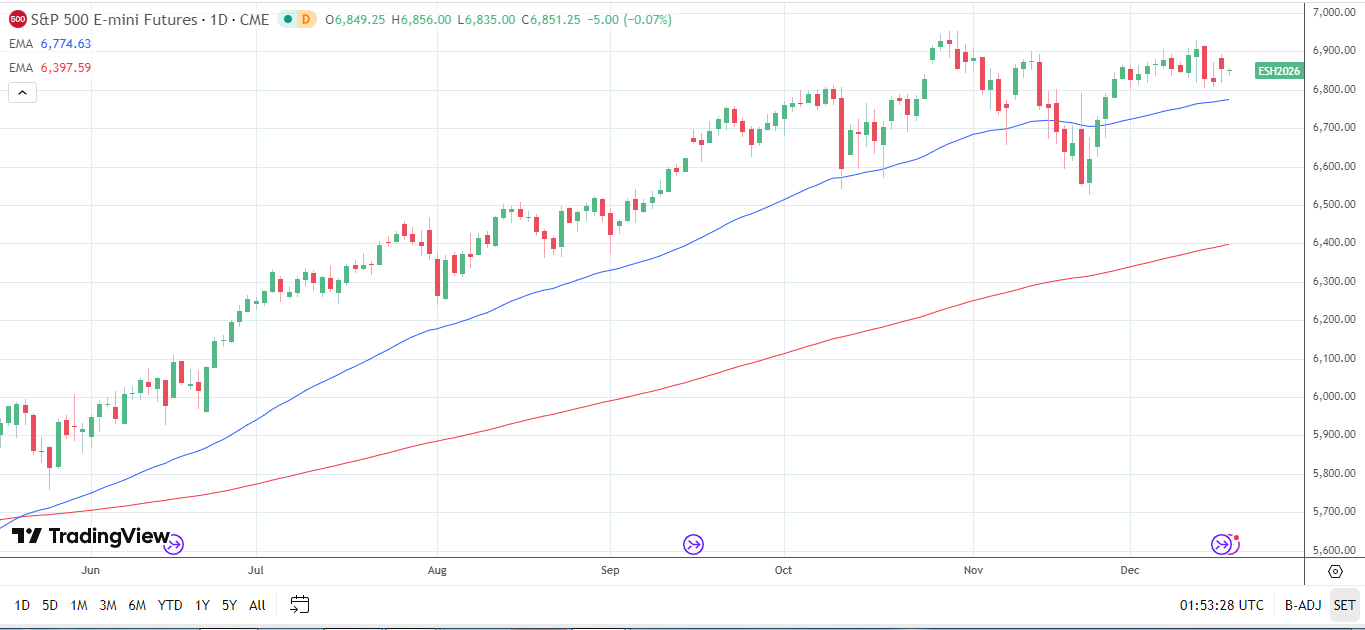
Despite the morning losses, the Dow Jones E-mini, the Nasdaq 100 E-mini, and the S&P 500 E-mini remained above their 50-day and 200-day EMAs, indicating a bullish bias.
Near-term trends will hinge on JGB yields, USD/JPY trends, US retail sales and inflation data, and the BoJ monetary policy decision and forward guidance. Key levels to monitor include:
Dow Jones
- Resistance: 48,750, the December 12 record high of 48,917, and then 49,000.
- Support: 48,000, 47,500, and then the 50-day EMA (47,308).
Nasdaq 100
- Resistance: 25,500, 25,750, 26,000, and then the October 30 record high of 26,399.
- Support: the 50-day EMA (25,182), 24,500, and then 24,000.
S&P 500
- Resistance: the October 30 record high of 6,954, and then 7,000.
- Support: the 50-day EMA (6,775), 6,500, and then 6,250.
Short-Term and Medium-Term Outlook Hinge on Key US Data and BoJ
In my opinion, the short- to medium-term outlook remains cautiously bullish amid rising bets on a March Fed rate cut. Despite concerns about a BoJ rate hike and a yen carry trade unwind, US-Japan rate differentials are likely to remain profitable, albeit less attractive, dampening fears of market disruption.
However, several events may derail the cautiously bullish short- and medium-term outlook, including:
- Bank of Japan declares a 2% neutral rate, signaling multiple rate hikes in 2026 and a sharply narrower US-Japan rate differential.
- Hawkish Fed rhetoric, supporting one 2026 rate cut.
- US retail sales tumble, and inflation data fuels risks of stagflation.
Conclusion: Outlook Cautiously Bullish
In summary, cooler US inflation data would raise bets on a March Fed rate cut, boosting demand for US equity futures.
However, traders should closely monitor JGB yields, the USD/JPY, and the Nikkei 225. Their trends are potential warning signals for a yen carry trade unwind.
Key levels include a USD/JPY drop to 150 and 10-year JGBs at 2%, an important level to watch. These levels would likely trigger a sharper Nikkei 225 sell-off, weighing on broader risk sentiment.
A dovish BoJ rate hike, rising bets on a March Fed rate cut, and easing stagflation fears would likely send US stock futures to their all-time highs.
Follow our live coverage and consult the economic calendar for real-time market updates.