
US stock futures kick-started the year on a positive note in early trading on January 2, 2026. The Nasdaq 100 E-mini futures looked to snap a three-day losing streak.
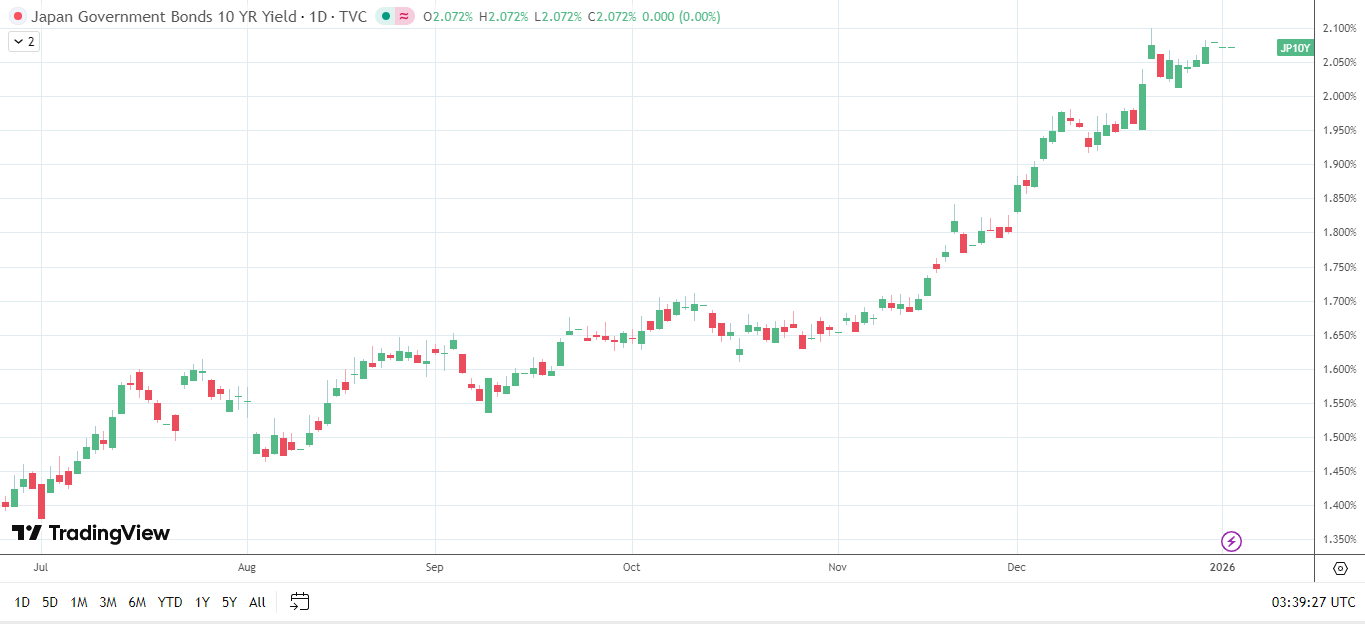
USD/JPY trended higher in morning trading, while 10-year Japanese Government Bond (JGB) yields were flat, easing concerns about a yen carry trade unwind.
While Japan’s equity markets were shut, the Hang Seng Index rallied 2.1%, signaling a risk-on mood to the start of 2026.
Optimism toward the upcoming earnings season, AI developments, and easing US-China trade tensions added to the positive sentiment, supporting a bullish medium-term price outlook.
Below, I’ll outline the key market drivers, the medium-term outlook, and the key technical levels traders should watch.

China Rare Earth Exports to the US Normalize
US restrictions on chip sales to China and China’s controls on rare earth exports to the US have been a focal point for markets. US-China trade relations have improved since President Trump’s meeting with Chinese President Xi Jinping in October.
Notably, Chinese rare earth exports to the US have rebounded since the meeting, suggesting the trade war truce may hold.
The Kobeissi Letter reported the latest trends in rare earth mineral exports to the US, stating:
Dow Jones Price Forecast
Every new Dow Jones analysis as it publishes, today's technical signal and key levels, live price — on one page.
See all Dow Jones forecasts“China’s total export volumes of rare-earth magnets fell 11% MoM in November, to 582 tonnes, bringing total 2025 shipments to 5,378 tonnes. Shipments over the last 2 months have been in line with the monthly average recorded in 2024. By comparison, in April and May, magnet supplies to the US were below 300 tonnes COMBINED after China imposed export restrictions in April. […] Overall, China’s exports of rare-earth elements and related products, including magnets, jumped 13% MoM in November.”
USD/JPY Moves toward the Intervention Zone, Calming Yen Carry Trade Unwind Jitters
The Bank of Japan’s Summary of Opinions fueled speculation about multiple rate hikes, signaling a narrowing in US-Japan rate differentials. However, 10-year JGB yields eased back from the December 22 high of 2.1%, the highest since 1999. USD/JPY climbed 0.33% to 156.852 in morning trading, boosting demand for risk assets.
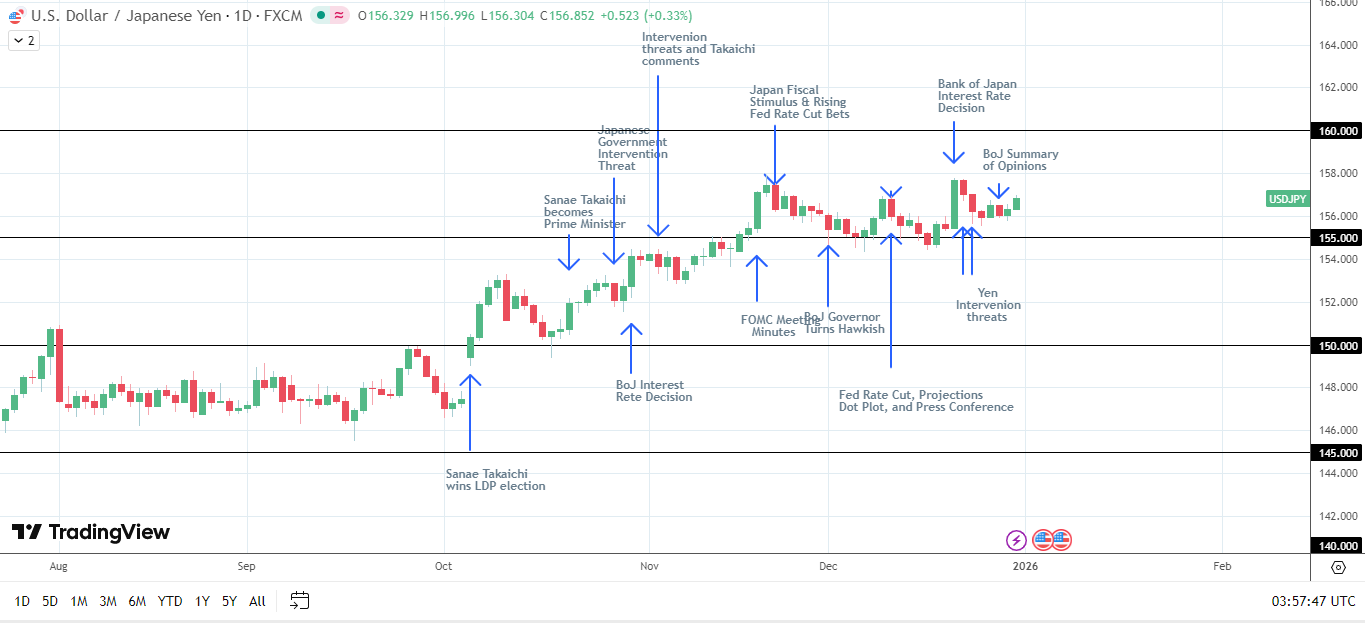
Surging JGB yields and a sharp drop in USD/JPY could make yen carry trades unprofitable, leading to the sell-off of risk assets to repay yen-denominated debt.
Crucially, hopes for Fed rate cuts in 2026 have bolstered demand for risk assets. US President Trump is expected to announce a new Fed Chair in January, who may be willing to stomach above-target inflation and favor lower interest rates.
Lower interest rates would reduce borrowing costs, boost corporate earnings, and raise equity valuations. Typically, Fed rate cuts would counter the effects of yen carry trade unwinds, watering down the longer-term impact of BoJ rate hikes.
Fed Speakers in Focus
US futures posted solid gains during the Asian morning session on Friday, January 2. The Nasdaq 100 E-mini and the S&P 500 E-mini climbed 148 points and 27 points, respectively, while the Dow Jones E-mini advanced 101 points.
Later on Friday, traders should closely monitor the speeches of FOMC members, given the influence of the Fed’s rate path on sentiment. Growing support for further monetary policy easing would counter yen carry trade unwind jitters, supporting bullish short- and medium-term outlooks for US stock futures.
According to the CME FedWatch Tool, the probability of a March Fed rate cut slipped from 48.7% on December 31 to 46.7% on January 2. Meanwhile, the chances of a cut in April or June stood at 57.8% and 81.9%, respectively.
Key Technical Levels for Dow Jones, Nasdaq 100, and S&P 500
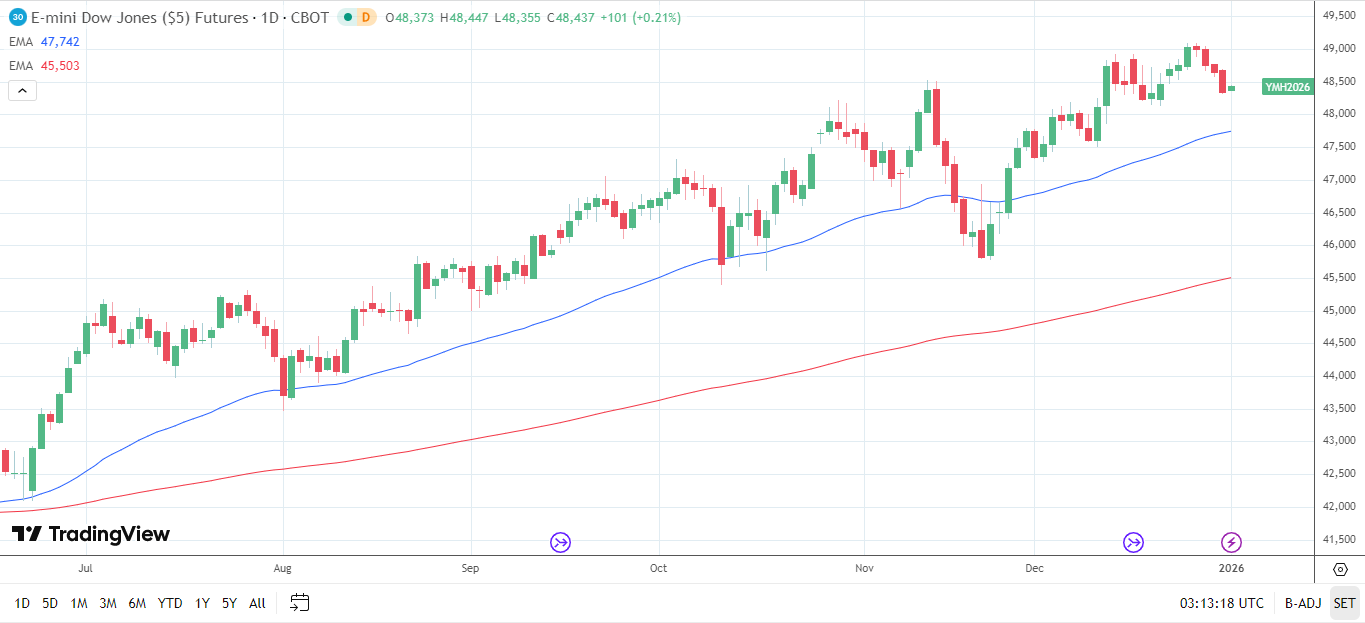
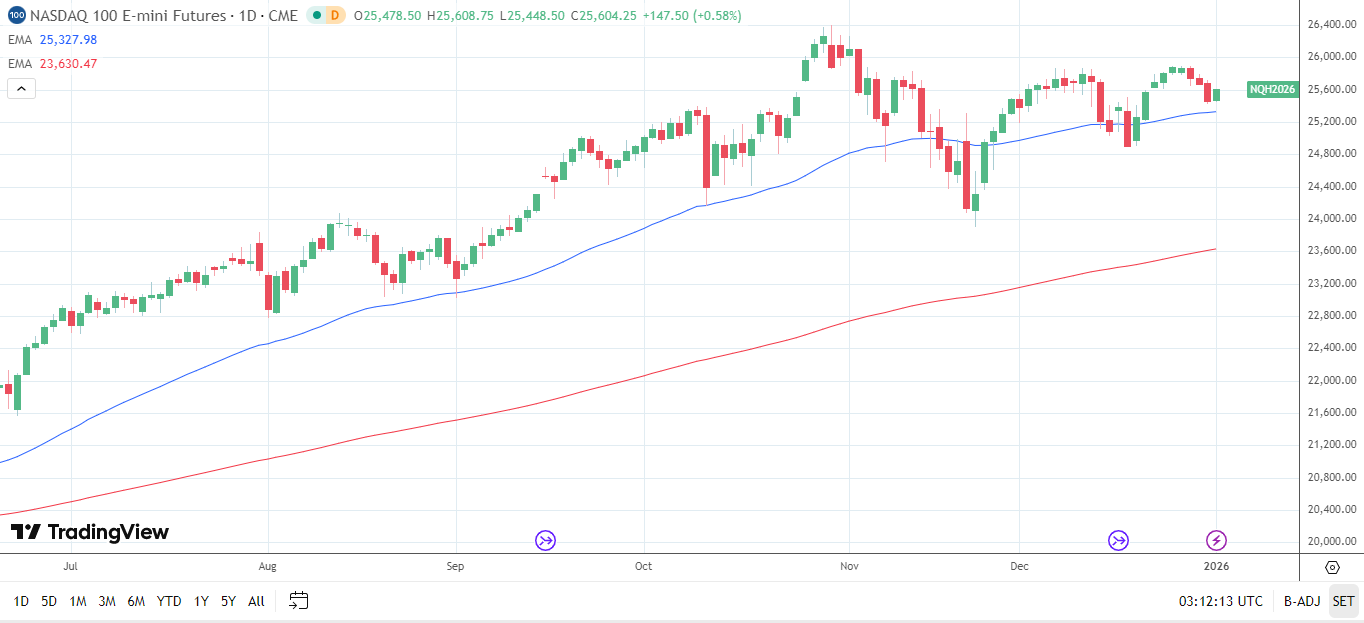
Friday’s gains sent the Dow Jones E-mini, the Nasdaq 100 E-mini, and the S&P 500 E-mini further above their 50-day and 200-day EMAs. The EMAs signaled a bullish short- to medium-term outlook, aligning with positive fundamentals.
Near-term trends will hinge on US data, Fed chatter, and BoJ commentary. Key levels to monitor include:
Dow Jones
- Resistance: The December 26 record high of 49,086, and then 49,500.
- Support: 48,000 followed by the 50-day EMA (47,742).
Nasdaq 100
- Resistance: 26,000 followed by the October 30 record high of 26,399.
- Support: the 50-day EMA (25,328) and then 24,500.
S&P 500
- Resistance: the December 26 record high of 6,988, and then 7,000.
- Support: the 50-day EMA (6,824) and then 6,500.
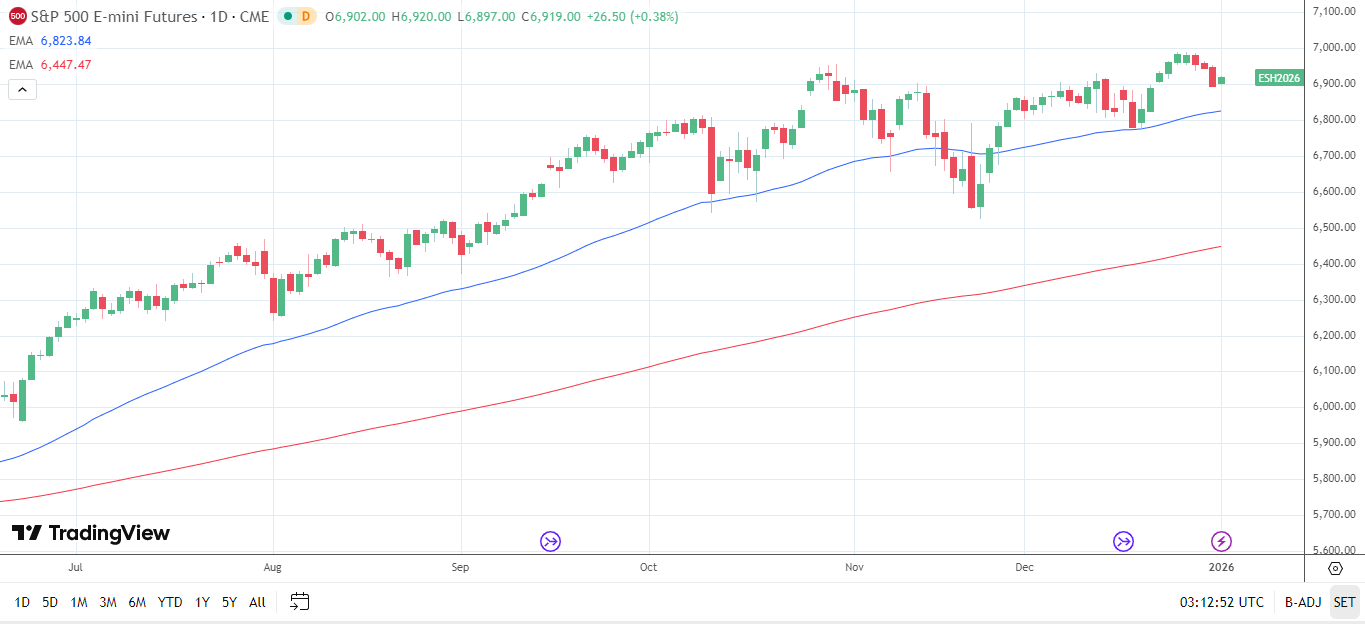
Bullish Medium-Term Outlook: Fed Rhetoric and US Economic Data Key
In my opinion, the short-term price outlook remains cautiously bullish on expectations of a Fed rate cut, alongside technicals. Additionally, market expectations of an incoming Fed Chair supporting lower interest rates reinforce the constructive medium-term bias.
However, several scenarios would likely derail the bullish medium-term outlook, including:
- The Bank of Japan declares a neutral interest rate of between 1.5 and 2.5%, indicating a sharply narrower US-Japan rate differential.
- Upbeat US data and hawkish Fed forward guidance reduce bets on a Fed rate cut.
Conclusion: Outlook Bullish
In summary, a resilient US economy, bets on Fed rate cuts, AI developments, and a less hawkish BoJ support a cautiously bullish short-term and bullish medium-term outlook for US stock futures.
However, traders should closely track 10-year JGB yields, USD/JPY trends, and the Nikkei 225 in the near term. Yen intervention threats and hawkish BoJ policy signals would likely send JGB yields higher and push USD/JPY lower, bearish triggers.
Key levels to watch include a USD/JPY drop below 150 and 10-year JGB yields climbing to the December 22 high of 2.1%. These levels would likely drag the Nikkei 225 lower, weighing on demand for US risk assets.
Despite the risk of multiple BoJ hikes, US stock futures are likely to target new highs, with the Fed and earnings key drivers.
Follow our live coverage and consult the economic calendar for real-time market updates.