
US stock futures dipped in early trading on Tuesday, January 13, amid caution ahead of the highly anticipated US CPI report.
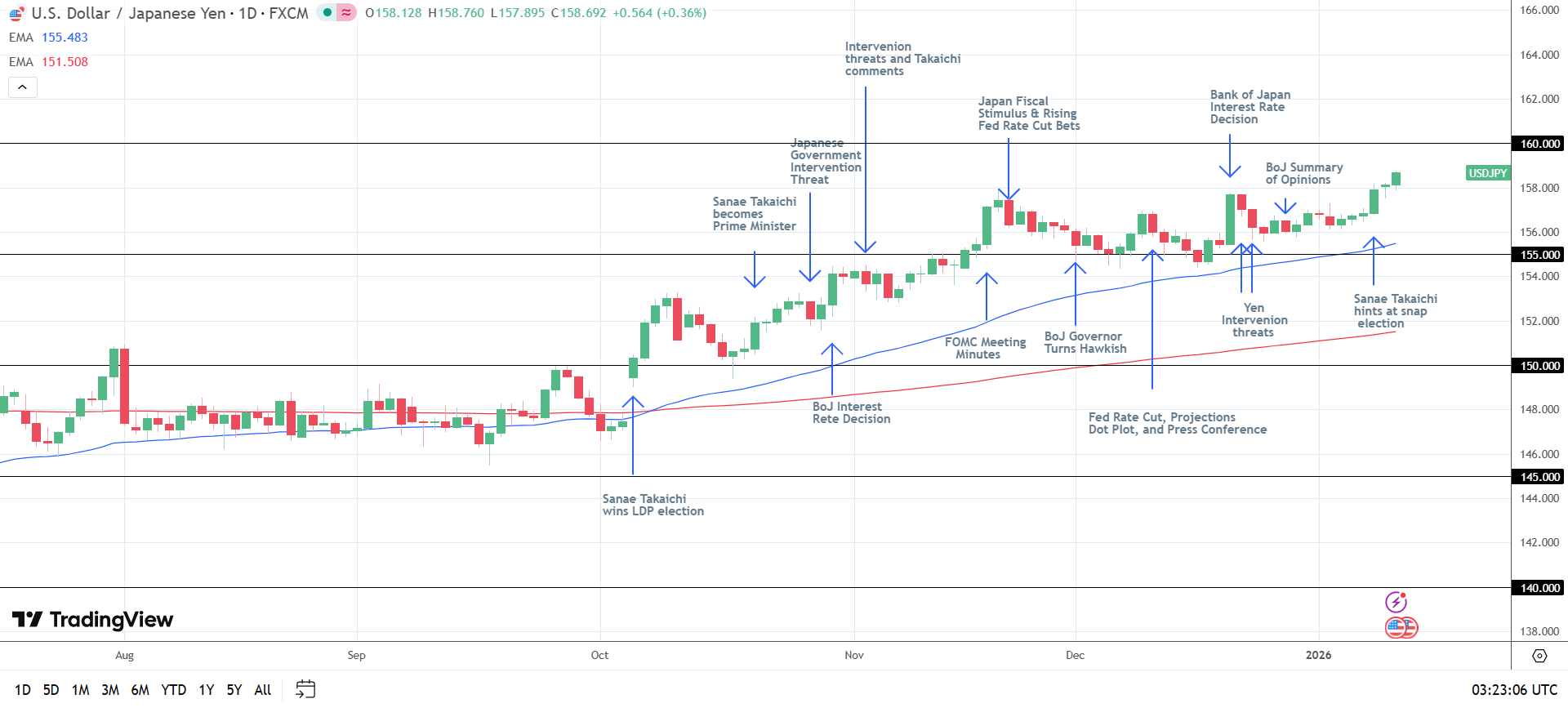
However, a weaker Japanese yen cushioned the downside as markets considered the China-Japan political spat, a potential snap election, and BoJ policy uncertainty. USD/JPY climbed 0.36% to 158.692, its highest level since January 2025, fueling yen carry trades into US risk assets.
Despite the morning losses, optimism about the earnings season, bets on two Fed rate cuts in 2026, and a resilient US economy support a bullish medium-term outlook for US equity futures.
Below, I’ll outline the key market drivers, the medium-term outlook, and the key technical levels traders should watch.

USD/JPY Climbs into the Intervention Zone as Yen Headwinds Circle
Political and monetary policy uncertainty sent USD/JPY higher in early trading as markets considered a potential snap election in February in Japan. A strong election win would strengthen Prime Minister Sanae Takaichi’s push for fiscal policy measures. USD/JPY has surged 7.9% since Prime Minister Takaichi became the Liberal Democratic Party leader.
Notably, concerns about her fiscal policy plans have sent 10-year Japanese Government Bond (JGB) yields to their highest levels since 1999 in morning trading.
Prime Minister Takaichi’s spending plans and Japan’s sizeable debt-to-GDP ratio have increased risk premiums for holding JGBs, sending yields higher. Rising borrowing costs and a substantial national debt burden expose the Japanese economy to downside risks.
Uncertainty about the timing of Bank of Japan rate hikes contributed to the yen’s weakness. US-Japan interest rate differentials remain firmly in favor of the US dollar, sending the USD/JPY pair higher.
Importantly, the Nikkei 225 surged 3.08% in morning trading, benefiting from the weaker yen and the prospects of fiscal policy support. The China-Japan political spat added to the negative sentiment toward the yen.
Crucially, the prevailing yen weakness sent USD/JPY into the intervention zone (157-160), raising the threat of government intervention in the forex markets, capping USD/JPY gains.
Dow Jones Price Forecast
Every new Dow Jones analysis as it publishes, today's technical signal and key levels, live price — on one page.
See all Dow Jones forecasts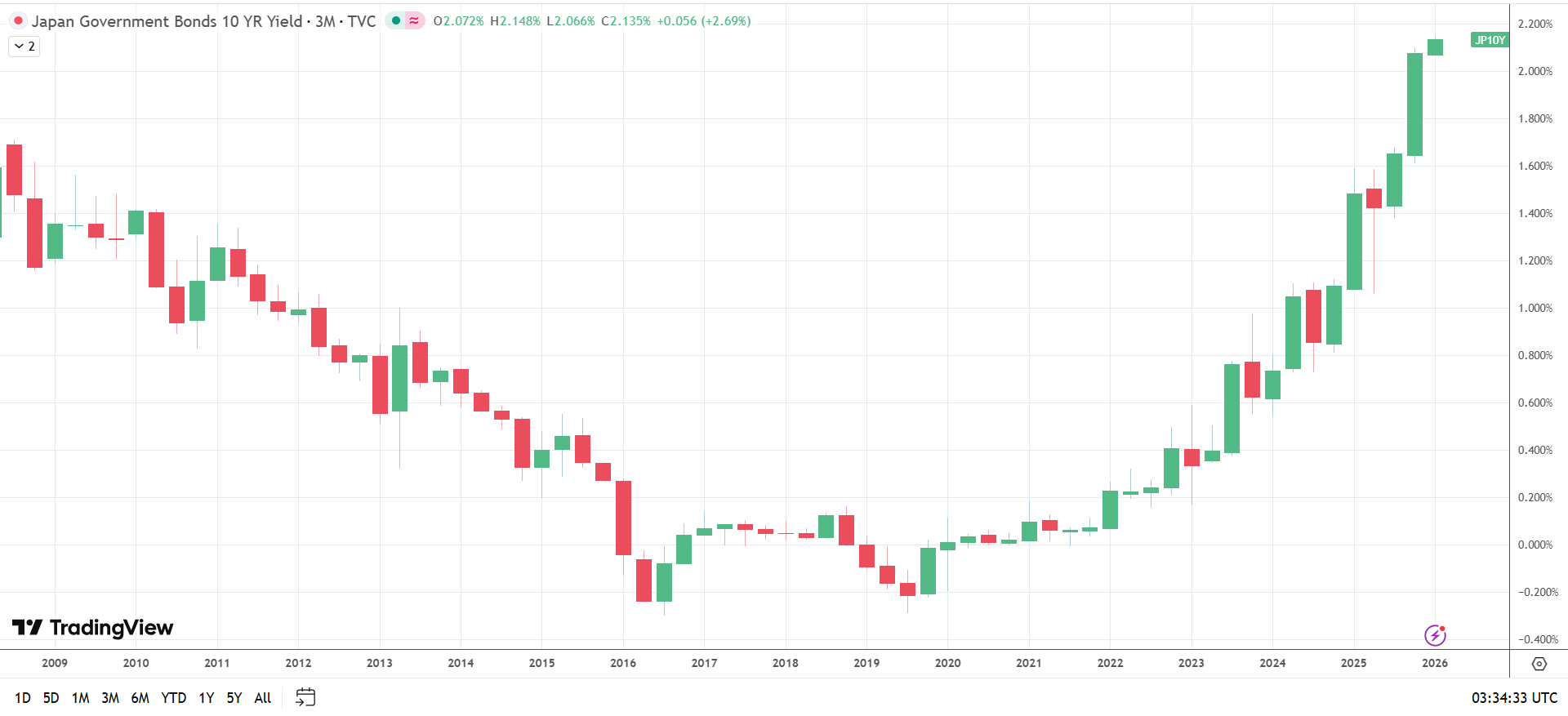
US CPI Report and Earnings Take Center Stage
US futures saw modest losses during the Asian morning session on Tuesday, January 13, after a choppy start to the week.
The Nasdaq 100 E-mini and the S&P 500 E-mini fell 81 points and 10 points, respectively, while the Dow Jones E-mini slipped 22 points.
Later Tuesday, the US CPI report will influence sentiment regarding the Fed rate path. Economists forecast headline inflation to remain at 2.7% in December, while forecasting core inflation to rise from 2.6% in November to 2.7% in December. December’s figures will likely dictate the timeline for a Fed rate cut, given the stronger-than-expected US jobs report.
Softer inflation would likely support a more dovish rate path, boosting demand for risk assets. Typically, lower borrowing costs would boost earnings and equity valuations.
Headline inflation fell from 3% in October to 2.7% in November. However, economists attributed the drop to the US government shutdown, curbing consumption, suggesting that ‘in line’ with forecast numbers would boost bets on a March Fed rate cut.
Given the significance of the CPI report, traders should closely monitor reactions from Fed speakers to the numbers and views on rate cuts.
Beyond the economic calendar, corporate earnings will influence risk appetite. JPMorgan Chase (JPM) will kick off the earnings season on Tuesday.
The current dynamics, including market optimism over corporate earnings and expectations of an H1 2026 Fed rate cut, affirm the cautiously bullish near-term and bullish medium-term price outlook.
Key Technical Levels for Dow Jones, Nasdaq 100, and S&P 500
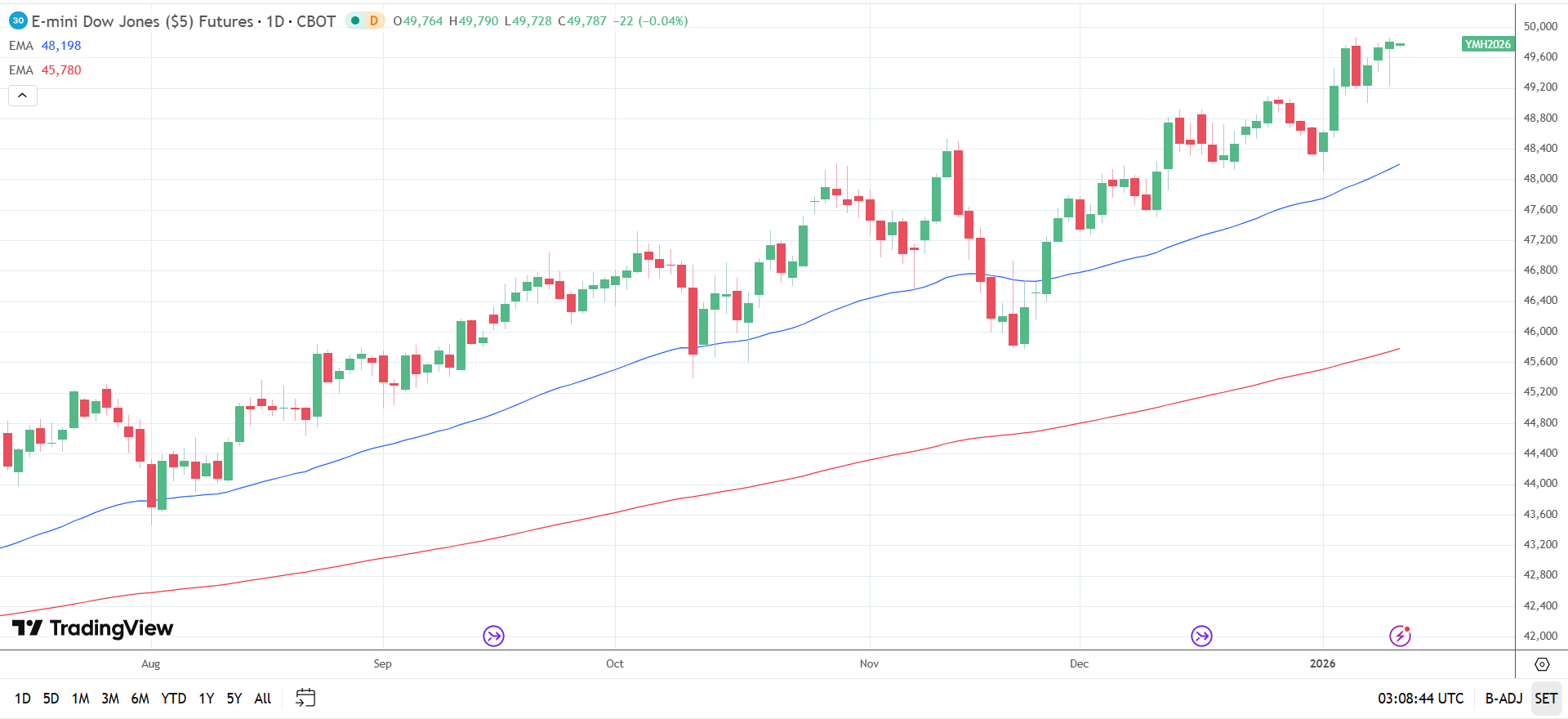
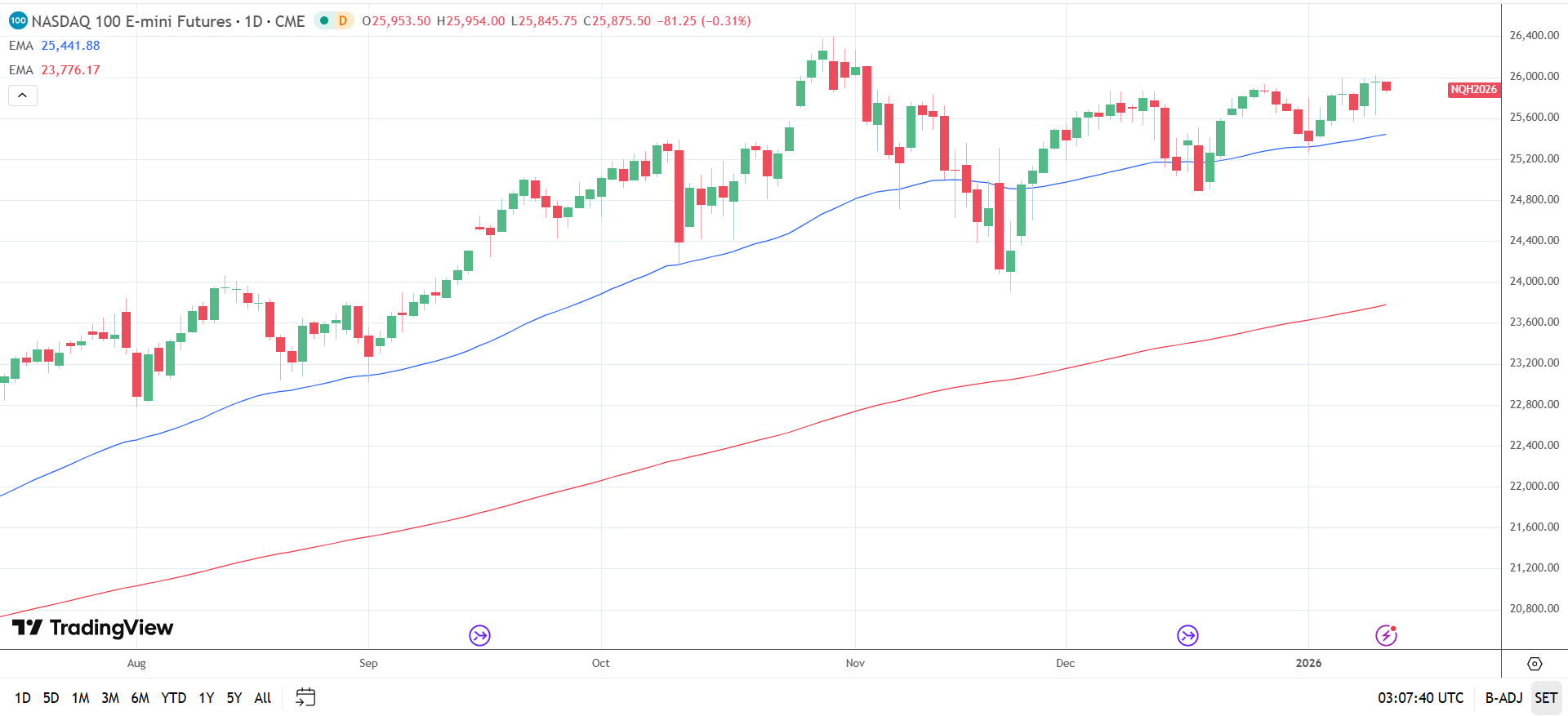
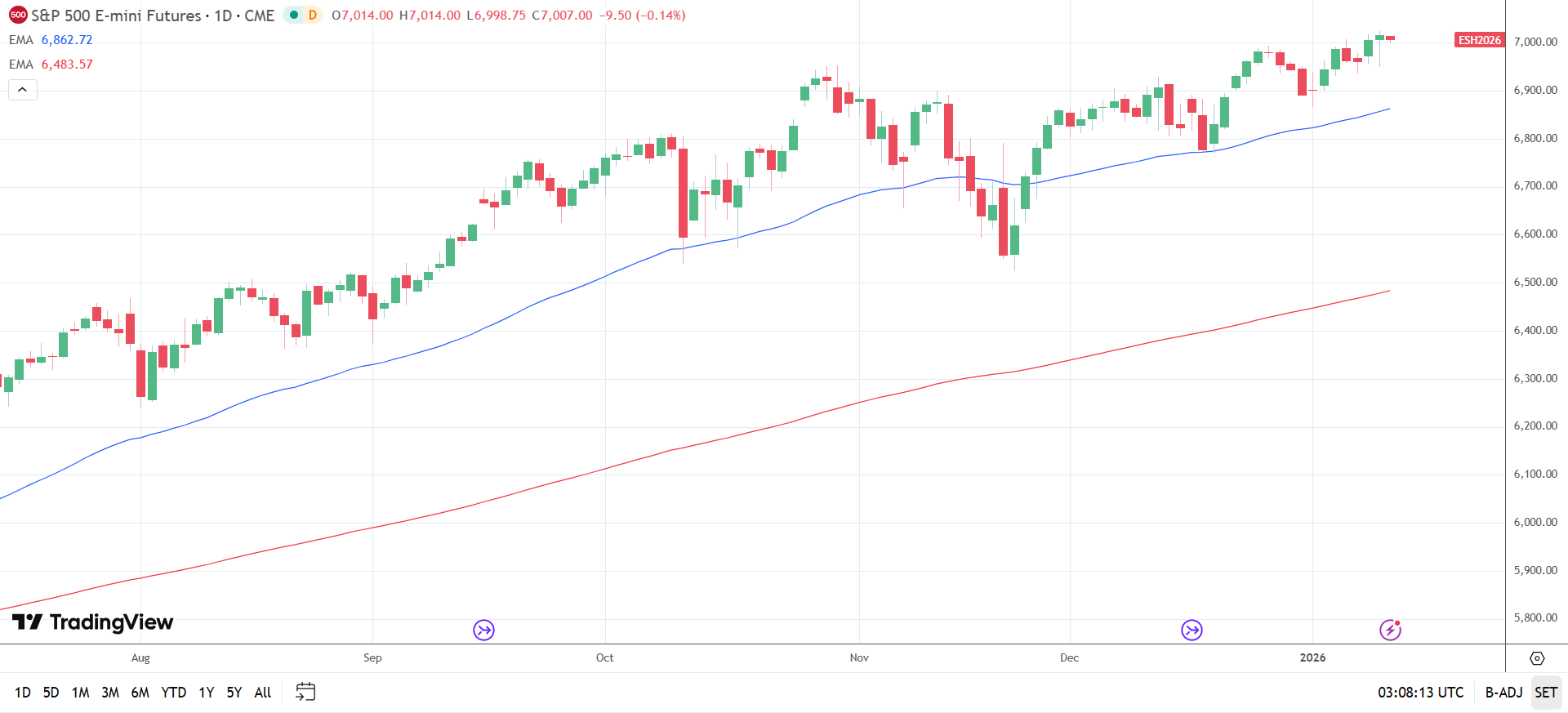
Despite the morning pullback, the Dow Jones E-mini, the Nasdaq 100 E-mini, and the S&P 500 E-mini traded above their 50-day and 200-day EMAs. The EMAs indicated a bullish short- to medium-term outlook, aligning with positive fundamentals.
Near-term trends will hinge on geopolitical risks, US inflation, corporate earnings, and Fed forward guidance. Key levels to monitor include:
Dow Jones
- Resistance: the January 7 record high of 49,876, and then 50,000.
- Support: 49,000 followed by the 50-day EMA (48,198).
Nasdaq 100
- Resistance: 26,000 followed by the October 30 record high of 26,399.
- Support: the 50-day EMA (25,442) and then 24,500.
S&P 500
- Resistance: the January 12 high of 7,025, followed by 7,500.
- Support: the 50-day EMA (6,863) and then 6,500.
Bullish Medium-Term Outlook: US CPI Report, Earnings, and the Fed
In my opinion, the short-term price outlook remains cautiously bullish, bolstered by bets on an H1 2026 Fed rate cut and strong corporate earnings. These fundamentals align with constructive technicals. Additionally, speculation that the incoming Fed would accept sticky inflation and lower interest rates reinforces the constructive medium-term bias.
However, several scenarios would unravel the bullish medium-term outlook, including:
- The Bank of Japan declares a hawkish neutral interest rate (potentially 1.5%-2.5%), indicating a narrower US-Japan rate differential. Typically, sharply narrower differentials trigger a yen carry trade unwind.
- Stronger US inflation data and hawkish Fed chatter would reduce expectations of a Fed rate cut.
- Corporate earnings and outlooks disappoint.
- Geopolitical tensions intensify.
Conclusion: Bullish Outlook Firmly Intact
In summary, a resilient US economy, a dovish Fed policy stance, AI-related earnings, and a dovish BoJ neutral rate reaffirm a cautiously positive short-term and a bullish medium-term outlook for US stock futures.
However, traders should continue to monitor 10-year JGB yields, USD/JPY trends, and the Nikkei 225, given the influence of yen carry trades on market liquidity. Threats of a yen intervention and hawkish BoJ rhetoric may trigger fears of a yen carry trade unwind.
Key levels include a USD/JPY drop below 150, 10-year JGB yields climbing to new highs, and a sharp Nikkei sell-off. These would be early signs of an unwind, weighing on buyer appetite for US risk assets.
Despite economists expecting higher Japanese interest rates, US stock futures are likely to target new highs. US data, corporate earnings, and the Fed are the key price catalysts.
Follow our live coverage and consult the economic calendar for real-time market updates.