
It has been a remarkable year for Ethereum without a doubt. The token managed to make a strong comeback from $1,400 in April to make a new all-time high just four months later on the back of a strong technical overhaul.
The Pectra upgrade shut up most of Ethereum’s detractors as it improved the network’s scalability and effectively lowered its transaction fees.
By increasing the number of blobs (datasets) that can be included on each ETH block, Pectra made layer-2 chains like Base and Arbitrum much more efficient and paved the way for increasing adoption.
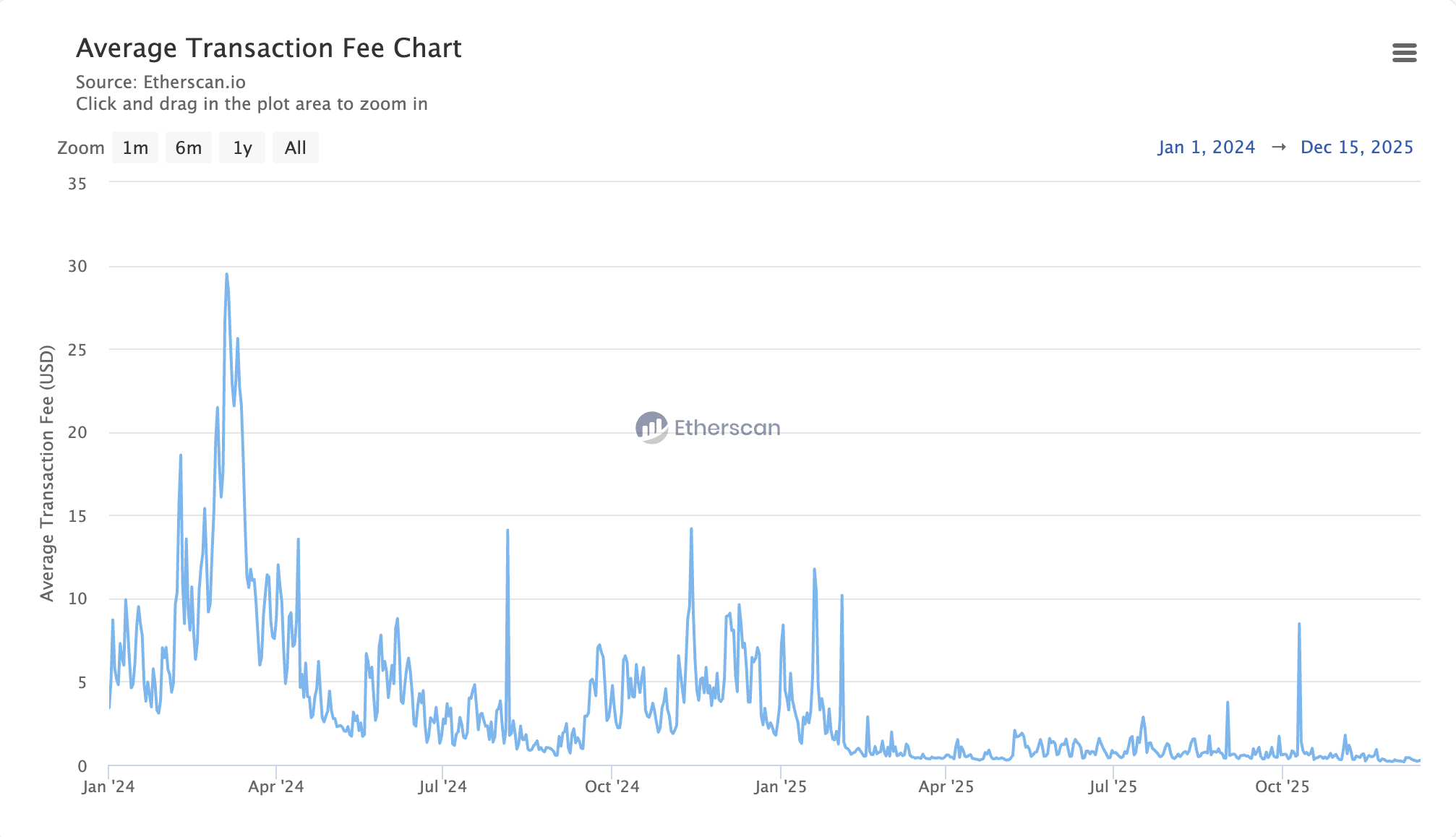
Average Transaction Fees Ethereum Blockchain – Source: Etherscan
Data from Etherscan shows that post-Pectra transaction fee volatility has subsided significantly, meaning that users can now transfer assets and execute smart contract transactions at much more predictable gas fees compared to a year ago.
The chart shows the remarkable difference between pre- and post-Pectra eras in terms of fee volatility.
Apart from a temporary hiccup on October, 10 when, let’s face it, the market went south, and everybody feared the worst, average transaction fees have been quite stable.
In addition, the Fusaka upgrade was successfully implemented earlier this month, and this latest technical improvement to the network’s inner workings could further boost Ethereum’s credibility as a reliable, scalable, and efficient blockchain to deploy all kinds of decentralized applications.
Despite its jump to a new price record in August, ETH has faced significant selling pressure as a result of President Trump’s erratic discourse on the trade front. His decision to slap China with a 100% tariff increase on top of existing levies caused record-high liquidations and spooked traders out of their desks.
Combined with some short-term uncertainty regarding the Federal Reserve’s dot-plot, the market had more than enough causes to start selling at the top.

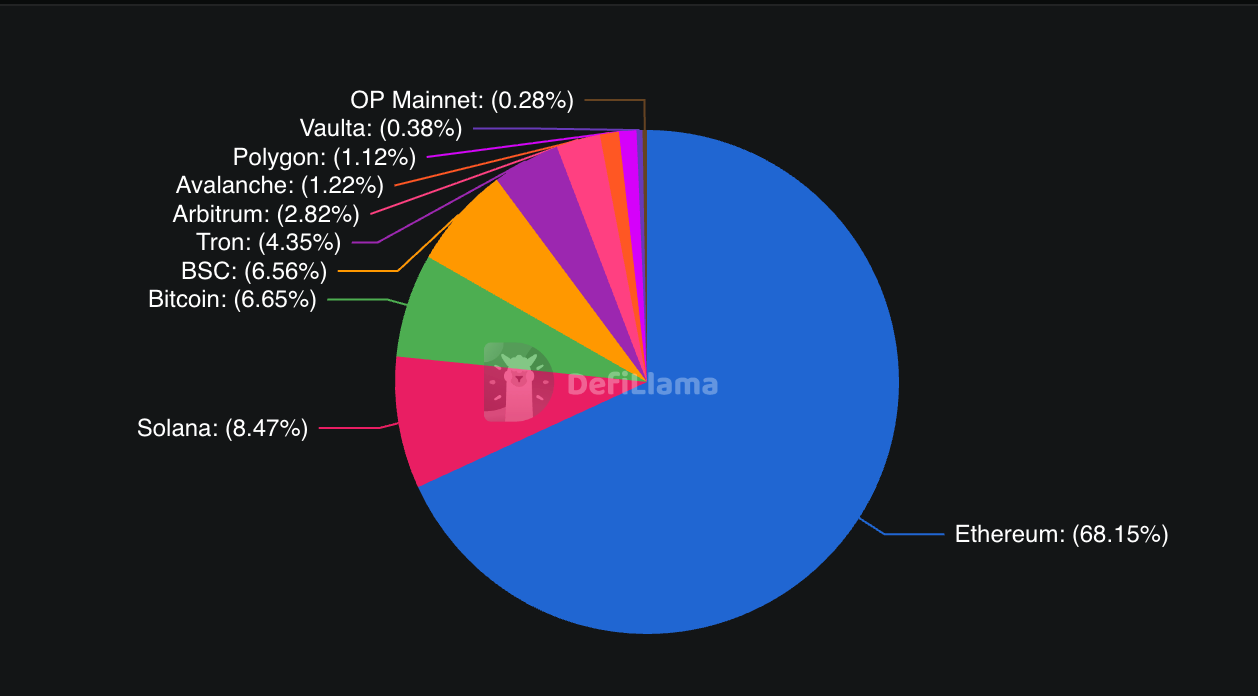
Ethereum Market Share in DeFi – Source: DeFi Llama
Ethereum maintains an indisputable lead in the decentralized finance (DeFi) space with a total value locked (TVL) of $68 billion, resulting in a market share exceeding 68%.
More than three-quarters of that total comes from Aave and Lido Staking, the most successful dApps in its ecosystem.
Meanwhile, in the real-world assets (RWA) market, Ethereum is also the leading force with a market share of 66% and a total value locked (TVL) of $12.3 billion.
All of this indicates growing adoption by institutional players and showcases the network’s practical use cases for the financial industry. At a point when big names are increasingly embracing blockchain technology to deploy the next wave of Web 3 platforms, the Ethereum network could be uniquely positioned to reap the rewards of this trend.
Ethereum Price Forecast
Every new Ethereum analysis as it publishes, today's technical signal and key levels, live price — on one page.
See all Ethereum forecastsHistorical Patterns Indicate 50% Chance of a Drop to $1,650
Heading to the weekly chart, there’s a lot going on with ETH that’s worth considering to draft a price prediction for 2026.
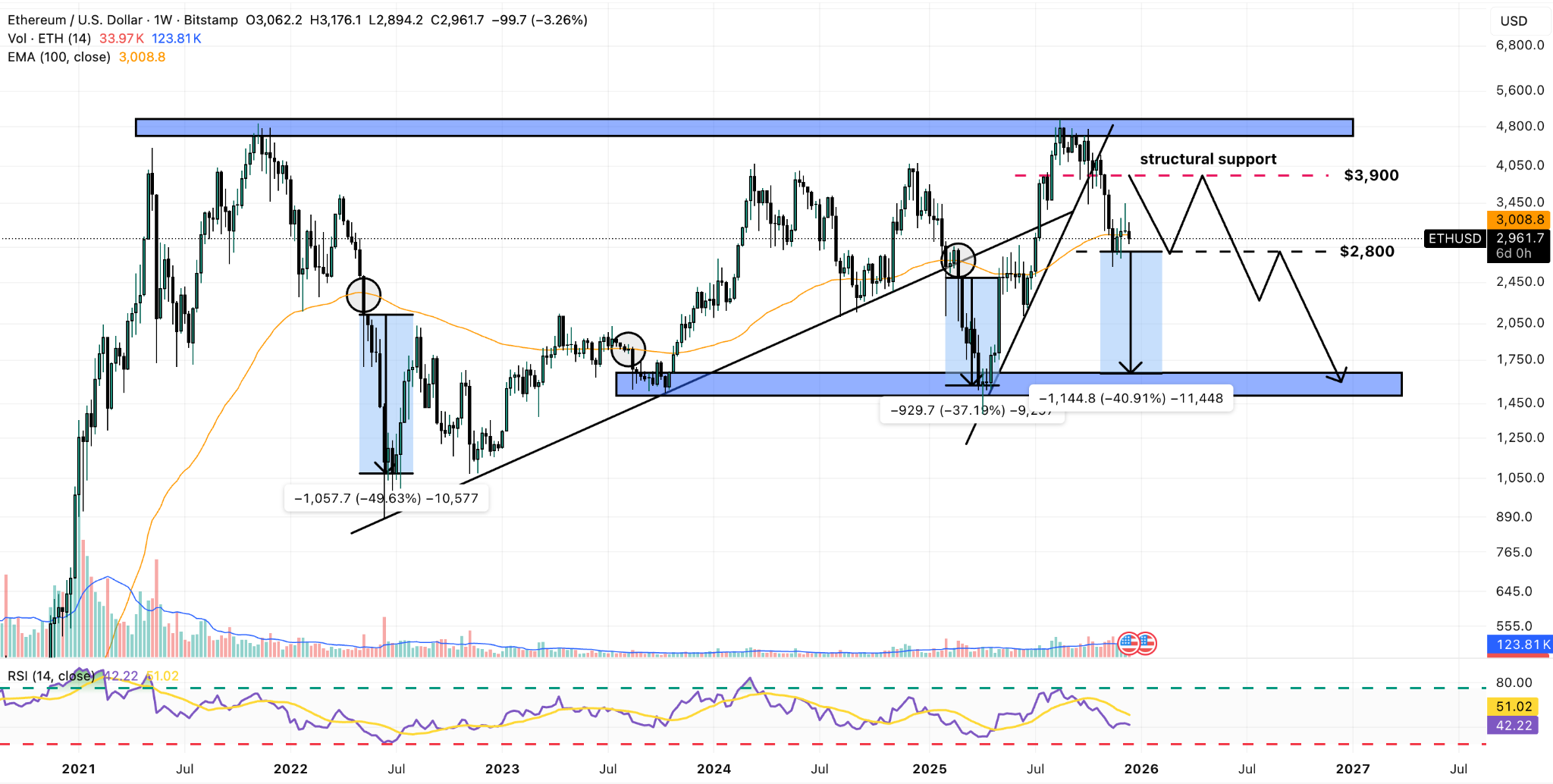
ETH/USD Weekly Chart (Bitstamp) – Source: TradingView
The first thing is a double-top pattern at $4,000 that immediately resulted in a huge decline for the token. This setup was confirmed by a drop in the Relative Strength Index (RSI) below its 14-week moving average, which is typically interpreted as a sign of a trend reversal.
ETH broke two trend line supports this year as well, the first in February and the other in late October. The first time, ETH went on to 1,400.
The market’s structure is also bearish in this higher time frame as ETH dropped below its structural support. We are now seeing the first strong bounce, which marks ETH’s first lower low.
Now, we could be heading to retest the $3,900 level from below to confirm the market’s bearish bias. Traders should pay attention to how the price action unfolds in 2026 if the price gets there at some point.
If the market rejects a move above this line, the odds of a much stronger drop toward $2,500 or lower will be high. The only way that ETH’s outlook would be bullish from now on is if we break the $4,000 barrier again.
That would invalidate the bearish structure and ignite the token’s next leg up, possibly eyeing the $5,000 level this time.
Another interesting confirmation of a bearish bias for 2026 is a break below the 100-week exponential moving average (EMA). This is the fifth time this has happened since 2022. In two out of the four previous instances, the price of ETH dropped by more than 37%.
So, we have a 50% chance that ETH could drop to at least $1,650. For that to happen, some strong catalysts would be needed. We don’t have the negative catalysts that can drive the top altcoin to those lows on the table right now.
Meanwhile, heading to the daily chart, we can see that there are early signs of a reversal. This favors the view that ETH could be getting ready to climb back to $3,900 in the mid-term if positive momentum gains traction.
Near-Term Outlook Favors a Bullish Scenario
Favoring this thesis, the Federal Reserve just cut interest rates for a third time this year, clearing the fog and improving the market’s visibility for months to come.
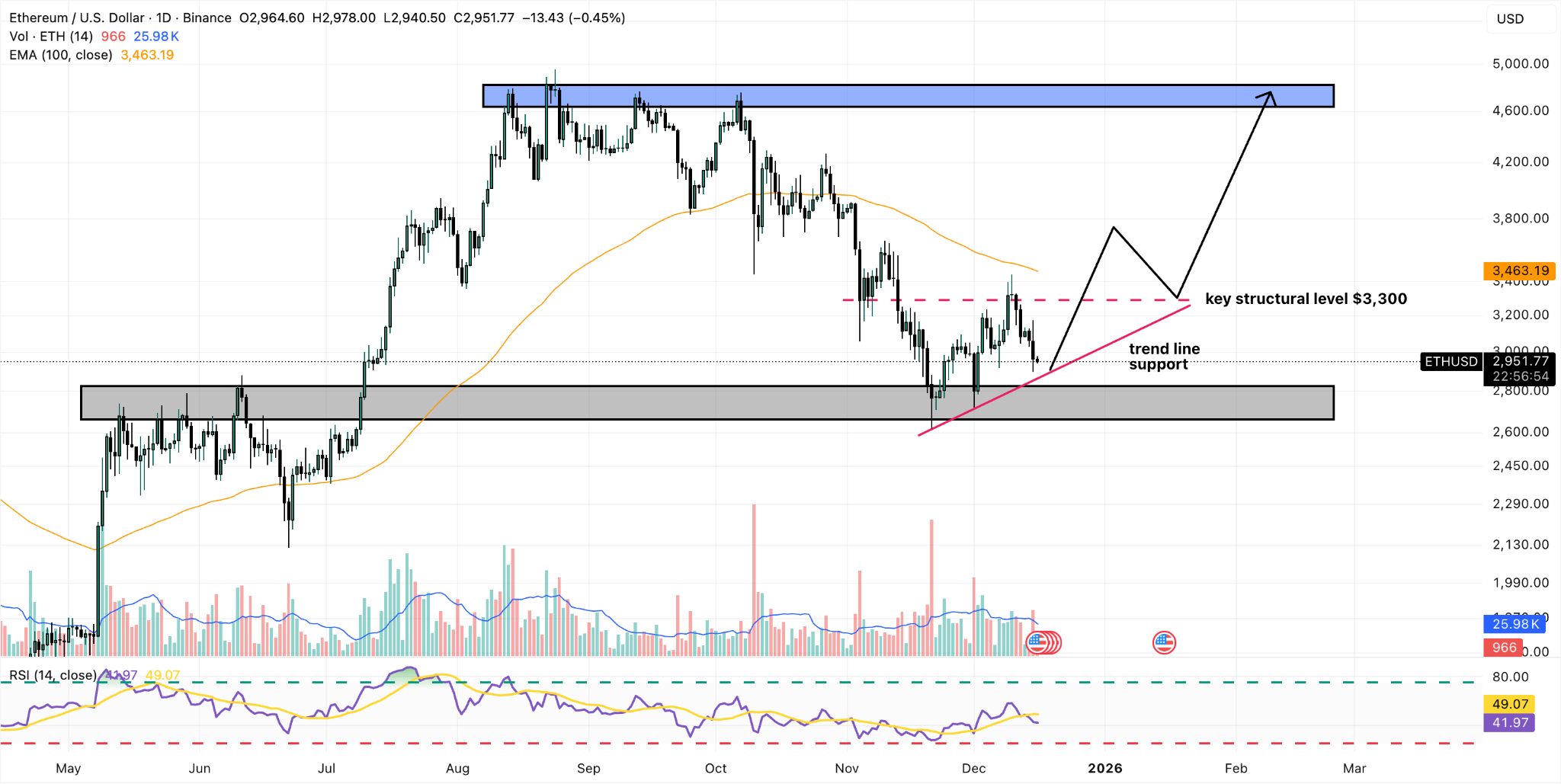
ETH/USD Daily Chart (Binance) – Source: TradingView
This week is critical to Ethereum’s short-term outlook as both jobs and inflation data covering October and November will be released. If the data is good enough, it could backstop the decline and propel cryptos to higher ground now that the Fed has nothing else to say until next year.
The $2,850 would be the key trend line support to watch, followed by the $2,800 level. A break below this mark would set off a much deeper correction and would confirm the bearish outlook discussed earlier, meaning a huge downside potential ahead.
Meanwhile, if ETH starts climbing and rises past the $3,300, then the second scenario would be confirmed, and we could get a move toward $3,900 at some point next year.
ETH bulls need a lot of strength to overcome the significant resistances that lie ahead. However, market conditions lean toward a positive outlook. If institutional adoption keeps accelerating, this could easily reverse the downtrend via news-related price jumps.