
Venezuela Crisis Triggers Rally in Commodities
Weekend developments – the US military intervention culminating in Venezuelan President Nicolás Maduro’s forcible removal from office – heightened volatility across the commodities market. Maduro appeared before the court yesterday, facing multiple charges to which he has pleaded not guilty. This marks merely the opening salvo in what promises to be a lengthy legal battle, with the next hearing scheduled for March.
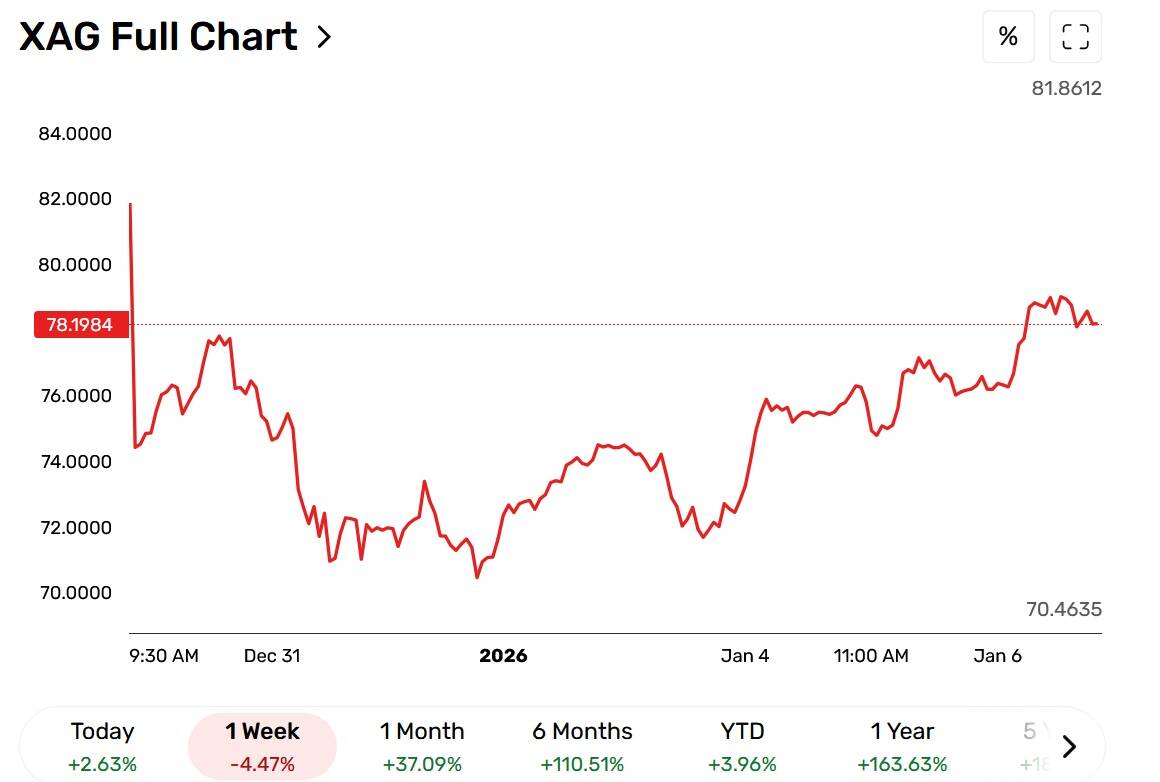
Dr Copper also recently breached US$13,000 for the first time in LME trading history, buoyed by speculation about potential US tariffs and infrastructure spending demands linked to Venezuela’s reconstruction. Crude markets also found support, with WTI rallying nearly 2.0% as the intervention cast fresh uncertainty over access to Oil reserves.
Across the FX space, the USD settled modestly lower, down 0.1% and well off its best levels. US Treasury yields also ended the session lower across the curve, with the benchmark 10-year yield snapping a three-session advance and testing 4.16%. Bond markets now face competing narratives – geopolitical developments supporting safe-haven demand versus persistent inflation concerns and fiscal policy uncertainties that could dampen appetite for US debt.

US Manufacturing Sector Signals Continued Weakness
On the macro front, Monday saw the release of the December ISM Manufacturing PMI, which showed activity contracting to 47.9 from 48.2 in November. Survey respondents emphasised tariff uncertainty as a persistent headwind.
Interestingly, the employment sub-index rose to 44.9 from 44.0, yet remains mired in contractionary territory for an eleventh consecutive month. Meanwhile, the prices-paid component held steady at 58.5, underscoring the stubbornness of inflationary pressures – a challenging backdrop for policymakers.
AUD/USD Price Forecast
Every new AUD/USD analysis as it publishes, today's technical signal and key levels, live price — on one page.
See all AUD/USD forecastsInflation Data on the Horizon
While the economic data docket remains thin today, things heat up tomorrow with Australian and eurozone CPI inflation data for November and December, respectively.
I will be closely watching the Australian data; economists expect a slight moderation in price pressures, though they remain above the RBA’s inflation target band. Markets are pricing in a 32% chance that the RBA may increase the cash rate by 25 bps next month. Therefore, if inflation comes in higher than expected, the AUD could find bids as traders increase rate-hike bets. As for the eurozone print, I do not expect these data to move the market’s needle much and will likely reinforce the point that policy is ‘in a good place’. Consequently, without a major surprise, I am not anticipating much from this release.
Wednesday’s Full Agenda
Tomorrow’s inflation readings will be complemented by December US ADP employment figures, the ISM Services PMI, and November JOLTS job openings – a comprehensive snapshot of labour market dynamics and service-sector numbers.
Written by FP Markets Chief Market Analyst Aaron Hill