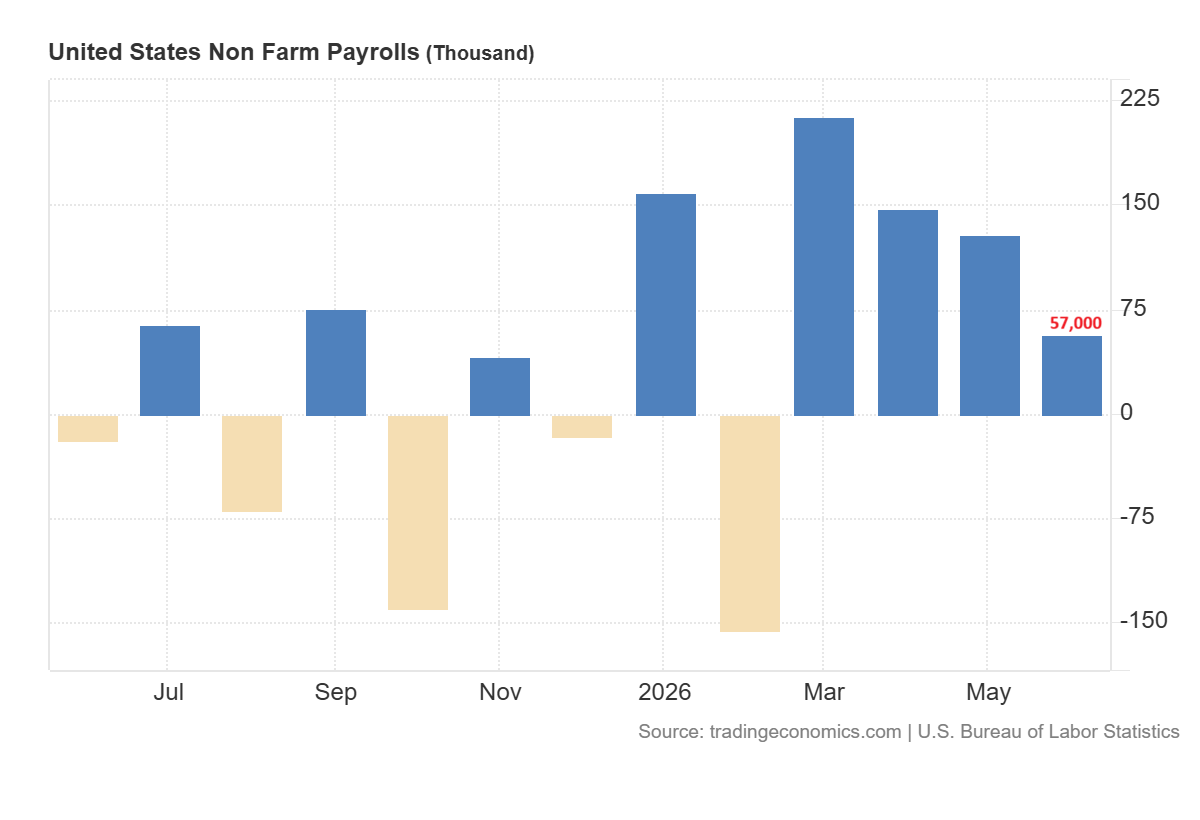
Gold (XAU) prices surged on Thursday following a fresh U.S. jobs report which weakened the case for a further Federal Reserve interest rate increase. Nonfarm Payrolls increased by just 57,000 in June, well below the expected 110,000. The weaker data suggest that the job market is slowing. The downward revisions for April and May also put pressure on the U.S. dollar. Gold recovered from the daily low of $4,032 to push above the $4,150 level.
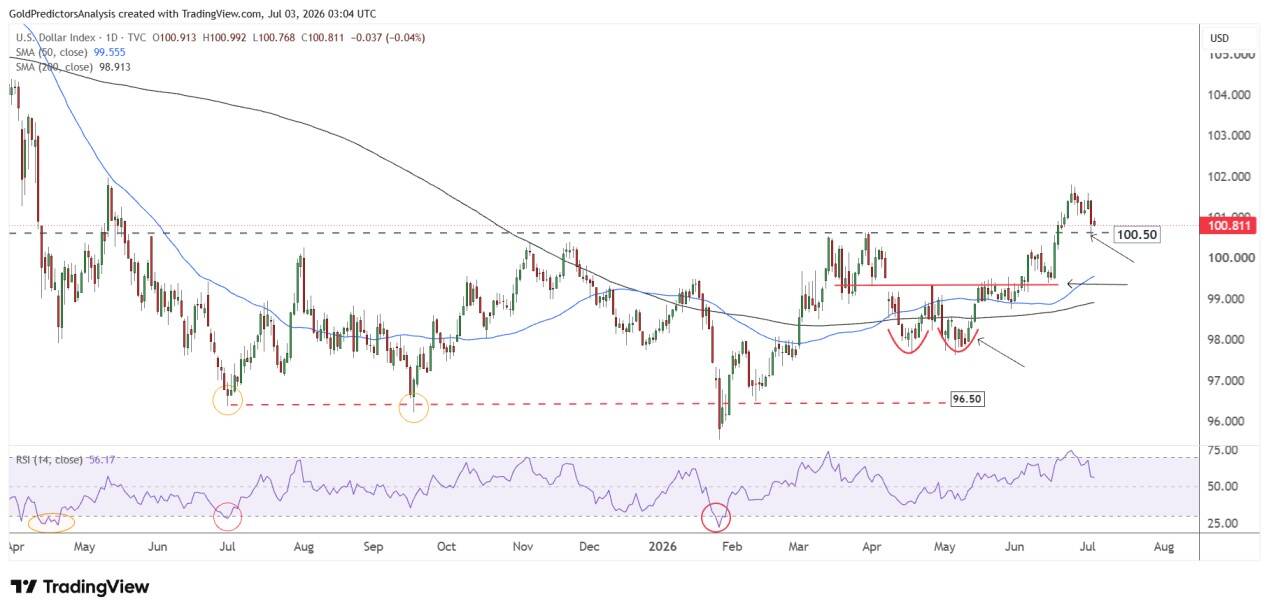
The U.S. dollar and Treasury yields dropped as traders reduced the odds of a Fed rate hike. The U.S. Dollar Index dropped to 100.75. Moreover, the 10-year Treasury yield reversed its earlier gain and was around 4.48%. Despite this drop, the US dollar still remains above the 100 level which keeps the gold short-term rally in question.
The market has not completely ruled out another rate hike. As per the FedWatch tool, the market still expects a September hike with 45.6% probability.
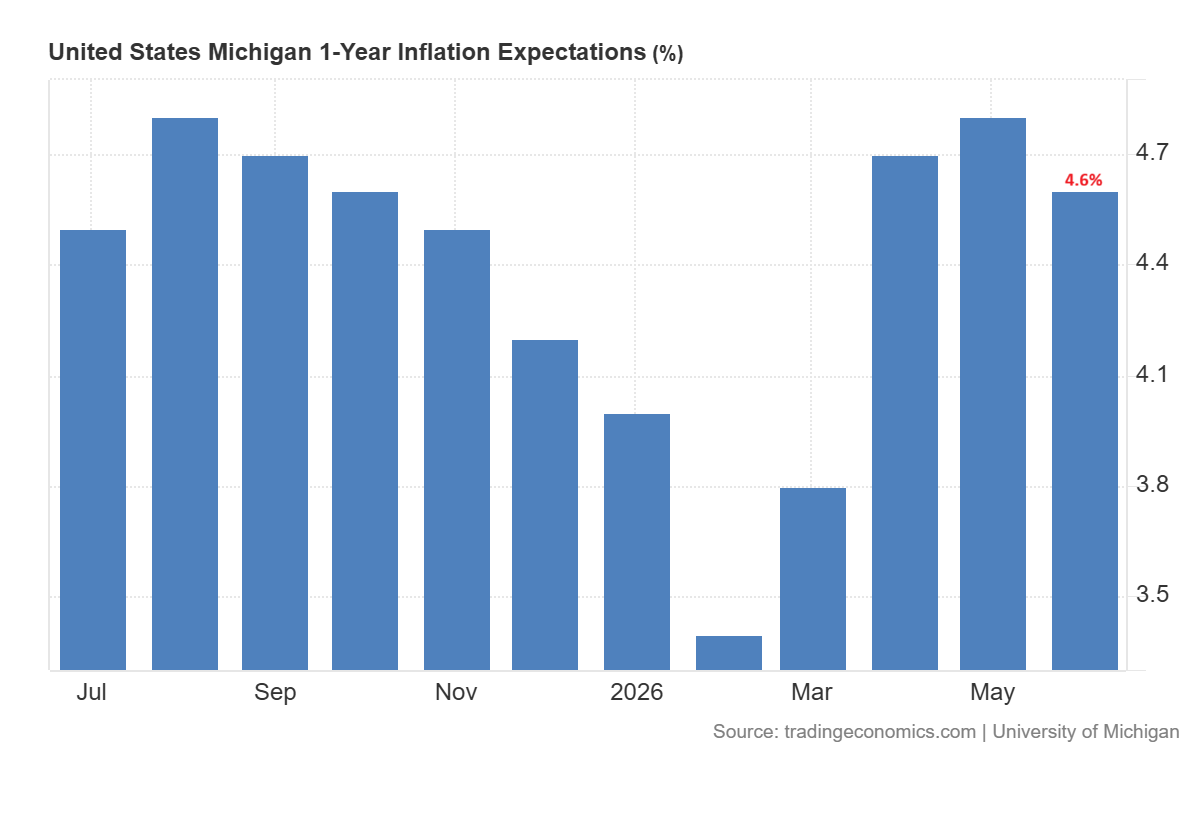
Fed officials also kept the outlook mixed. Mary Daly noted that the economy has been showing positive signs but noted that tariffs and oil shocks could help keep inflationary pressure alive. But the inflation expectations have eased in June as the central bank’s primary concern is price stability. This could lead the Fed to remain cautious despite poor jobs data. The chart below shows that the year-ahead inflation expectations are at 4.6% in June 2026, down from a nine-month high of 4.8% in May.
Meanwhile, the failure to make any progress in U.S.-Iran talks may keep the safe haven demand alive and may favor gold if geopolitical risks take another turn for the worse.
Gold Price Forecast: $4,200 Breakout Holds the Key
XAUUSD Daily Chart Shows Strong Support Near $3,950
The daily chart for spot gold shows that the price hit the strong support of $3,950 and initiated a rebound. The price has been consolidating for the past 5 days, and every drop to $3,950 has initiated a rebound. This indicates that the price has found support and is looking for a strong rally to $4,200 in the short term.
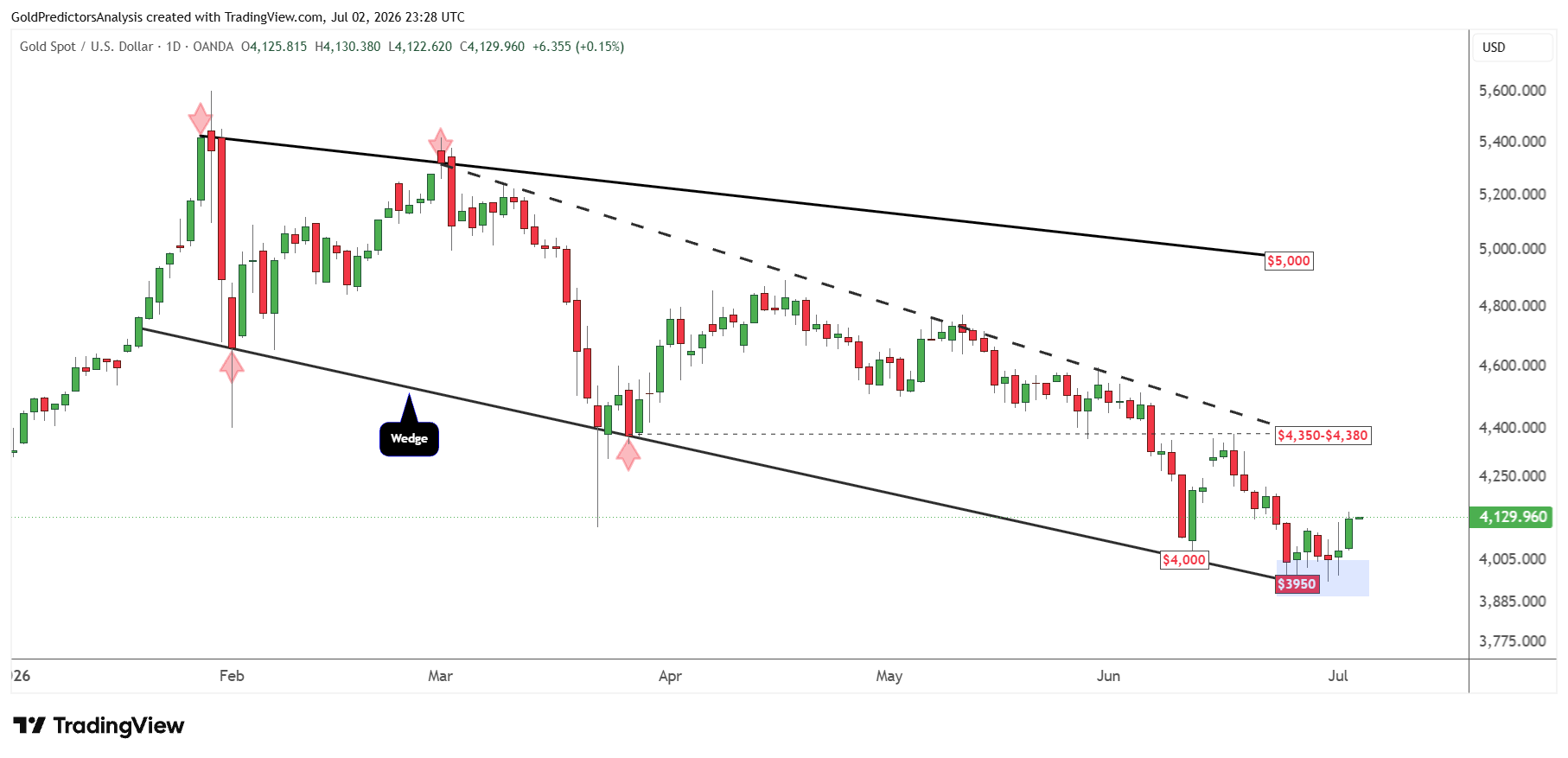
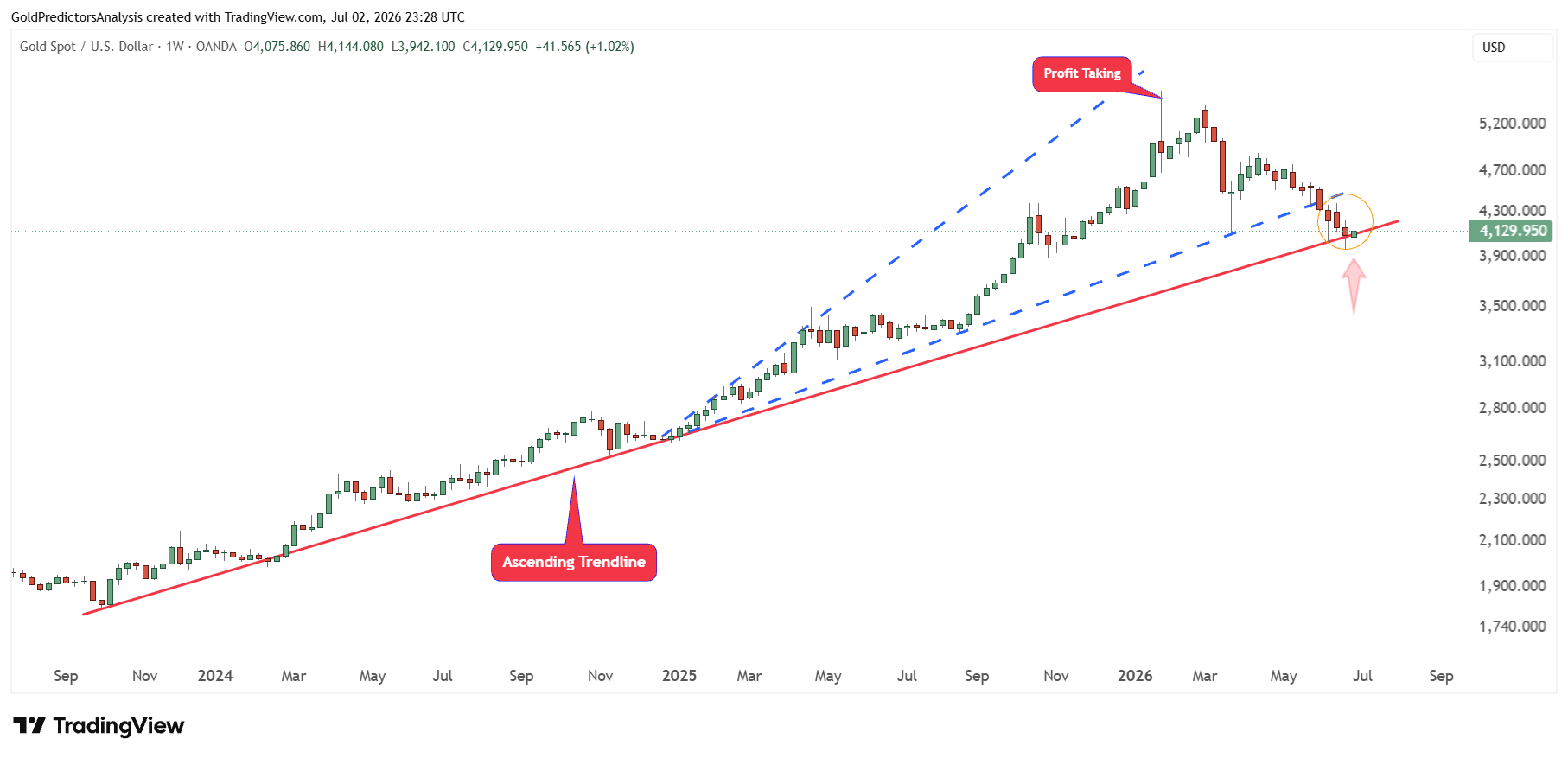
A breakout of $4,200 will likely push the gold price towards $4,350. A break above $4,350 will open the door for a move to $5,000. The strong support in the spot gold market is also observed on the weekly chart below.
A weekly close above $4,200 will be considered a positive development in the gold market. But a break below $4,000 on Friday will indicate further downside next week.
Gold Price Forecast
Every new Gold analysis as it publishes, today's technical signal and key levels, live price — on one page.
See all Gold forecastsXAUUSD 4-Hour Chart Points to $4,350 Resistance
The 4-hour chart for spot gold also shows strong support at $3,930, where the price rebounded higher. This support was defined by the November lows. The price is now heading towards the red highlighted region at the $4,200 to $4,350 area.
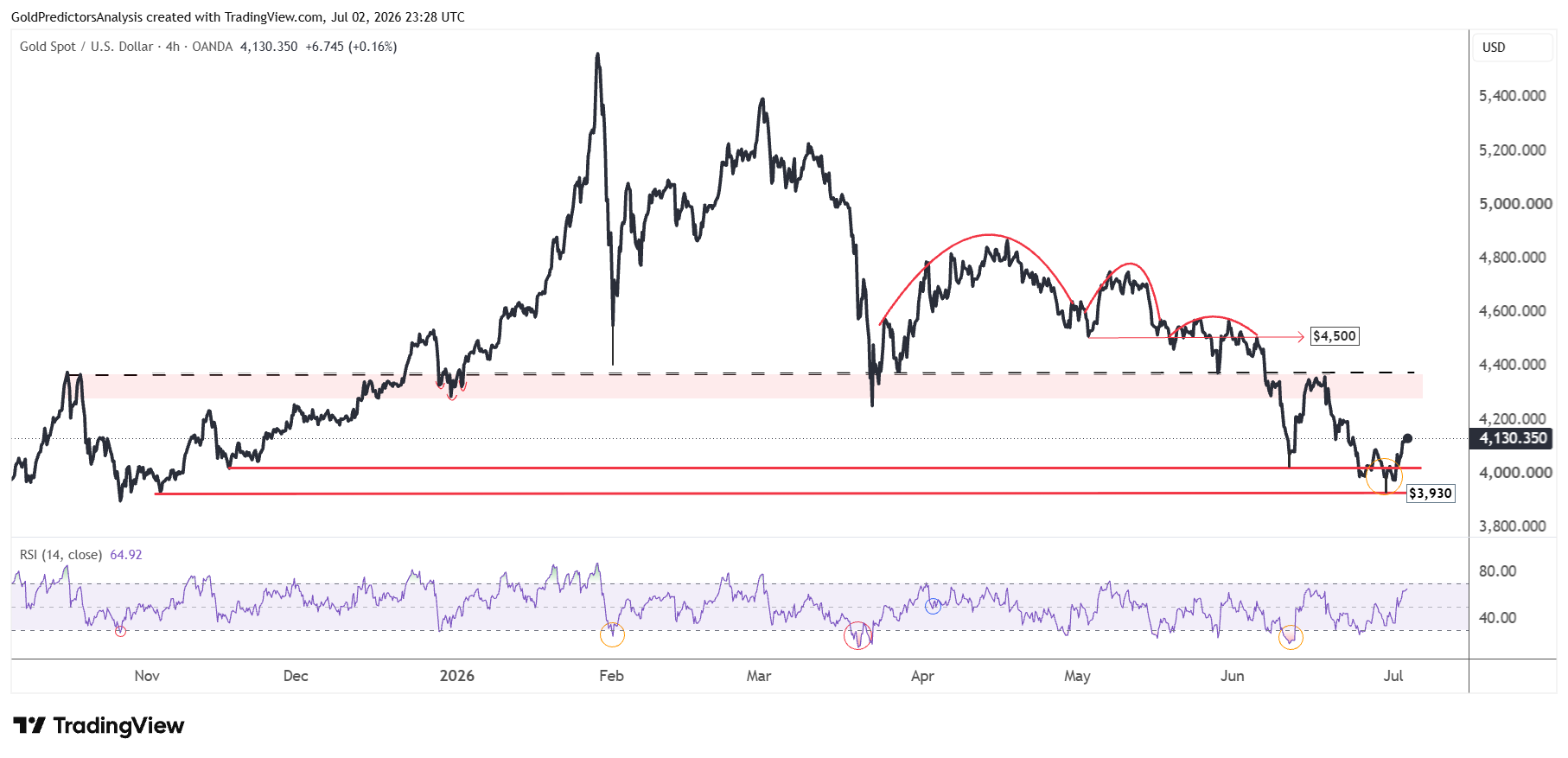
The price action on the 4-hour chart also presents the same view as in the daily chart. A break above $4,350 will likely push the price towards $4,500. On the other hand, a break above $4,500 will indicate further upside towards $5,000.
The strong support in spot gold is also evident in the descending broadening wedge pattern, whereby the price is moving towards $4370.
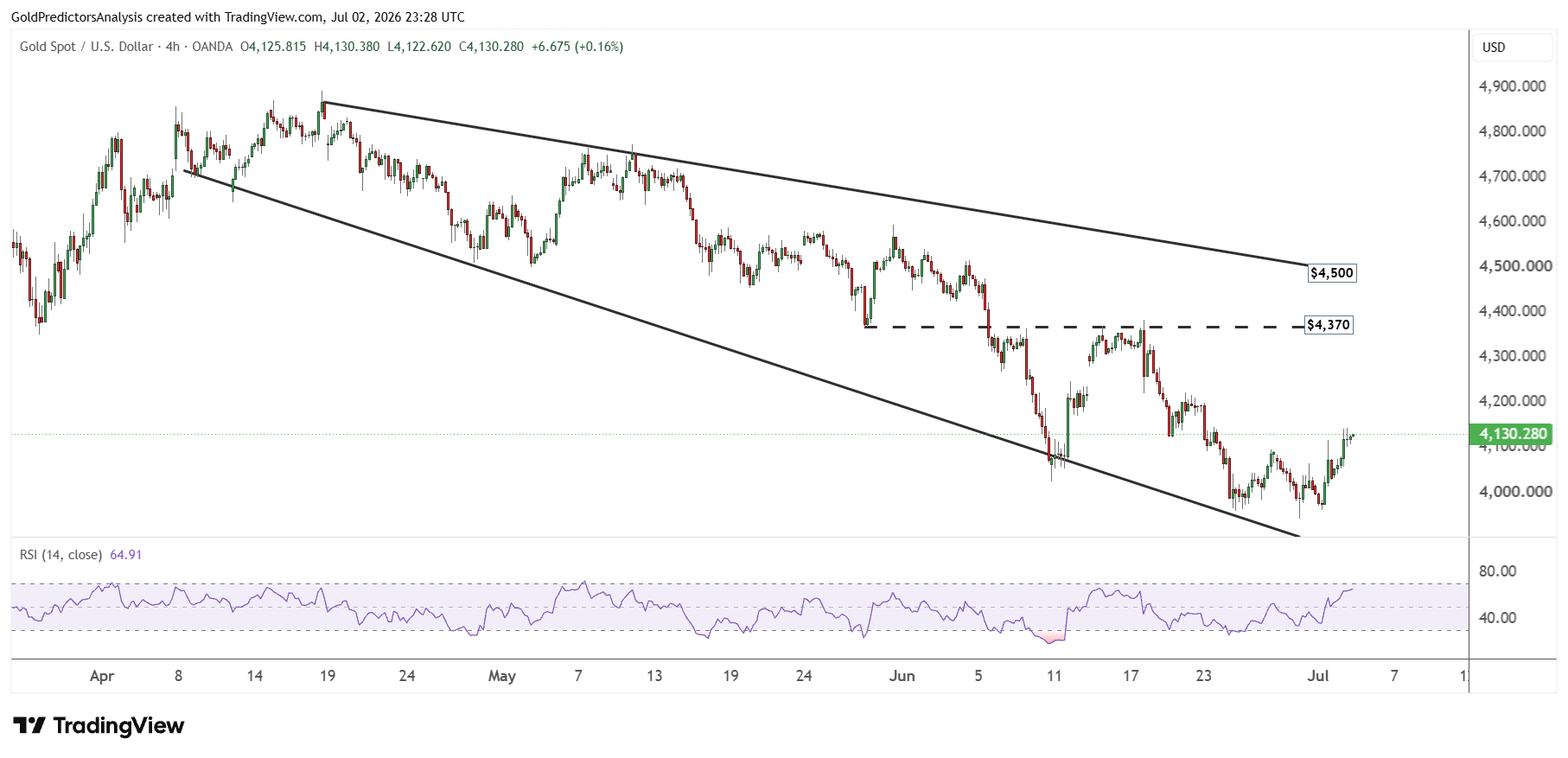
The price action over the past five days has formed a short-term bottom pattern, suggesting a short-term rebound.
Silver Price Forecast: $64.50 Breakout May Trigger Rally
XAGUSD Daily Chart Holds Above Key $55 Support
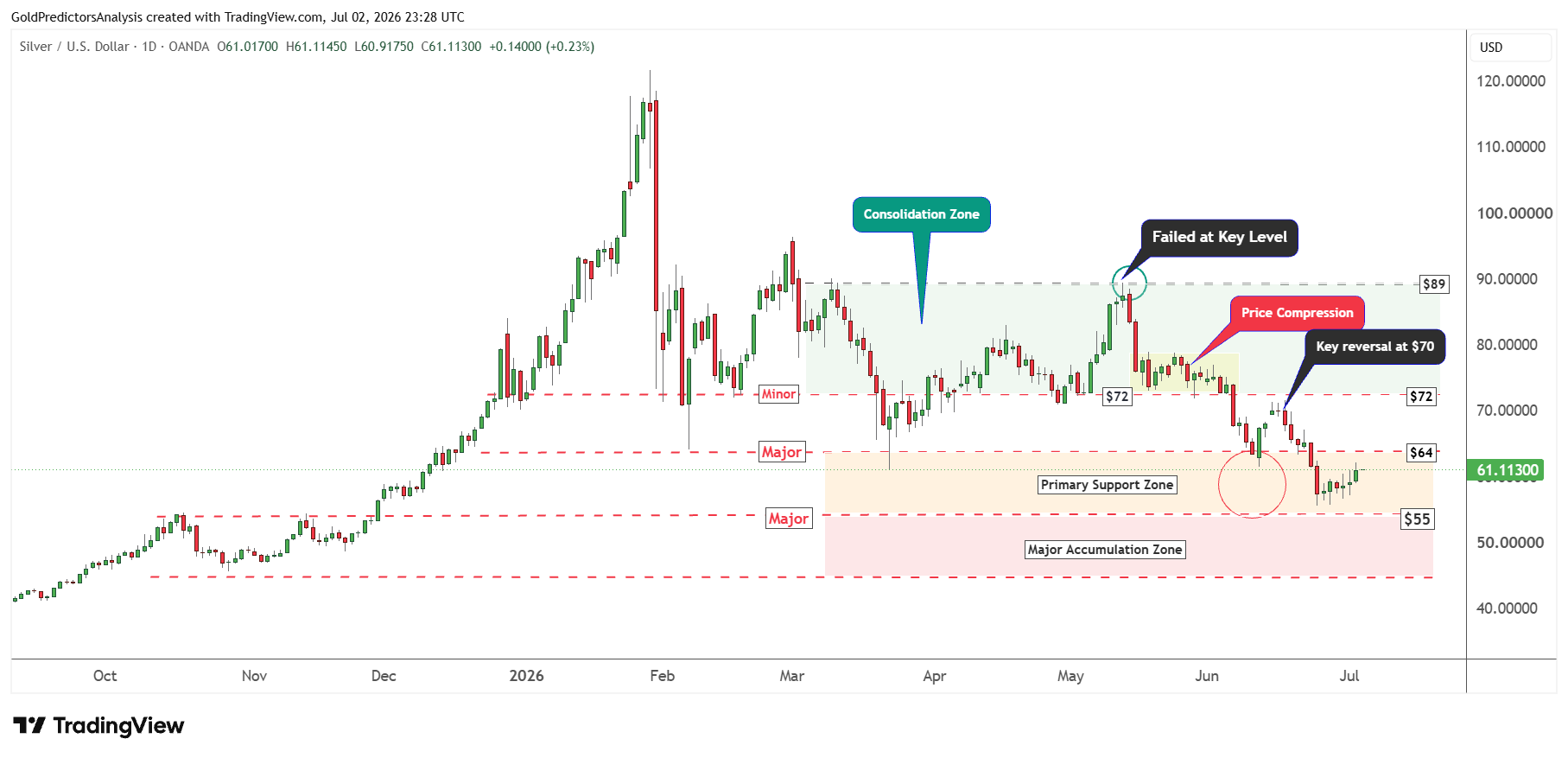
The daily chart for spot silver also shows constructive price action above the $55 area. This zone was discussed in previous analysis as the lower boundary of primary support.
The immediate resistance remains at $64 in the short term. A break above $64 will push the price towards $72. A break above $72 will indicate that a bottom is formed and prices will likely rally towards $89. The price is rebounding from the strong long-term support zone in the spot silver market, which suggests a short-term rally.
XAGUSD 4-Hour Chart Targets $72 After Breakout
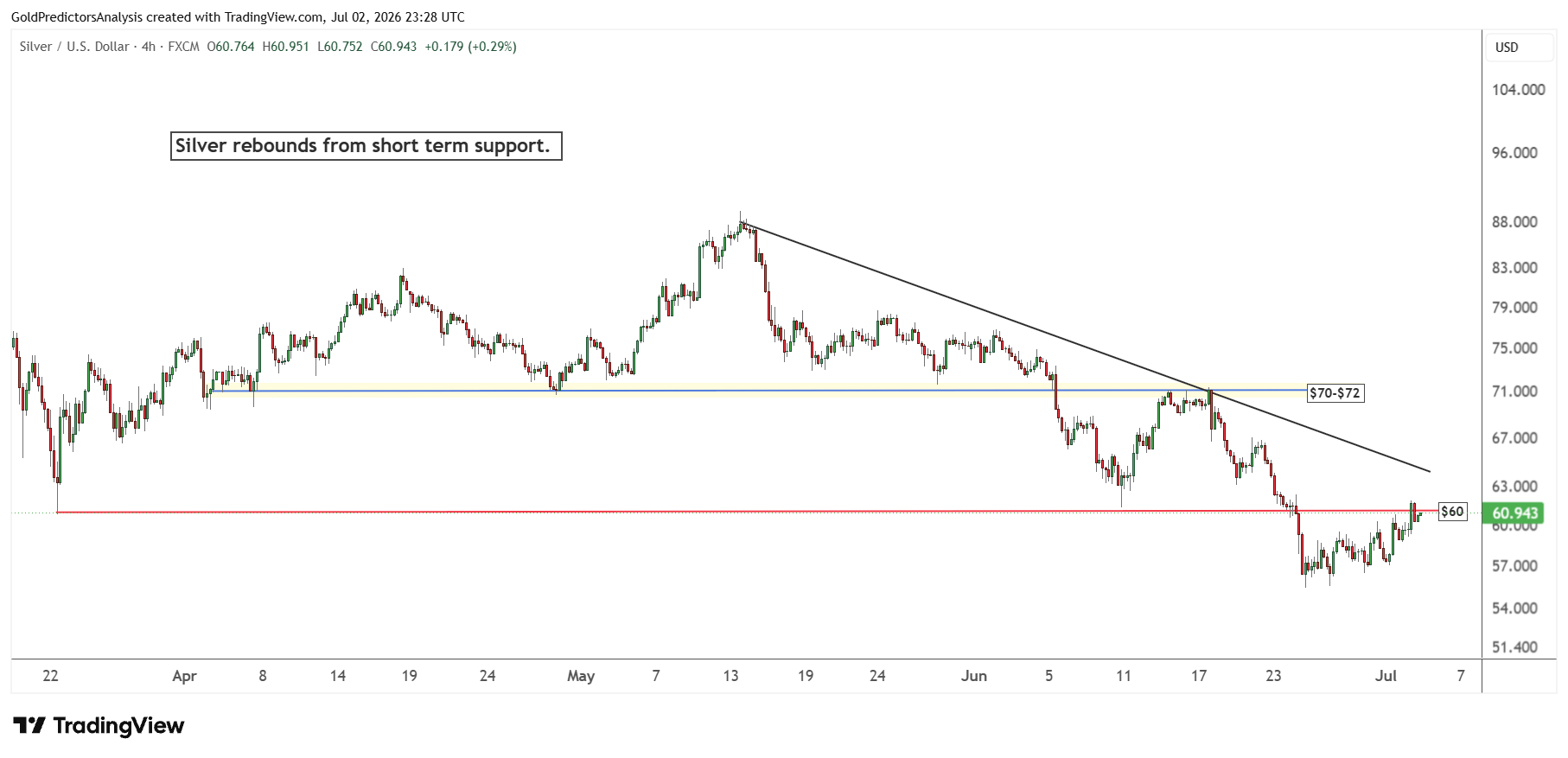
The 4-hour chart for spot silver also shows that the consolidation during the past five days has resolved to the upside. The price is moving towards $64.50, which is defined by the descending trend line emerging from the May 2026 high.
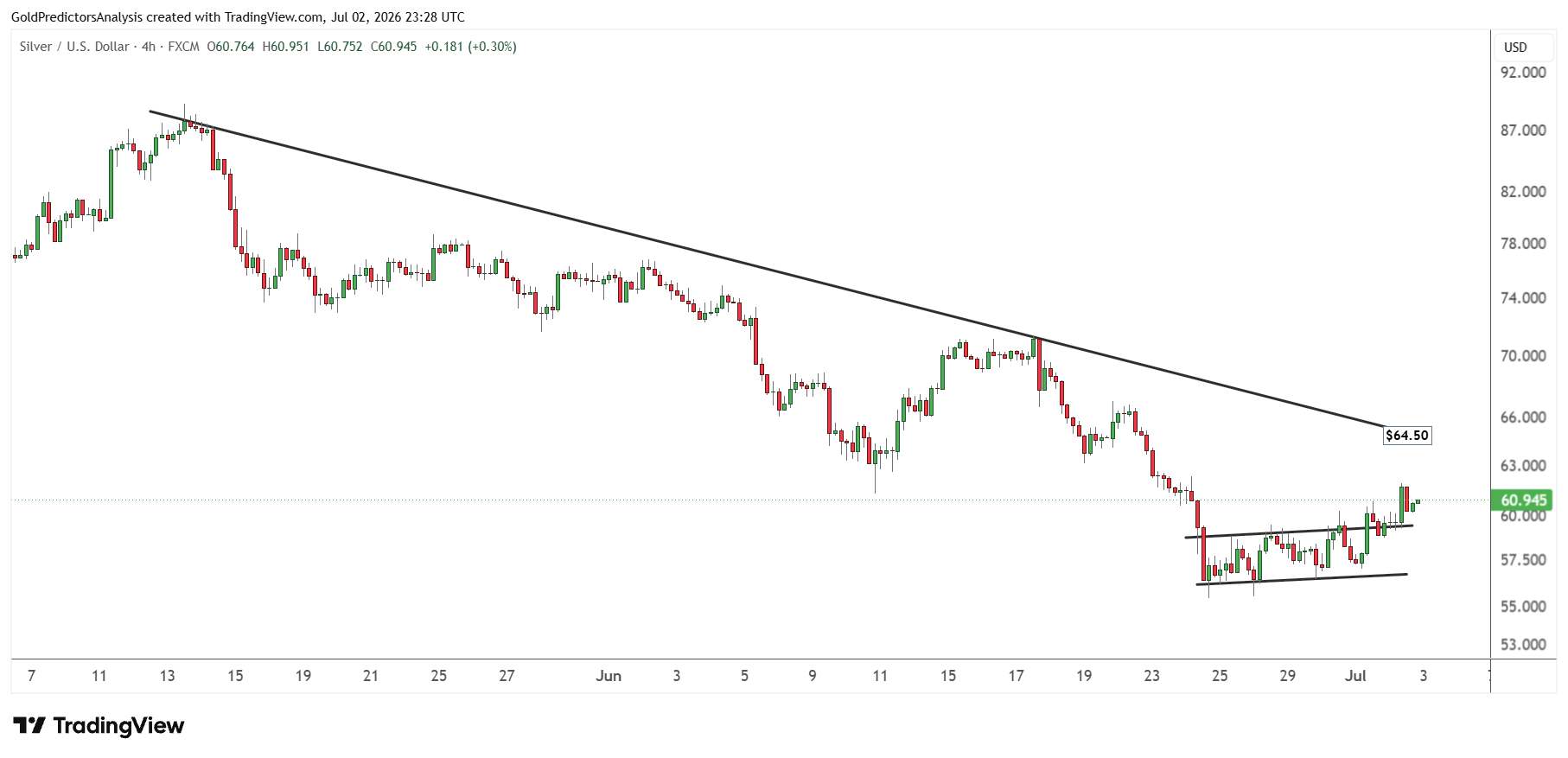
The chart below confirms that a recovery above $64.50 will confirm a rally to the $72 level.
Bottom Line
Gold and silver prices rebounded after weaker jobs data from the U.S., which weighed on the U.S. dollar and Treasury yields. But the US dollar still holds the 100 level, and the market has not completely removed the risk of Fed rate hike.
Gold needs to break above $4,200 to push the prices to $4,350 and $5,000. On the other hand, silver needs to break above $64.50 to set the course for $72 and $89. Until these levels are broken, the rebound could be a short-term recovery from robust support. But the weak labor data, falling inflation expectations and growing safe haven demand from U.S.-Iran tensions could continue to support precious metals in the next few months.
Read more: Strong Dollar Pressures Gold as China Buys the Dip