


Warsh’s First Meeting Rewrote the Gold Trade
Spot Gold dropped $56.10 or 1.33% to $4,152.90 at 17:46 GMT Friday, extending the selling into the end of the week after the most consequential Fed meeting in months. For the week the metal lost 1.55%. This was not a geopolitical shock or a collapse in physical demand. This was the market repricing the entire rate outlook after a committee that sounded nothing like what the bulls were expecting.
Kevin Warsh chaired his first FOMC meeting and the gold market found out fast that the leadership change was more than a nameplate swap. Traders who expected Warsh to carry forward the direction Powell had set walked into a meeting that went the other way entirely. The transition was supposed to be procedural. It turned out to be the most important policy signal of the year.
Nine Policymakers Lined Up Behind Higher Rates

The rate hold at 3.50% to 3.75% was priced in. The projection that nine of nineteen officials now see at least one hike before the end of 2026 was not. Earlier this year nobody on the committee was pointing toward higher rates. That is not a minor revision. That is the committee reversing its outlook in one meeting and gold dropped the moment the dot plot came out.
The easing language came out of the statement entirely. For months that language had been supporting gold by keeping alive the assumption that the next move in rates would be lower. Warsh pulled it and made the focus inflation. The committee is not ready to discuss cuts and the intraday sell-off confirmed the market believed every word of it. The selling started the moment the projections hit and gold has not found a bid since.
Gold had been rallying for months on the expectation that rates were heading lower. Gold pays nothing and Treasuries are paying more by the day. Without rate cuts coming, the bulls do not have an argument. Warsh told the market that argument is off the table for 2026 and the repricing started before the press conference was over.
Gold Price Forecast
Every new Gold analysis as it publishes, today's technical signal and key levels, live price — on one page.
See all Gold forecastsDollar and the 2-Year Piled On
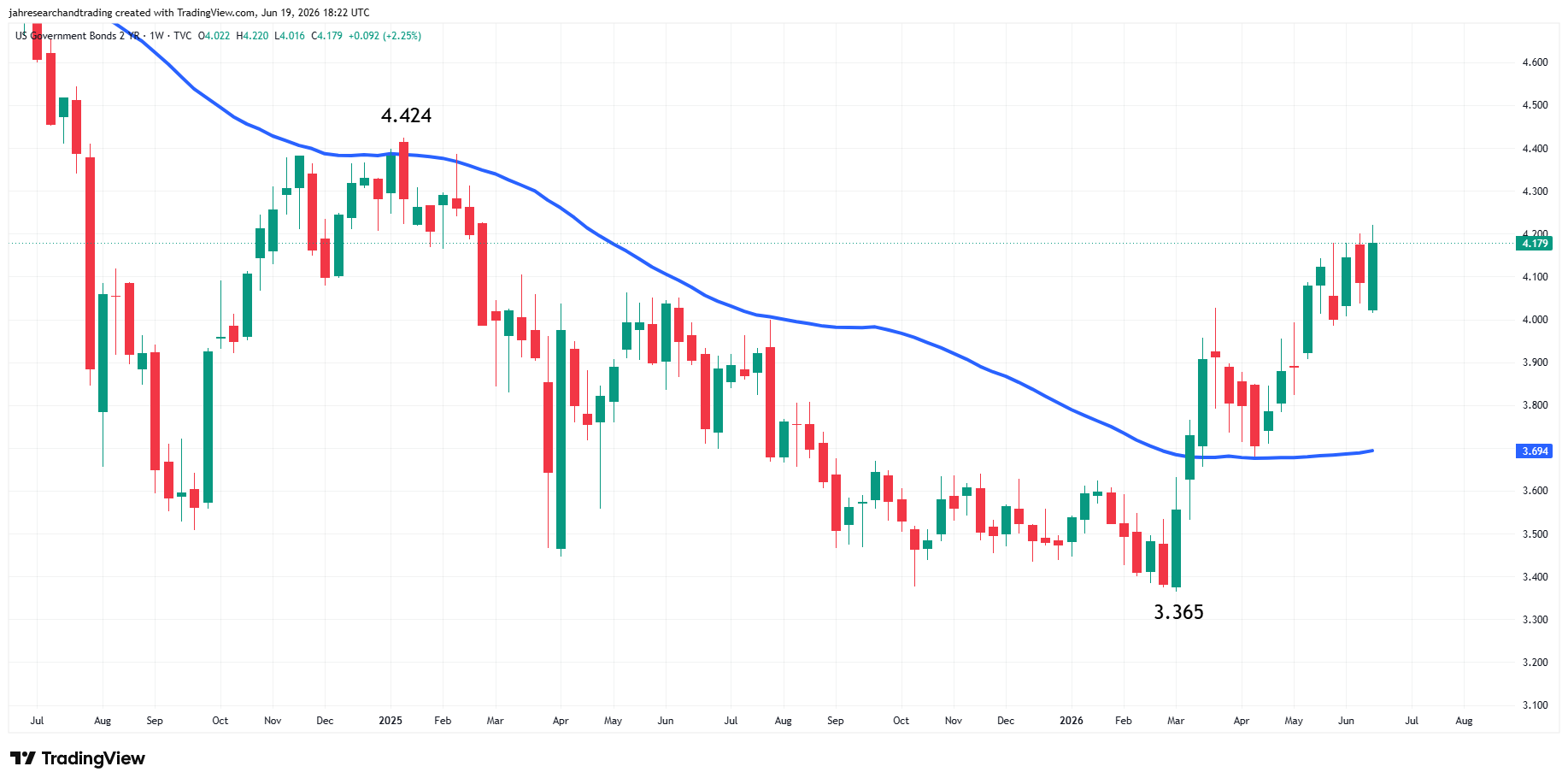
The 2-year Treasury yield climbed 2.25% on the week to 4.179%. Gold traders know what a move like that means. Money left metals and went straight into yield and there was nothing gradual about it. The short end of the curve repriced the rate path in a matter of sessions and gold absorbed the full weight of it.
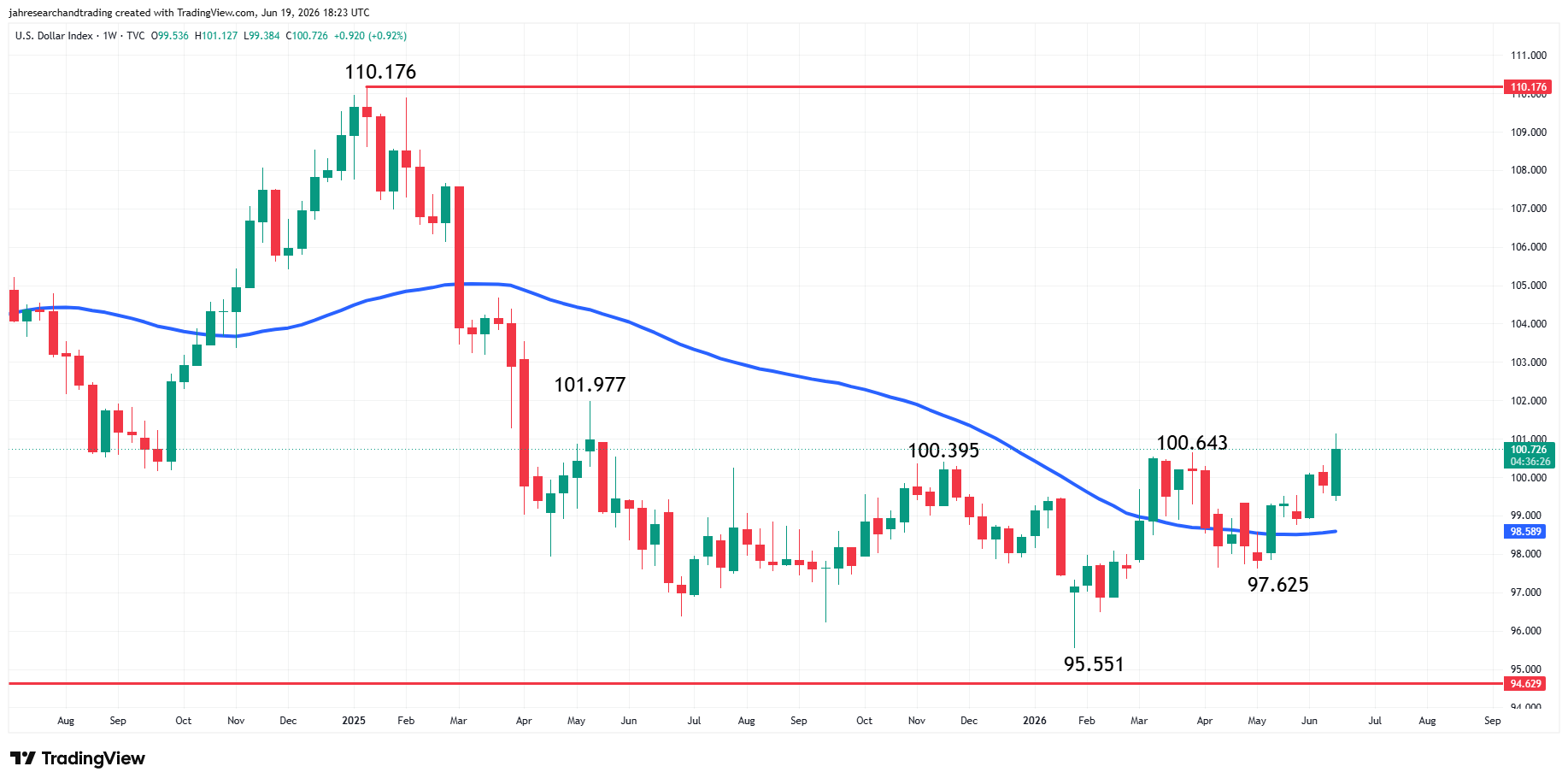
The Dollar Index gained 1.00% for the week on top of the yield move. Earlier this year the dollar had been cooperating with gold’s rally. That reversed the moment the projections came out. A rising dollar and climbing short-term yields at the same time is the worst combination gold can face in a rate-driven market. Either one alone is a problem. Both together and every bounce becomes a selling opportunity. The two forces fed off each other all week and gold was caught in the middle of it.
The Bull Case Lost Its Strongest Leg
Central bank buying has not stopped. The Iran situation remains unresolved and continues to provide a geopolitical floor underneath the market. Concerns about government debt levels are still driving demand for hard assets. None of those factors disappeared this week and they could limit how far the selling goes during periods of weakness. The longer-term case for gold has not fallen apart.
But the trade that powered the rally for months was the rate cut expectation and Warsh just took it apart. The Fed does not even need to follow through with a hike for gold to stay under pressure. The expectation alone does the damage. When the market is repricing the probability of tighter policy, gold pays for it whether the hike actually arrives or not. That is exactly what played out this week. The committee did not raise rates. It just changed the conversation and gold sold off as if it had.
I keep coming back to how fast the repricing happened. A week ago the debate was about when cuts would begin. Now the market is weighing whether a hike lands before year-end. That is a completely different environment than what gold was trading on heading into the meeting and the weekly loss says the adjustment is still underway.
Inflation has come down from the highs of the past several years but the committee clearly believes the job is not finished. Policymakers showed no interest in preparing the market for an easing cycle and until that changes, the rate trade works against gold on every rally.
Daily Spot Gold (XAUUSD) Technical Analysis

Spot Gold is in a downtrend according to both the major moving averages and the main swing chart. And that’s not going to change until the market starts to make higher-highs and higher-lows that lead to the recapturing of key resistance points.
The main swing top at $4382.62, followed by the 200-day moving average at $4463.02 and the 50-day moving average at $4540.55. These are the major resistance points.
The short-term range is $4023.87 to $4382.62. The market is currently straddling its retracement zone at $4203.24 to $4160.91.
While the major resistance points contain the intermediate and long-term outlooks, the retracement zone controls the short-term direction. If buyers come in to support this area then a secondary higher bottom could form, which could shift short-term momentum to the upside. If buyers don’t show up to stop the slide then $4382.62 becomes a major swing top, the bearish traders return and new sellers look for a breakdown under the June 11 main bottom at $4023.87.
Essentially, trader reaction to $4203.24 to $4160.91 sets the near-term tone. This is important because we can’t really think about a main trend change or a moving average breakout until the short-term trend turns bullish.
What to Watch
The next round of inflation data is going to tell gold traders whether Warsh’s committee was early or right on time. If the numbers come in hot, the hawkish projections get validated and the rate hike conversation picks up speed. That keeps the dollar bid alive and Treasury yields climbing, which is the exact combination that broke the rally this week. If inflation softens, gold gets a reason to test whether buyers are willing to step back in. But softening has to show up in the actual data. The Fed made clear this week that it is not going to ease on forecasts alone.
The retracement zone at $4,203.24 to $4,160.91 is where this gets decided. Buyers defending it would form a secondary higher bottom and put short-term momentum back in their favor. If they walk away, the June low at $4,023.87 is the next target and the bearish structure stays intact. The major moving averages are both overhead and the market has to reclaim the retracement zone before it can even think about challenging them.
If you’d like to know more about how to trade gold, please visit our educational area.


