Gold Hovers Near Bear Market Line as Bearish Drivers Stack Up
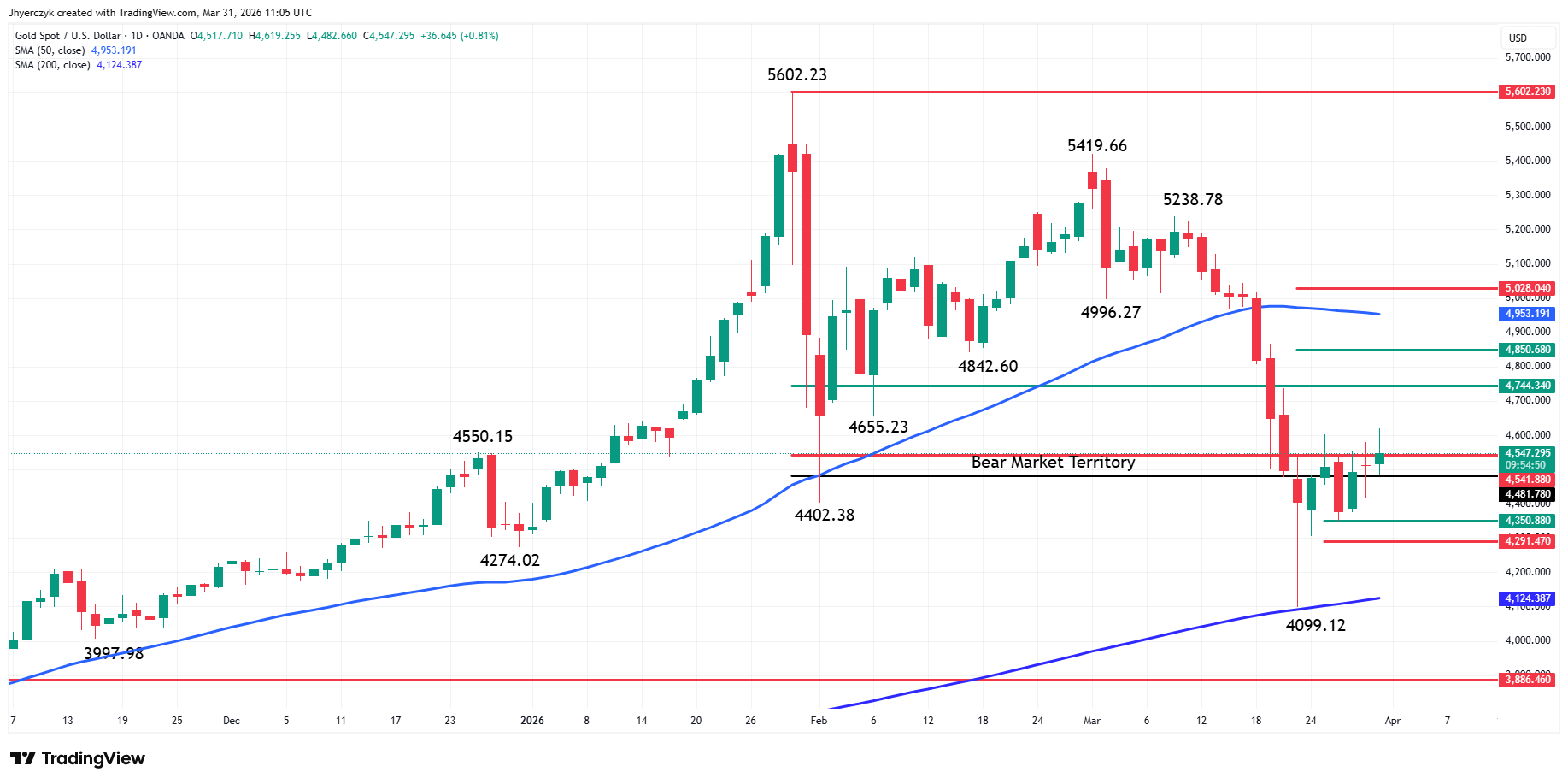
Spot Gold (XAUUSD) is edging higher on Tuesday while hovering near the bear market line at $4481.78 and straddling a former 61.8% support level at $4541.88. Since the March 23 plunge to $4099.12 and the successful test of the 200-day moving average, currently at $4124.45, the market has been consolidating inside a $503.53 trading range. Support has been a minor retracement zone at $4350.88 to $4291.47.
Since that break on March 23 reaffirmed the downtrend, I’ve been waiting for a strong counter-trend rally to drive the market back to $4850.68 to $5028.04, where sellers are likely to reemerge. The 50-day moving average resistance at $4953.38 is inside this zone.
Technical Outlook
That’s the short-term outlook. Longer-term, we’re dealing with the range formed by the October 28 main bottom at $3886.46 and the January 29 main top at $5602.23. Its 50% level or pivot at $4744.34 is essentially controlling the direction of the market.
Technically, I’m still leaning to the downside but more interested in selling a rally where I can control the risk than pressing the market lower by selling weakness. The quick reversals and snapback rallies make selling weakness a risky venture.
Three Bearish Drivers and All of Them Are Pointing the Same Way
Fundamentally, gold is currently in a position to post one of its worst months in years, and the move isn’t just random or an aberration. If you’re really focused on trading this market, there are three clear drivers that you’ll need to focus on right now and all of them are leaning toward the bearish side.
Rate Expectations Shifted and Gold Felt It First
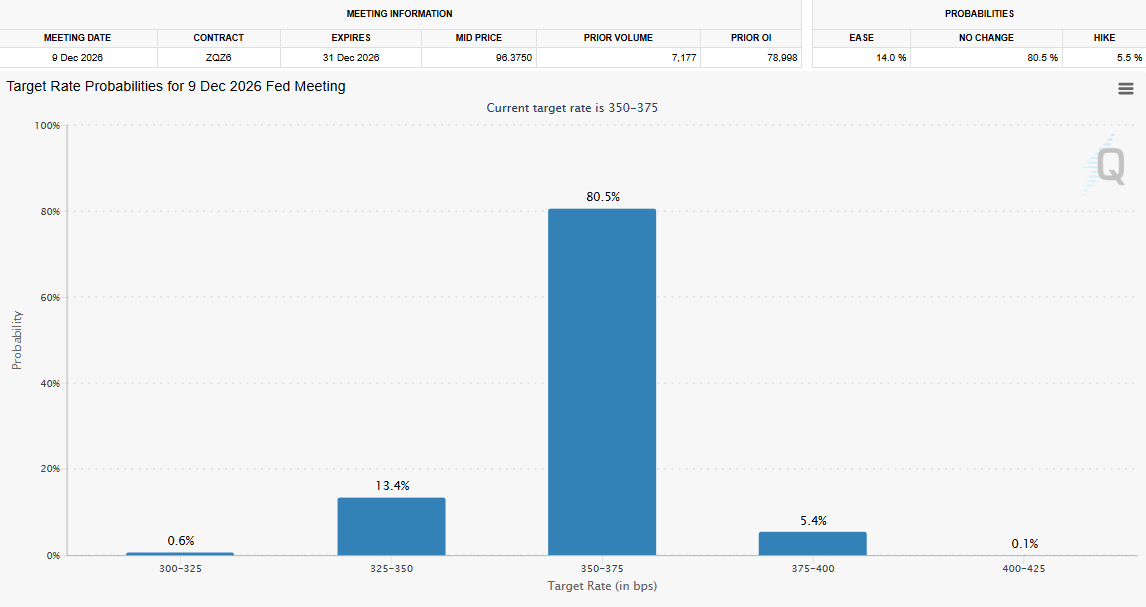
First, since the start of the year and up to January 29, rate expectations have shifted hard, and I believe that this is the main driver of the bearish tone in gold. You don’t have to have any special tools or flashy indicators to see that the top in gold came one day after the first Fed monetary policy of the year. So it’s easy to conclude that something the Fed said or did convinced some of the biggest bullish gold traders to book profits.
Gold Price Forecast
Every new Gold analysis as it publishes, today's technical signal and key levels, live price — on one page.
See all Gold forecastsIf we shift forward to the start of the war between the U.S. and Iran on February 28, we can see that any rate cuts the market was pricing in earlier have been essentially wiped off the map, and some surveys even show the expectations are even leaning toward a potential rate hike by the end of the year, although Fed Chair Powell tried to put that idea to bed on Monday. Even with Powell pushing back on the need for a hike, the market still isn’t buying into a near-term easing cycle. That shift alone since the start of the year has been enough to keep pressure on gold prices.
A Stronger Dollar Is Making It Worse
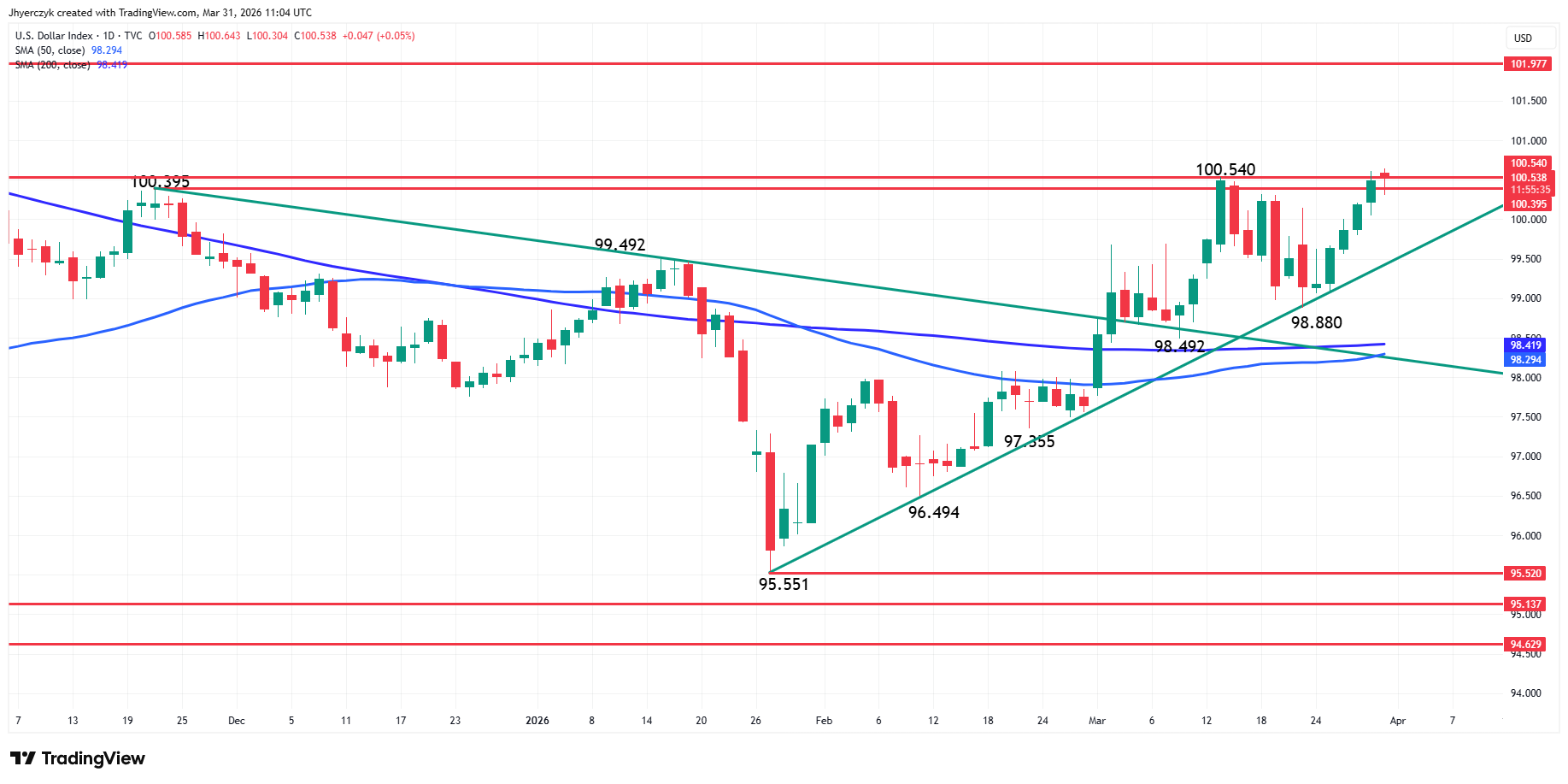
Second, the strength in the U.S. Dollar is supporting the move in interest rate expectations, too. Currently, the dollar is in a position to post its best monthly gain since July. What we’ve seen this month is higher-for-longer rate expectations paired with risk aversion which means investors have been reducing risk exposure and moving money into the greenback. I think when gold failed to react to a clear safe-haven situation on March 3 and the dollar went up, this told traders that higher rates and not safe-haven demand was controlling the trade.
Safe-Haven Money Went to Oil, Not Gold
Third, now we’re not saying that there isn’t geopolitical risk in the markets at this time. But we’ve observed that the safe-haven money has moved to crude oil, which is keeping inflation concerns elevated. That, in turn, reinforces my first two points, higher-rates for longer and a stronger dollar.
The Setup Is Bearish Until Rates or the Dollar Break
Looking ahead, I believe we’re seeing a setup in the markets that is clearly leaning bearish for gold. Simply stated, if rate cuts remain off the table and the dollar remains strong, the upside will be limited for gold. If you’re hoping for a bullish turn in gold then you really are just wishing for a shift in rate expectations or a massive break in the dollar. And I don’t see that happening as long as oil prices remain elevated.
More Information in our Economic Calendar.