Inflation Data and Its Implications for Gold
Investors are particularly focused on the upcoming release of the US Core Personal Consumption Expenditures Price Index (Core PCE) for April. Expected to show a month-on-month increase of 0.3% and a year-on-year rise of 2.8%, this data could stiffen the dollar if figures exceed expectations, potentially capping gains in the gold market.
Geopolitical Developments and Market Response
Amid escalating tensions in the Middle East, gold continues to benefit from its status as a traditional safe-haven asset.
The recent assertive military actions by Israel, establishing control over strategic border regions, have heightened geopolitical uncertainties, further supporting gold’s value.
US Economic Indicators and Federal Reserve Outlook
Recent US economic indicators have shown a mixed picture. The second estimate of the Q1 GDP confirmed a growth rate of 1.3% annually, consistent with expectations but down from the previous 1.6%.
Meanwhile, US jobless claims unexpectedly rose to 219K, suggesting potential volatility in the labor market. Comments from Federal Reserve officials, including Chicago Fed President Austan Goolsbee and Atlanta Fed President Raphael Bostic, underscore a cautious approach towards rate cuts, emphasizing ongoing concerns about inflation and economic stability.
Short-Term Forecast
Gold (XAU/USD) sees a slight increase to $2,342.86 per ounce, with market sentiment buoyed by a dip in the US dollar and Treasury yields. Investors are now keenly anticipating the upcoming US Core PCE data, which is expected to influence Fed rate decisions and gold’s price trajectory.
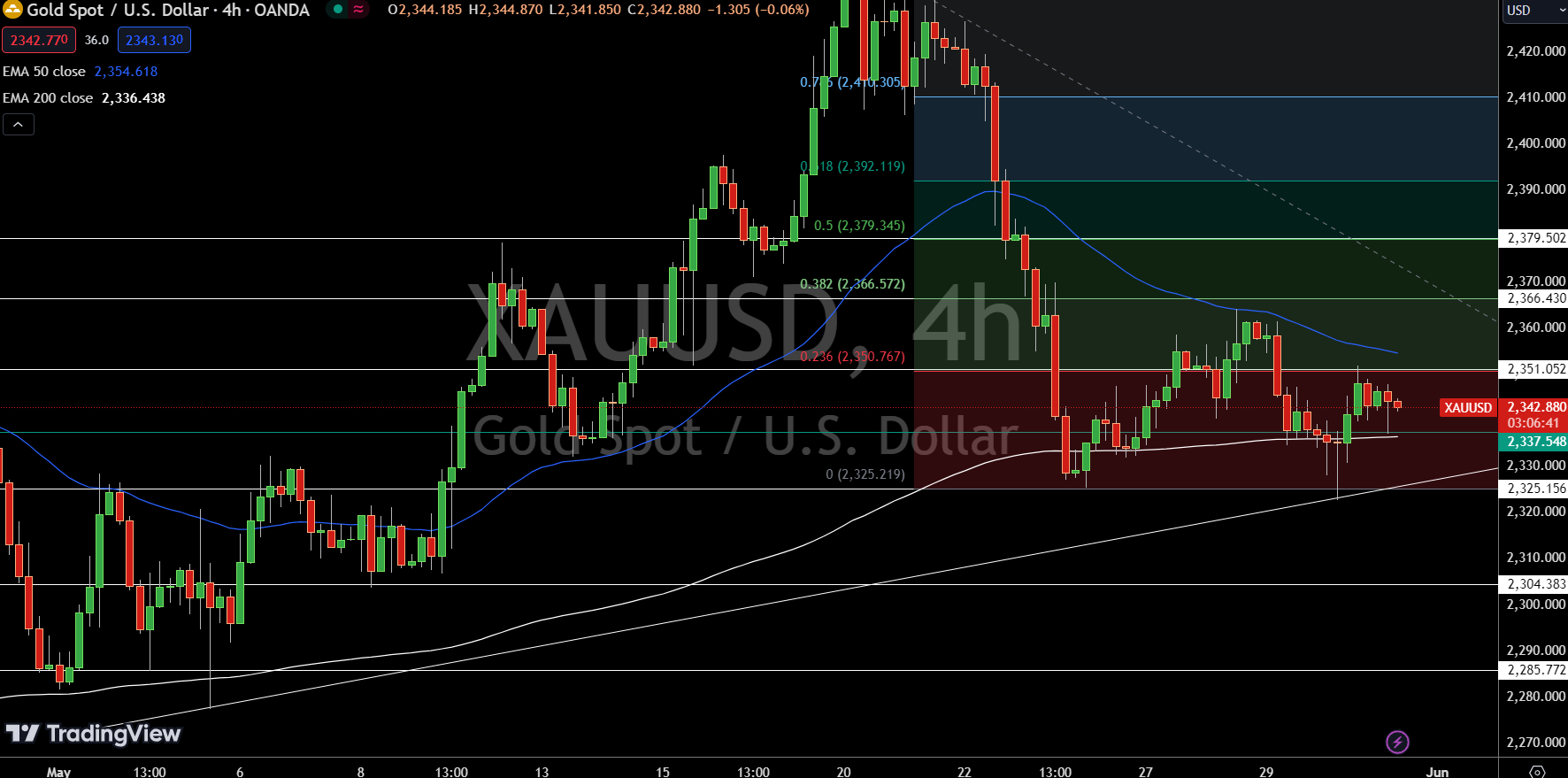
The conclusion for today’s trading suggests a bullish outlook above the pivot point of $2,337.55; however, any break below this level could prompt a substantial sell-off.