
USD/JPY took center stage in early trading on Friday, January 30, as market focus shifted to the Japanese economy and the Bank of Japan.
Crucial retail sales, inflation, and labor market data from Japan fueled speculation about an April BoJ rate hike amid ongoing chatter of yen intervention threats.
The USD/JPY pair continued trading below the crucial 155 level after plunging from 159.225 to 152.092 in a three-session sell-off.
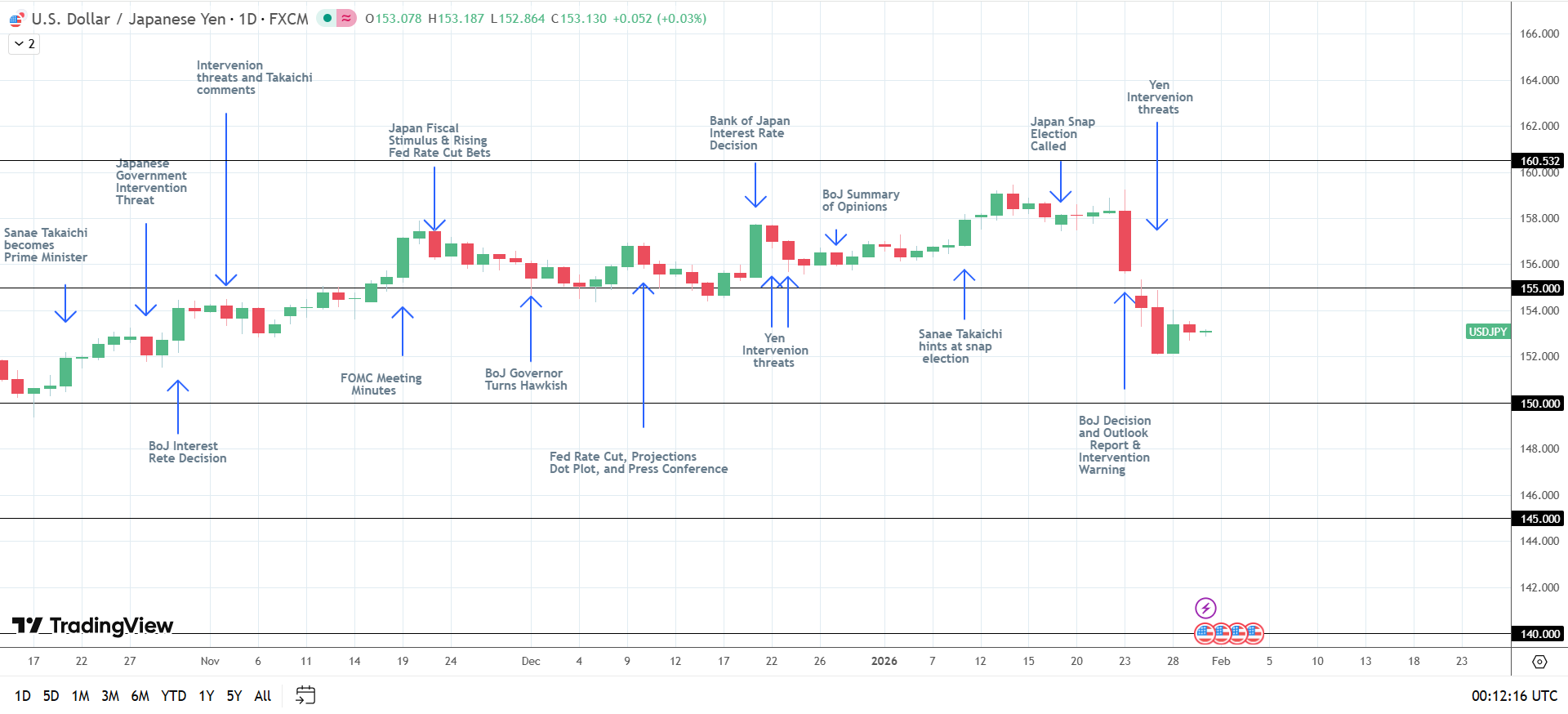
A hawkish BoJ policy outlook, warnings of yen interventions, and US dollar weakness continue to support a bearish medium-term outlook for USD/JPY.
Below, I’ll discuss the macro backdrop, near-term price catalysts, and technical levels traders should closely watch.

Japanese Economic Data Boosts BoJ Rate Hike Bets
On January 30, Tokyo inflation, retail sales, and labor market data contrasted with the BoJ’s upbeat quarterly economic projections for 2026.
Tokyo’s annual inflation rate slipped from 2.0% in December to 1.5% in January, while the so-called core-core inflation eased to 2.0% (December: 2.3%), holding at the BoJ’s 2% target.
As a leading indicator of national inflation, January’s figures potentially cooled bets on an April BoJ rate hike.
Meanwhile, retail sales fell 0.9% month-on-month in December, following November’s 1.1% rise. Retail sales trends are a key focal point for the BoJ, given that private consumption accounts for around 55% of Japan’s GDP.
Nevertheless, a stable labor market, with unemployment holding at 2.6% in December, supports wage growth. Typically, strong wage growth boosts spending, fueling demand-driven inflation, while driving economic momentum.
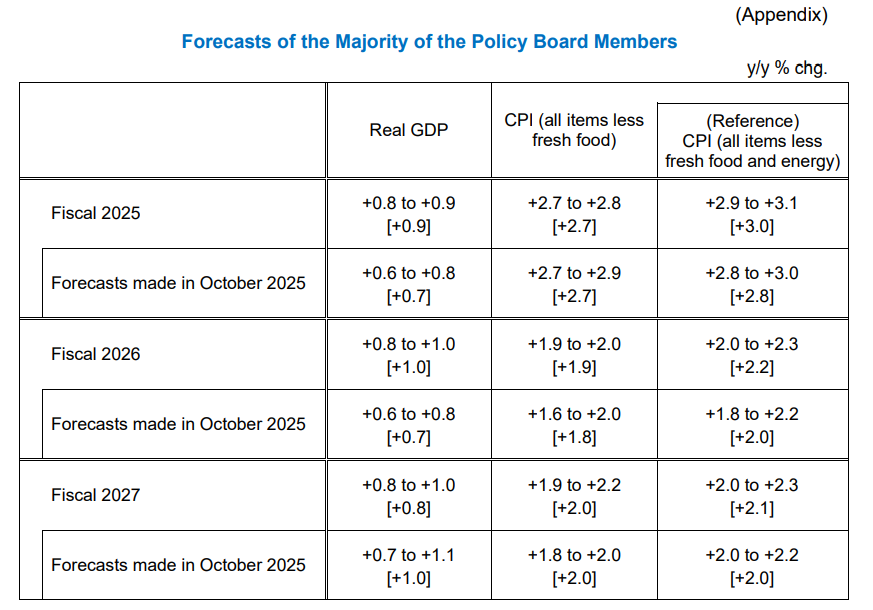
The Japanese economic data followed last week’s BoJ decision to keep interest rates at 0.75%, aligned with market expectations. However, the BoJ’s quarterly outlook report showed upward revisions to inflation and GDP growth for 2026 from the previous quarter.
Last week, BoJ Governor Kazuo Ueda reiterated that rate hikes would continue if the economy and prices moved in line with forecasts.
USD/JPY responded to the weaker-than-expected economic indicators, rising from 152.889 to 153.292, reflecting a less hawkish BoJ rate path. However, the BoJ’s forecasts suggest a pickup in inflation and consumption, supporting the bearish short- to medium-term outlook for USD/JPY.
Additionally, the unexpected fall in retail sales may reflect the lingering effects of the weaker yen pushing import prices higher. Rising import prices erode Japanese households’ purchasing power, another concern among the BoJ’s board members. A more hawkish BoJ rate path would strengthen the yen, soften import prices, and boost households’ purchasing power.
USD/JPY Price Forecast
Every new USD/JPY analysis as it publishes, today's technical signal and key levels, live price — on one page.
See all USD/JPY forecasts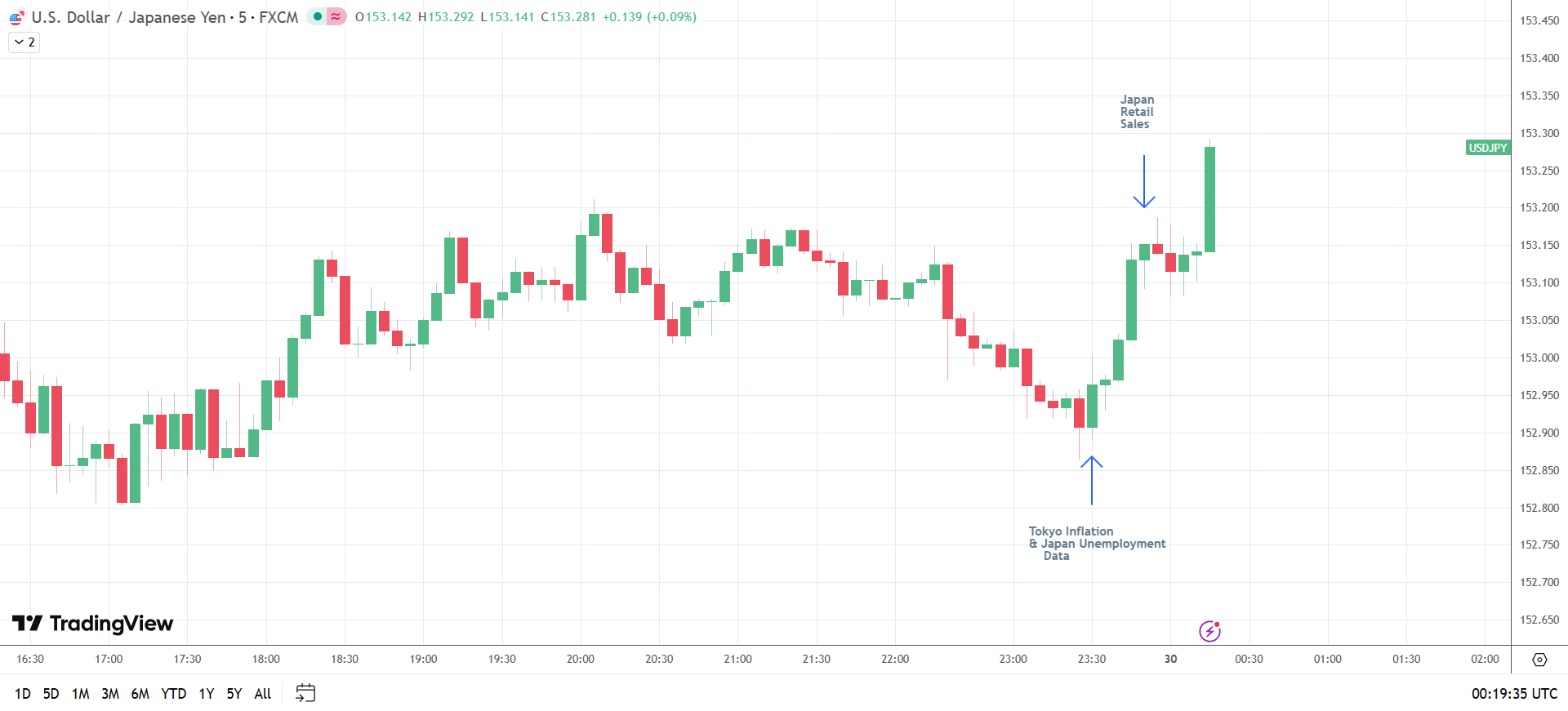
Economists Turn Optimistic About the Elections and Economic Outlook
Meanwhile, economists have also taken a more upbeat outlook on the Japanese economy, as tariff risks and inflationary pressures on households abated. East Asia Econ commented:
“Japan’s economy in 2025 suffered not one but two shocks: the tariff hit to business, and the inflation shock to households. Both have now lifted, with consumer confidence in Jan the highest since 2023. That helps the cycle. And snow aside, means Feb isn’t a bad time for the LDP to try an election.”
East Asia Econ referred to Prime Minister Sanae Takaichi’s first national election after heading the Liberal Democratic Party in October. The national election will take place on February 8. USD/JPY rallied from 147.819 on October 3 to a January high of 159.454 amid concerns about Prime Minister Takaichi’s fiscal spending plans and Japan’s 240% debt-to-GDP ratio.
US Producer Prices to Spotlight the Fed
Later on Friday, US economic indicators will influence expectations of an H1 2026 Fed rate cut and buying interest in the US dollar.
Economists forecast producer prices will rise 2.9% year-on-year in December, down from 3.0% in November.
In-line or softer-than-expected producer prices would raise expectations of an H1 2026 Fed rate cut. A more dovish Fed policy stance would weaken demand for the US dollar, supporting the bearish short- to medium-term outlook for USD/JPY.
This week, the Fed kept interest rates at 3.75%, citing a resilient US labor market and elevated inflation. However, Fed Chair Powell’s comments on inflation suggested the Fed could lower rates if inflation cools.
Traders should closely monitor sentiment toward the Fed’s rate path for the USD/JPY pair’s near-term trends.
According to the CME FedWatch Tool, the probability of a March Fed rate cut slipped from 17.3% on January 27 to 13.5% on January 28, following Powell’s press conference. Furthermore, the chances of a June cut eased from 65.4% to 60.8% on January 28. The modest declines underscore optimism that inflation will soften, enabling the Fed to reduce rates further.
Importantly, an H1 2026 Fed cut would boost bets for two rate cuts in 2026. Multiple Fed rate cuts would coincide with the BoJ’s hawkish policy stance, indicating a narrowing of US-Japan rate differentials. Narrowing rate differentials, favoring the yen, would weigh on USD/JPY.
Technical Outlook: Key Levels to Watch
For USD/JPY price trends, traders should consider technicals and closely track economic data, central bank chatter, and geopolitical developments.
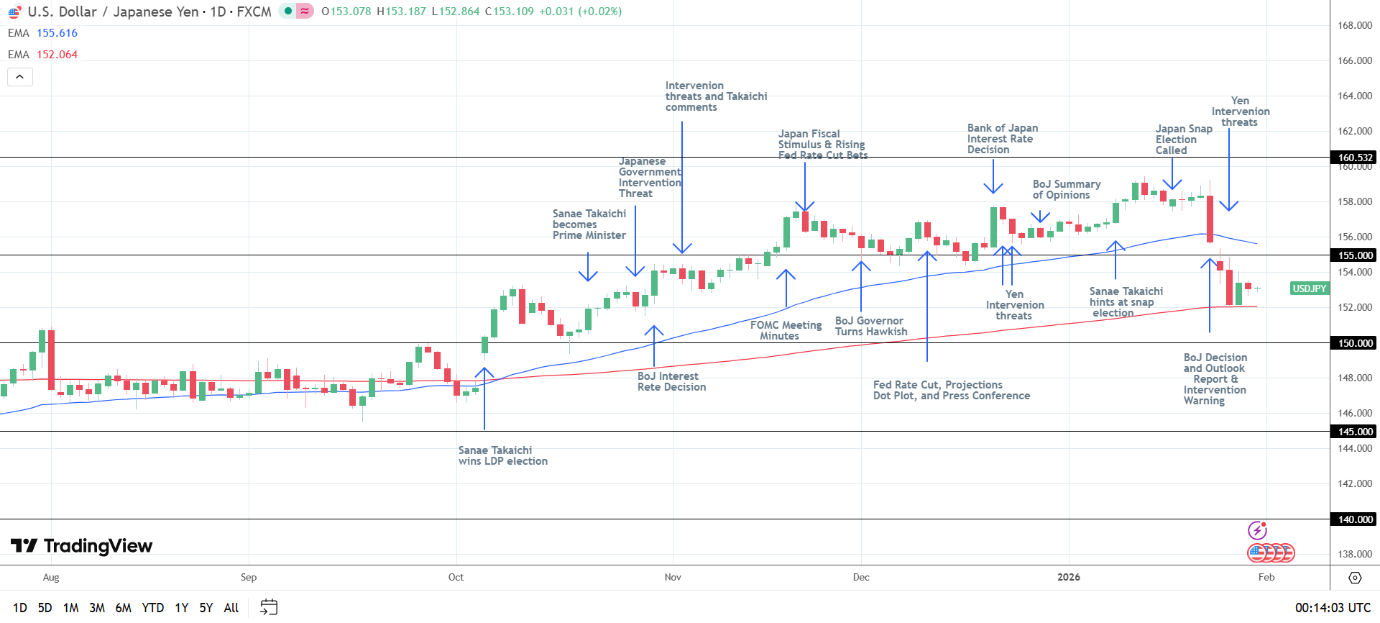
On the daily chart, USD/JPY remains below its 50-day Exponential Moving Average (EMA), but above the 200-day EMA. The EMAs indicated a near-term bearish trend reversal, aligning with the negative price outlook for USD/JPY. Favorable yen fundamentals have aligned with the near-term technicals.
A drop below the 200-day EMA would expose the 150 support level. If breached, October’s low of 146.585 would be the next key support level.
Importantly, a sustained fall through the EMAs would reaffirm the bearish trend reversal and reinforce the bearish short- to medium-term price outlook.
Positioning and Risk Outlook
In my view, the BoJ’s upbeat projections, a hawkish BoJ rate path, and the bets on Fed rate cuts support a negative price trajectory. However, Japan’s upcoming election and looming US inflation data will be key, given recent price action.
Additionally, a higher BoJ neutral interest rate level (potentially 1.5%-2.5%) would indicate multiple BoJ rate hikes and a narrower-than-expected US-Japan interest rate differential. A sharply narrower rate differential may trigger a yen carry unwind, as seen in mid-2024. An unwind of yen carry trades would likely push USD/JPY toward 140 over the longer term.
However, upside risks to the bearish outlook include:
- Dovish BoJ chatter and a lower neutral interest rate (potentially 1% – 1.25%).
- US inflation data tempers expectations of an H1 2026 cut.
These scenarios would send USD/JPY higher. However, threats of yen intervention are likely to cap the upside at the 155 level.
Read the full USD/JPY forecast, including chart setups and trade ideas.
Conclusion: Politics, the BoJ, and the Fed in the Spotlight
In summary, the USD/JPY trends will hinge on Japan’s election outcome, Prime Minister Takaichi’s fiscal spending goals, the BoJ’s rate path, the Fed’s policy stance, and Trump’s tariff policies.
A higher BoJ neutral rate (1.5%-2.5%) would indicate a hawkish BoJ rate path, strengthening the yen. Meanwhile, Prime Minister Takaichi’s snap election will also be key for the near-term USD/JPY trends, given her fiscal policy goals. Additionally, dovish Fed chatter would suggest narrower rate differentials, reinforcing the bearish medium-term outlook for USD/JPY.
A stronger yen and yen carry trade unwinds would likely send USD/JPY toward 140 over the longer 6-12 month time horizon.
For more in-depth analysis, review today’s USD/JPY trading setups in our latest reports and consult the economic calendar.