Support at Channel and Fibonacci Confluence
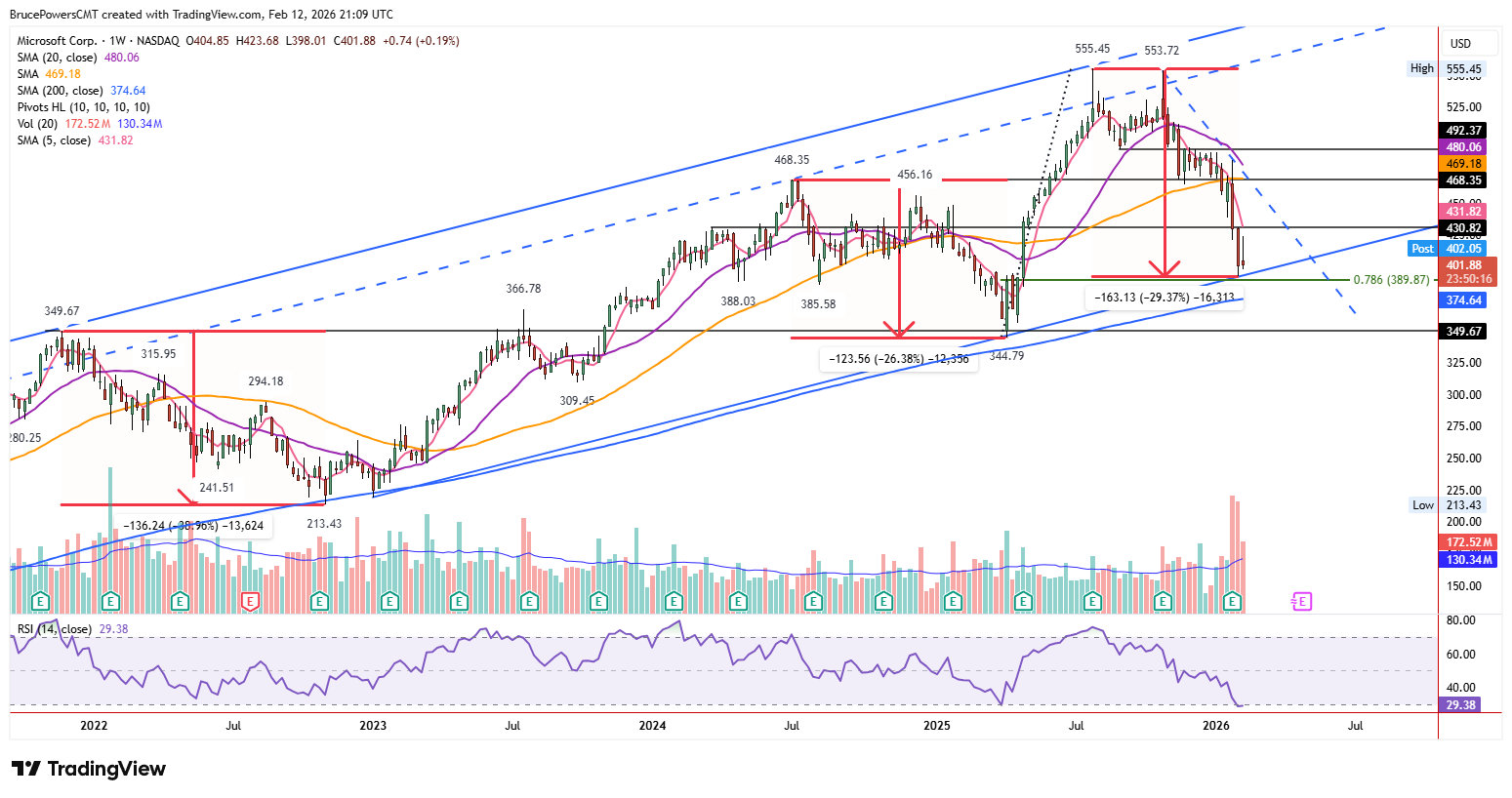
Microsoft Corp. (MSFT) stock may have found a bottom with last week’s low of $392.32. That low had the stock down by 29.4% from its $555.45 peak in July. Prior bearish corrections saw the price of the stock fall by 26% (2024) and 39% (2021). Support for last week was seen near the completion of a 78.6% Fibonacci retracement at $389.87 and a long-term rising trendline at the bottom of a parallel channel. The top of the channel marked resistance for the $555.45 peak in July. Note that the top channel line connects to the 2021 swing high at $349.67, before the July peak.

Double Top and Bearish Correction
Once the top of the channel was reached, followed by a bearish reversal, the other side of the channel became a potential target. MSFT turned down from its $555.45 peak and subsequently triggered a double top formation below $492.37 in November. Since the lower boundary of the channel has been reached, and is supported by a Fibonacci retracement level, MSFT may have hit a bottom. Also, notice the spike in volume during the drop over the past couple of weeks. This suggests possible exhaustion for the bear trend.
Inside Week Sets Key Levels
This week is on track to end with an inside week pattern, which will provide key levels for next week. The current range for this week is $398.01 to $423.68. Despite the potential for support, there could be further testing of the price zone down to the low at $392.32. Nonetheless, another long-term trend support level is near the rising 200-week average, currently at $374.65. That level is followed by a higher swing low at $344.79 from April 2025.
Breakout Above Resistance Signals Strength
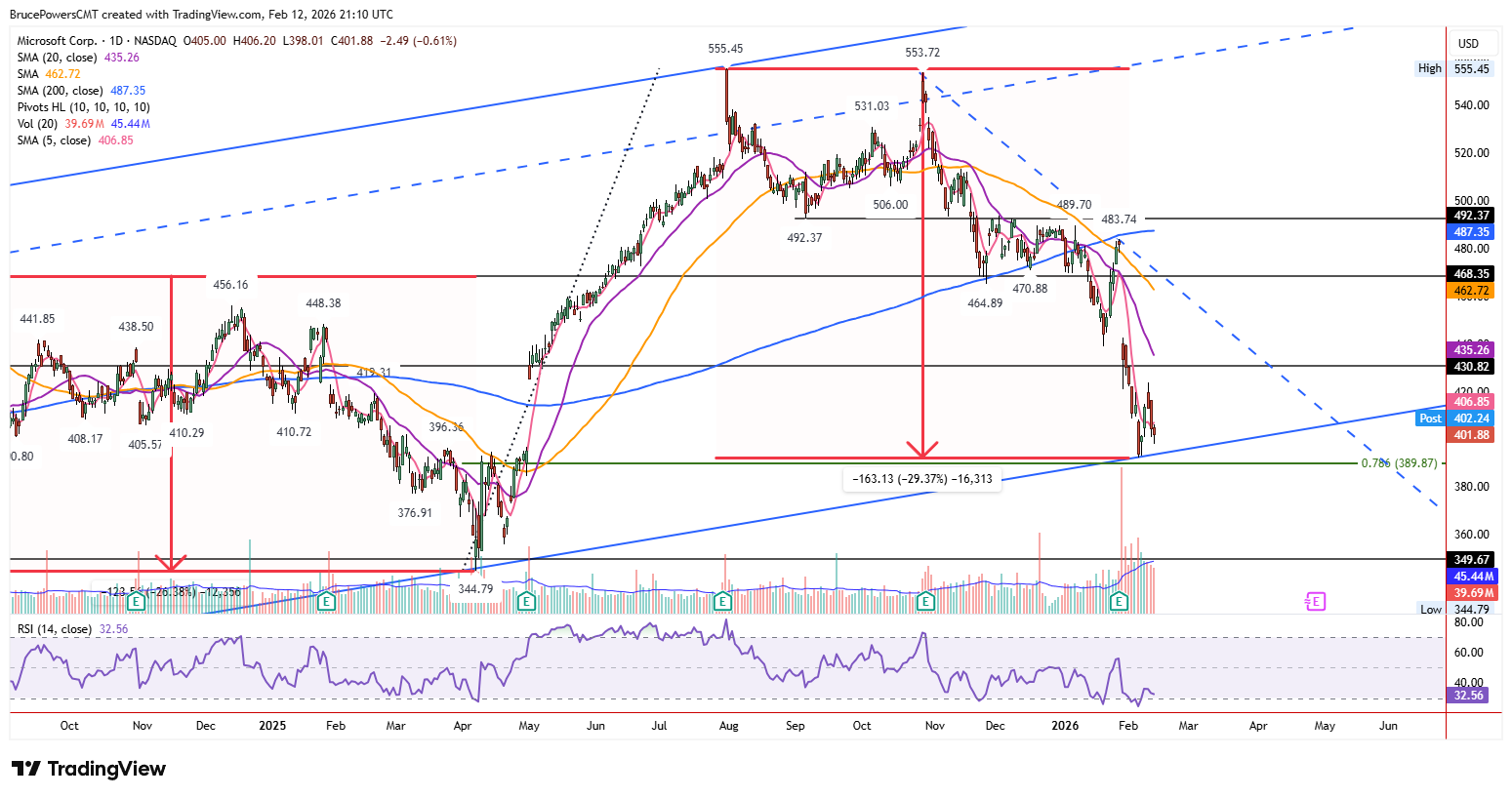
A decisive breakout above this week’s high will show strength and will be further confirmed by a sustained rally above last week’s high of $430.74. That high matched resistance seen at a minor swing high in March 2024. On the daily chart, the 200-day average, now at $487.36, marks key initial resistance for a rally. There is also a shelf of prior support near $468.35 that may now act as resistance. The daily chart shows the first pullback following an advance from last week’s low and may be used by more aggressive traders as a potential early entry signal.