Tech Selloff Intensifies as Semiconductor Concerns Mount
U.S. stock markets diverged on Wednesday, with the Dow Jones Industrial Average gaining ground while the S&P 500 and Nasdaq Composite retreated. This split reflects an ongoing rotation out of high-flying technology stocks into more rate-sensitive sectors.
Broad Market Movements
The Dow’s rise was primarily driven by UnitedHealth, which surged over 4% following a positive Wall Street upgrade. This builds on Tuesday’s rally of more than 700 points, marking the blue-chip index’s best day in over a year. In contrast, the tech-heavy Nasdaq dropped more than 2% as investors continued to reassess their positions in the sector.
Semiconductor Sector Under Pressure
Global chip stocks faced a severe selloff, with the VanEck Semiconductor ETF plummeting over 5%. Industry leaders bore the brunt of the decline:
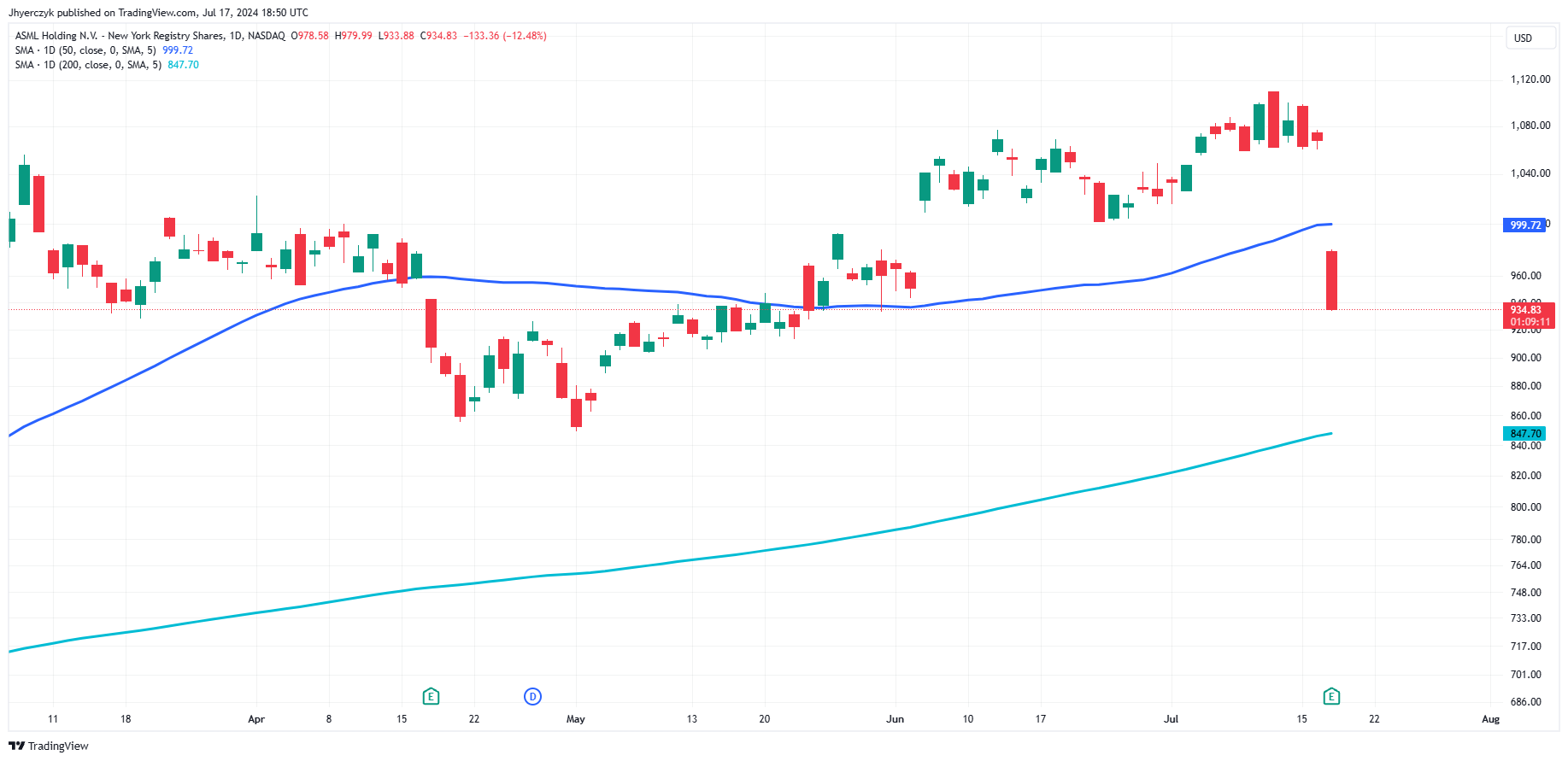
- ASML: Down 11% despite beating Q2 expectations
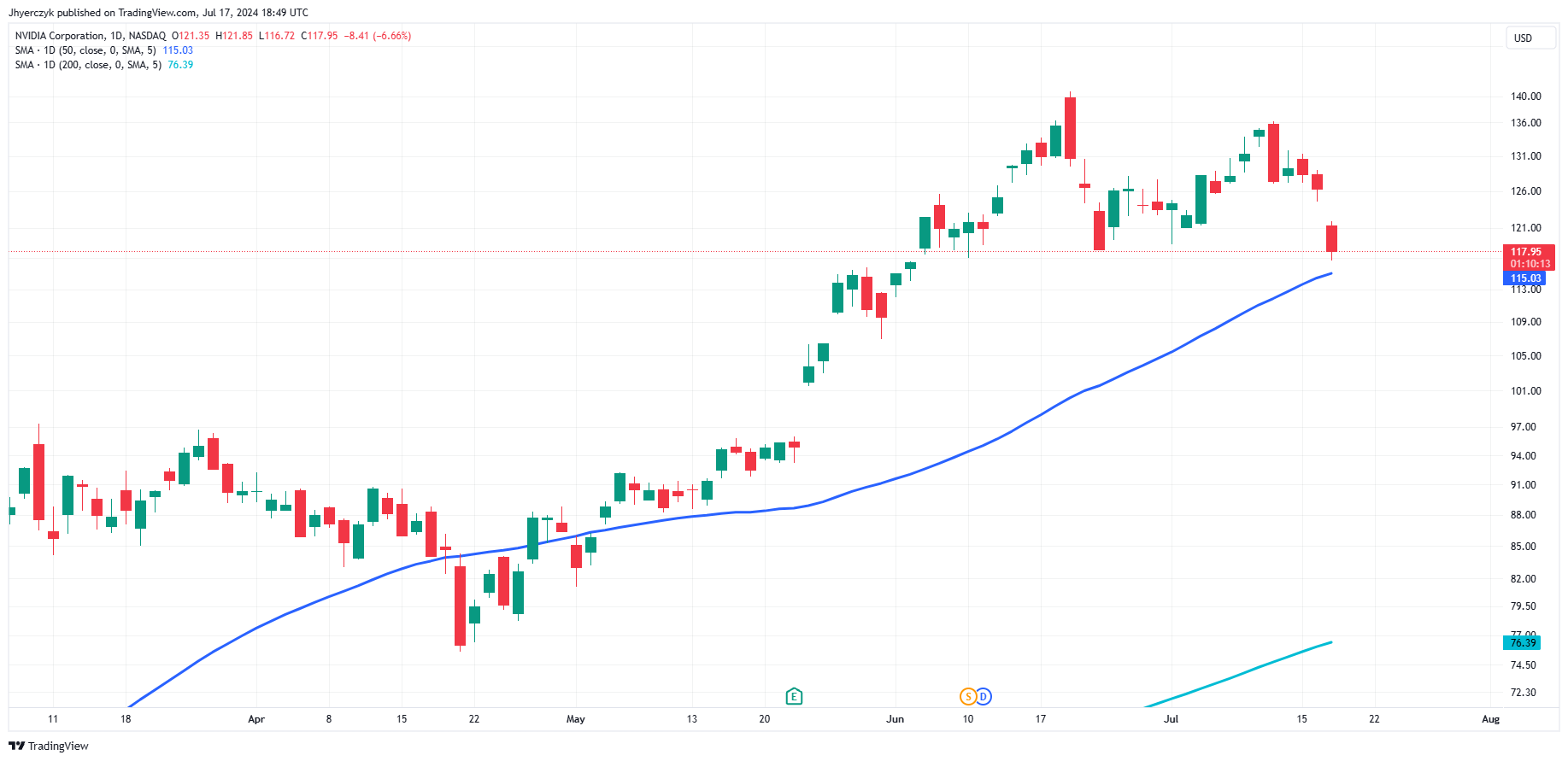
- Nvidia: Fell nearly 7%, erasing over $200 billion in market value
- TSMC: Closed down 2.4% in Taiwan
Other major players like AMD, Qualcomm, Micron, and Broadcom all experienced declines exceeding 5%.
Geopolitical Tensions and Export Restrictions
The semiconductor selloff was fueled by multiple factors:
NASDAQ 100 Price Forecast
Every new NASDAQ 100 analysis as it publishes, today's technical signal and key levels, live price — on one page.
See all NASDAQ 100 forecasts- Reports of potential tighter U.S. export restrictions on chipmaking equipment to China
- Consideration of expanding the foreign direct product rule (FDPR)
- Former President Trump’s comments on Taiwan’s defense payments
These developments raised concerns about the stability of the global chip supply chain and the potential impact on companies with significant exposure to the Chinese market.
Impact on Key Players
ASML’s sharp decline highlights the risks associated with its 49% sales exposure to China in Q2. Nvidia’s revenue from China dropped to 18% of total revenue in the latest quarter, compared to 66% a year ago, demonstrating the impact of existing restrictions.
Market Forecast
The short-term outlook for the semiconductor sector appears bearish, driven by geopolitical uncertainties and potential policy changes. The Philadelphia Semiconductor Index is on track for its largest single-day percentage decline since October 2022. Despite this setback, the index remains up 32% for 2024, outperforming the S&P 500’s 17% gain.
Traders should monitor geopolitical developments, potential policy changes, and upcoming Q2 earnings reports from major chip companies. While the AI boom has fueled significant gains in the sector this year, the current pullback suggests a period of consolidation and reassessment. Investors may need to adjust their strategies to account for increased volatility and potential regulatory headwinds in the semiconductor space.
Technical Analysis
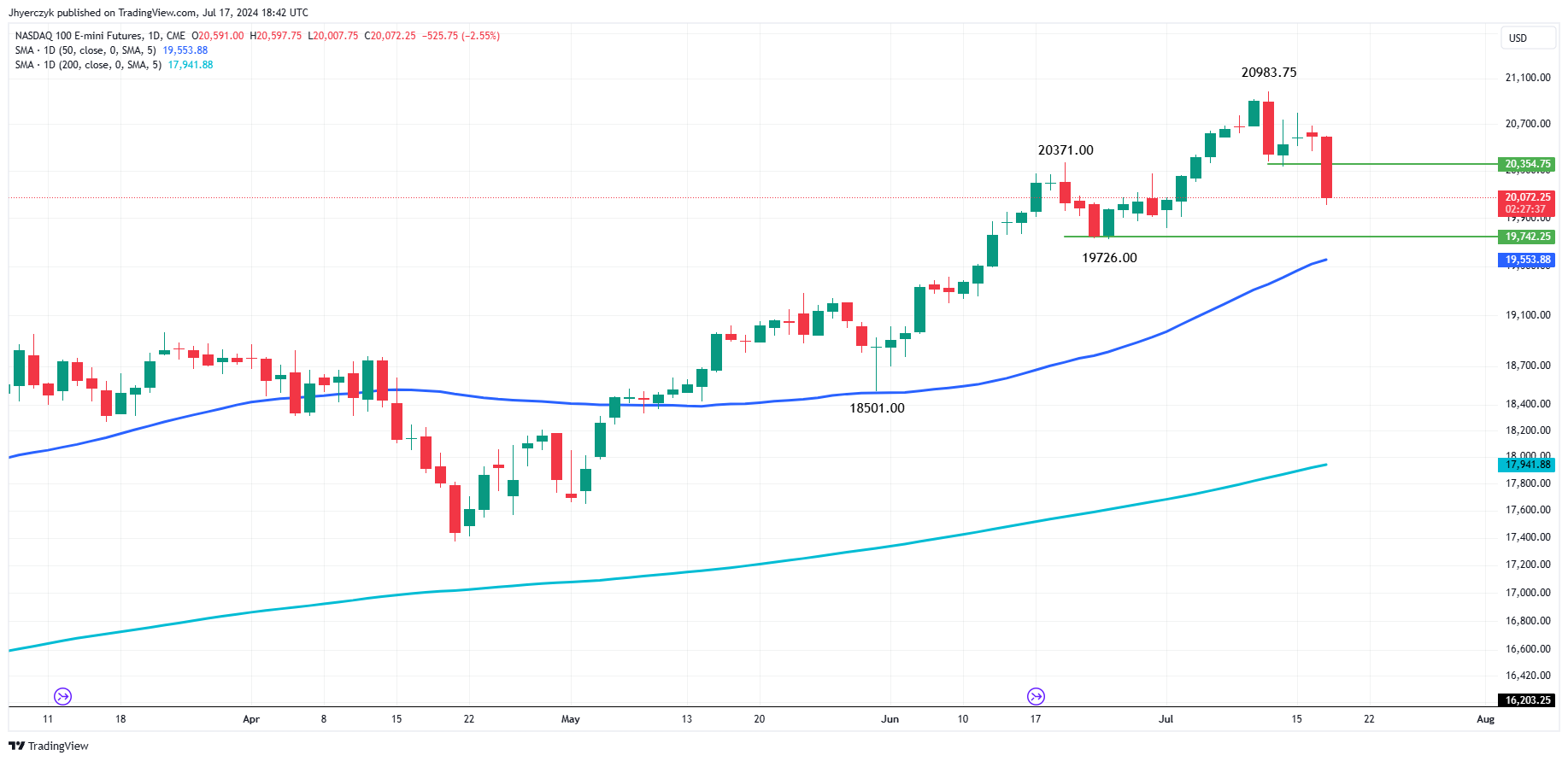
The E-mini Nasdaq-100 Index short-term trend turned down on Wednesday and the selling pressured increased throughout the day after the tech-weighted index broke minor support at 20354.75.
The current downside momentum suggests traders are going after the support cluster formed by the 50% level at 19742.25 and the 50-day moving average at 19553.58. A test of this area will be a major event because investors have become accostumed to buying “the dip”. A failure to hold this area may create a tremendous long-term buying opportunity, but over the short-run is likely to cause a lot of pain for investors with the next support coming in at 18501.00.