


Global markets have kicked off the Monday session trying to recover from a technology-led rout, but the rebound has not necessarily erased all of the questions from last week’s sell-off. A substantial repricing of artificial intelligence companies has spread into currencies, bonds, and regional stock markets. Investors are reassessing how AI-related capital expenditure, leverage, and higher interest rates fit all together.
NVDA
These are questions that we’ve been asking for some time when it comes to global markets, but it’s probably worth noting that early during the session, word got out that Jensen Huang is being reinstated as the CEO of NVIDIA after massive collapses in indices. Perhaps this could sort out some of the noise.
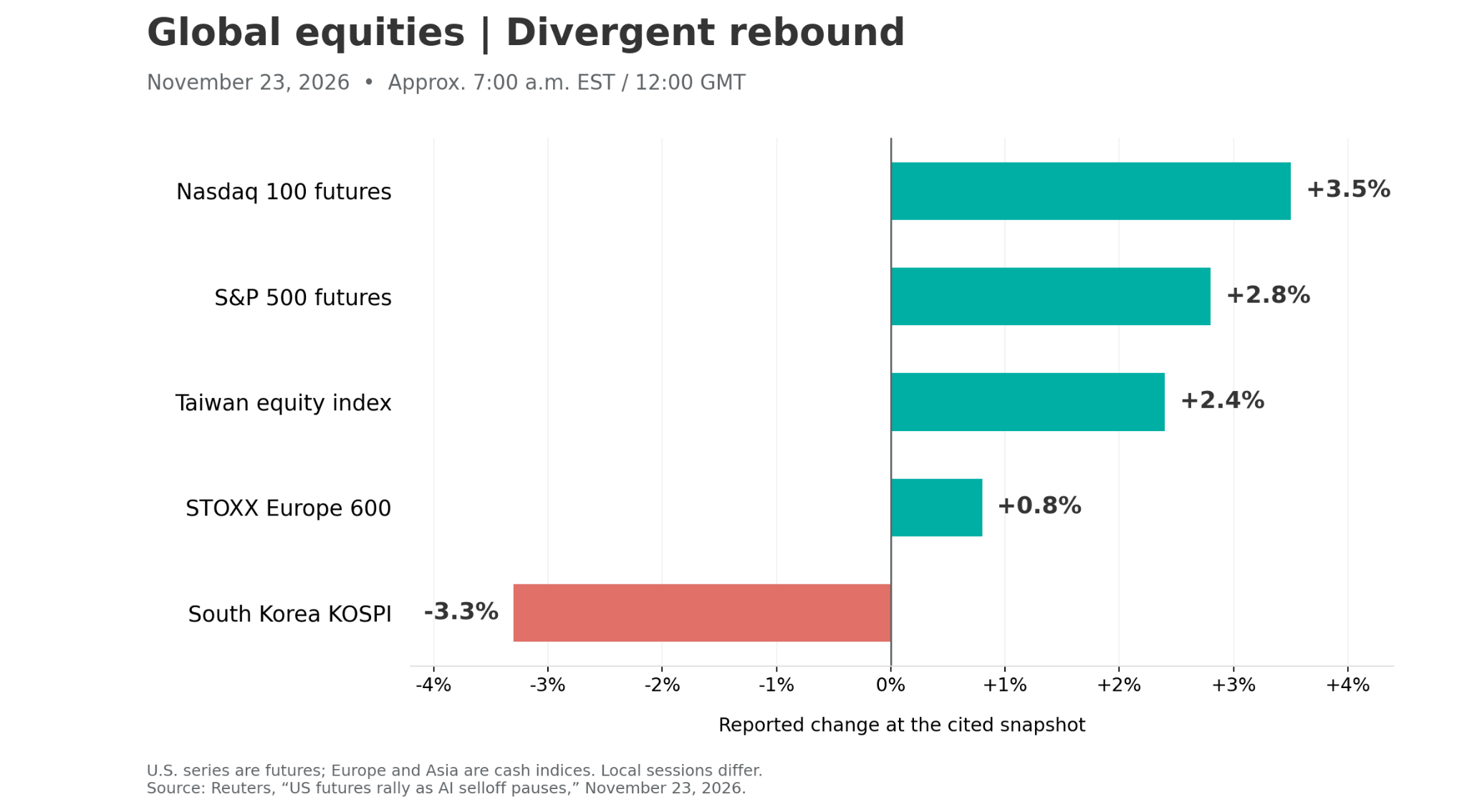
Asian markets reveal an uneven recovery, though, with Taiwan’s benchmark recovering 2.4%. Following its worst week since 1990, South Korea’s KOSPI, by contrast, was still down 3.3%. South Korea might be worth watching, though, because it is so heavily influenced by semiconductors. Taiwan tightened short-selling rules, China relaxed some margin-financing requirements, and South Korean officials reiterated their willingness to intervene. Tokyo was closed for a bank holiday.
Institutional positioning adds a second source of vulnerability. Global hedge funds lost more than 3% in the previous week, according to JPMorgan figures reported by Reuters. Goldman Sachs also described substantial reductions in leverage and net equity exposure.
The U.S. Dollar Remained Supported by Interest Rate Expectations
The U.S. dollar remained supported by interest rate expectations as currency markets reflected similar tension between defensive positioning and relative interest rates. The dollar index in early London trading stood near the 103.90 level, little changed and close to the 19-month high reached last week. The euro has been somewhat weak, as has the British pound.
S&P 500 Price Forecast
Every new S&P 500 analysis as it publishes, today's technical signal and key levels, live price — on one page.
See all S&P 500 forecastsThe dollar’s resilience reflects both its liquidity during market stress and expectations that U.S. borrowing costs could rise yet again. According to CME FedWatch probabilities, federal funds futures implied roughly a 96% probability of a 25-basis-point Federal Reserve increase at the December meeting. The possibility of a larger half-point rise, which had attracted some pricing the previous week, had effectively disappeared.
EU Economic Data
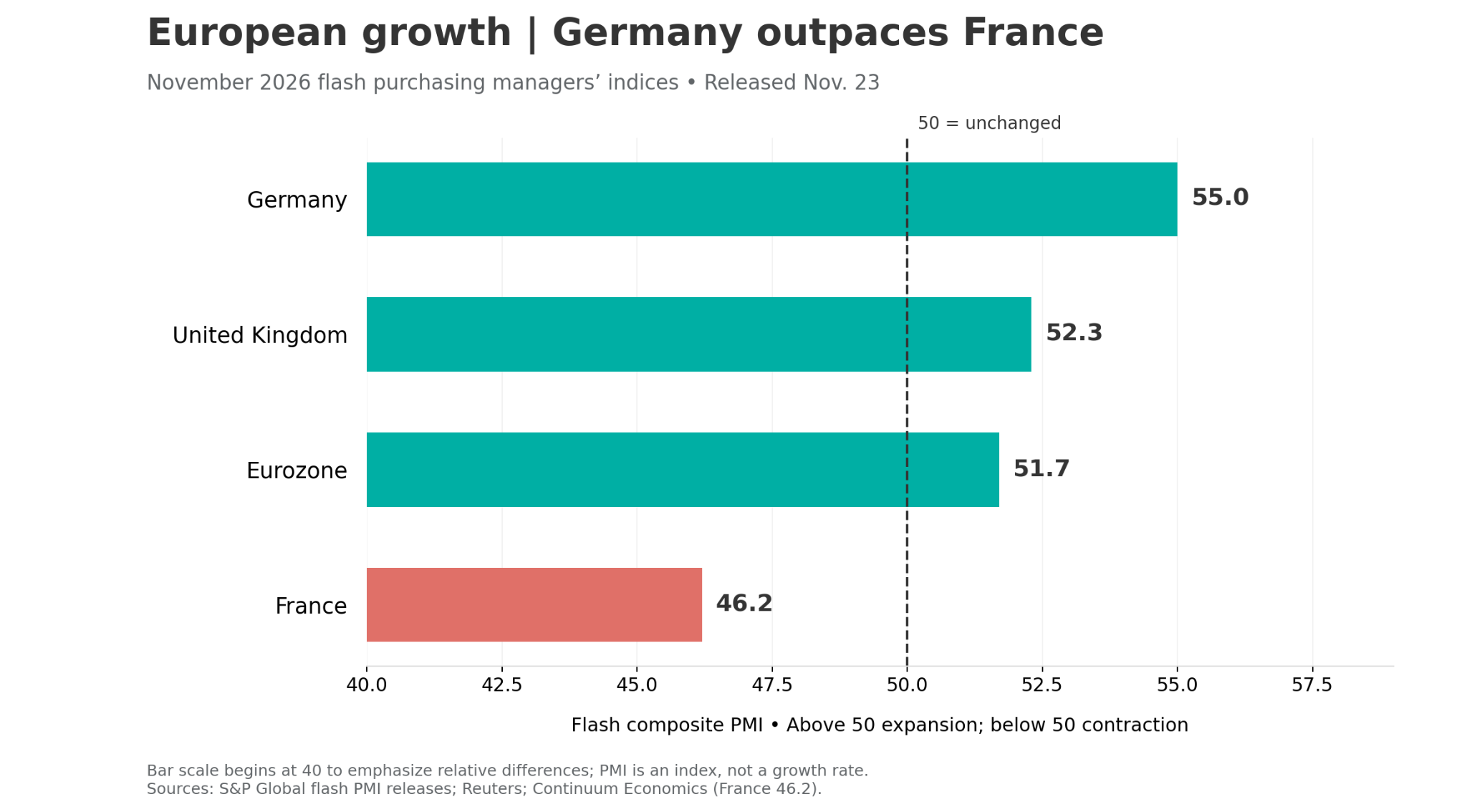
European economic data gave traders another reason to distinguish among currencies rather than treat the region as a single growth story. The eurozone’s November flash composite purchasing managers’ index came in at 51.7, indicating expansion, while Germany’s reached 55.0, its strongest since March 2022. France remained in contraction. Britain’s composite PMI slipped to 52.3 from 52.9, suggesting slower but continuing growth.
Bond Yields
Bond yields recovered as safe-haven demand eased. The 10-year Treasury yield had climbed 4.6 basis points to 4.95%, while Germany’s 10-year yield was near 3.30%. Rising yields alongside recovering equity futures are consistent with reduced demand for defensive assets, although a single session doesn’t necessarily signal a change in this trend. Relatively persistent high yields still place pressure on leveraged investors and long-duration equities.
Energy provided a different situation during the trading session, as both Brent and WTI fell as additional supply offset fears about attacks around the Gulf. Reuters reported the restart of Libya’s Sharara pipeline, while UK maritime authorities had recorded shipping incidents near the Strait of Hormuz yet again.
The immediate economic calendar is unusually concentrated. U.S. flash PMIs come out on Monday and were a touch lower than expected, coming out at 54.7, showing slight contraction. The Bureau of Economic Analysis has scheduled October personal income and outlays, including the PCE inflation measures, and the second estimate of third-quarter GDP for Wednesday, November 25, at 8:30 a.m. EST.
With U.S. markets closed on Thursday for Thanksgiving, the next inflation reading may carry disproportionate weight as traders reassess December central bank expectations.