



Bitcoin Gets Hit and Tech Is Feeling It
Bitcoin is taking a sharp hit to start the week, down 5.4% to around $86,435 by late morning in London. Ethereum is losing about 6.1%, Solana is dropping more than 7%, and Dogecoin is sinking nearly 9%. The selling is intensifying after China’s central bank warns against illegal digital currency activity over the weekend, with Hong Kong crypto stocks getting dumped early in the Asian session.
U.S. traders are waking up to the fallout. Dow futures are slipping 0.5%, S&P 500 futures are off 0.6%, and Nasdaq-100 futures are falling 0.7%. Nvidia and AMD are down about 1% before the bell, while Broadcom and Oracle are trading softer as well. Risk appetite is fading to start December.
Stocks and Crypto Are Now Moving Together
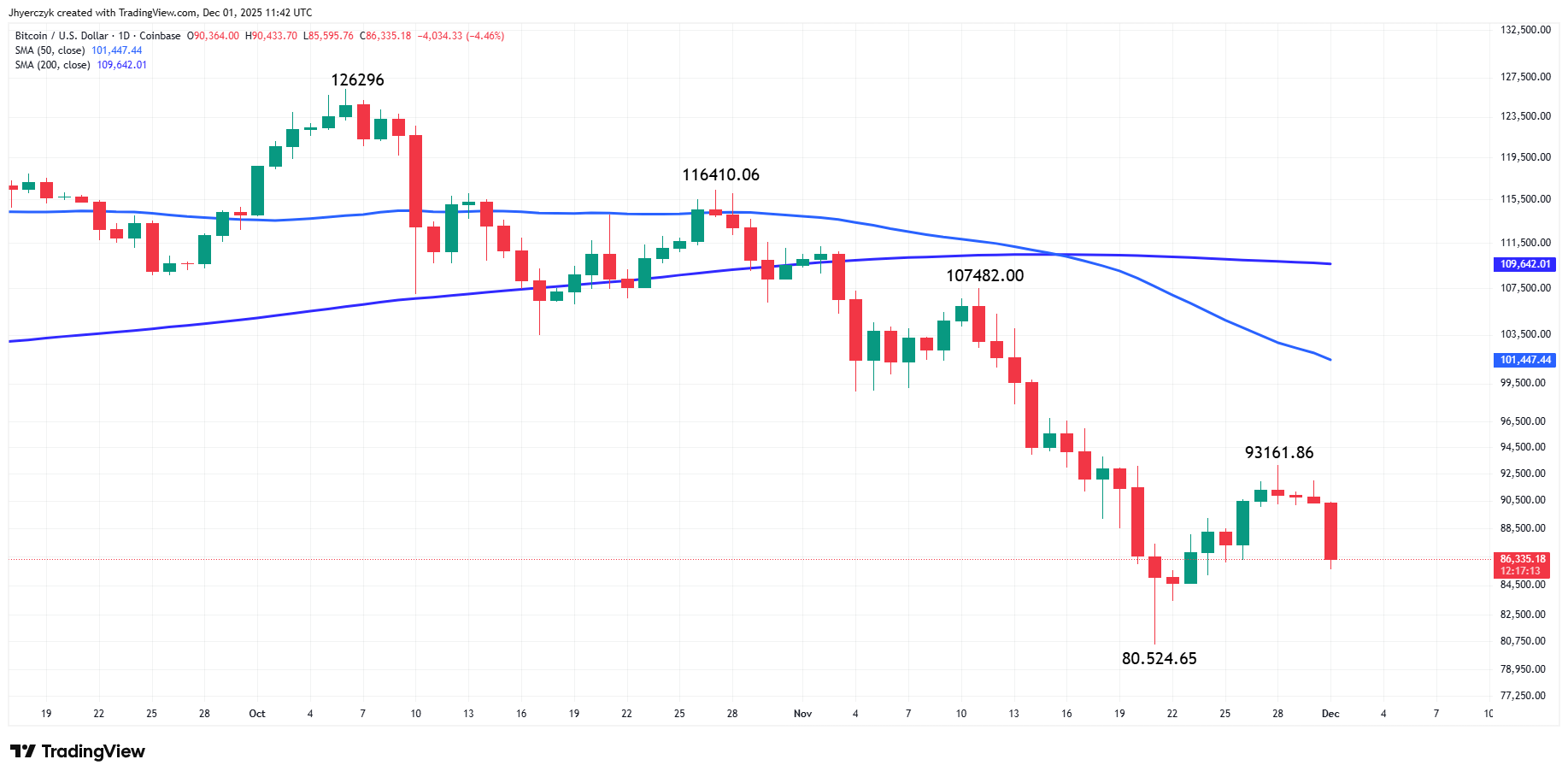
For years, Bitcoin was pitched as a market hedge — something that moves on its own terms. Not anymore. The link between Bitcoin and the Nasdaq is tightening, and Monday’s selling is putting that relationship front and center. The current 30-day correlation is sitting near 0.80 — the strongest since 2022 and among the highest readings in a decade.
CME Group research using data since 2014 keeps the long-run relationship near 0.2. But when stress hits, correlation is spiking — often into the 0.5s or higher. The pandemic is where it shifted: everything fell together, then everything surged once liquidity flooded the system. That’s when Bitcoin turned into a high-beta tech trade.
The Bearish Skew Is Back
Wintermute is warning about the same problem seen in 2022 — the “bearish skew.” When tech rallies, Bitcoin doesn’t always keep up. But when tech sells off, Bitcoin tends to fall harder. Today’s move is reinforcing that pattern. Traders are already rattled after a $400 million liquidation over the weekend — a signal of stress, not strength.
Ben Emons at Fedwatch Advisors says sentiment is fragile and leverage is still at risk of being flushed out.
Bitcoin Price Forecast
Every new Bitcoin analysis as it publishes, today's technical signal and key levels, live price — on one page.
See all Bitcoin forecastsLeverage Is Fueling the Drop
Crypto leverage remains huge. Some venues are offering up to 200x exposure. Emons estimates roughly $787 billion in leveraged Bitcoin perpetuals are stacked against around $135 billion in ETF holdings. That mismatch explains why the downside can accelerate so quickly — stops trigger stops.
And most of that leverage is sitting with retail accounts. They move fast. They move emotionally.
Why Tech Traders Are Paying Attention
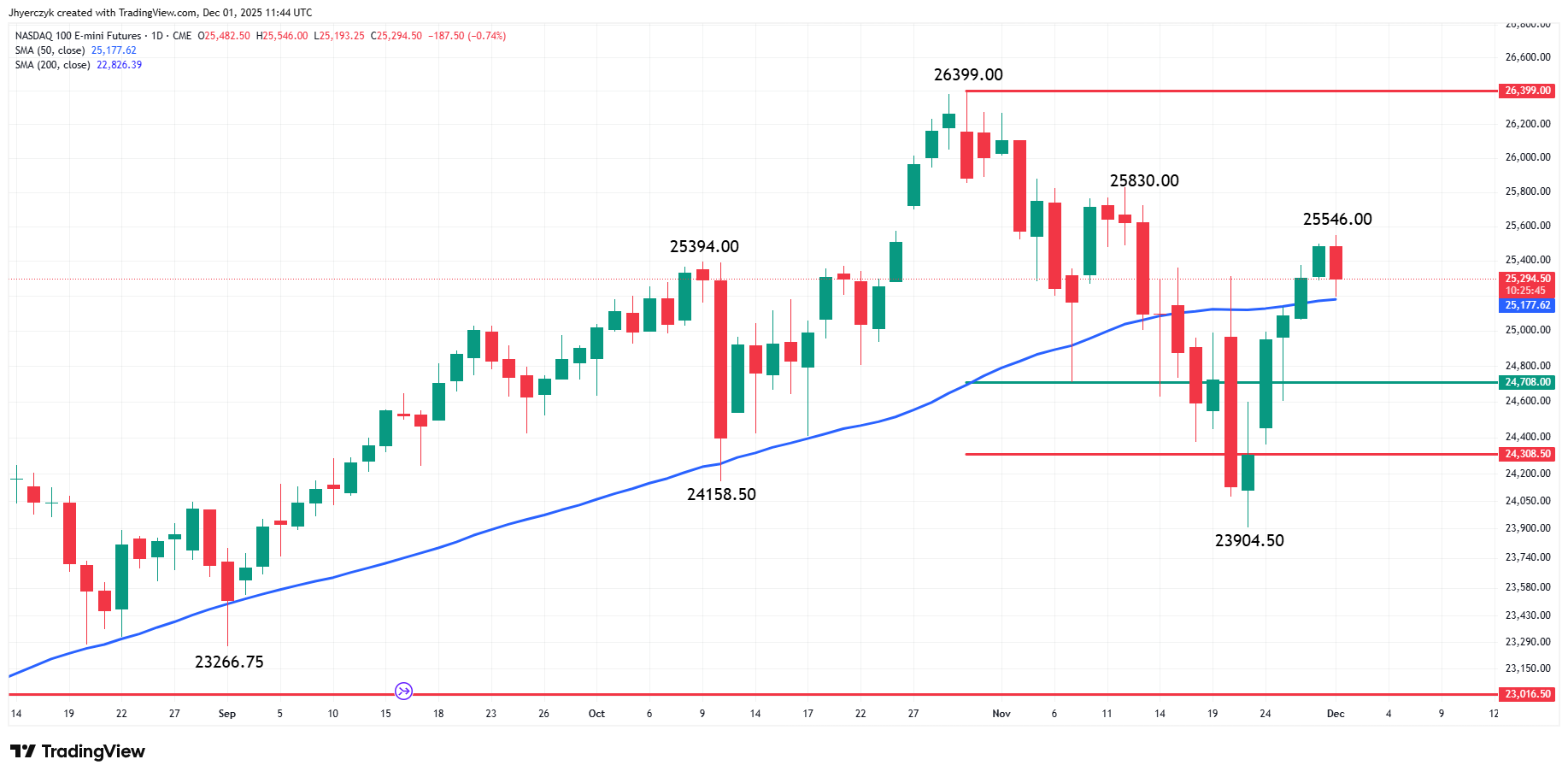
Bitcoin isn’t just a crypto trade anymore — it’s a sentiment gauge. When it turns lower, traders instantly trim speculative tech. That’s showing up in chipmakers and software names pre-market.
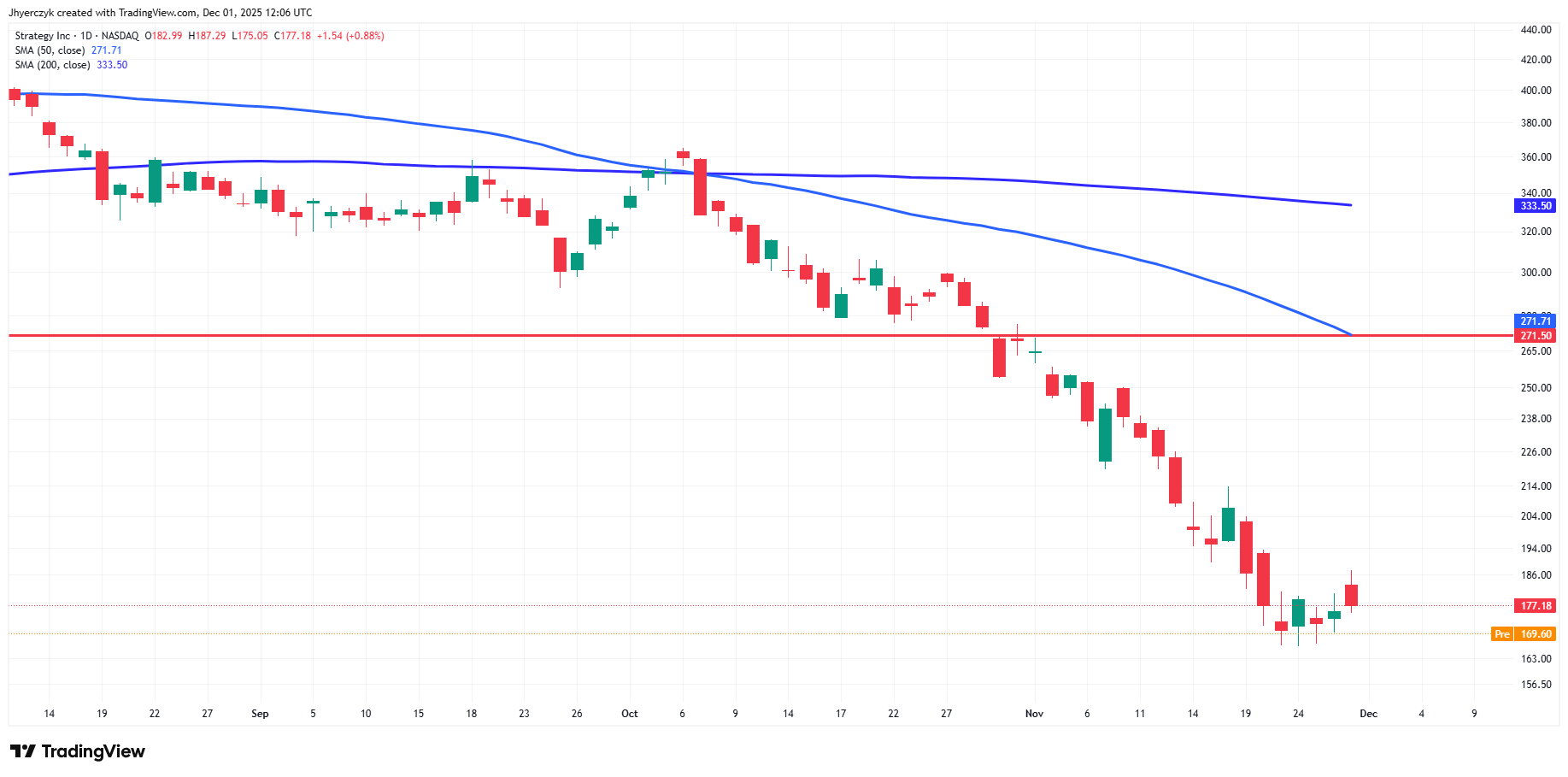
Crypto-linked stocks are taking the biggest hit. Coinbase. Strategy Inc. (formerly MicroStrategy). Marathon Digital. Riot Platforms. Strategy Inc.’s 597,000-coin stake practically makes the stock a levered Bitcoin tracker.
But it’s bigger than direct exposure. When risk appetite cools, high-growth tech is the first thing investors lighten up on.
November’s Chop Is Still In Play
The major indexes are coming off a rebound week:
• S&P 500: +3.7%
• Nasdaq Composite: +4.9%
• Dow: +3.2%
But November wasn’t smooth. The Nasdaq finished down 1.5% and was nearly 8% below the October close at one point. AI name valuations stayed under pressure, and uncertainty over a potential December rate cut kept buyers selective.
Bottom line: investors are willing to buy dips — just not blindly.
What Traders Are Watching Next
Bitcoin now acts like a high-octane read-out of tech-sector sentiment. If crypto stabilizes and buyers return, tech can snap back quickly. If Bitcoin continues to slide, expect volatility to pick up across Nasdaq-heavy growth names.
Seasonality is helping the bull case — December typically posts gains, with the S&P 500 averaging more than +1% going back to 1950. Mark Newton at Fundstrat says momentum is improving after last week’s breadth reset.
But until Bitcoin calms down or the correlation breaks, tech traders have no choice but to follow every move in crypto.
More Information in our Economic Calendar.