
Natural Gas Surges Past Key Resistance, Tests $4 Psychological Level
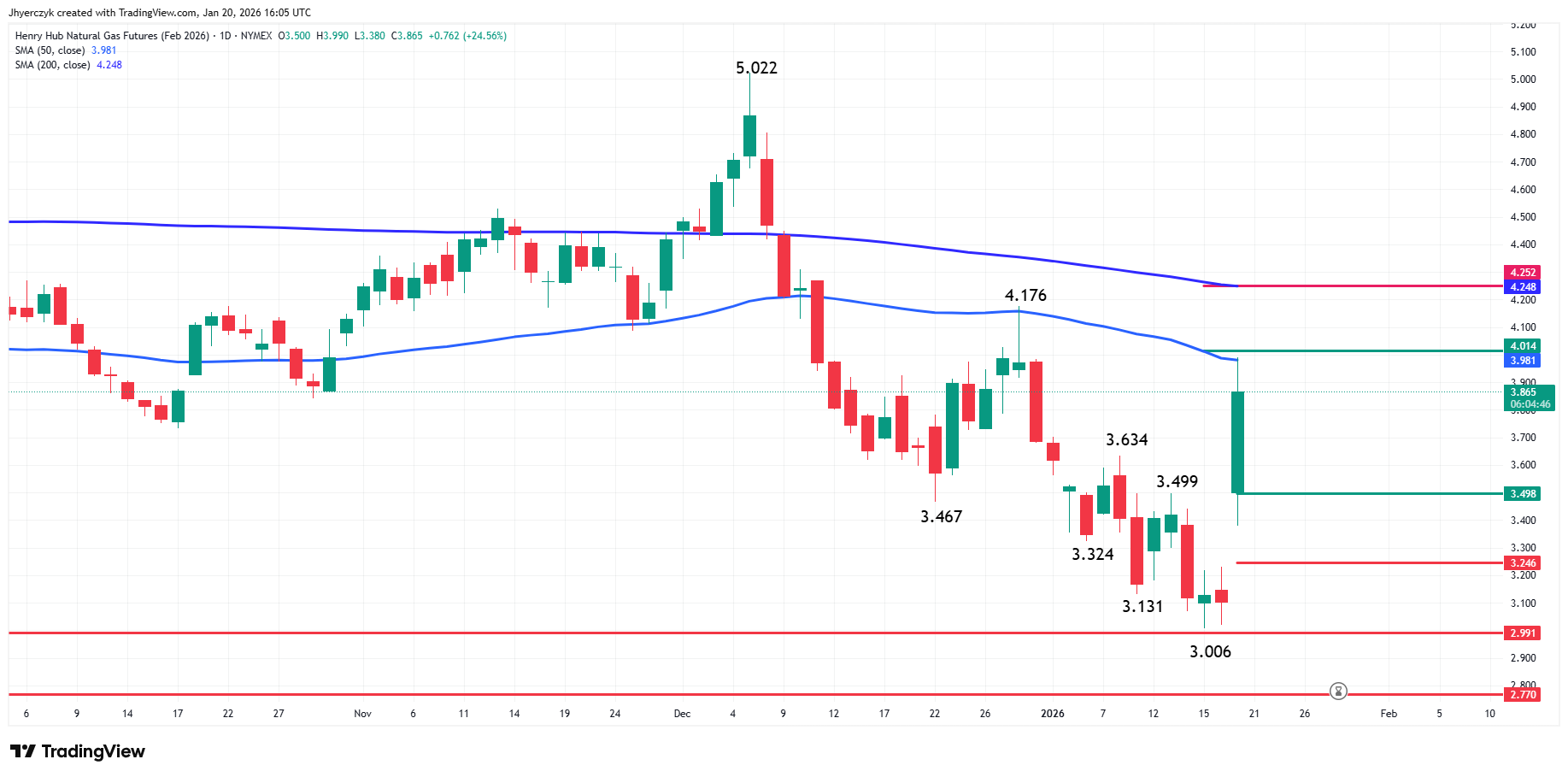
U.S. natural gas futures are sharply higher approaching mid-session on Tuesday. After gapping higher on Monday and plowing through a pair of swing tops at $3.499 and $3.634 and retracement levels at $3.320 and $3.591, the market stretched early Tuesday to test the 50-day moving average at $3.980. The rally stalled at $3.990, just below the psychological $4.000 level and the intermediate 50% level at $4.014, before pulling back to $3.858.
At 16:31 GMT, February Natural Gas Futures are trading $3.871, up $0.768 or +24.75%.

Bulls Eye $4.25 Resistance Cluster as Path to $5 Opens
Overcoming the 50-day moving average and the 50% level at $4.014 could launch another surge into the resistance cluster formed by the 200-day moving average at $4.248 and the intermediate 61.8% retracement level at $4.252. This zone is the last major barrier before the December 5 main top at $5.022.
Short-Covering Rally Faces Test: Can Real Buying Sustain the Momentum?
So far, we’ve been witnessing a massive short-covering rally with some speculative buying. In order to produce a prolonged rally, we’re going to have to see some real buying. This makes the market vulnerable to a pullback into the short-term retracement zone at $3.498 to $3.246.
Cold Snap or Bigger Trend? Traders Weigh Strategic Entry Points
The question traders are asking is: are we facing a cold snap, which means the current rally is going to be a one-and-done event, or is something bigger developing? This will determine whether traders chase this market higher through resistance, or play for a short-term pullback into the support zone.
Twin Winter Storms Drive Heating Demand Sharply Higher
Tuesday’s gains are being fueled by intensifying cold weather that is driving heating demand sharply higher. The surprise cold pattern is being shaped by the alignment of two winter storms.
Natural Gas Price Forecast
Every new Natural Gas analysis as it publishes, today's technical signal and key levels, live price — on one page.
See all Natural Gas forecastsDangerous Cold System Targets Texas and Southern States
NatGasWeather explains the current situation this way. Prices are higher after the weekend weather trended “massively” colder since the middle of last week. It is said to be capable of bringing a dangerously cold weather system late this week and into early next week with lows of -20°F to 20s, including 10s to 20s deep into Texas and the South.
In addition to the near-term cold, traders are also watching the February 1-3 period, which has trended colder over the past few days as well.
February 1-3 Forecast Emerges as Critical Make-or-Break Period
Looking ahead, from a technical perspective, will enough real buying emerge to drive prices through the 200-day moving average at $4.248. The answer is yes if the forecast for an impressive cold shot to come through key demand areas on February 1-3 doesn’t change.
Over the next few days, speculators are going to be offered a chance to buy the dip to $3.498 to $3.246, or buy the first breakout over the 50-day moving average at $3.980 and then the 200-day moving average at $4.248.
Keep an eye on the Feb. 1-3 pattern, this could make or break the market.
More Information in our Economic Calendar.