Pattern Compression Inside Broader Wedge Formation
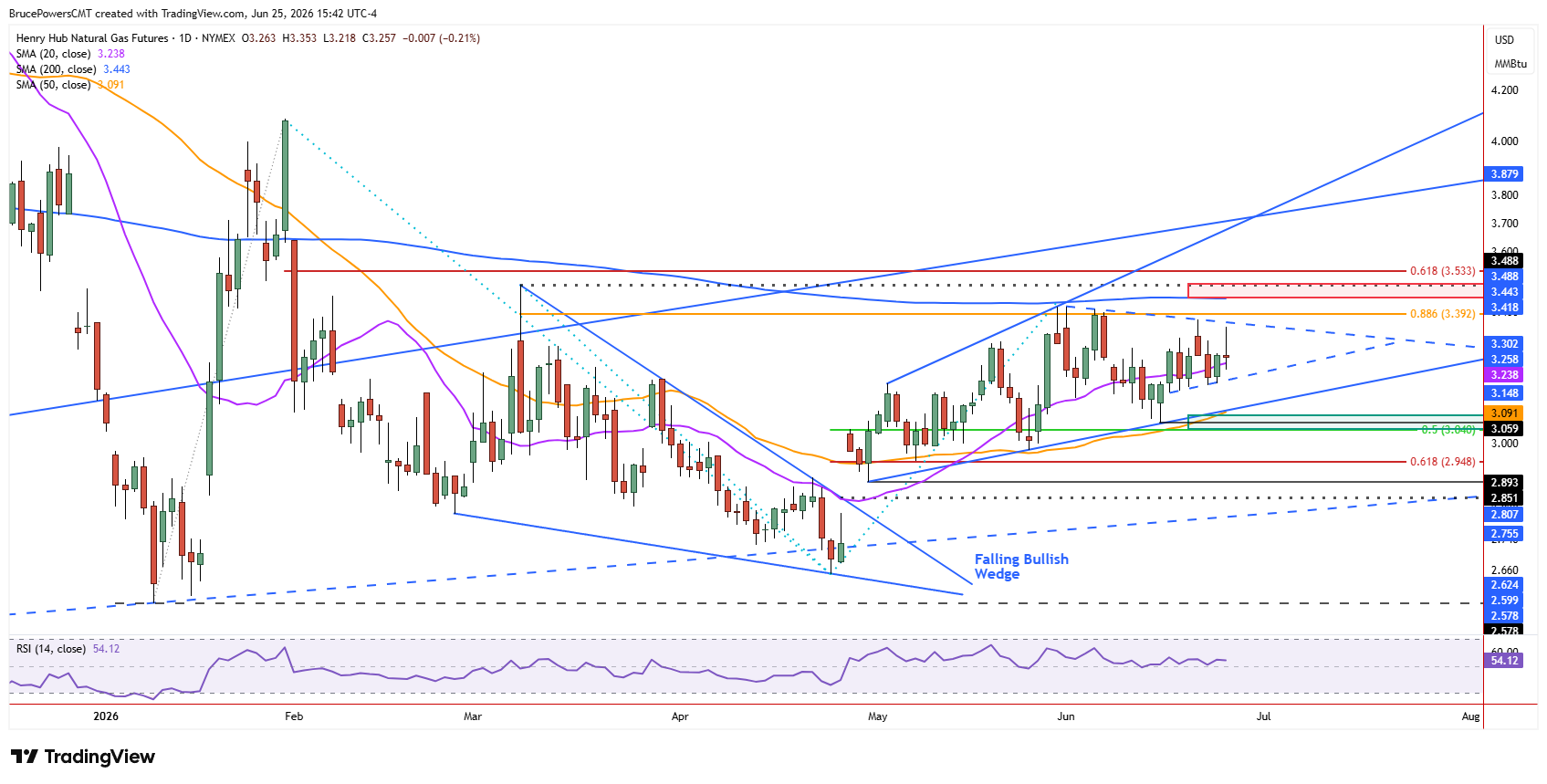
An ascending broadening wedge continued to form for natural gas on Thursday, as it rose to a three-day high of $3.35 before encountering resistance and pulling back intraday. The pullback represented a successful test of resistance near a short descending trendline, further indicating short-term range compression. A trendline across recent daily lows marks the initial lower boundary of near-term consolidation, which forms a small symmetrical triangle (dashed).

Breakout Thresholds Define Short-Term Direction
The bias remains to the upside, but a bullish signal is needed to confirm strength with a move above Wednesday’s high of $3.38. A decisive rally above Wednesday’s lower swing high of $3.38 would trigger a breakout of the smaller consolidation pattern, which is developing within the larger ascending broadening wedge formation. Resistance would then be anticipated between the recent high of $3.42 and the lower swing high of $3.49 from early March.
Support Structure and Moving Average Dynamics
If the lower boundary line across recent daily lows is broken, then the lower boundary of the ascending wedge pattern becomes the next downside target. It is anchored by the 50-day moving average near $3.09 and the recent higher swing low of $3.06. In addition, the improving trend structure is reflected in the 50-day moving average, which is poised to cross above the lower boundary of the wedge, providing another indication of improving momentum.
Weekly Momentum Strengthens Broader Setup
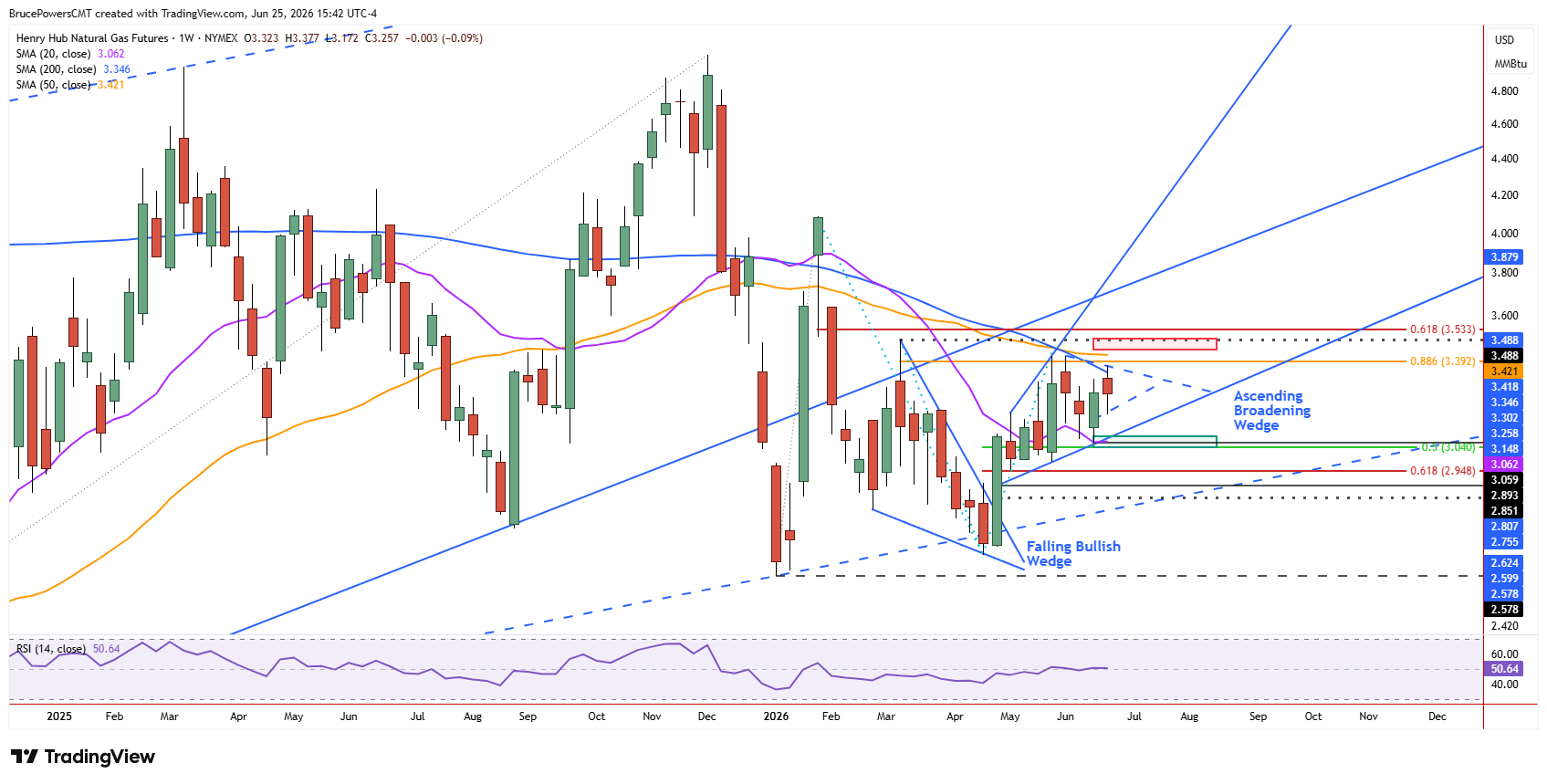
The weekly chart is also showing signs of strength that suggest the possibility of further upside. This week, a one-week bullish reversal triggered following a rally above last week’s high, resulting in a higher weekly low at $3.17 and a higher high of $3.38. That breakout followed three weeks of successful tests of support near the 20-week moving average, reinforcing the developing short-term bullish outlook.
Key Resistance Alignment Across Timeframes
Resistance on the weekly chart is defined by the 200-week moving average near $3.35 and the 50-week moving average at $3.42. Those resistance levels align well with the upside objectives identified on the daily chart, while this week’s high and low establish additional key price levels to monitor for confirmation of strength or weakness as the developing wedge pattern progresses.
Natural Gas Price Forecast
Every new Natural Gas analysis as it publishes, today's technical signal and key levels, live price — on one page.
See all Natural Gas forecastsIf you’d like to know more about how to trade natural gas, please visit our educational area.