Direction Still Unresolved
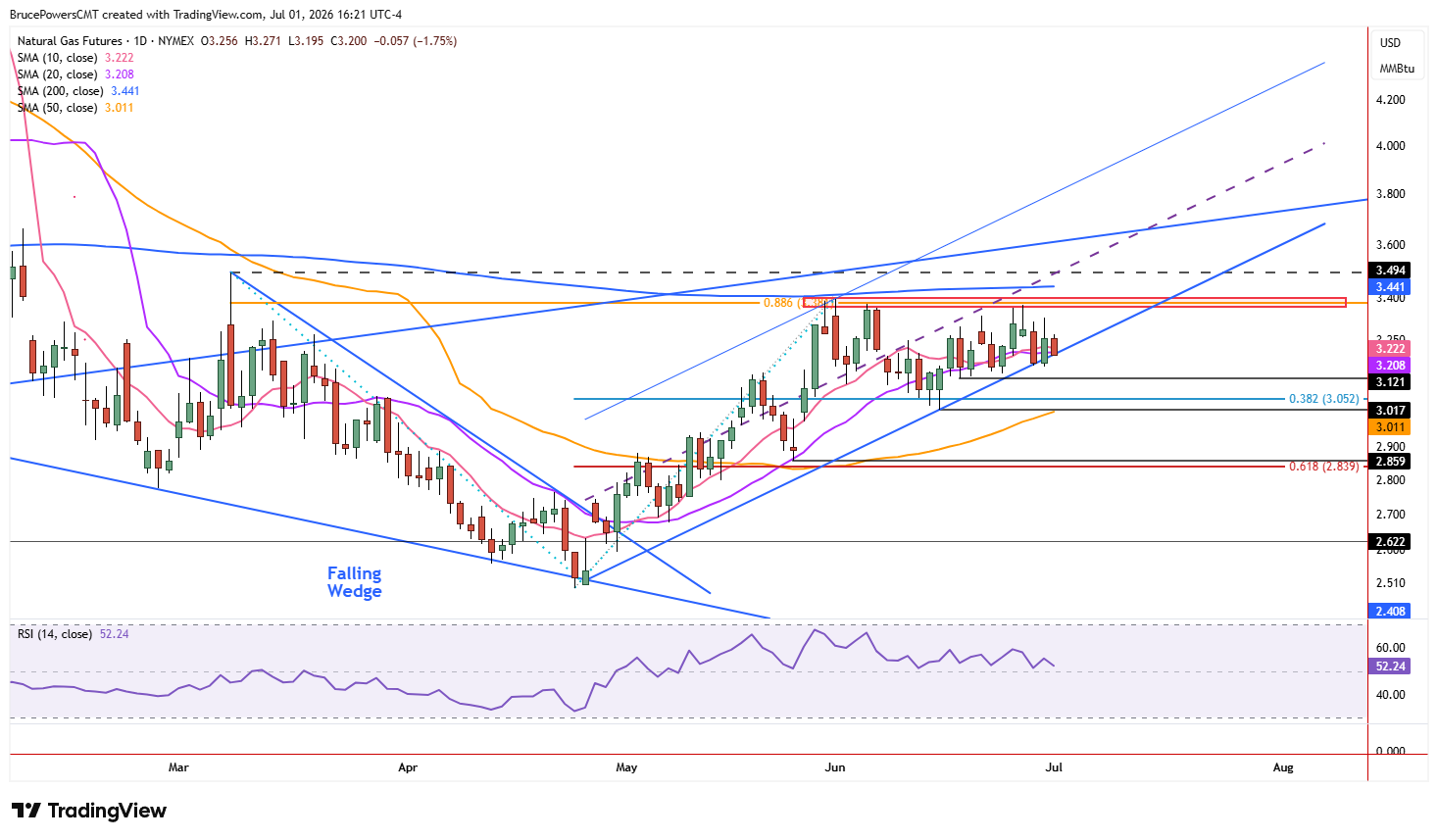
Natural gas continues to reflect indecision as buyers and sellers look to establish control and a move out of consolidation. Technically, the uptrend that followed the April low remains intact but is showing signs of pressure as support has been tested near the uptrend line for three days, including Wednesday. Nonetheless, a trendline by itself is not particularly reliable without confirming signals.

Converging Signals Around Key Pivot Zone
Both the 10-day and 20-day moving averages may provide additional evidence for a key pivot zone, having recently converged as consolidation persisted following the recent swing low of $3.02. That decline completed a 38.2% Fibonacci retracement before buyers took control and allowed a new trendline to be established. That is a sign of strength but not fully confirmed unless there is an advance above the current trend high of $3.40. Until then, there is the possibility of a double top triggering. A potential double top formation being activated, given the recent lower swing high of $3.38.
Trendline Defense and Buyer Response
Since the trendline is being touched for the third time, it gains credibility as a defining dynamic support zone. That should lead to signs of strength back toward recent highs, unless it fails to hold. So far, support is being seen, suggesting an upside resolution.
Short-Term Levels Under the Microscope
As of today, the 20-day moving average, now near $3.21, provides a proxy for the trendline. Also, Tuesday’s low of $3.16 is a key short-term level to either confirm weakening or hold as a support zone. A decisive decline below that level would further confirm a failure of trend support and increase the likelihood of additional downside pressure or extended consolidation.
Overhead Resistance Shapes Breakout Path
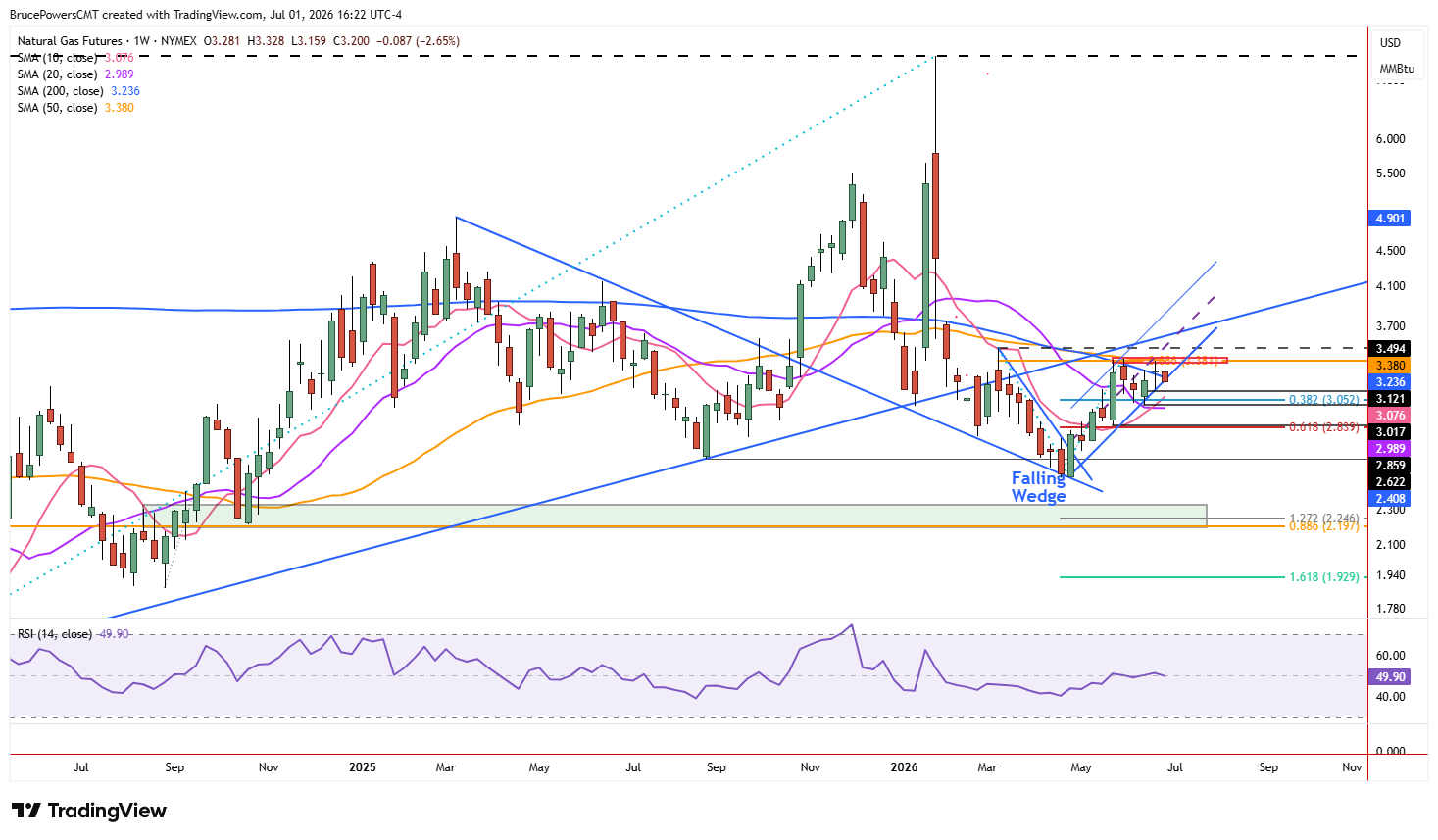
Natural gas is facing resistance near key long-term technical indicators, including the 200-day moving average, a rising trendline, and the 50-week moving average. Nonetheless, buyers continue to exert influence against persistent resistance. If an upside breakout above $3.40 triggers, the 200-day moving average, currently around $3.44, could act as a significant resistance barrier. Having said that, a sustained reclaim of the 200-day average would begin to shift the broader trend structure toward a more constructive phase.
Natural Gas Price Forecast
Every new Natural Gas analysis as it publishes, today's technical signal and key levels, live price — on one page.
See all Natural Gas forecastsIf you’d like to know more about how to trade natural gas, please visit our educational area.