Short-Term Turns Cautious After Break
Key price levels for natural gas start with support near $3.12 and resistance at this week’s high of $3.33. A six-day low of $3.15 was reached on Thursday, which attracted buyers and led to a bounce back into a three-day range. Consequently, a decline below the convergence of the 20-day moving average near $3.21 and the uptrend line was triggered, with the session’s full range printing on the lower side of those indicators, further signaling weakness. It remains to be seen whether the break of the trend indicators leads to a decline or further consolidation, with the trend adjusting its angle.

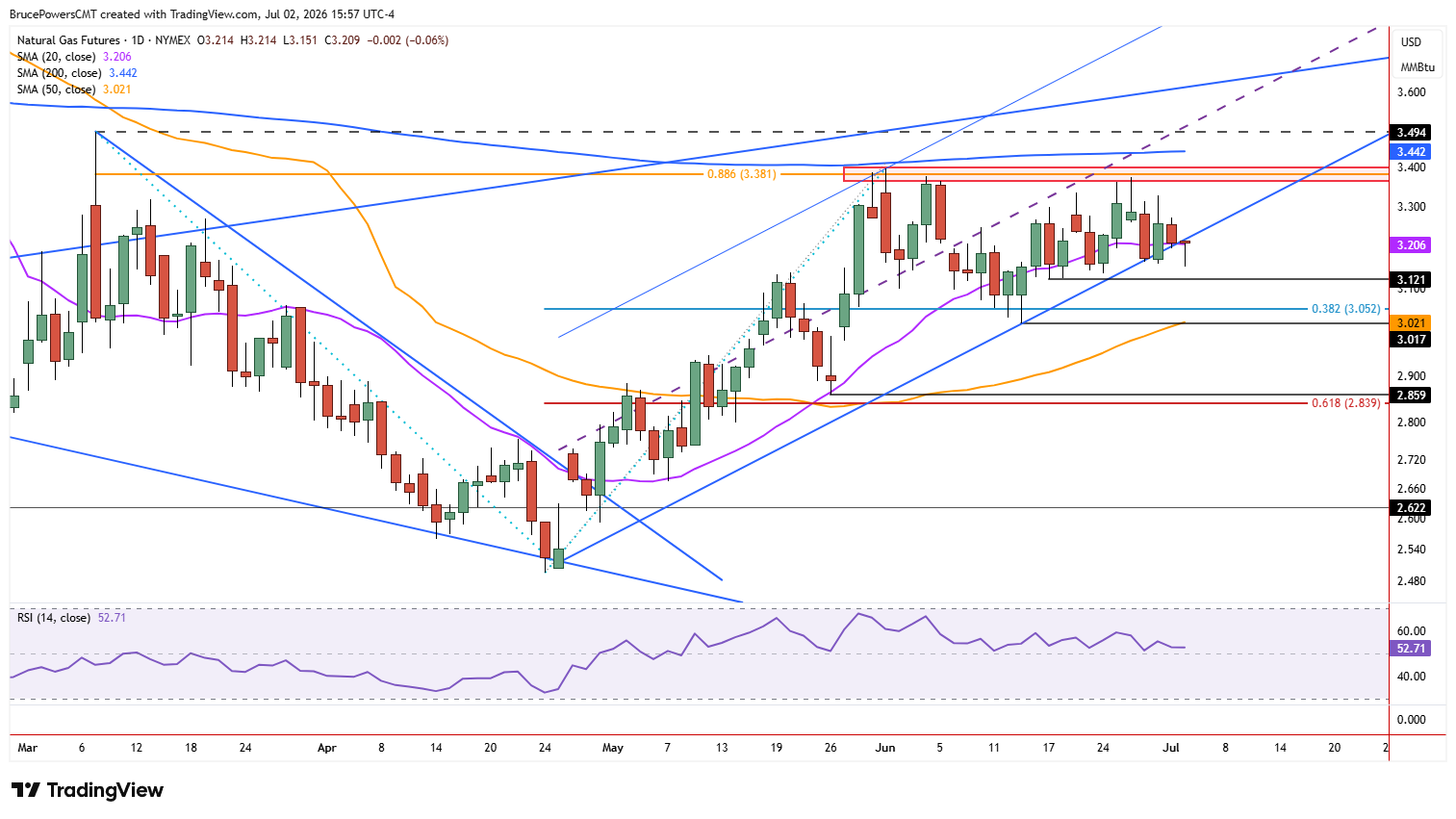
Support Levels Shift Toward $3.12 and Below
Regardless, a decline below the interim swing low of $3.12 would provide additional confirmation of weakness, with the first lower target defined by the rising 50-day moving average, now near $3.02. That average is starting to rise above the higher swing low of $3.02 from June, which is part of the bullish trend structure and therefore a key support zone. The 50-day average also services as a key indicator, as it has been successfully tested as support once since it was last reclaimed in May.
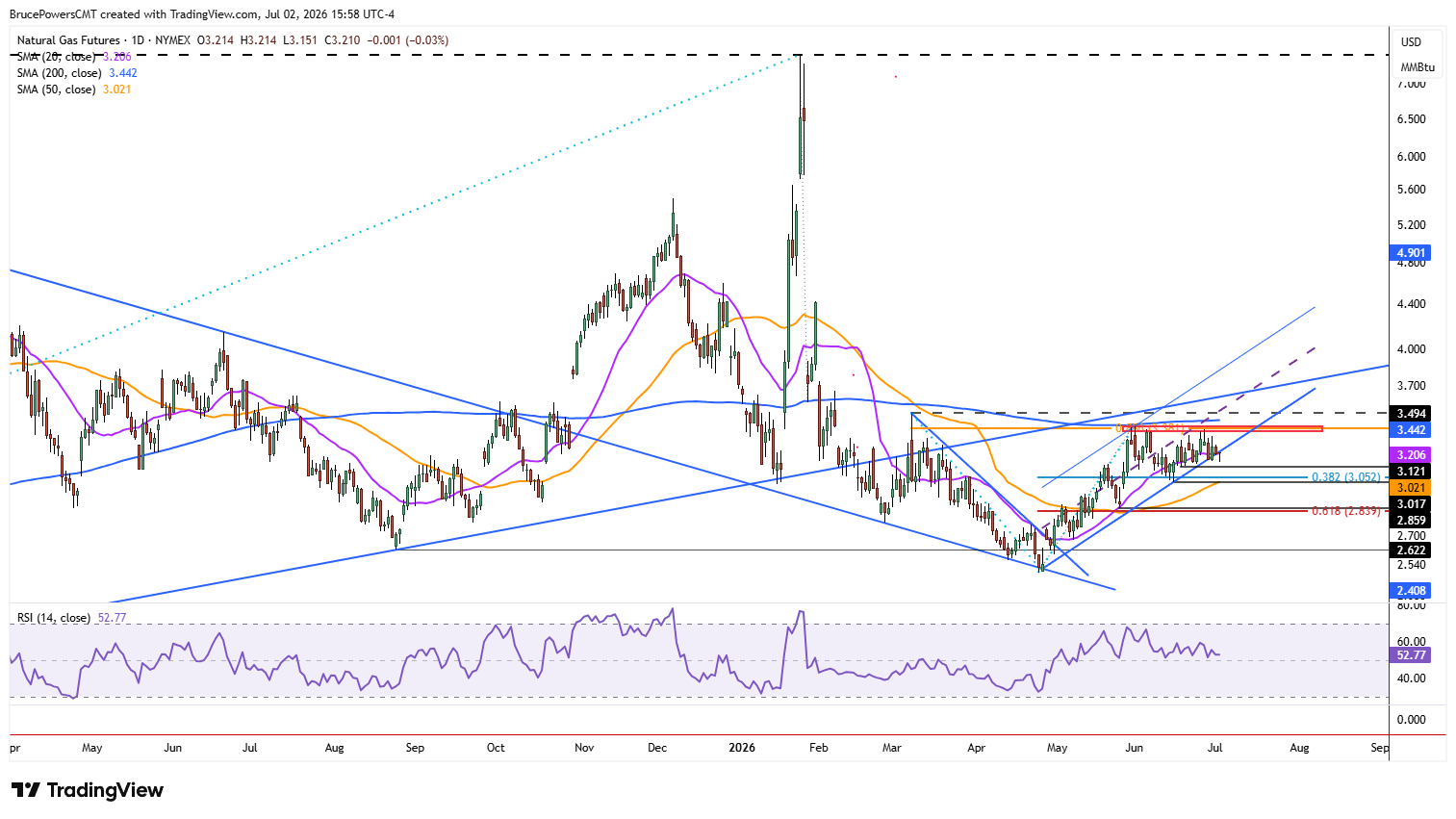
Potential Topping Structure in Focus
The June swing low also represents the bottom of a potential topping formation. Therefore, a decline below it could elicit a more aggressive response from sellers compared to a simple break of a higher swing low. The weekly trend structure shows key near-term support at this week’s low of $3.15, followed by last week’s low of $3.14.
Reversal Scenario Still Intact Above $3.27
A quick recovery of the 20-day average, followed by further strength, may negate the bearish implications of failing trend support. An inside day completed for Wednesday and a rally above the high of the session at $3.27 would trigger a bullish reversal that may again test recent highs ranging from around $3.38 to $3.44.
Broader Trend Hinges on Moving Average Defense
Overall, while the recent break below short-term support has shifted momentum slightly lower, the broader structure still hinges on whether buyers can quickly reclaim the 20-day moving average or whether downside pressure extends toward the rising 50-day average support zone.
Natural Gas Price Forecast
Every new Natural Gas analysis as it publishes, today's technical signal and key levels, live price — on one page.
See all Natural Gas forecastsIf you’d like to know more about how to trade natural gas, please visit our educational area.