
Natural Gas Futures Surge on Colder Weather Outlook
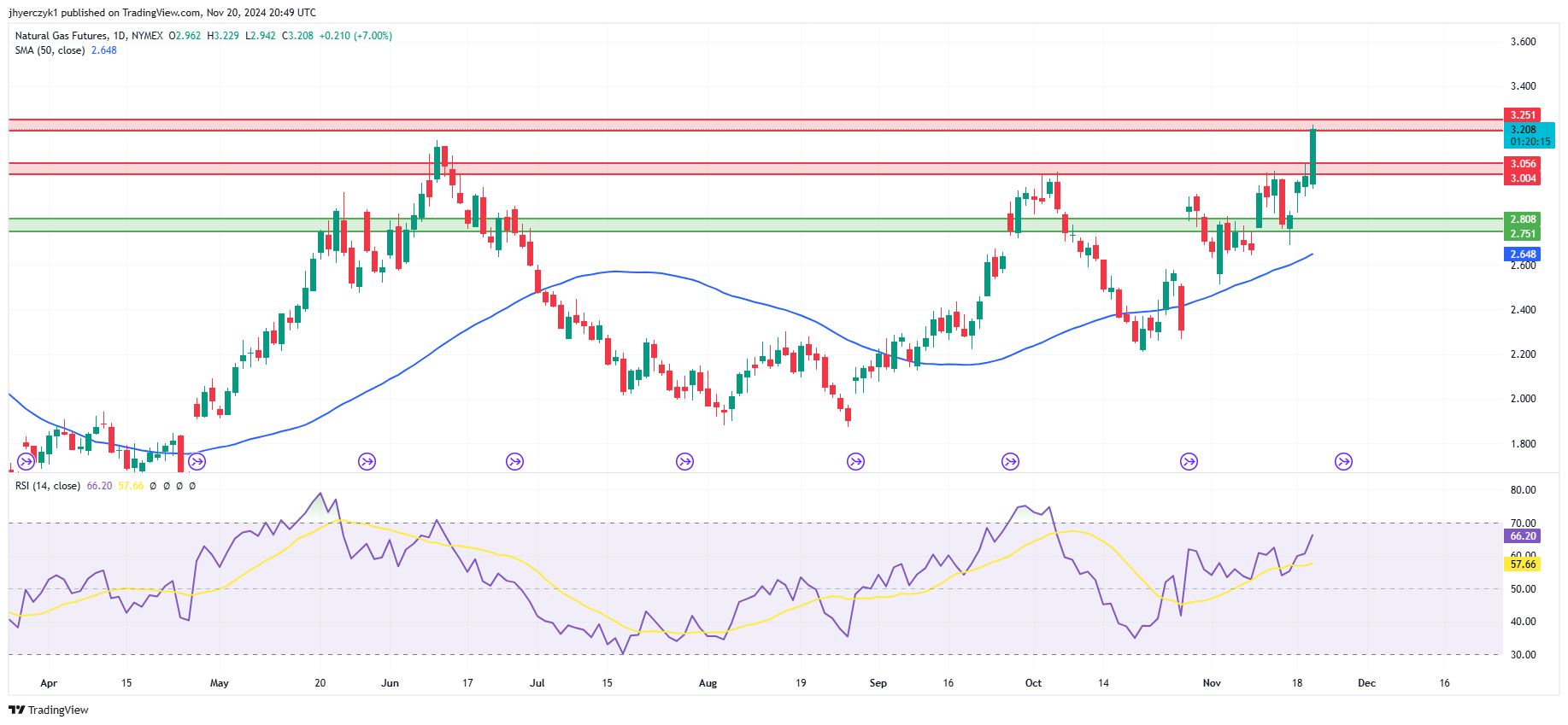
U.S. natural gas futures soared Wednesday, with December contracts hitting $3.229, marking a fourth consecutive daily gain. The rally stems from colder forecasts for late November, boosting heating demand expectations. Maxar Technologies predicts a sharp temperature drop, driving bullish sentiment. Sustained LNG feed gas flows further support prices, with key levels holding for potential continued gains.
Natural gas is currently testing resistance at $3.202, which is also the trigger point for an acceleration to the upside.

WTI Crude Slips Amid Inventory Build, Demand Concerns

WTI crude prices dropped modestly on Wednesday, supported by geopolitical tensions and temporary North Sea production disruptions, but capped by expectations of lower demand. The U.S. benchmark faces bearish pressure from rising domestic crude inventories, with a reported 4.75 million-barrel build last week. This far exceeded the 100,000-barrel increase expected by analysts, signaling potential demand weakness or overproduction.
Gasoline and distillate stock declines partly offset bearish sentiment, as falling inventories suggest resilient fuel demand. Nevertheless, with WTI crude set to expire today, traders are closely monitoring the official Energy Information Administration (EIA) data, expected to confirm the American Petroleum Institute’s (API) preliminary figures.
Market participants will also watch for additional supply increases from U.S. producers as winter approaches, potentially capping price gains. Geopolitical risks, particularly the Ukraine war, provide a short-term floor, but inventory builds remain a critical downside risk for WTI.
Technically, the market could become rangebound if it continues to trade inside $67.02 support and $72.55 resistance. However, overcoming the 50-day moving average at $70.52 will shift momentum to the upside.
Brent Crude Dips as Traders Downplay Supply Risks
On the demand side, concerns linger over rising U.S. crude inventories and potential global economic weakness. Yet, falling gasoline and distillate stocks in the U.S. suggest some resilience in consumption.
Brent prices are likely to remain sensitive to geopolitical developments and winter demand patterns. Analysts expect prices to hold above key support levels in the short term, with additional volatility likely from OPEC+ policy signals.
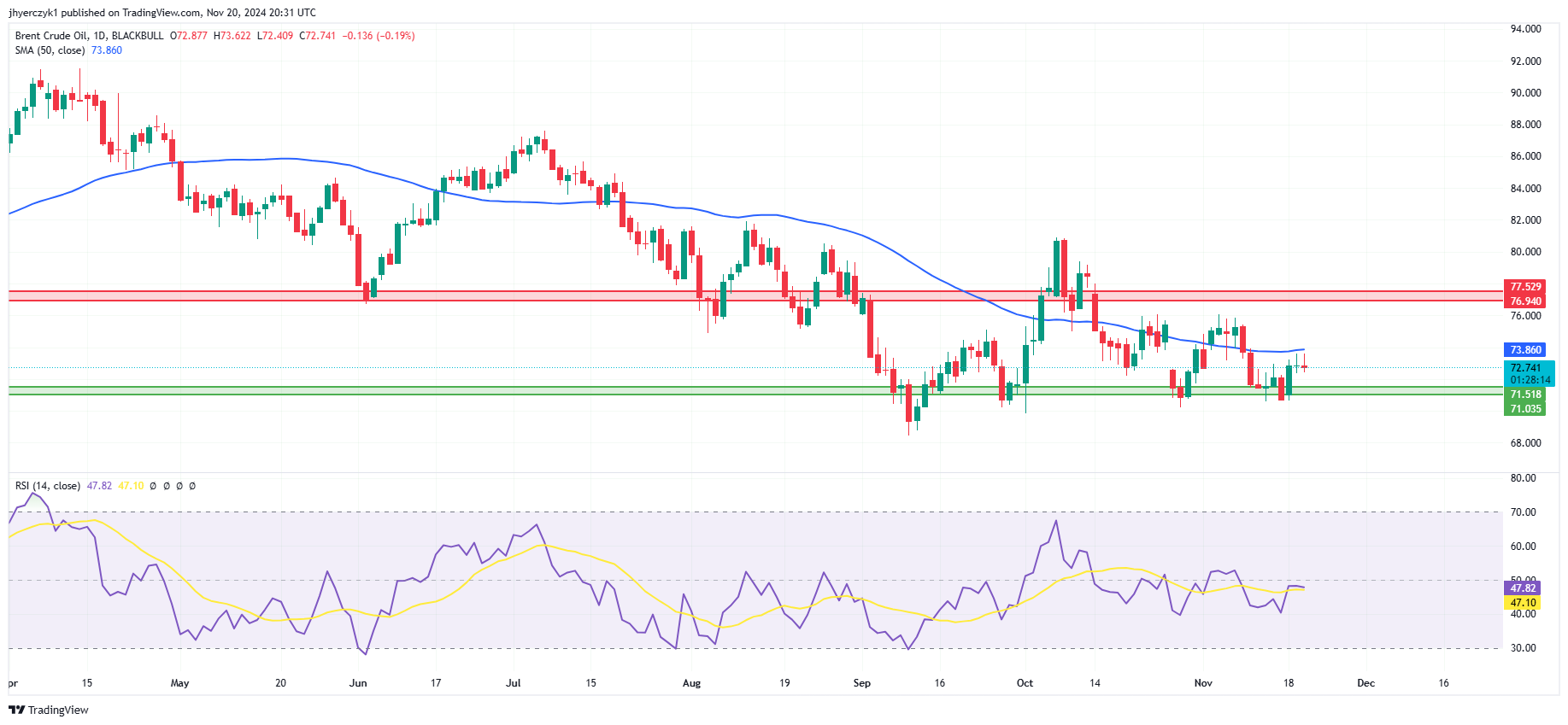
Technically, traders appear to be respecting support at $71.518 to $71.035. The latter, however, is a potential trigger point for an acceleration to the downside. Overcoming the 50-day moving average at $73.86 could trigger an acceleration to the upside.