Nikkei 225 surged higher on Wednesday after forming a strong support at the pivotal zone of 60,000 as investors returned to risk assets. The correction in oil prices and more optimism about a U.S.-Iran deal dominated the supportive factors. It is important to Japan because it is a major energy importer.

Oil Pullback and AI Optimism Lift Nikkei 225 from Key Support
The chart below shows the pattern where any boost in oil prices triggers a correction in the Nikkei 225, while the correction in oil prices rallies the index. The recent rally in Nikkei 225 is due to the correction in Brent crude oil from $114 to $105.
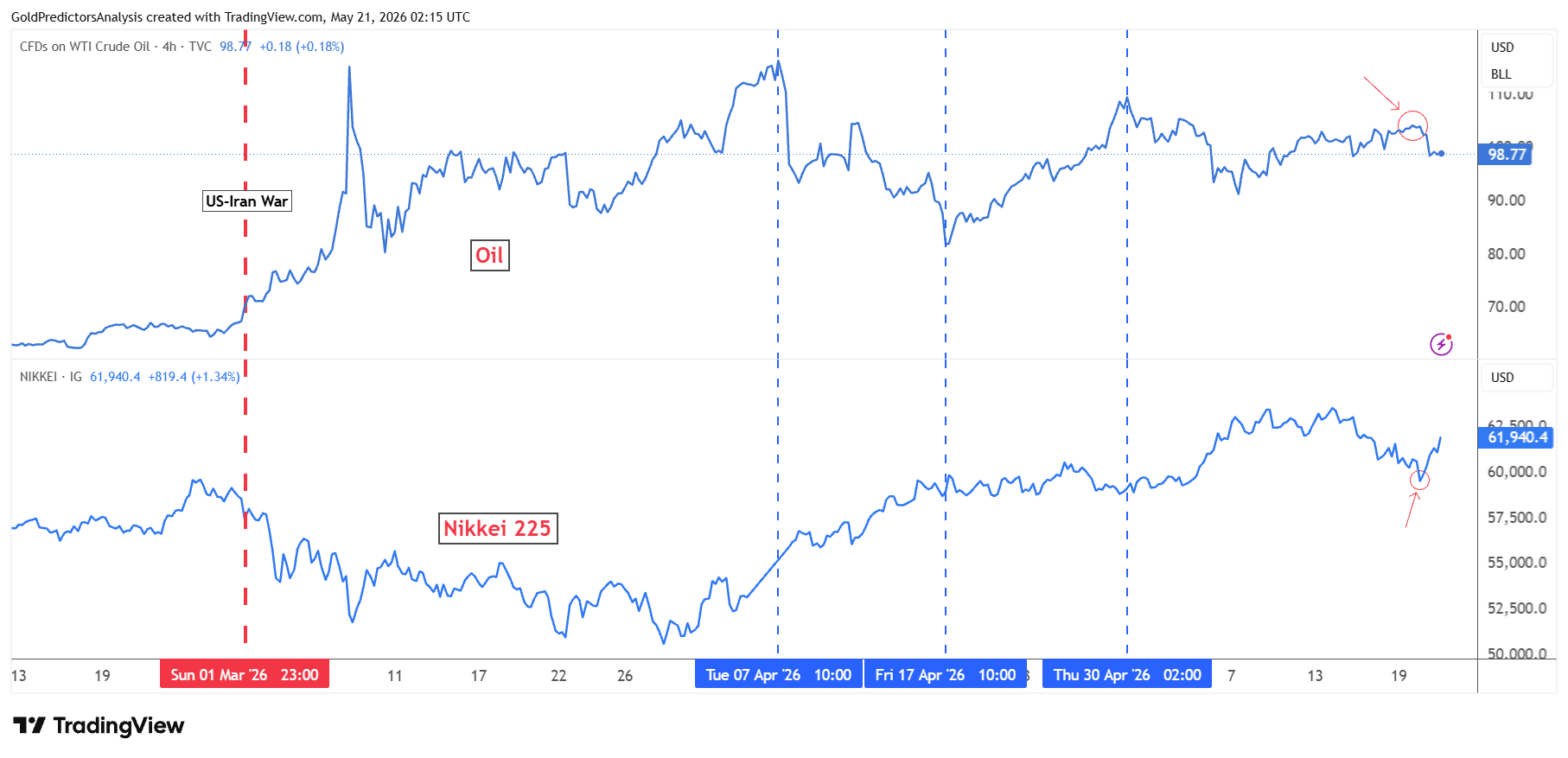
A correction in oil prices helps ease inflationary pressures. It also helps to ease the pressure on company margins. This has provided investors with an impetus to purchase Japanese stocks following the recent volatility in stock market caused by the war.
The bullish argument was reinforced by Japan’s trade data as well. The chart below shows that the Exports jumped 14.8% in April as semiconductors had strong shipments.
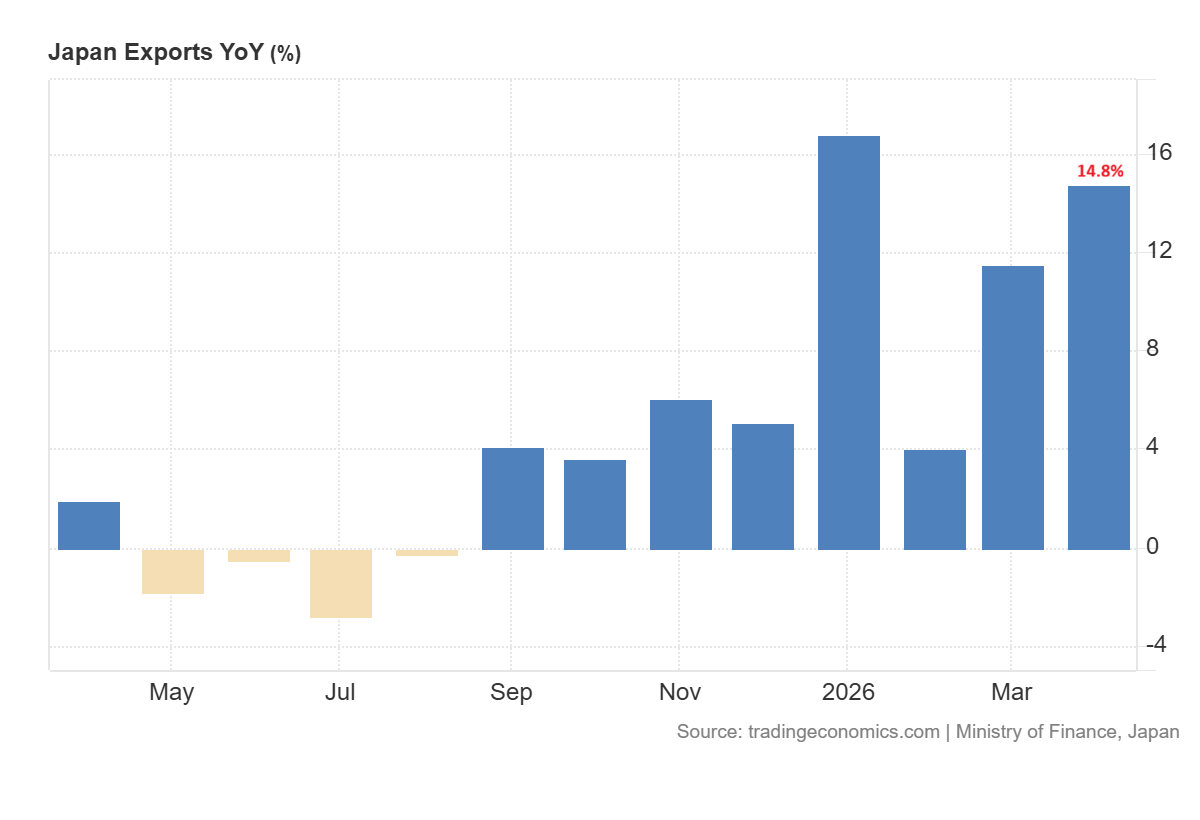
The exports in Japan remain strong and present a positive trend since the last quarter of 2025.
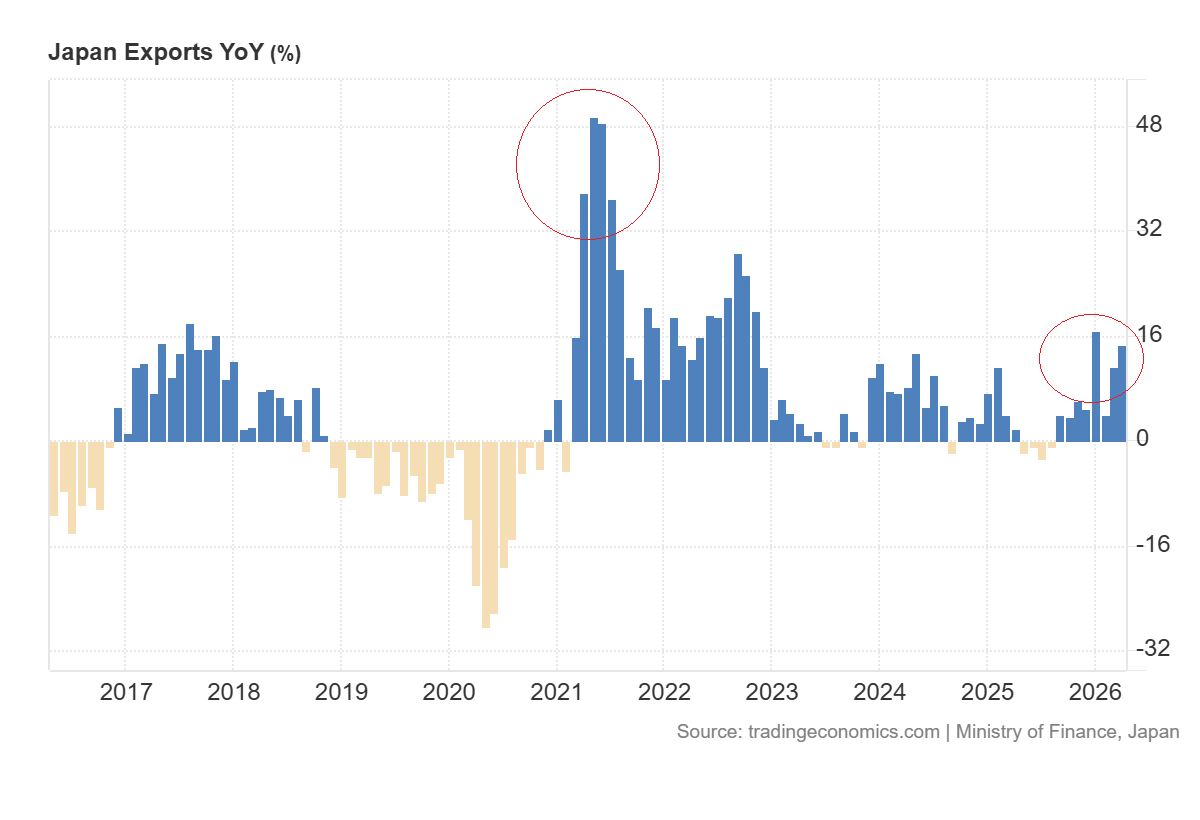
It indicates that Japan is still reaping the rewards of the global AI and chip craze. The smaller trade imbalance also boosted sentiment as it reflects lower import pressure. This is significant for the Nikkei 225. The index is heavily weighted toward exporters, tech and industrial stocks. The strong export growth could bolster earnings expectations.
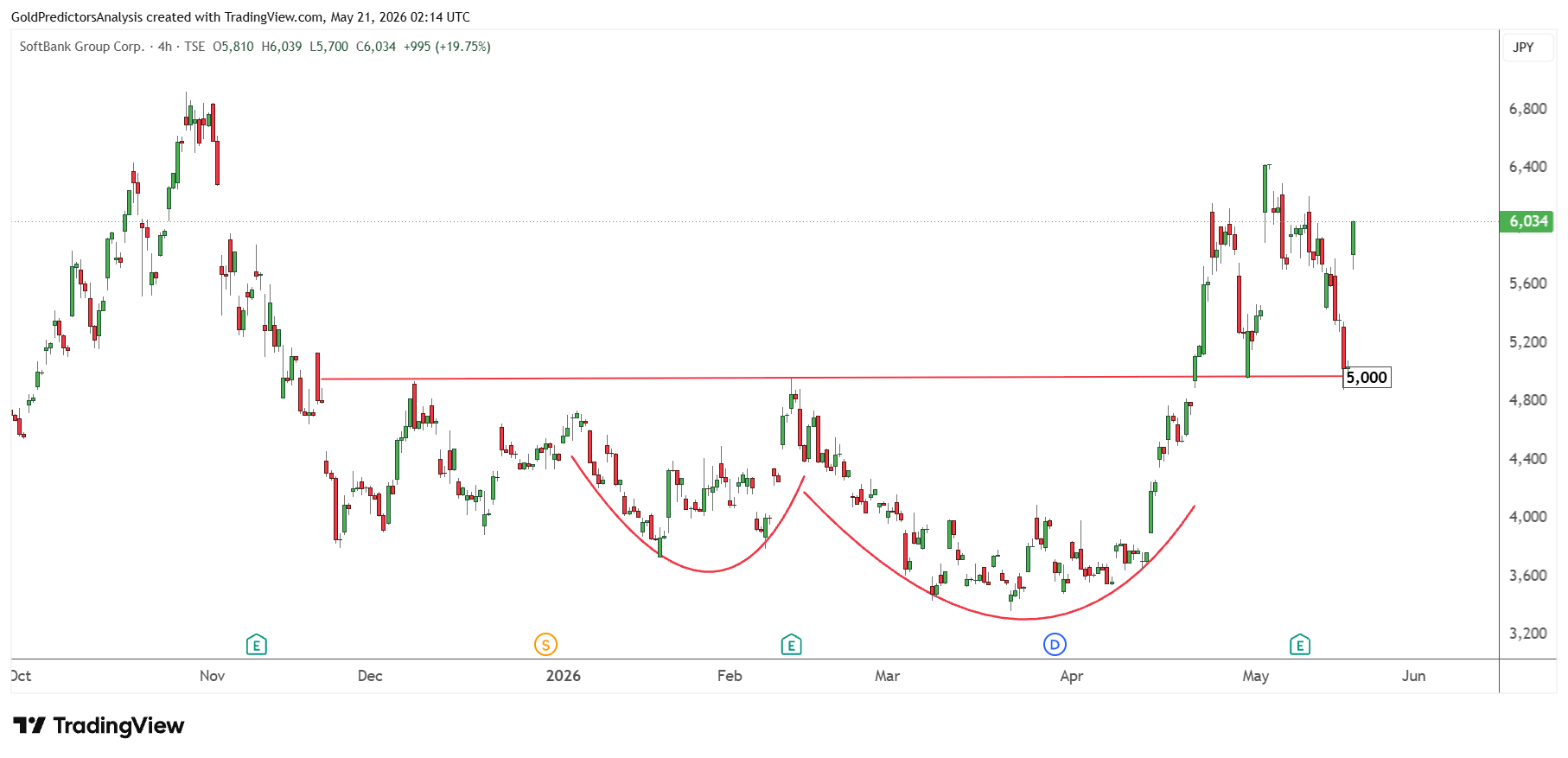
The strong rally in SoftBank also supported the sentiments. The chart below shows that SoftBank rebounded from 5,000 and looks to accelerate towards 7,000 in the short term. The stock surged by 20% after Nvidia’s strong earnings that boosted confidence in AI-related demand. This supported the increase in Nikkei 225 as SoftBank has significant weight in the index.
The geopolitical tensions in the Middle East remain the main risk. The Nikkei may be exposed to additional downward pressure from inflation concerns, rising yields and lack of appetite for risk if talks with Iran break down.
Nikkei Price Forecast
Every new Nikkei analysis as it publishes, today's technical signal and key levels, live price — on one page.
See all Nikkei forecastsNikkei 225 Technical Analysis: 60,000 Support Signals Move Toward 67,000
From a technical perspective, the Nikkei 225 had formed a bottom at the long-term support of 60,000. After forming the bottom, the index surged higher. The correction from 63,800 and then the formation of a bottom at 60,000 indicates that the next move in the Nikkei will likely be toward 67,000.
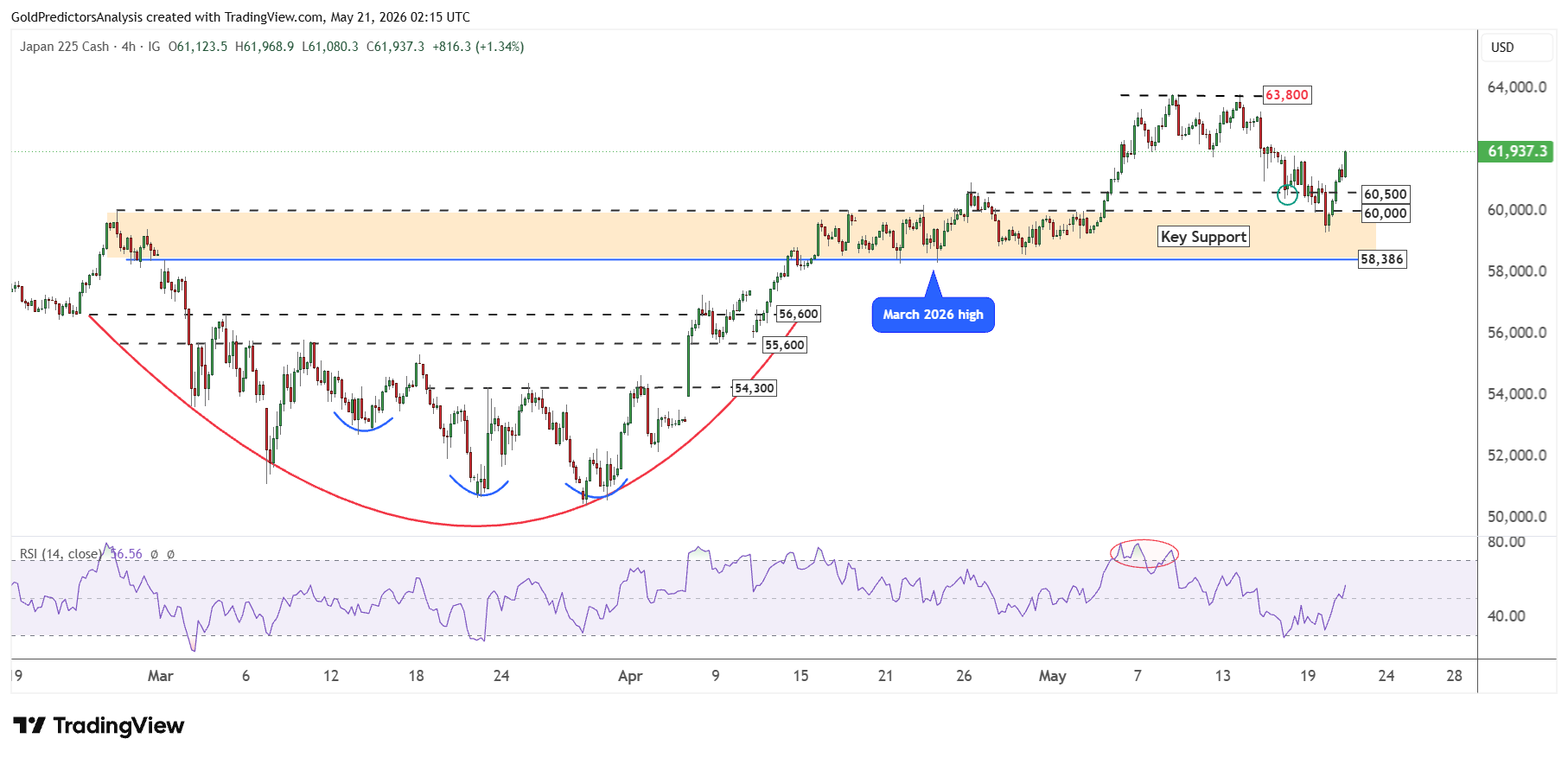
The formation of cup patterns and then the price compression within the 58,000 to 60,000 range indicate that the next move will likely be stronger than the recent rally. The RSI also shows a strong bottom at the lower range. This bottom supports a continued rally in the Nikkei 225.
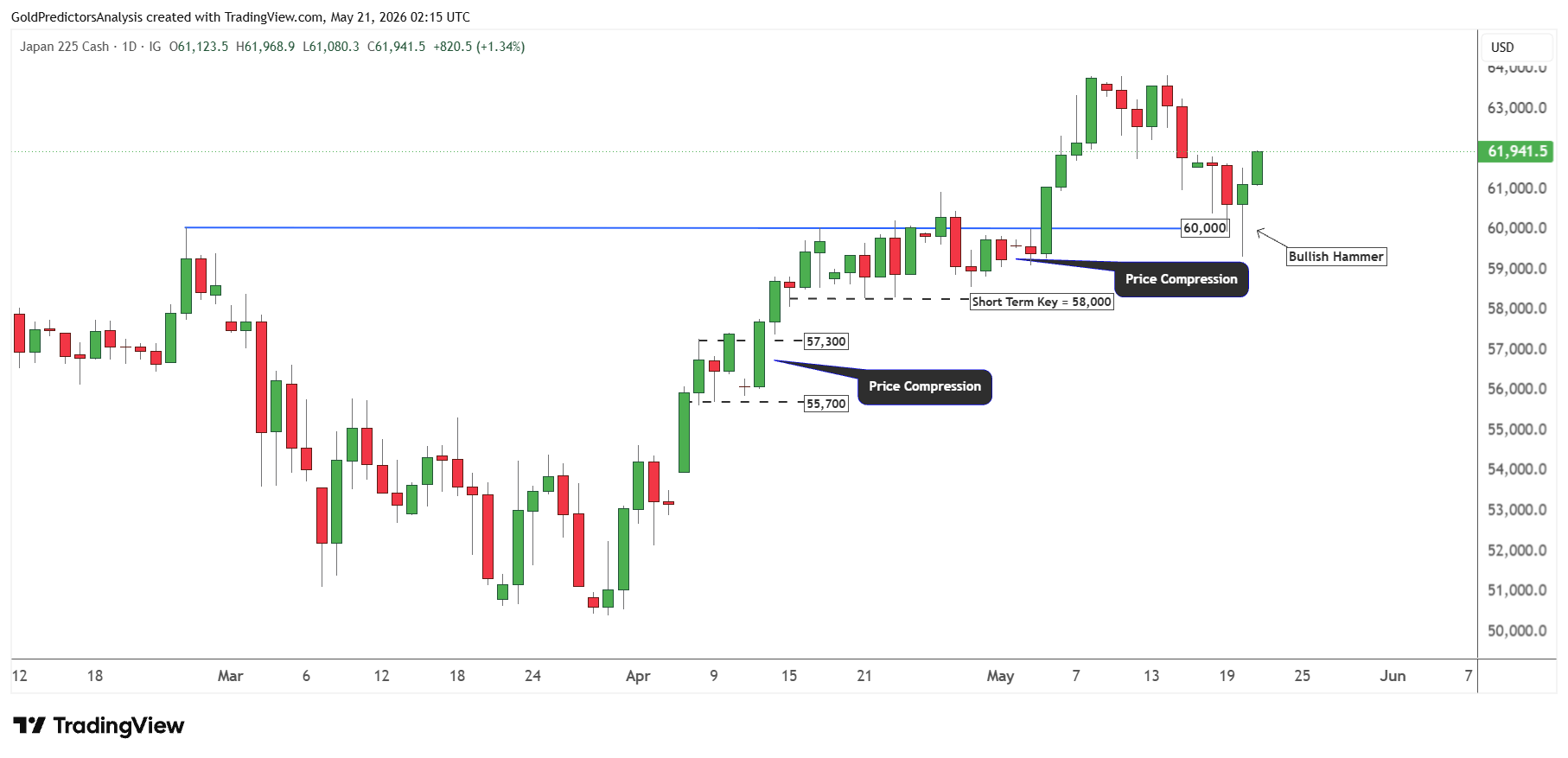
The daily chart for the Nikkei 225 shows the formation of a bullish hammer candlestick above the 60,000 level. This candlestick further confirms the strong rally. The formation of multiple price compressions after the bottom at the 50,000 level indicates that the Nikkei 225 is setting the stage for the next rally to 67,000.
The daily chart for the Nikkei 225 shows that the index is trading within an ascending channel. The formation of a V-shaped recovery above the 50,000 level at the 200-day SMA support bullish momentum. The formation of a bullish hammer candle at the 60,000 level at the ascending channel line indicates that the Nikkei 225 is preparing for a strong surge to 67,000.
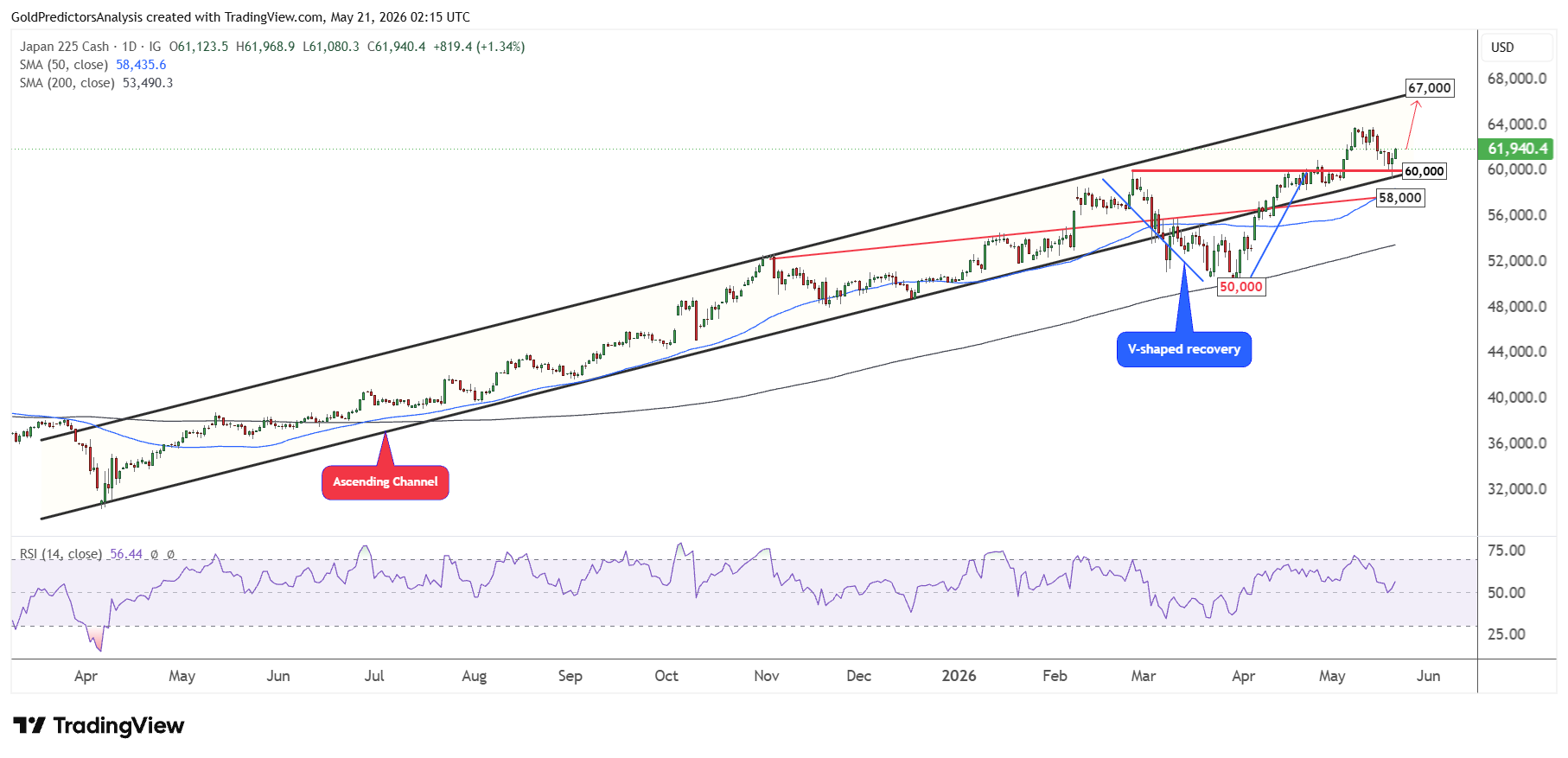
Moreover, the RSI is also rebounding from the mid-level, which indicates continued upside over the next few days.
Bottom Line
Nikkei 225 has resumed its strong momentum after defending the crucial 60,000 support level. A weak yen and the decline in oil prices have helped ease inflation concerns in Japan. The impact of export strength and demand for AI technologies has helped lift earnings sentiment. The strong recovery by SoftBank has given another boost due to its weight.
The technical structure also backs the bullish thesis. The bullish hammer and positive price structure define this thesis. The Nikkei 225 would likely keep rising toward 67,000 provided oil prices are kept in check and the index remains above 60,000. But the rally may be delayed if there is a fresh bout of tensions in the Middle East or another oil price surge.