
Euro Fundamental Analysis
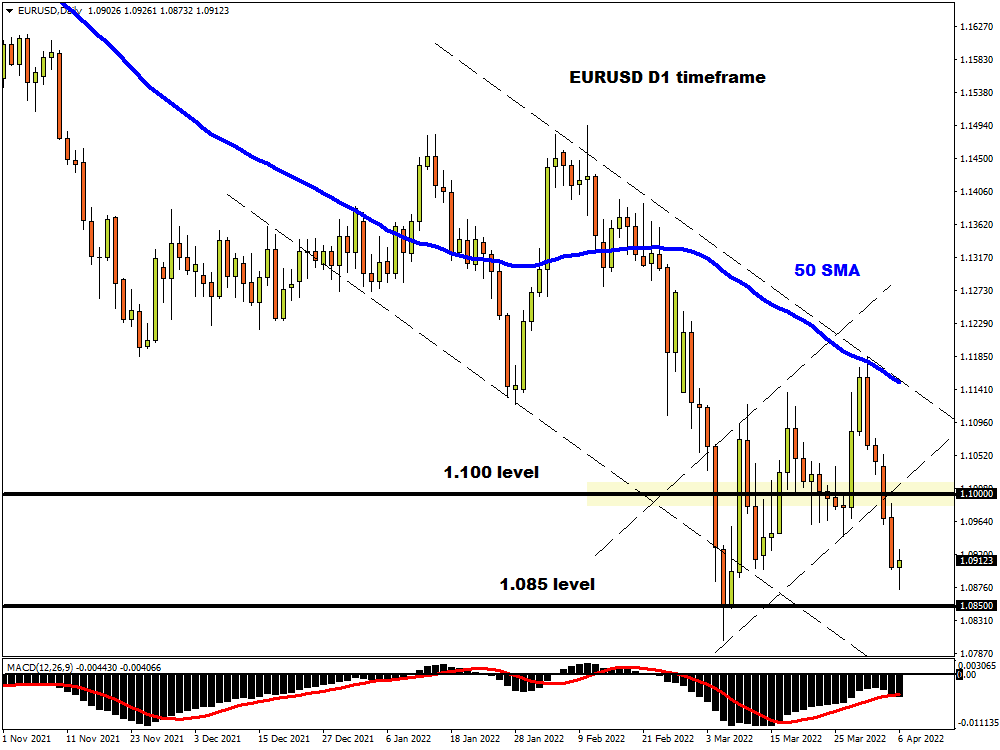
The euro is getting bashed from all sides it seems this month, with peace talks in Ukraine a distant prospect from the hope sparked towards the end of last month. With fresh new sanctions most likely being piled onto Russia adding to the volatile situation, bond yields are ratcheting higher across the globe, and especially in the US, as inflation fears increase. This is pushing the world’s most popular currency pair, EUR/USD, back down to the hugely significant cycle lows at 1.08. The small matter of a French presidential election also kicks off this weekend to add yet another potential headwind to the single currency.
Rising bond yields have been bolstered by more comments from Fed officials in recent days. Known dove Lael Brainard called the task of reducing inflationary pressures “paramount”. She said the central bank will raise interest rates steadily while starting a “rapid” reduction of its balance sheet to tight policy further as soon as next month. This quantitative tightening talk raises the significance of asset runoff to the FOMC’s policy of overall tightening.
Markets are pricing in two bigger 50 basis point rate hikes at its next meetings in May and June. Front-loading is certainly the current narrative with the peak of the Fed’ hiking cycle eventually hitting around the 3% mark. Tonight’s FOMC minutes will be parsed for any signals of a wider consensus to shrink the balance sheet at a fast pace. This would keep bonds on the back foot and continue to support the greenback.
For the euro, mounting geopolitical risks have been the key factor in its very recent underperformance, and this shows no sign of ending. The recent shock to the eurozone’s terms of trade may be compounded by another round of sanctions on Russia. While oil exports have so far been excluded, further consequences for energy exports should keep EUR under pressure.
With investor confidence collapsing in the zone, the ECB’s response to rising inflation will also be key, with all eyes on next week’s meeting. Markets are pricing in around 50bps of rate hikes by year end. But the loss of support in EUR/USD around the 1.10 level may indicate that FX traders at least are concerned that policymakers will sound more cautious than current money market pricing.

French Presidential Election and the Euro
Another risk for the common currency is also looming with the upcoming French presidential election. Tightening polls have showed the lead for the incumbent Macron over the far-right Le Pen being cut from 61% to 39% two weeks ago to a much narrower 54% versus 46% recently. Some surveys even have a Le Pen victory within the margin of error. We note there is a noticeable pick up in implied volatility in EUR/USD options around the date of the second-round election on 24 April. All eyes will be on the first round of votes due this weekend as the beleaguered euro hopes for some Easter forgiveness.
Written on 06/04/2022 by Lukman Otunuga, Senior Research Analyst at FXTM
For a look at all of today’s economic events, check out our economic calendar.
For more information, please visit: FXTM
Disclaimer: This written/visual material is comprised of personal opinions and ideas. The content should not be construed as containing any type of investment advice and/or a solicitation for any transactions. It does not imply an obligation to purchase investment services, nor does it guarantee or predict future performance. FXTM, its affiliates, agents, directors, officers or employees do not guarantee the accuracy, validity, timeliness or completeness of any information or data made available and assume no liability for any loss arising from any investment based on the same.