Breakdown Risk Builds Below Key Trend Indicators
The stock of NVIDIA Corporation (NVDA), a leader in artificial intelligence chips and data-center GPUs, is at risk of confirming a breakdown from a large topping consolidation pattern on Friday. A key support trendline across the bottom of the formation has been broken, along with the 200-day moving average, increasing the significance of the breakdown. The bearish indications were confirmed with a daily close below both trend indicators.
Since these bearish signals occurred relatively close together, downward pressure in NVDA stock looks likely to continue unless there are clear signs of strengthening. Given the current environment, those signs may begin to emerge on a sustained move above $179.98, which would signal improving demand.

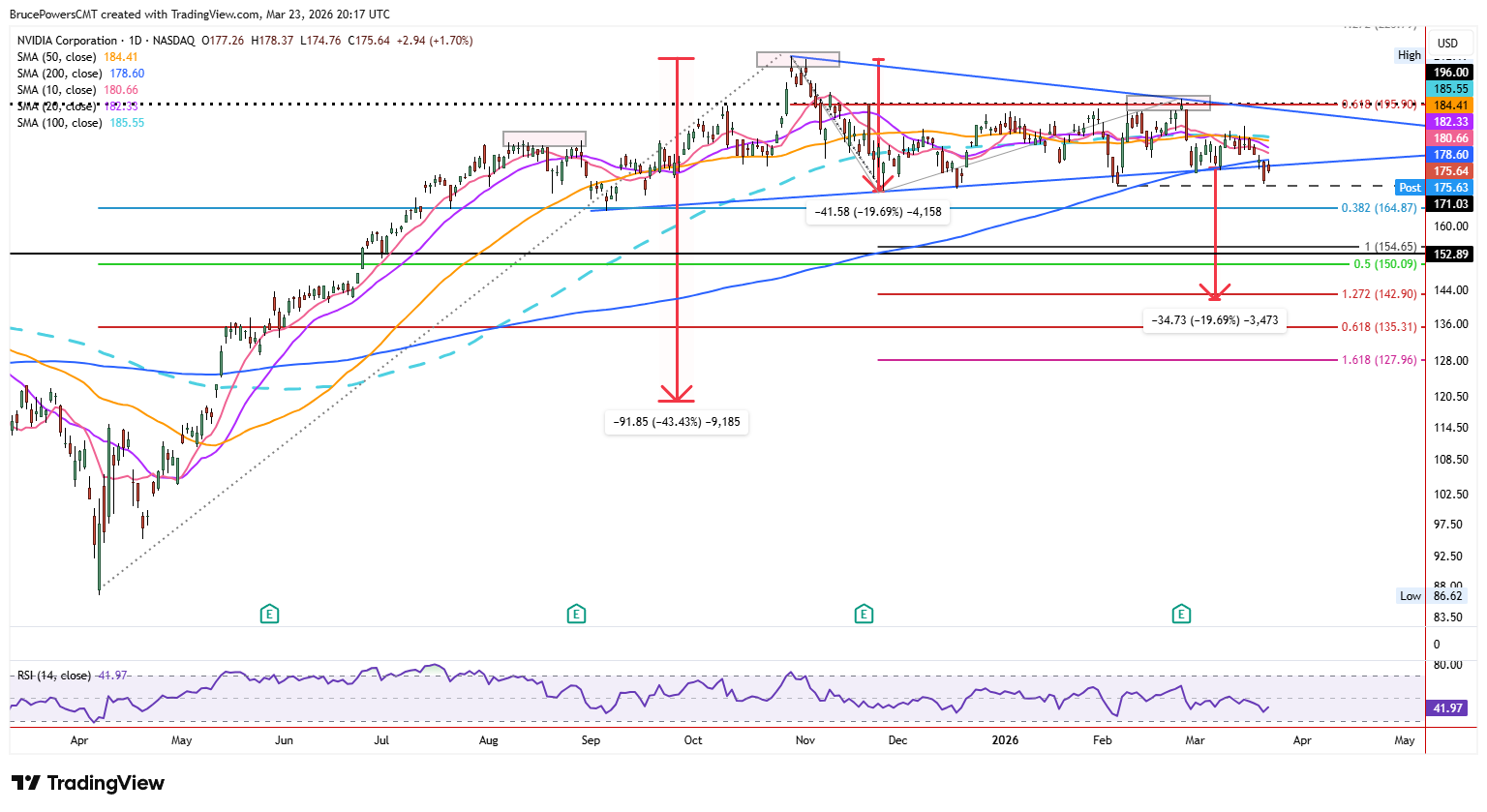
200-Day Average Flips to Resistance
On Monday, NVDA pulled back and tested prior support near the 200-day average as resistance. Price was rejected near that level, reinforcing the 200-day moving average as resistance rather than support. Once that occurs, it often signals that the bear trend is ready to proceed. Note that NVDA has traded above the 200-day line since it was last reclaimed in May 2025.
$171.03 Level Key for Bearish Continuation
There is one more near-term support level to be challenged before a new trend continuation signal will occur. That will happen on a decline below a higher swing low at $171.03 from early February. A break below that structure level will provide a new bearish continuation signal for NVDA stock. Recent price action testing resistance during a minor March upswing provided bearish evidence by establishing a lower swing high near the convergence of several moving averages. The 100-day moving average at $185.56 is the most significant nearby resistance level among the averages.
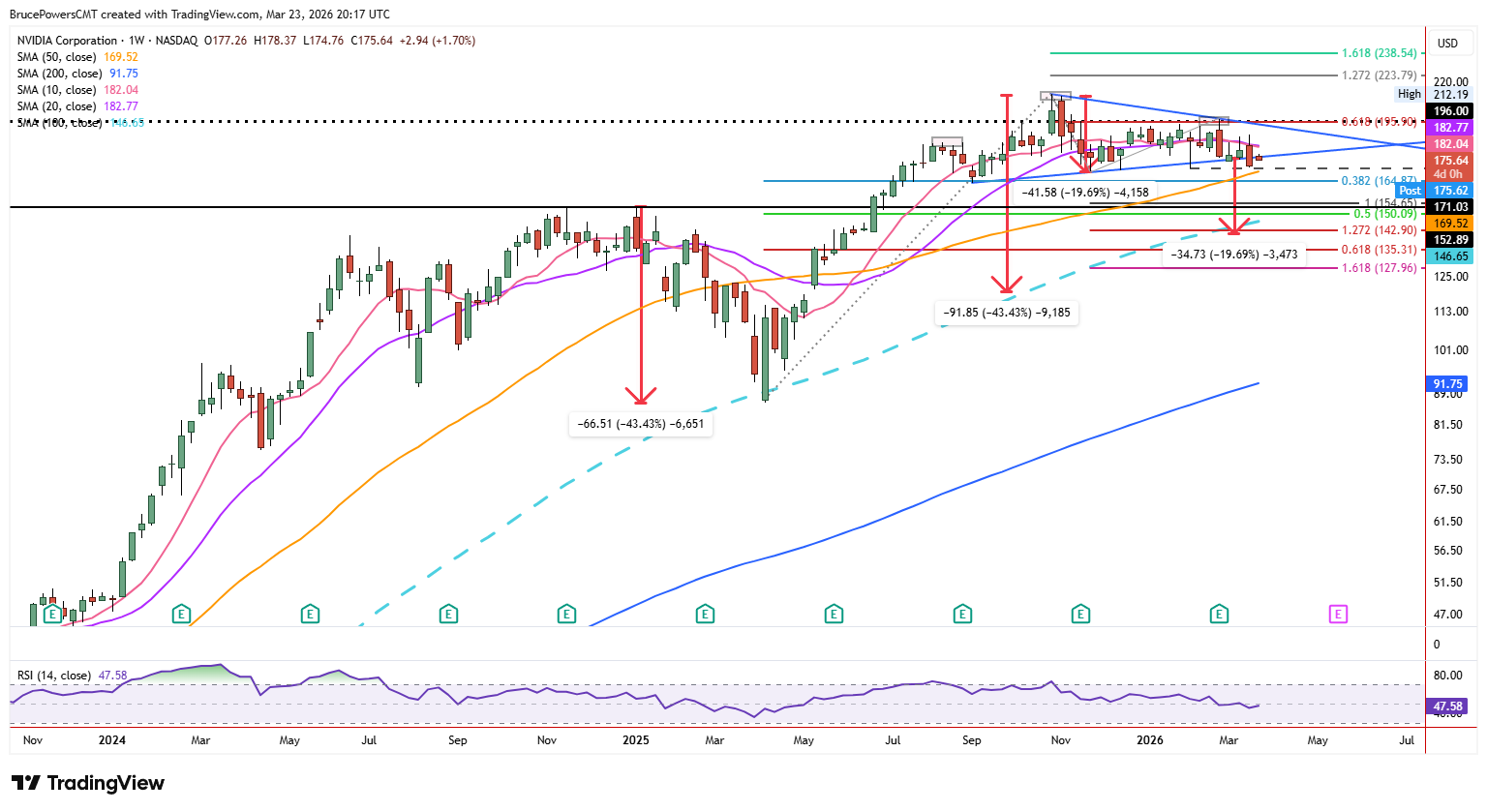
Downside Targets Cluster Near Prior Breakout Zone
With a breakdown from the consolidation top now triggered, traders are watching for additional confirming or contrary evidence to appear. But sometimes, price structure alone is sufficient to indicate that lower targets are likely to be tested. The more obvious downside target is near the prior trend high from November near $152.89. It takes on added significance since it is joined by the 50% retracement at $150.09, creating a confluence support zone.
Support Confluence Strengthens Below $150
Nonetheless, the 100-week moving average, now at $146.65 and rising, marks a potentially key support level, as this average previously marked where support was found during the bearish correction in April 2025. Therefore, it may do so again if tested. However, since it is rising towards the $152.89-$150.09 price zone, it may converge with that range by the time price reaches it, further strengthening the broader support area. This developing confluence helps tie back to the initial breakdown risk, as it highlights where a deeper decline may ultimately stabilize if bearish momentum persists.
If you’d like to know more about technical analysis and how traders use it, please visit our educational area.