Oil prices show uncertainty below $60 as Ukraine strikes Russia’s Druzhba pipeline, raising concerns about potential supply disruptions. Although the pipeline operator confirmed that flows to Hungary and Slovakia remain unaffected, the market reacted to the geopolitical risk. The perception of heightened tensions provided short-term support for prices. Brent crude oil (BCO) increased to $62.80, while WTI crude oil (CL) reached $59.10.
The stalled peace talks between the U.S. and Russia increase the likelihood of a short-term rebound in oil prices. Traders had previously anticipated a breakthrough that could lead to the lifting of sanctions on Russian oil. However, with no progress reported and uncertainty still lingering, expectations of an imminent supply return have diminished.
However, short-term gains remain limited due to weak underlying fundamentals. Concerns over global oversupply and sluggish demand continue to weigh on the market. Fitch Ratings recently lowered its 2025–2027 oil price outlook, citing expectations that production growth will outpace consumption. While geopolitical risks may provide temporary support, the broader downtrend is likely to persist unless there is a meaningful recovery in demand.
WTI Crude Oil (CL) Technical Analysis
WTI Oil Daily Chart – Consolidation at Long-Term Support
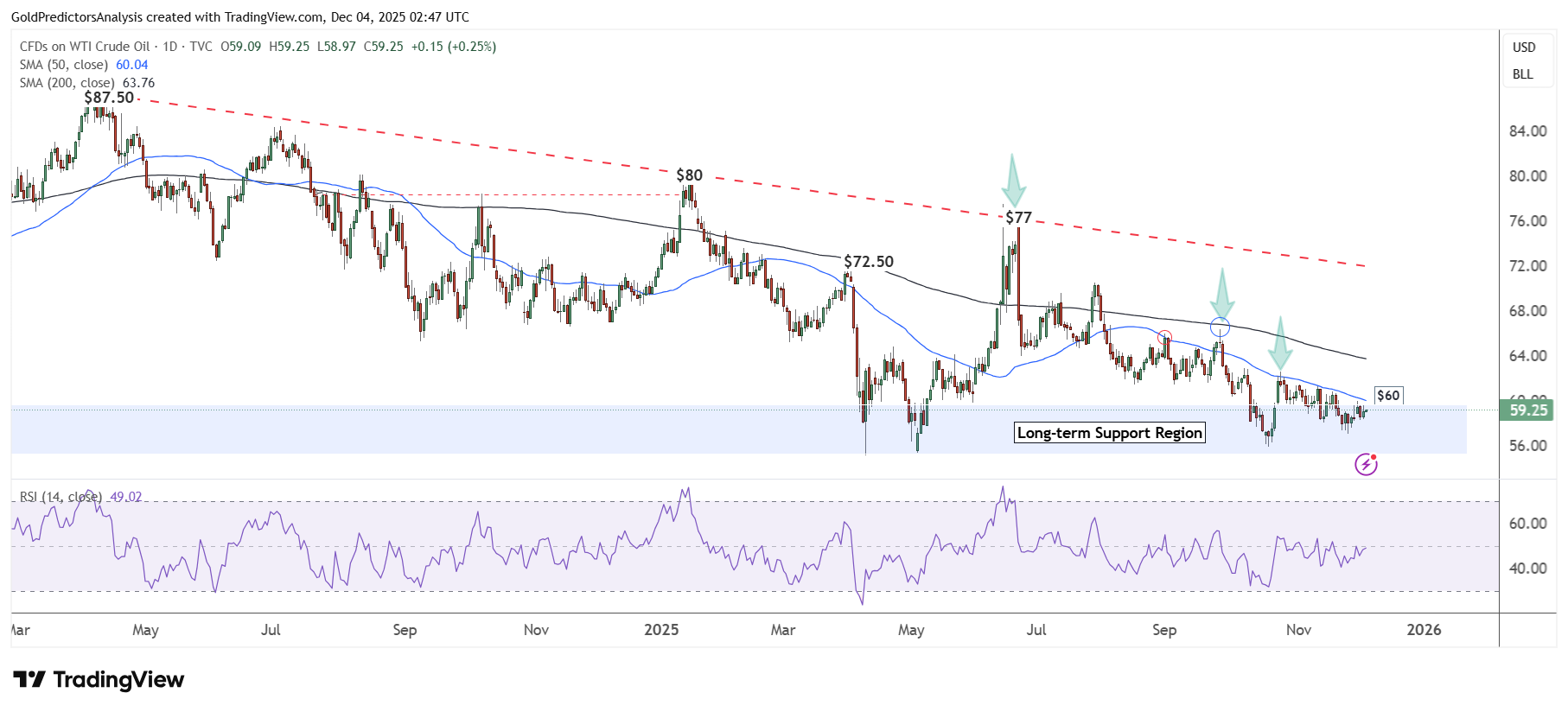
The daily chart for WTI crude oil indicates that the price is consolidating within a long-term support zone, spanning the $55 to $60 region. However, the strong rejection at the 50-day and 200-day SMAs suggests that oil prices remain under bearish pressure.
As long as the price stays below the $60 level, the possibility of a further decline toward the $55 area remains high. On the other hand, a decisive break above the $65–$68 zone would increase the likelihood of a strong move toward the $70 region. The RSI is also fluctuating below the mid-level, which further reinforces the negative pressure on oil prices.
WTI Oil 4-Hour Chart – Negative Price Action
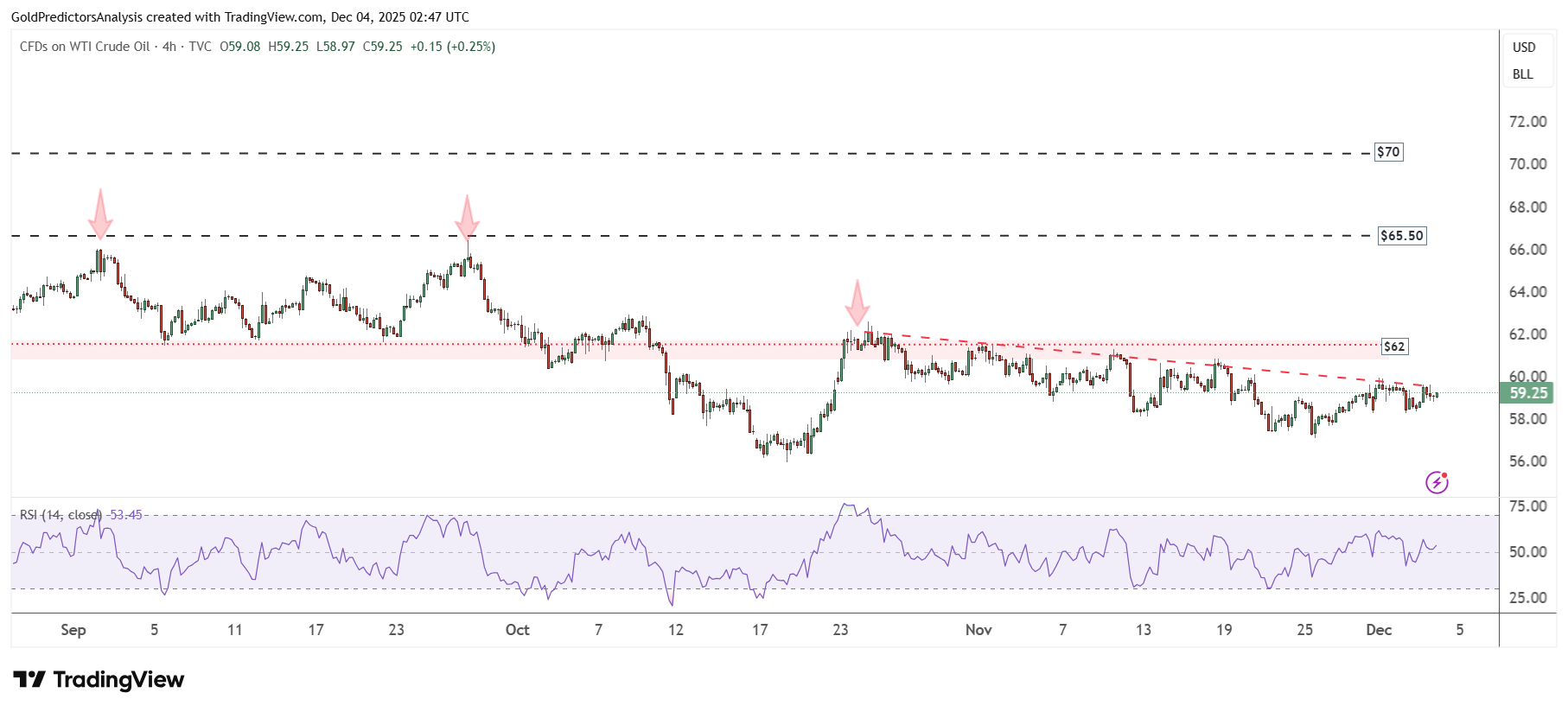
The 4-hour chart for WTI crude oil shows that the price is consolidating below the red dotted trendline. As long as the price stays below $62, the likelihood of a strong drop in oil prices remains high.
Natural Gas Price Forecast
Every new Natural Gas analysis as it publishes, today's technical signal and key levels, live price — on one page.
See all Natural Gas forecastsThe prolonged consolidation below the $70 and $65 regions over the past few months has created a tight trading range for oil prices. This sustained price action increases the probability of continued downside pressure in the oil market.
Natural Gas (NG) Technical Analysis
Natural Gas Daily Chart – Bullish Momentum
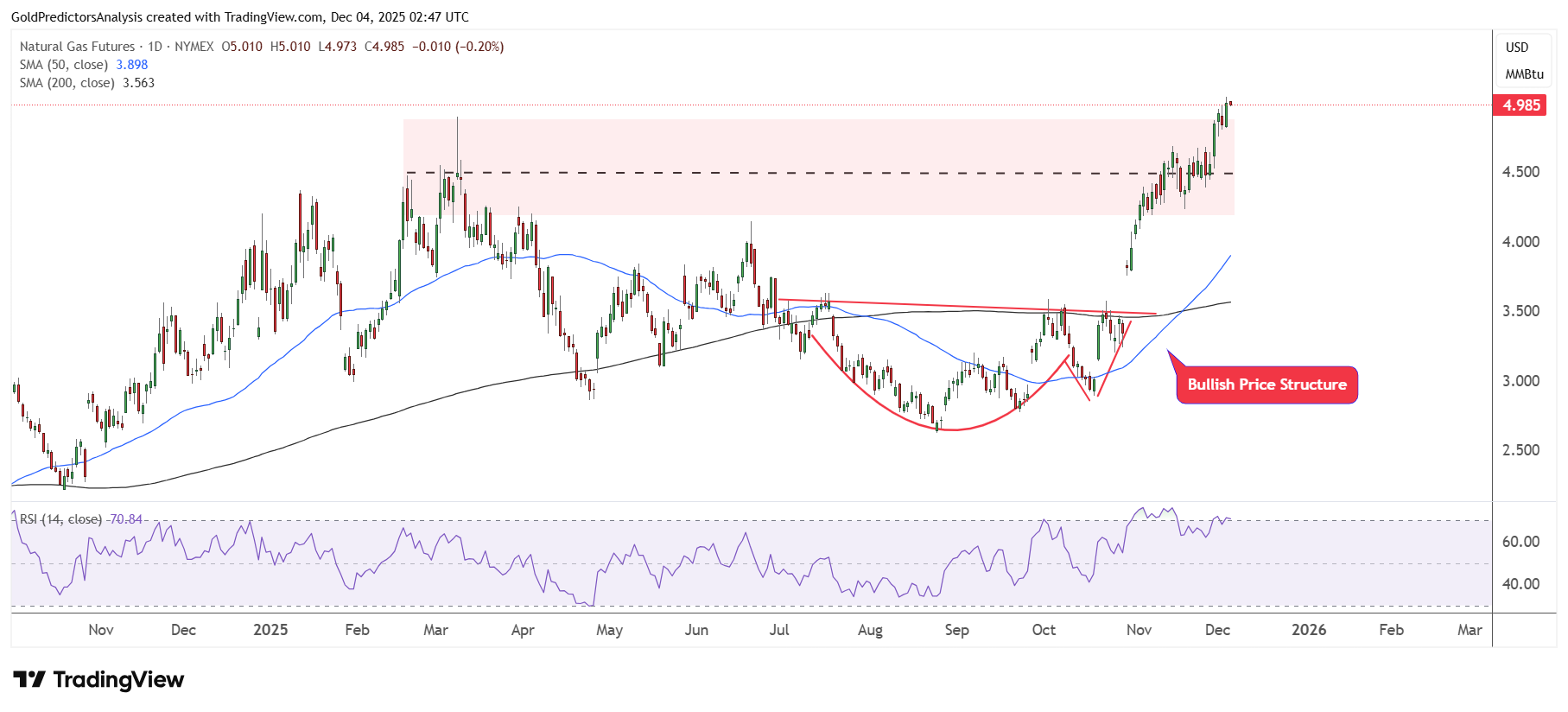
The daily chart for natural gas (NG) indicates that the price has broken above the red-shaded area around the $4.90 level. This breakout signals a potential for a continued strong upside move. Bullish price action has emerged from the long-term support level near $2.50. This development supports the likelihood of upward momentum in the days to come.
However, the RSI is currently hovering in the overbought zone. This signals that a short‑term pullback or slower consolidation may occur before the next leg higher. The immediate strong support remains near the $4.50 level.
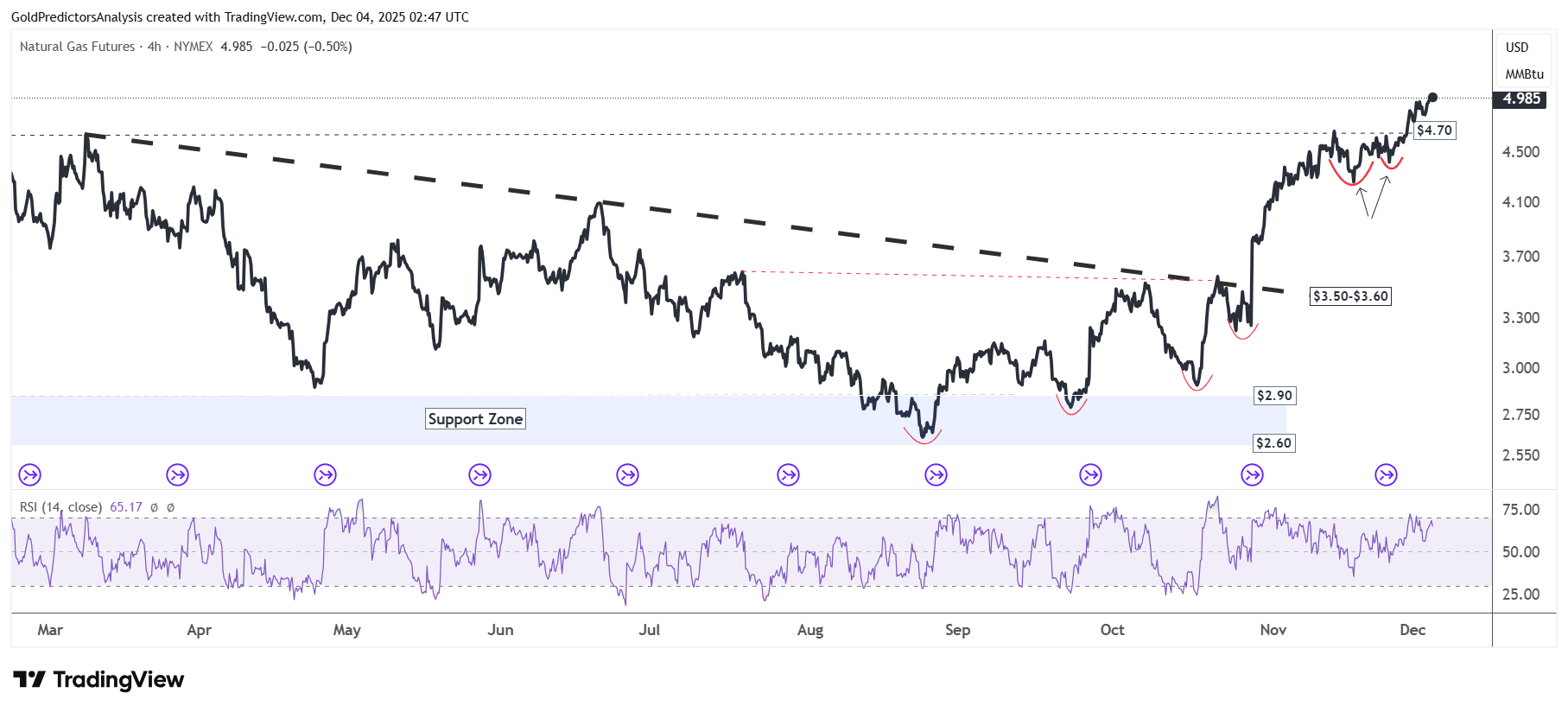
Natural Gas 4-Hour Chart – Bullish Momentum
The 4-hour chart for natural gas shows that the price has broken above the $4.70 level after forming a bullish price structure above the $4.10 region. Multiple reversals from the $2.60 support zone have signaled a strong base for natural gas prices. A breakout above the black dotted trendline near $3.50 confirms sustained bullish momentum. These developments indicate further upside potential for natural gas in the coming days.
US Dollar Index (DXY) Technical Analysis
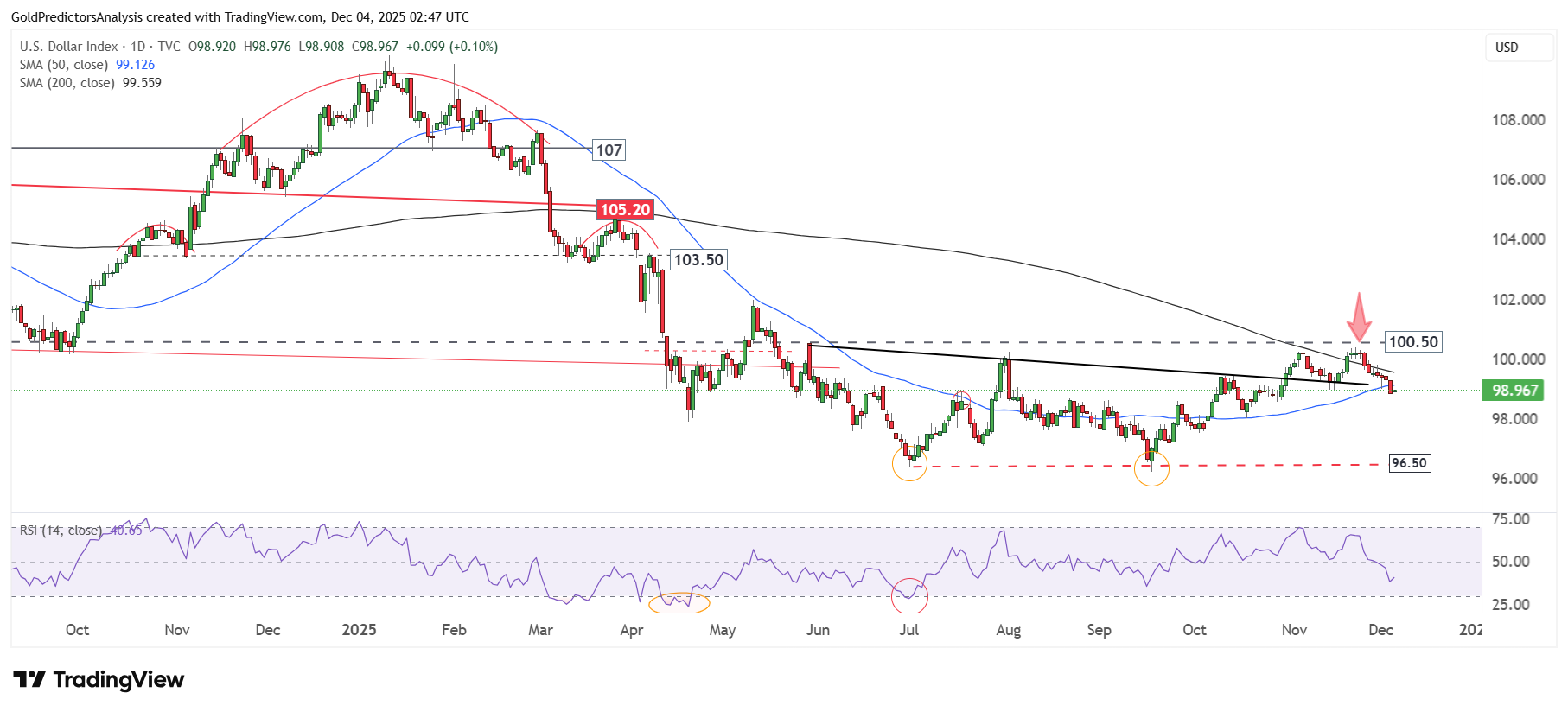
US Dollar Daily Chart – Bearish Pressure
The daily chart for the U.S. Dollar Index shows a continued decline below the 99 level. This move followed a failed attempt to break above the 100.50 resistance. The price has also dropped below the 50-day SMA. This breakdown increases the likelihood of a deeper move toward the 96.50 level. Additionally, the RSI remains below the mid-level, reinforcing short-term bearish pressure on the dollar.
US Dollar 4-Hour Chart – Negative Price Action
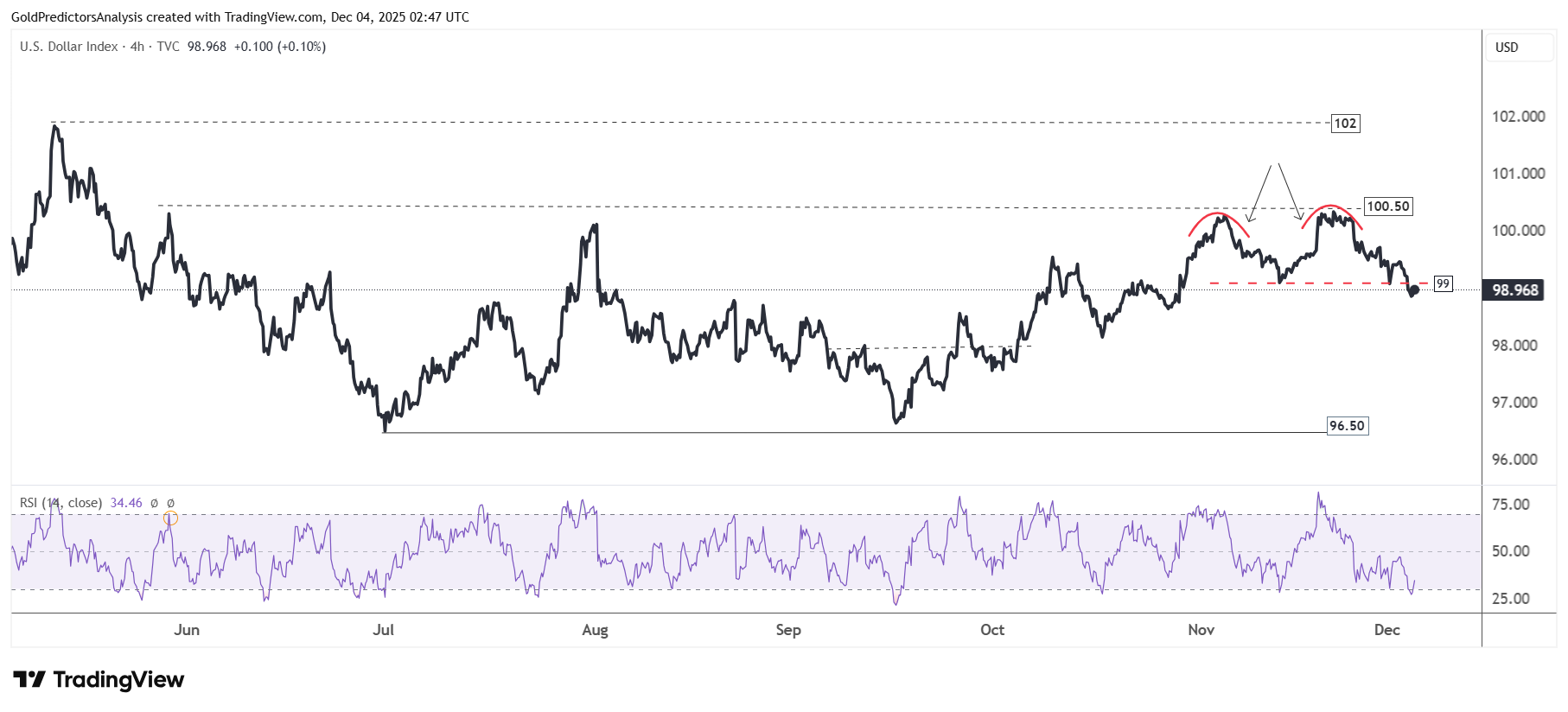
The chart for the U.S. Dollar Index shows that the index has broken below the 99 level. This level served as the neckline of a double top pattern. The formation of the double top near 100.50 suggests strong bearish pressure. This pattern increases the likelihood of continued downside toward the 98 level. A confirmed break below 98 would reinforce the bearish outlook and open the path for a further decline toward the 96.50 region.