


The economic outlook is changing with increasing uncertainty in global markets due to threats of tariffs and the US-Iran conflict. The rising trade tensions are increasing costs and disrupting supply chains across industries. Meanwhile, developments around the ceasefire are changing market sentiment and are causing volatility in currencies and equities. Investors are reacting quickly to headlines as risk appetite changes. The future of US-Iran negotiations will determine the future market trend. This article introduces how tariffs, war risk, and ceasefire negotiations are influencing the future of the US dollar, currencies, stocks and global markets.
Trump Tariff Threats and Iran War Raise Global Trade Risks
Donald Trump has changed his military pressure on Iran to economic pressure by imposing tariffs. He mentioned that a 50% tariff on any country will be imposed who supply weapons to Iran, with no exemptions. The action follows closely on the heels of a temporary ceasefire.
This forms an additional level of uncertainty in international trade. War risk and trade risk have to be priced in the markets. With such tariffs being implemented, the international supply chains will be disrupted. Businesses that depend on international trade will experience increased expenses. Concurrently, the risk can be sufficient to drag investment decisions. Businesses will stall their expansion in times of uncertainty in policy direction. This slows the pace of the economy and heightens instability in markets.
The situation becomes more complex due to legal challenges. The validity of recent tariffs is already being questioned by US courts. This undermines policy transparency and doubt in long-term trade policy. The three risks that investors currently have to deal with are geopolitical tension, aggressive trade policy and legal uncertainty. The consequences of the US-Iran negotiations will be crucial. Heavy tariffs and shaky markets might be abated by a stable deal. However, with the likelihood of new surge in tensions, tariffs may turn into a larger trade war on a global scale.
Currency Markets React to Tariffs and Iran War Risk
US Dollar Index Outlook: Key Range Amid Tariff Uncertainty
In this scenario, the US dollar index (DXY) will most probably stay very volatile. On the one hand, the US-Iran war poses a geopolitical risk that contributes to the safe-haven demand of the dollar. On the other hand, the legal issues surrounding tariffs and the question of policy power undermine the long-term US trade policy. When tensions run high, the dollar gets stronger. In the event that diplomacy gains ground, there is a chance that the dollar could weaken.
Brent Oil Price Forecast
Every new Brent Oil analysis as it publishes, today's technical signal and key levels, live price — on one page.
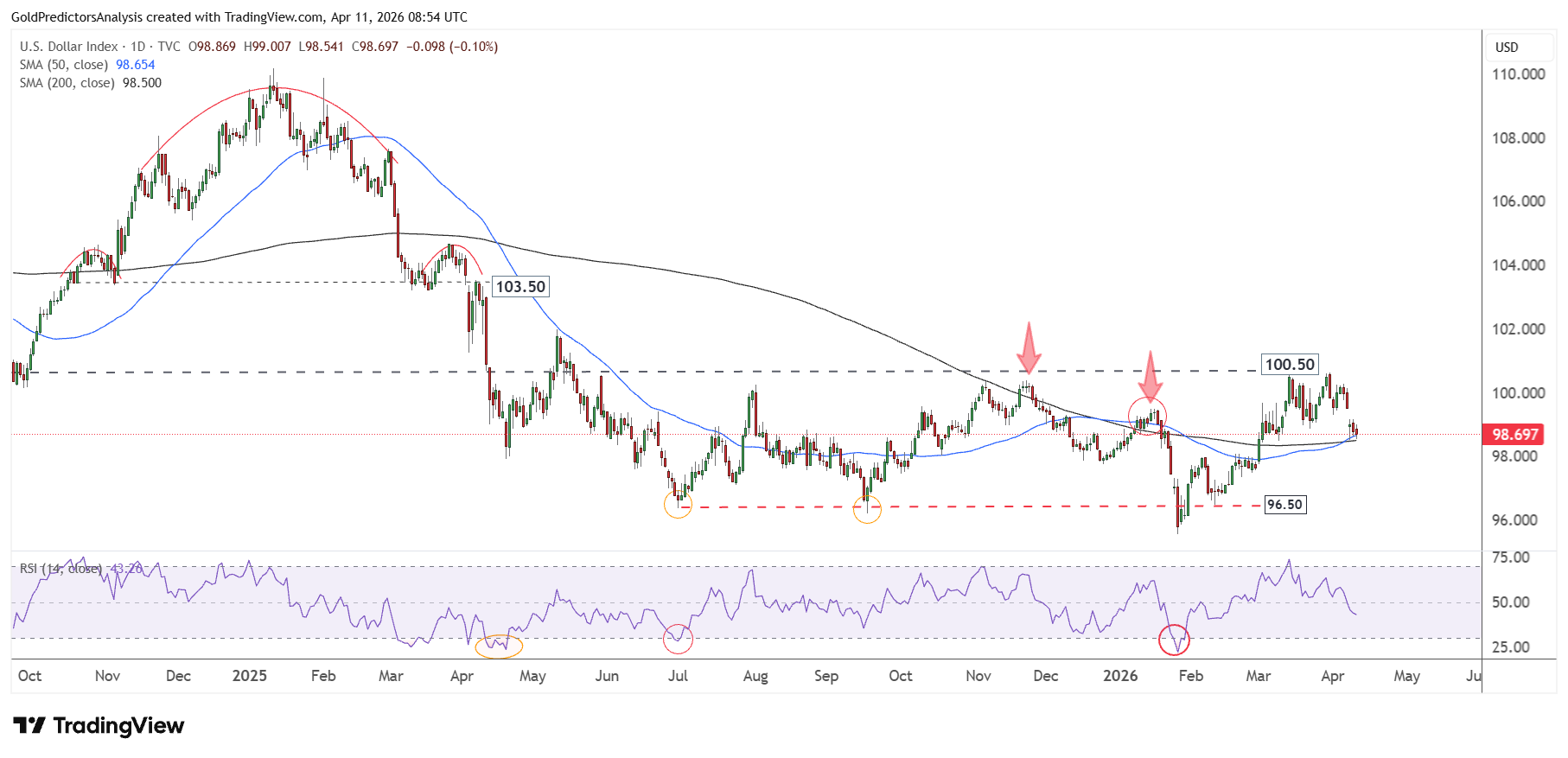
See all Brent Oil forecastsFrom technical perspective, the US dollar index has failed to break above 100.50 on the 2-week ceasefire. The next move will depend on how the ceasefire deal works. However, the US dollar index remains bearish as long as the index remains below 100.50. A break below 96.50 will trigger a strong drop to the 90 level. On the other hand, a recovery above 100.50 will indicate an upside move to the 102 level.
EURUSD Outlook: Euro Support Holds
In a risk-off environment, EURUSD is likely to be under pressure. Usually, capital moves to the US when there is geopolitical stress. But with the potential development of trade tensions in Europe or the global economic slowdown, the euro may fall further as a result of its export vulnerability. However, if the ceasefire deal is reached, the US dollar will face pressure, which will push EURUSD higher.
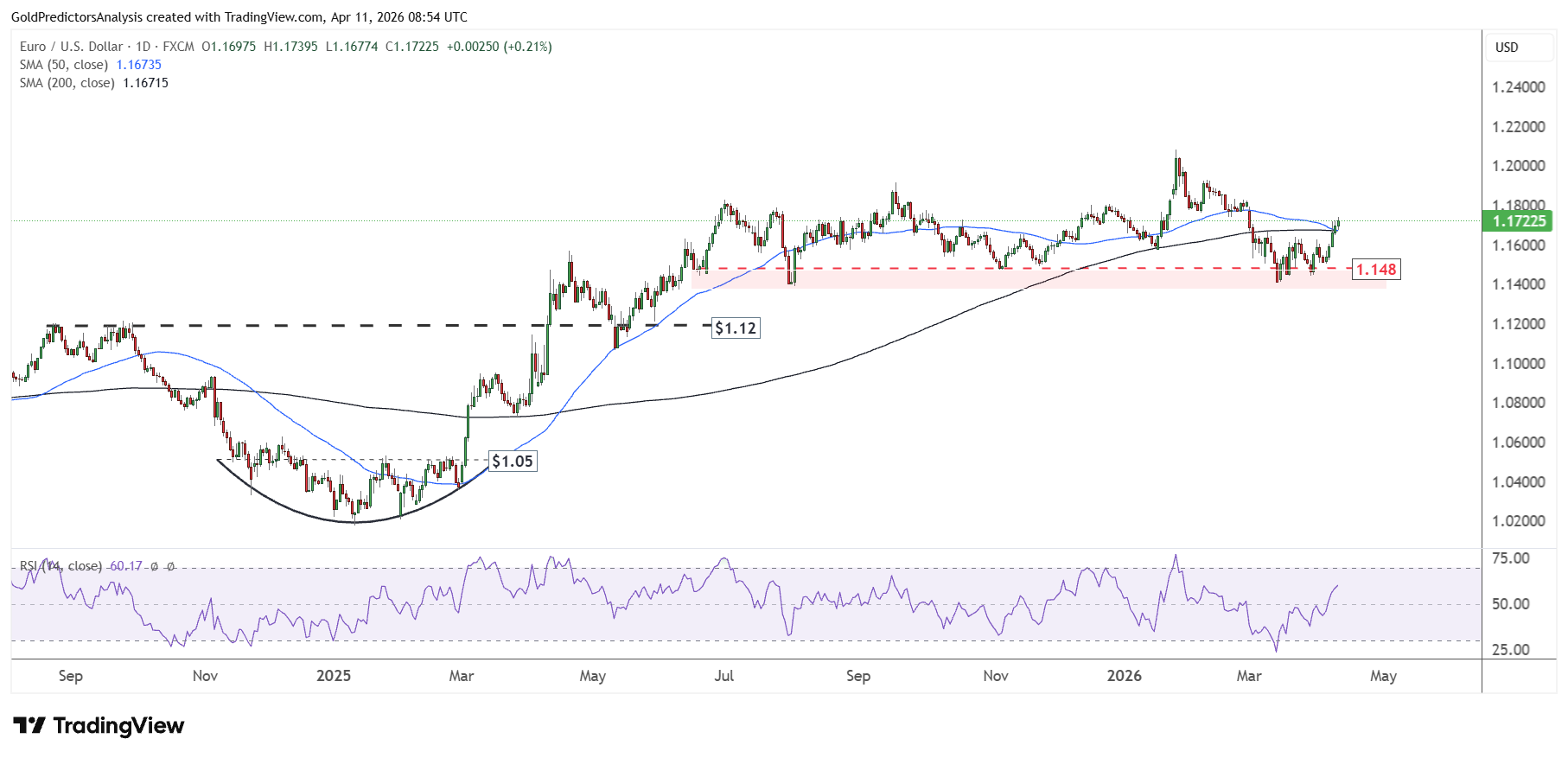
From technical perspective, the EURUSD holds the 1.14 support zone. As long as the pair remains above this level, the next move will be higher to 1.22.
USDJPY Outlook: Yen Strength Builds on Risk-Off Sentiment
USDJPY is much more susceptible to risk spirit. Increasing geopolitical tensions tend to appreciate the Japanese yen as it is considered a safe haven. This may drive USDJPY down even in a strong dollar scenario. In the event of an Iran-US deal, USDJPY can recover as risk appetite will be restored.
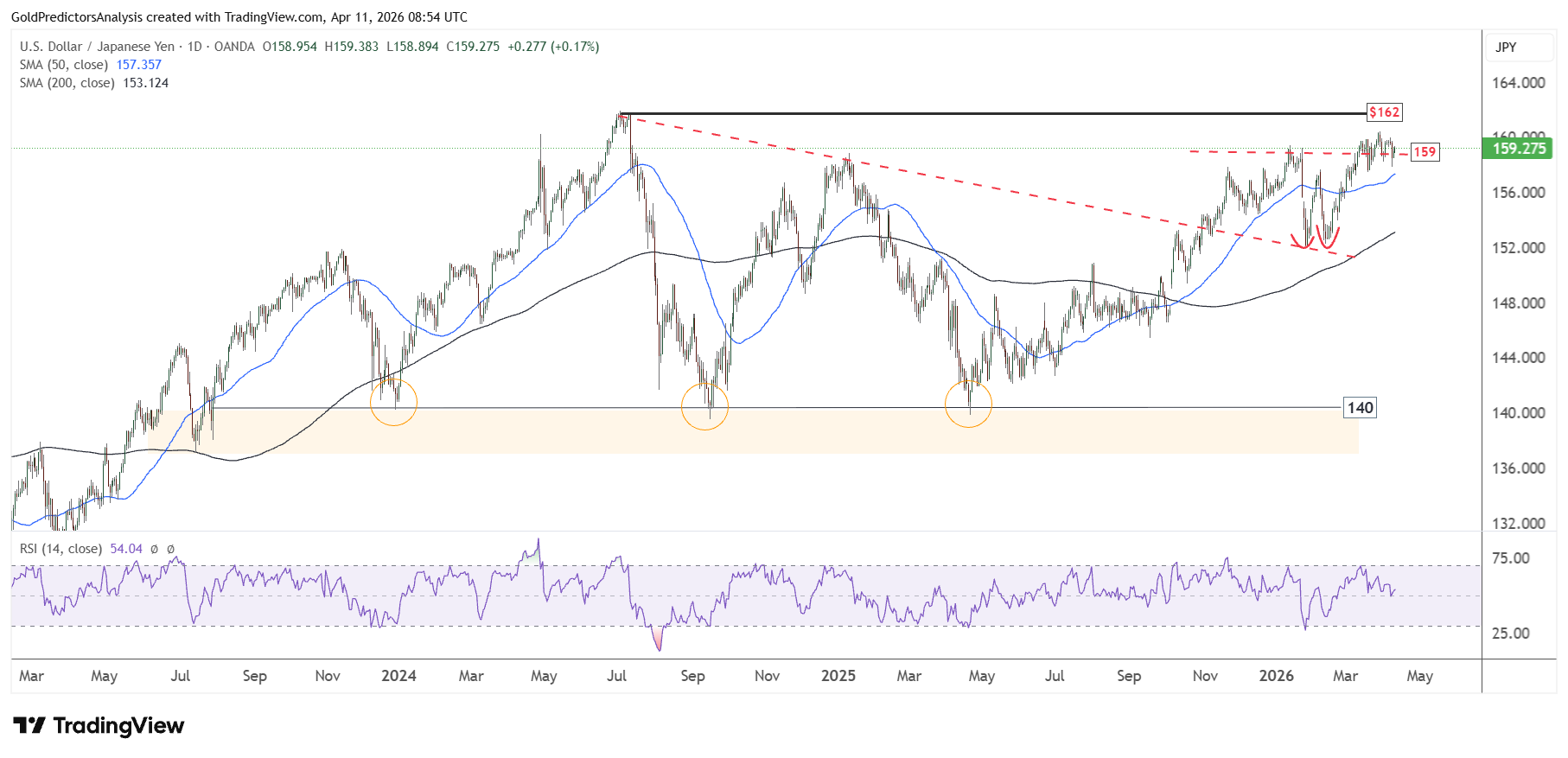
From technical perspective, the pair is consolidating above 159, which indicates a positive trend. The immediate resistance remains at the 162 level. A break above 162 will indicate strong upward move in the pair. However, a break below 157 will suggest further downside to the 153 level.
USDCHF Outlook: Safe-Haven Demand Drives Franc Strength
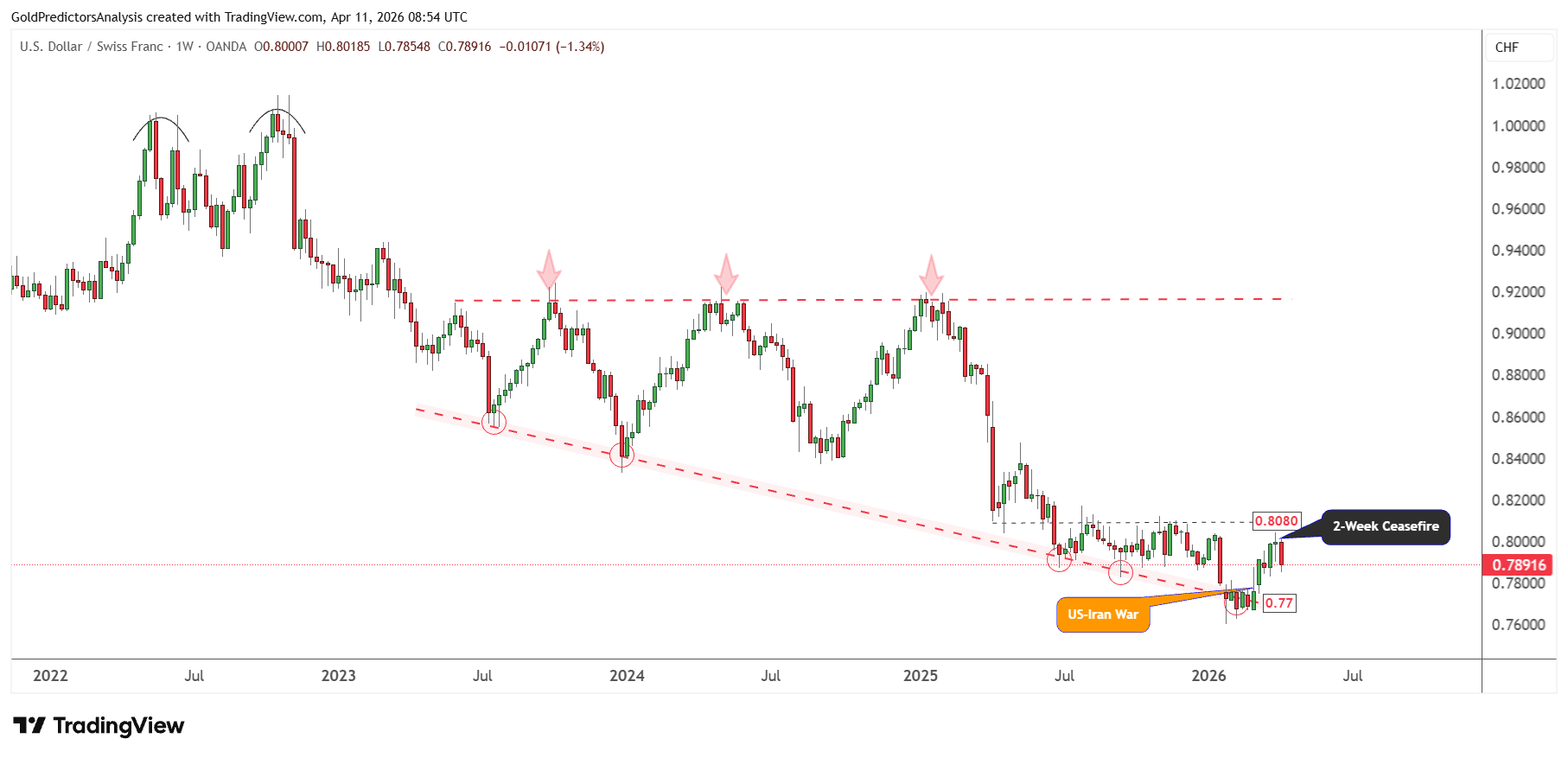
The same will be the case with USDCHF. The Swiss franc enjoys geopolitical stress and uncertainty. In case the situation escalates or tariffs are extended into a broader trade war, USDCHF will depreciate as investors shift to safer assets. However, the US-Iran war is benefiting the US dollar as a safe haven currency. Therefore, if the deal is done, then USDCHF will push downside due to the weakness in US dollar index.
The chart below shows that the announcement of 2-week ceasefire has resulted in a strong drop in the pair near the resistance zone of 0.8080. As long as the pair remains below this level, the next move in the pair will be downward. A break below 0.76 will trigger a quick and strong drop.
US Stocks Remain Volatile as Tariffs and War Risks Collide
S&P 500 Holds Support as Tariffs and War Risks Create Volatility
There are two forces that will affect the US equity market. On the one hand, tariffs put international trade and business profits in a state of uncertainty. Meanwhile, any developments of a ceasefire or a diplomatic agreement favour the risk sentiment.
S&P 500 will most probably continue to be in a range with high volatility. The risks in the supply chain are posed by trade threats to China and Russia. This strains multinational firms and industries. Meanwhile, defense and energy stocks can be successful due to the demand related to the war.
From technical perspective, the S&P 500 dropped to the support level of 6,200 as expected. The target of 6,200 was set after the breakout of an ascending broadening wedge pattern that had developed since July 2025. However, the index hit 6,316 and missed the ideal number of 6,200.
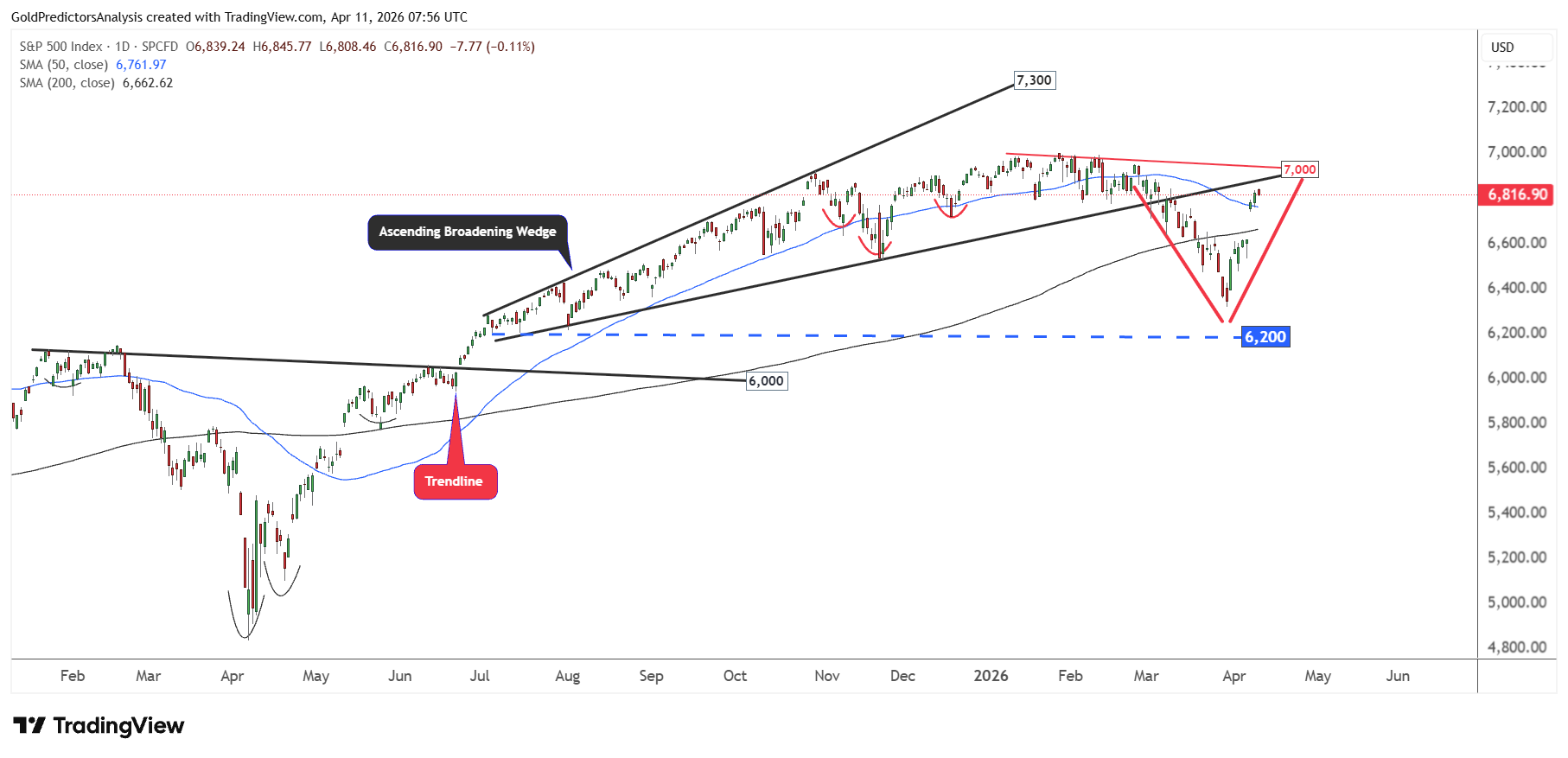
After hitting this level (6,316), the index reversed by forming a V-shaped recovery. In times of geopolitical uncertainty, it is normal to miss the ideal targets in financial instruments and indices. The formation of V-shape pattern is a strong bullish pattern that indicates that a break above 7,000 will trigger a strong surge in the S&P 500.
The S&P 500 was discussed in a previous article where the 6,200 was considered a major target.
This discussion was further supported in another article here.
Nasdaq Faces Supply Chain Risks but Signals Strong Recovery
Global supply chains are a key factor in technology companies. Any increase in tariffs on Chinese companies or semiconductor imports would put a strain on tech stocks. Nevertheless, when the situation calms and trade flows are not disrupted, the Nasdaq might recuperate within a short period.
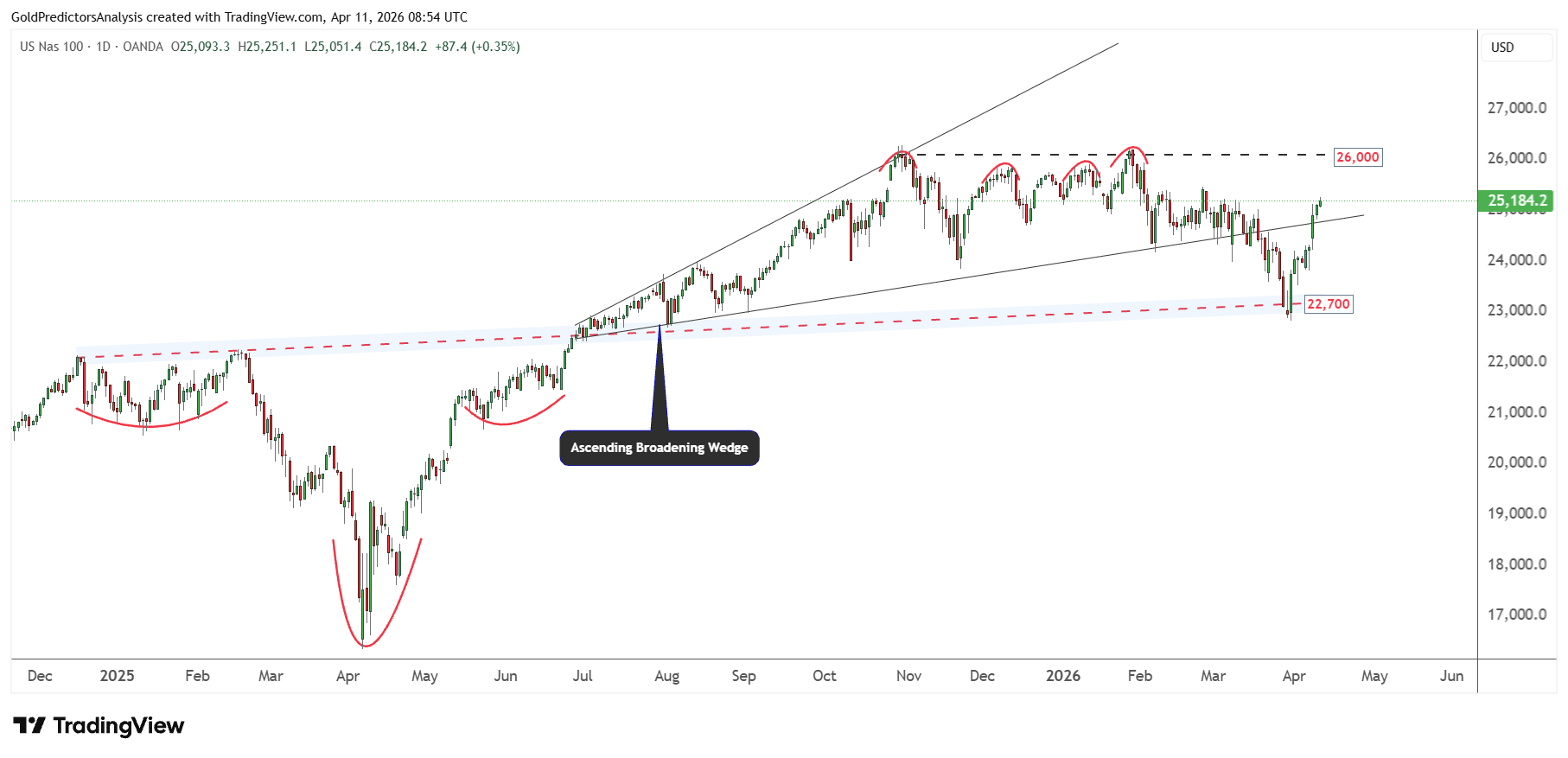
Nasdaq hit our defined target of 22,800 at the red dotted line and reversed higher to close back above the ascending broadening wedge pattern. This reversal is a strong signal of upward continuation in the index. The immediate resistance remains at 25,400, but a break above here is likely. The break above 26,000 will trigger a strong surge in the Nasdaq.
Global Market Impact: Tariffs and US-Iran Conflict Weigh on Growth
The change in policy will have a direct impact on Chinese equities. A new geopolitical risk to Chinese firms is the threat of tariffs associated with Iran-related supply chains. This may decrease investor confidence and augment capital outflows.
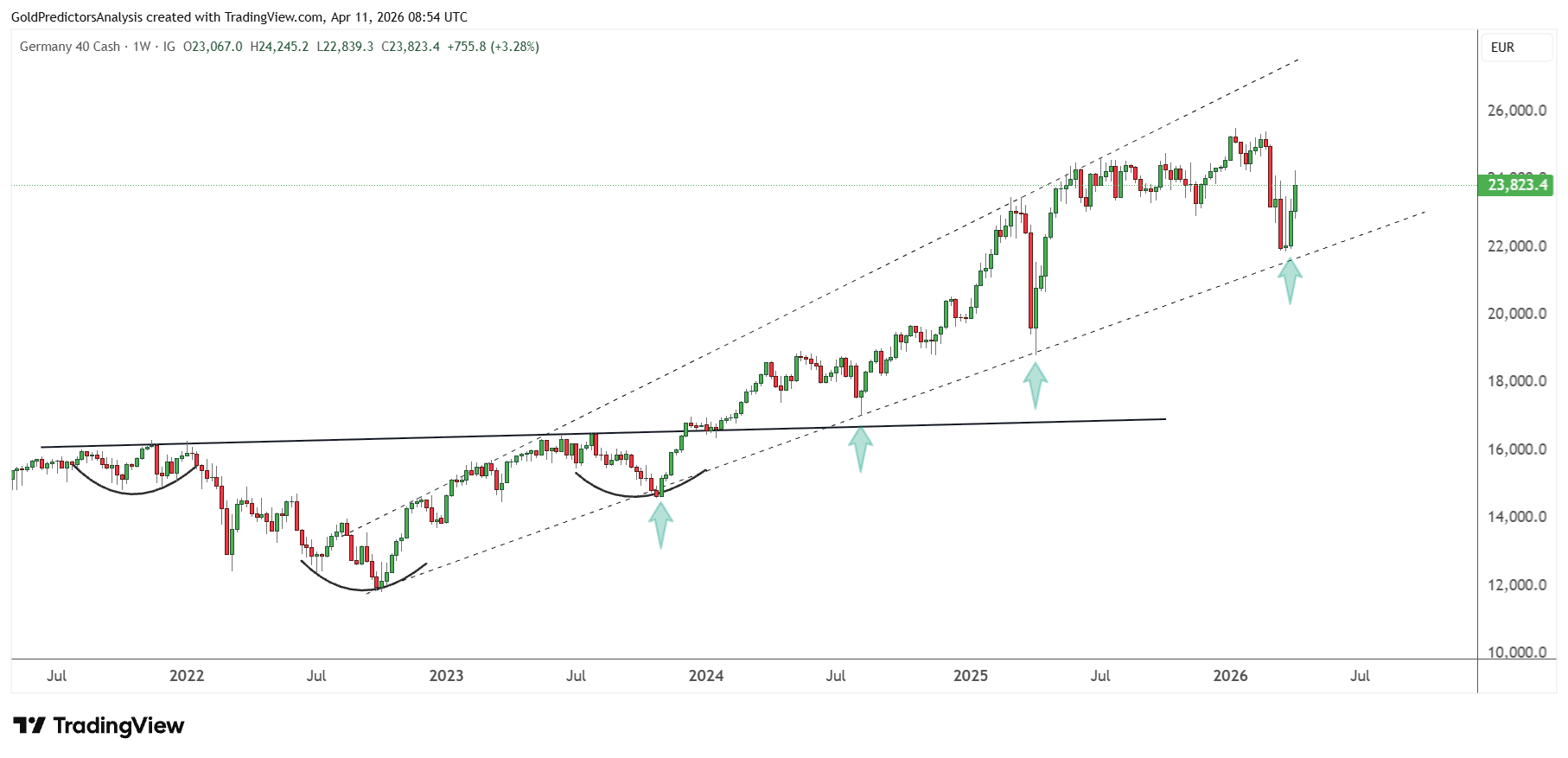
There is an indirect pressure on the European markets, such as the DAX. Europe is very sensitive to international trade flows and energy prices. An escalation in geopolitical tensions raises the prices of energy and increases unpredictability in supply. This is a burden on export and industrial based economies such as Germany.
The chart below shows that the DAX index also benefits from the 2-week ceasefire which has recovered the index from the support zone of 21,000-22,000. The next move in the index will depend on how the ceasefire talks work.
Tariffs and War Risk Raise Costs for Industrials and Consumer Sectors
The cost and uncertainty will increase for industrials. Tariffs interfere with the supply chain and raise the cost of inputs. Unclear trade policies may slow down investment decisions.
Direct pressure will be exerted on manufacturing industries. An increase in tariffs and geopolitical risk reduces trade activity in the world. This reduces demand and raises the cost of production simultaneously.
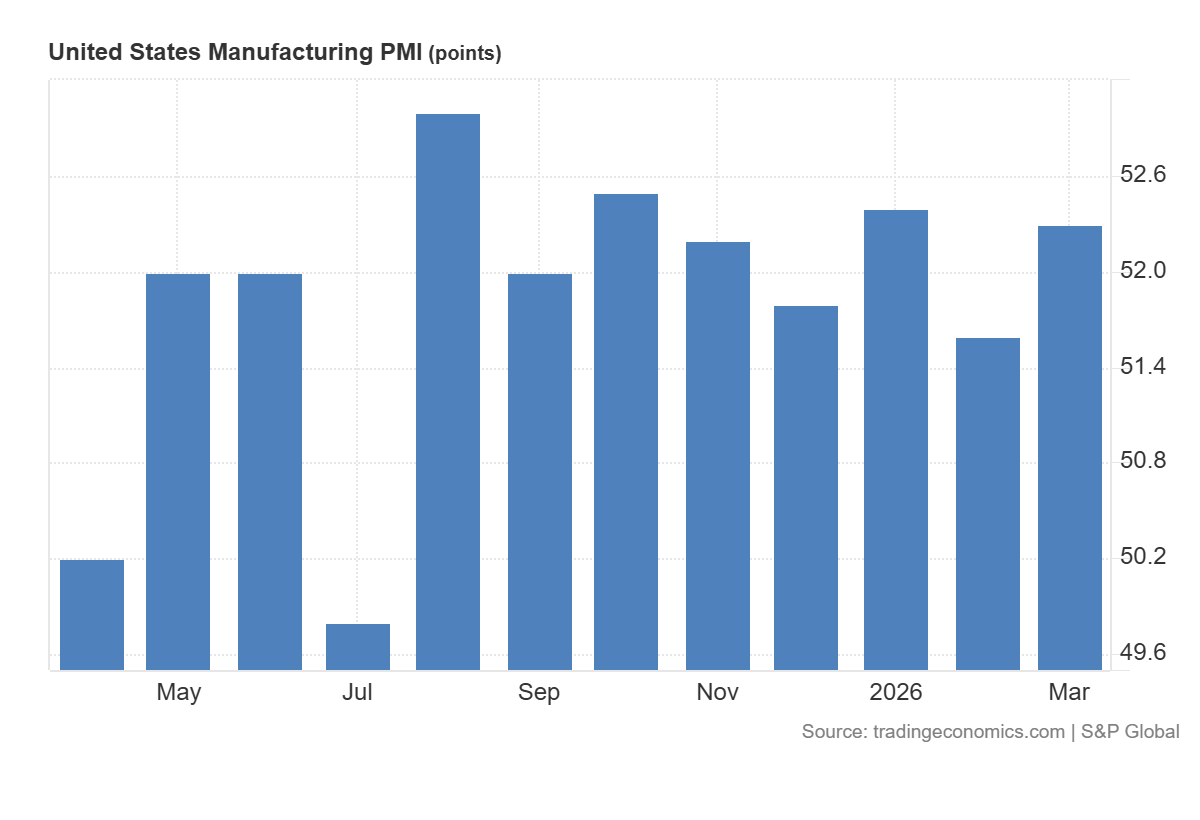
According to the data below, the S&P Global US Manufacturing PMI has recorded 52.3 in March which indicates further growth. But increase in tariffs and geopolitical risks may curb this trend by interrupting supply chains.
The automotive companies are especially susceptible. They are relying on international supply chains and cross border trade. The tariffs on essential parts or trading partners will raise prices and reduce profits.
Prices will be under pressure in retail sectors. Increased import tariffs will raise consumer prices. This decreases demand and squeezes margins in price sensitive markets.
US-Iran Talks to Decide Next Move in Global Markets
The future step in the world markets will now depend on the result of the US-Iran negotiations. Stable agreement can minimize geopolitical risk and relieve the burden of tariffs. This would help in promoting international trade and enhancing investor confidence. The US dollar can weaken because the safe-haven demand will decrease and equities may increase because of the higher risk appetite. Supply chains will stabilize and industries will be able to pick up momentum as uncertainty reduces.
But when the negotiations are not fruitful or the tension escalates again, markets are soon to become defensive. Investors will likely run to the US dollar that will appreciate. The increasing cost and declining global demand will press equities once again. Tariffs may turn into a wider trade war, which would add pressure to manufacturing, automotive and retail industries. In this case, volatility will remain high and markets will still be sensitive to headlines and policy decisions.