Silver has finally broken free from its decades‑long shackles. Trading above $54 per ounce and up more than 76 % year‑to‑date, the metal is delivering returns that have surprised even committed bulls. But this rally is not powered by speculation alone — it reflects a fundamental repricing of one of the world’s most strategically important commodities. A historically stretched gold/silver ratio, powerful Chinese demand, and a structural supply crunch indicate that silver’s strong run may be far from finished.
Richmond Lee, CFA and Senior Market Analyst at PU Prime commented:
Silver has become the standout performer in commodities this year, trading above $57 per ounce and rising more than 90% year-to-date. What began as a speculative rally has evolved into a structural repricing of one of the world’s most strategically important metals. A compressed gold/silver ratio, accelerating Chinese demand, and a deepening global supply deficit are combining to create a near-perfect bullish setup.
The gold/silver ratio, long a key valuation metric, remains historically stretched near 80:1 (well above its 25-year average of around 69:1). This gap implies that silver still trades at a steep discount to gold, even after its extraordinary run. Previous ratio peaks in 1991 and 2020 both preceded multi-year periods of silver outperformance, suggesting further upside potential as the imbalance narrows.
On the demand side, China has emerged as the central force behind this rally. Record exports and surging industrial consumption have drained domestic inventories to their lowest levels in a decade. The Shanghai Futures Exchange now shows the smallest stockpiles since 2015, while lease rates in London have jumped above 20%, a clear evidence of tightening physical supply.
The structural shortage is five years in the making. Since 2021, cumulative global deficits have reached nearly 800 million ounces, equivalent to a full year of mine production. With roughly three-quarters of supply coming as a by-product of other metals, production cannot quickly respond to higher prices.
Meanwhile, the green-energy transition is transforming silver into an industrial cornerstone. Solar, electric vehicles, and AI infrastructure now account for more than 60% of demand, and that share continues to rise.
Taken together, these forces point toward a once-in-a-generation opportunity. As investors seek both hard-asset protection and exposure to industrial growth, silver’s dual role as a precious and technological metal positions it for further long-term gains
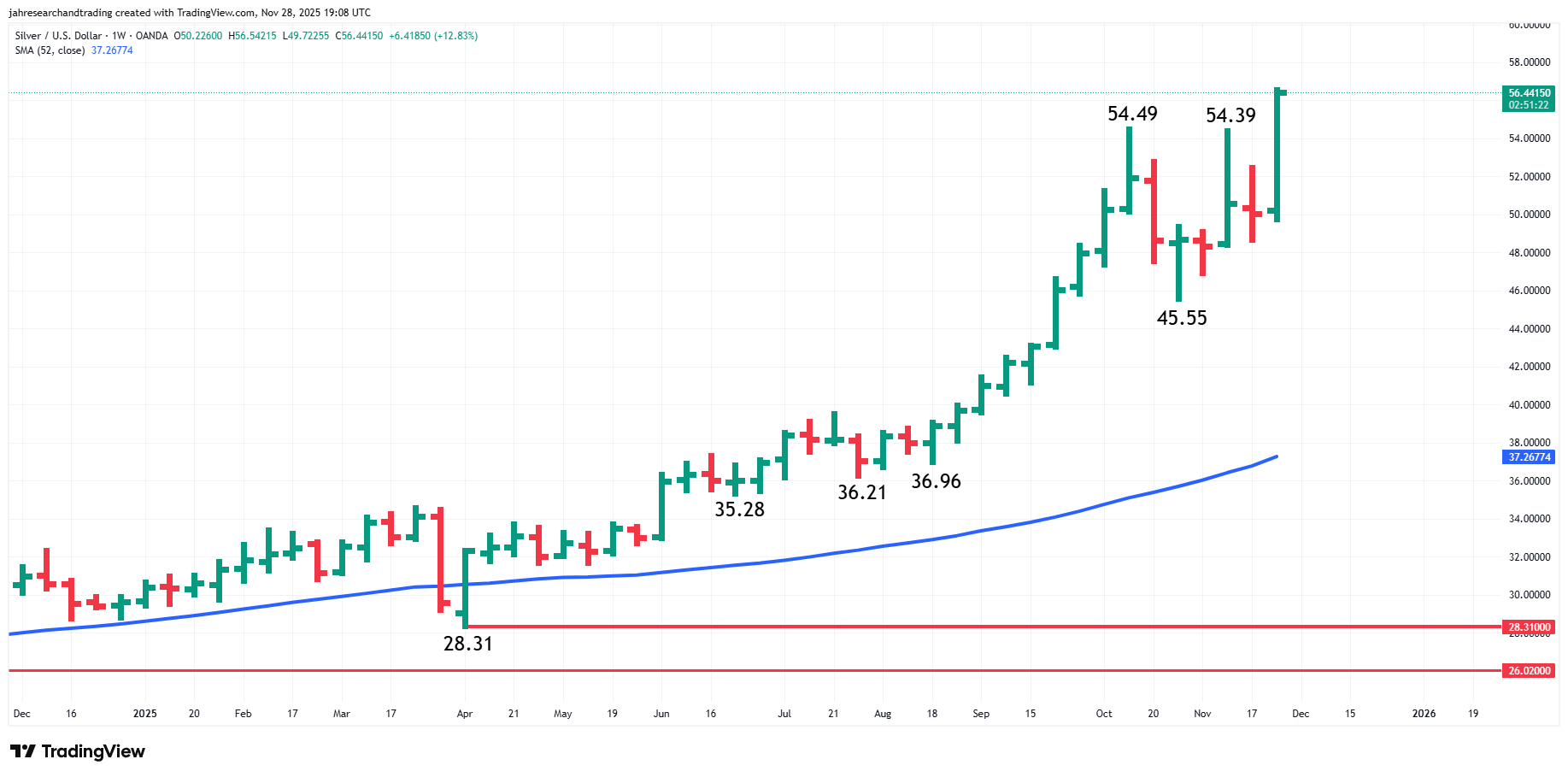
Weekly candlestick chart of silver. Source: TradingView
The Gold/Silver Ratio: A Screaming Buy Signal
For centuries, the gold/silver ratio has served as a guide for valuing precious metals. Despite silver’s recent strength, the ratio still points to additional upside. It currently trades between 80:1 and 83:1 — well above the 25‑year average of about 69:1 and notably higher than the 60:1 to 75:1 zone often considered balanced. Earlier this year, the ratio spiked to an extraordinary 104:1, signaling deep undervaluation that historically precedes major silver rallies.
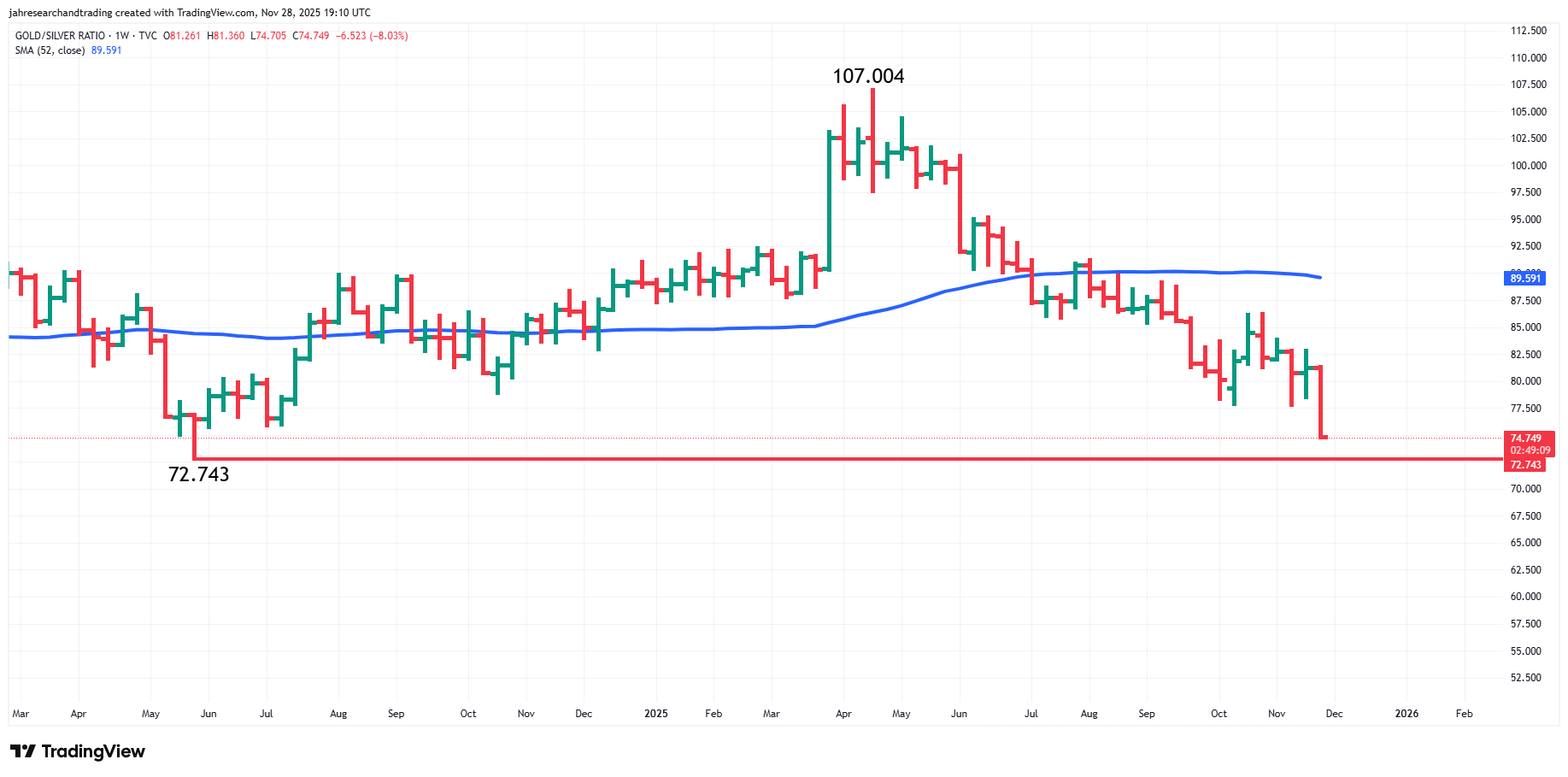
Weekly chart of the gold/silver ratio. Source: TradingView
Peter Krauth, editor of Silver Stock Investor, highlights the arithmetic: using $3 ,700 gold and long‑term averages implies silver should already trade near current levels — or higher. With gold climbing toward $4 ,000 per ounce, the argument for further silver gains strengthens.
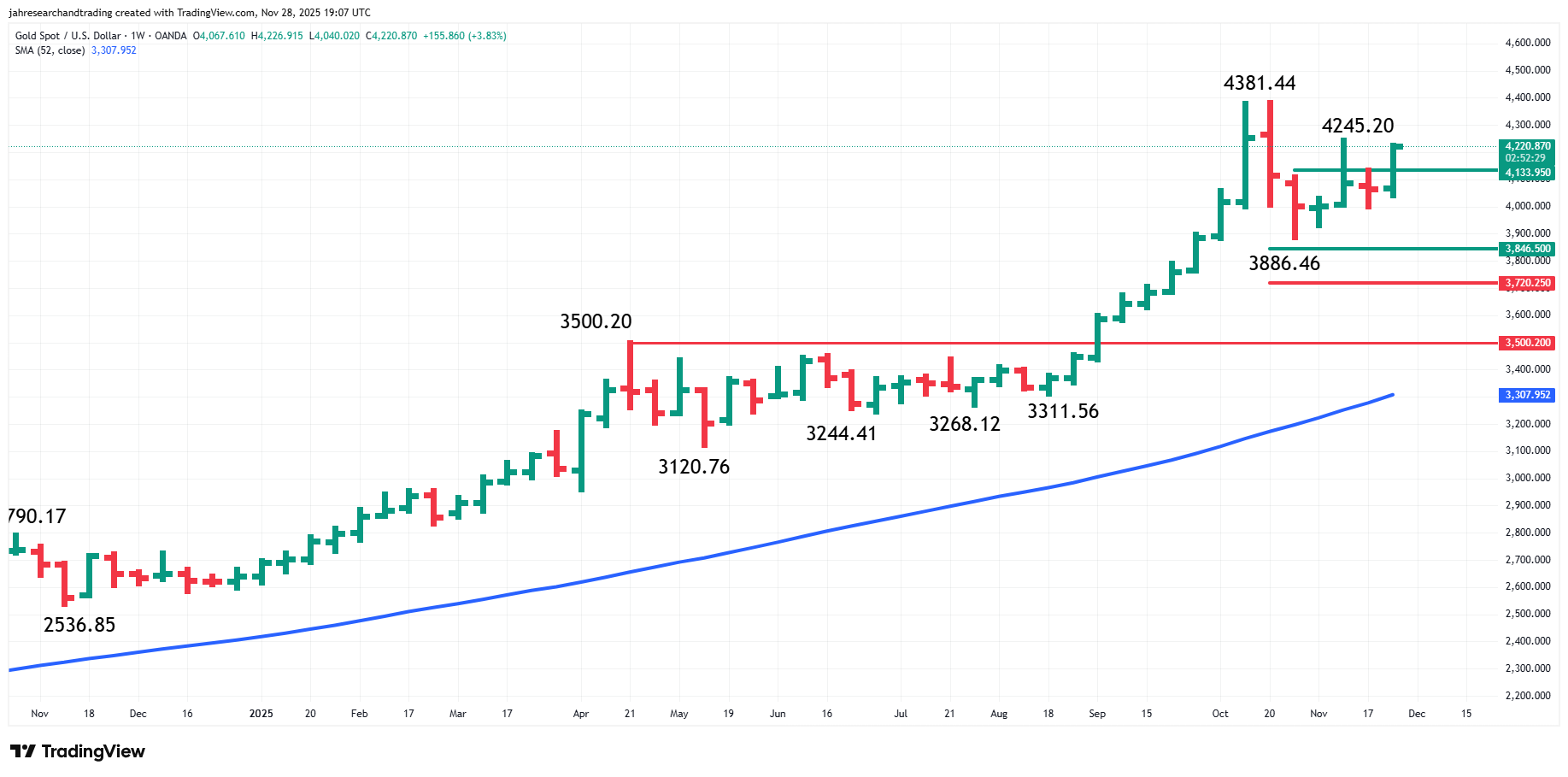
Weekly candlestick chart of gold. Source: TradingView
Mining ratios further reinforce this case. Nature produces gold and silver at roughly 7:1, yet the market still prices them close to 80:1. First Majestic Silver CEO Keith Neumeyer has long argued that this imbalance must narrow, and past cycles support that view. After previous ratio peaks in 1991 and 2020, silver outpaced gold over the following 6 to 24 months. Even with this year’s surge, considerable catch‑up potential remains.
Silver Price Forecast
Every new Silver analysis as it publishes, today's technical signal and key levels, live price — on one page.
See all Silver forecastsChina’s Voracious Appetite: The Dragon Awakens
While Western investors debate silver’s value, China has been aggressively accumulating. The nation’s manufacturing strength and strategic planning have made it the dominant force in global silver demand.
Chinese silver exports exceeded 660 tons in October 2025, the highest on record, as shipments were sent to London to ease a severe squeeze that pushed global prices upward. This surge has drawn down domestic stockpiles to their lowest levels in a decade. Warehouses tied to the Shanghai Futures Exchange hold the smallest inventories since 2015, while volumes on the Shanghai Gold Exchange have dropped to nine‑year lows.
Analyst Zijie Wu attributes this tightness to exports and growing industrial and jewelry demand. The strain is so intense that near‑term contracts in Shanghai trade above longer‑dated ones, signaling acute supply pressure. TD Securities strategist Daniel Ghali warns that increased Chinese imports could further drain Western inventories. He also notes that U.S. tariffs on silver would trap metal already inside the country, potentially magnifying shortages if China continues to absorb supply.
Tax reforms have also played an unexpected role. Beijing’s removal of a long‑standing rebate on input VAT for certain gold sales has caused retailers to shift toward silver. In Shenzhen’s major Shuibei market — traditionally dominated by gold — merchants are increasingly favoring the white metal.
A Supply Crisis Five Years in the Making
The market is now in its fifth straight year of structural deficit — an unprecedented development. Since 2021, the cumulative shortfall has approached 800 million ounces, nearly matching a full year of global mine output. Silver Institute CEO Michael DiRienzo expects the deficit to extend into 2026, noting that production has already fallen roughly 800 million ounces short of demand.
This crunch is structural. Roughly 75 % of silver supply comes as a by‑product of mining other metals such as copper, lead, zinc and gold. This means higher silver prices alone cannot rapidly increase production. Primary silver mines take 8 to 15 years to progress from discovery to commercial output, leaving no quick path to new supply.
The tightness is visible across physical markets. London lease rates have surged to 20–35 % annually — levels rarely seen in the modern era. TD Securities warns that LBMA inventories could be depleted within months if current demand persists, with the float reportedly shrinking to about 155 million ounces.
Fund managers highlight the bullish implications. Larry Lepard of Equity Management Associates argues that persistent deficits could drive silver to $100 per ounce, with $75 by mid‑2026 and $80–$90 by year‑end appearing realistic under current conditions.
The Green Revolution’s Secret Ingredient
Silver’s industrial importance has accelerated dramatically. More than 60 % of global silver consumption now comes from industrial use, with clean energy acting as the strongest growth driver.
Solar production alone consumed about 6 ,577 tons of silver in 2024, or around 19 % of total demand. Each photovoltaic panel uses 15 to 25 grams of silver, and next‑generation TOPCon and heterojunction cell technologies require up to twice as much silver per gigawatt as prior models. Research from Ghent University suggests annual solar demand could reach 14 ,000 tonnes by 2030 — potentially 40 % of global consumption.
Electric vehicles amplify this trend. Each EV requires as much as 50 grams of silver, double the amount used in traditional vehicles, due to increased wiring, battery systems and electronic components. As EV production scales, automotive silver consumption could triple by 2030.
Artificial intelligence adds another significant pull on supply. Data centers require extensive silver for electrical conduction and thermal systems. DiRienzo notes that growing electrification and ongoing geopolitical uncertainty support strong investment and industrial demand heading into 2025.
The Path to Triple Digits
These converging forces have led analysts to issue increasingly bullish forecasts. Bank of America now projects silver could reach $65 per ounce in 2026. Mike Maloney of GoldSilver.com believes silver could climb above $200 if gold reaches the upper targets some analysts expect.
Analyst David Steer foresees a supply‑demand “brick wall” that could propel silver to $200–$400 per ounce once the market breaks. Brett Elliott of APMEX notes that, adjusted for inflation, silver’s 1980 spike equates to nearly $200 today — making the possibility of three‑digit prices far less speculative than many assume.
Conclusion: A Once‑in‑a‑Generation Opportunity
Silver sits at a pivotal moment. The gold/silver ratio highlights deep undervaluation. China is absorbing enormous volumes. Global inventories are shrinking under the weight of five years of deficits. And surging industrial demand from solar, EVs and AI strengthens the long‑term outlook.
For investors, silver’s dual appeal as a precious metal and essential industrial input has rarely been more compelling. While volatility remains part of any metals market, the fundamental case for silver is exceptionally strong. Those who recognized the opportunity in gold at $1 ,500 may see a similar window opening in silver today.