


Chips Crack, Yields Bite
June E-mini S&P 500 Index futures are down 0.4% ahead of the open. Nasdaq 100 futures lost 0.6%. Dow futures slipped 0.2%. The chip stocks that led this rally for a month are the same ones pulling it apart right now, and rising Treasury yields are making it worse at the same time.
June E-mini S&P 500 Index Futures Technical Analysis
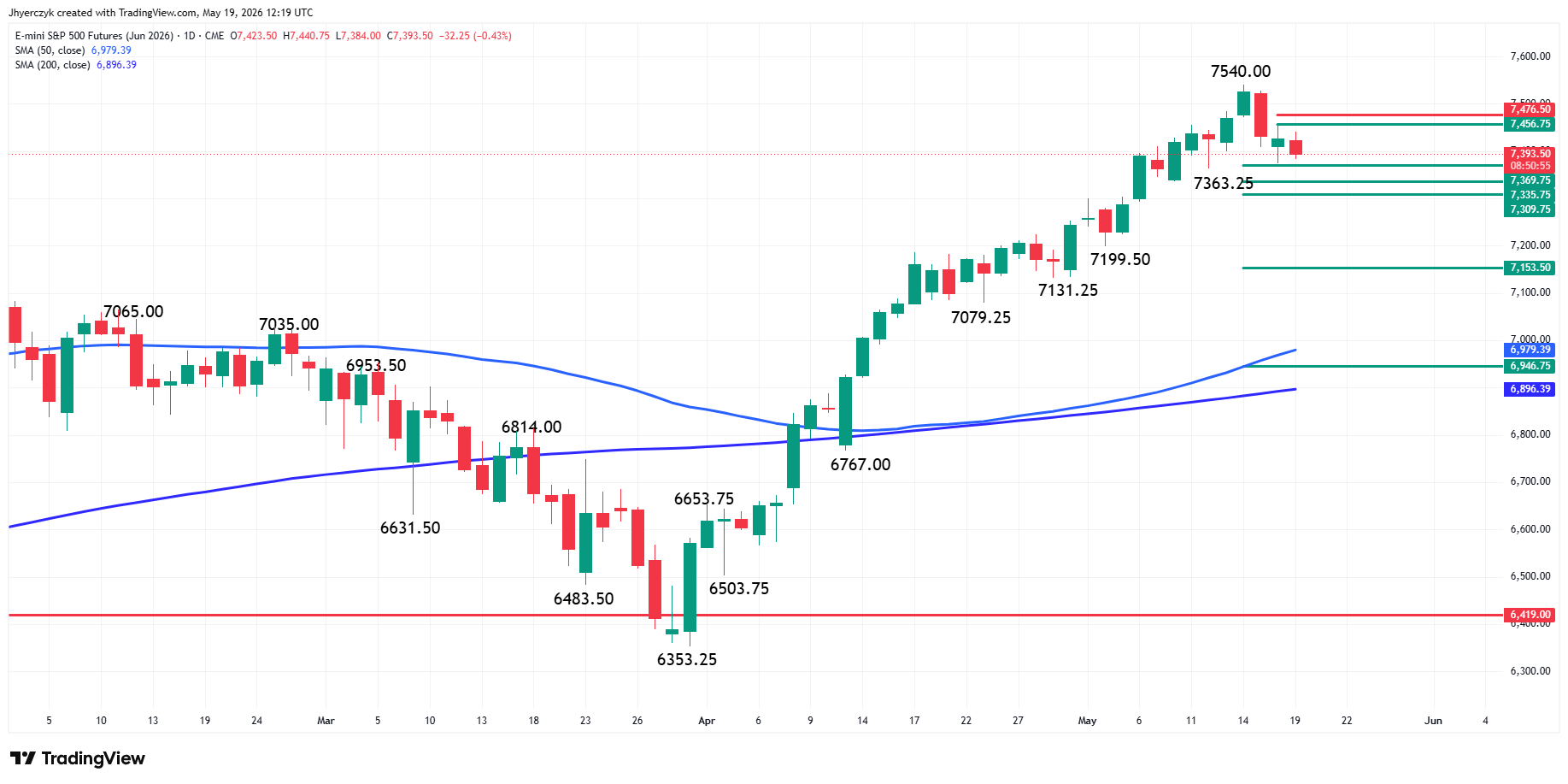
June E-mini S&P 500 Index futures are edging lower in the pre-market session. The market is trading inside yesterday’s range, which suggests investor indecision and impending volatility.
The main trend is up according to the swing chart, but the aggressively bullish pattern is starting to show signs of weakening. A trade through 7540.00 will signal a resumption of the uptrend. There are no main bottoms nearby, just a lot of minor bottoms, which essentially control the momentum.
The new minor range is 7540.00 to 7373.50. Its retracement zone at 7456.75 to 7476.50 is important to the near-term direction. Trader reaction to this zone will determine if the index continues to new highs or begins a steep sell-off. To put it another way, the bulls are looking to use it as a launching pad for a potential upside breakout, while the bears will be watching to see if a secondary lower top forms.
The previous minor range is 7363.25 to 7540.00. Its 50% level is 7451.50. Since the index is currently below this level, we’re already looking at developing weakness.
The first support is a pivot at 7369.75. The next support is the minor bottom at 7363.25. Additional pivots come in at 7335.75 and 7309.75.
Given the current set up where support levels are all lined up closely, we’re expecting labored selling. This is until 7335.75 is taken out with conviction. If this happens, we could see an acceleration to the downside with 7153.50 the first major target.
So on Tuesday, you’re going to want to watch the reaction at 7456.75 to 7476.50 first. Then deal with weakness but a potentially choppy trade between 7369.75 to 7309.75. Once the latter is cleared, conditions should open up to the downside.
S&P 500 Price Forecast
Every new S&P 500 analysis as it publishes, today's technical signal and key levels, live price — on one page.
See all S&P 500 forecastsThe Leadership Group Is Cracking
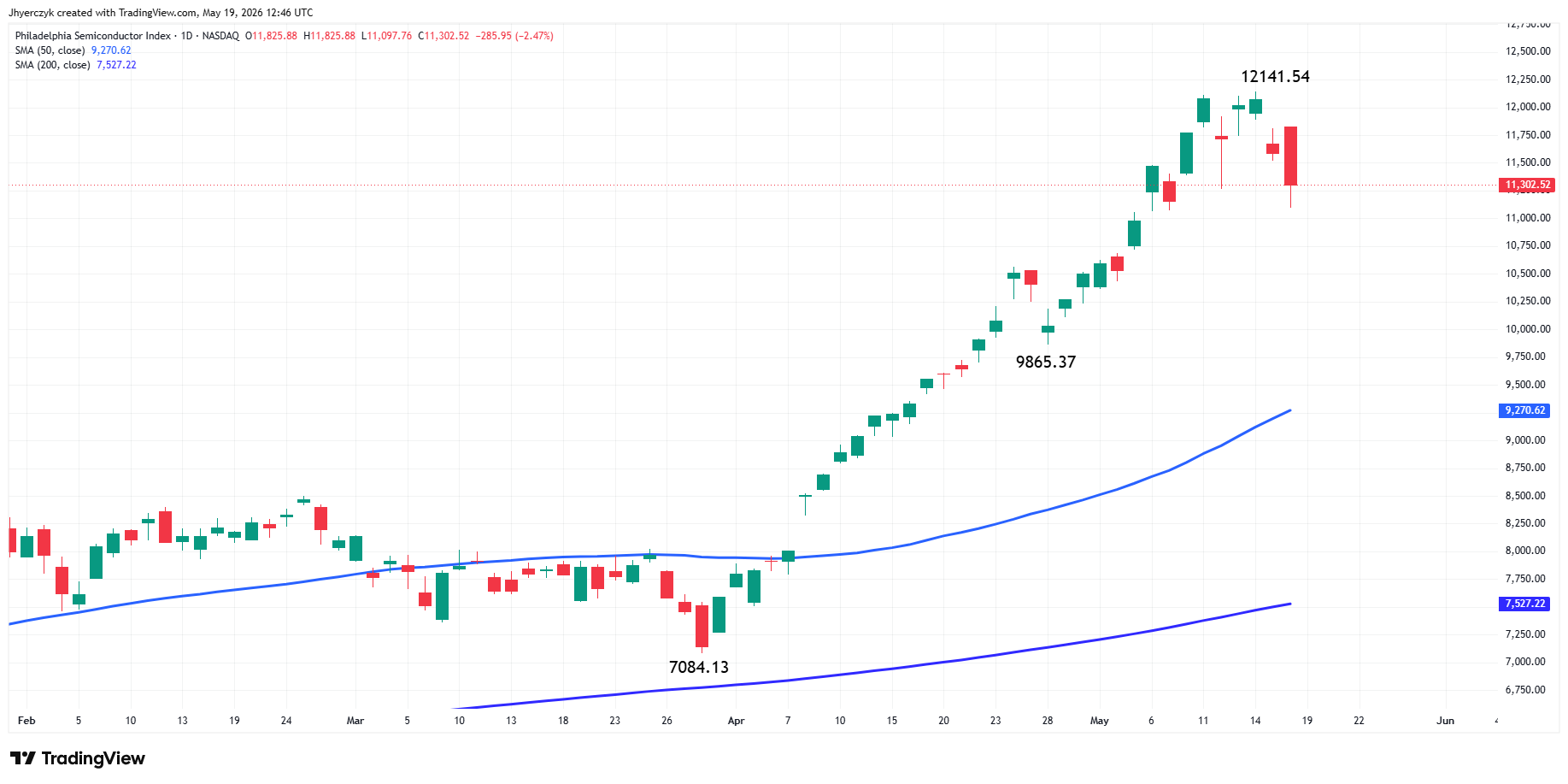
The Philadelphia Semiconductor Index dropped 6% over two sessions and the names doing the damage are the same ones that carried the broader market to fresh highs last week. Micron is heading into a fourth straight session lower. Seagate warned it cannot keep up with demand. Nvidia is down for the third consecutive session ahead of earnings. I’ve seen this before. When leadership starts to crack this way, the index does not have anywhere to hide. There is no rotation stepping in to absorb those flows right now and that is the problem.
Record Highs Monday. Sellers Tuesday.
The S&P 500 and Nasdaq were at fresh highs last week. The Dow touched 50,000. In my opinion, what broke the momentum was not one piece of bad news. It was math. AI spending drove this rally and the growth assumptions underneath it got stretched too far too fast. When expectations run that far ahead of actual numbers, the market does not need a catalyst to pull back. It just needs to stop going up. Valuations were already extended before any of this started. One round of profit-taking was all it took.
5.159% on the 30-Year and the Rate Cut Story Is Over
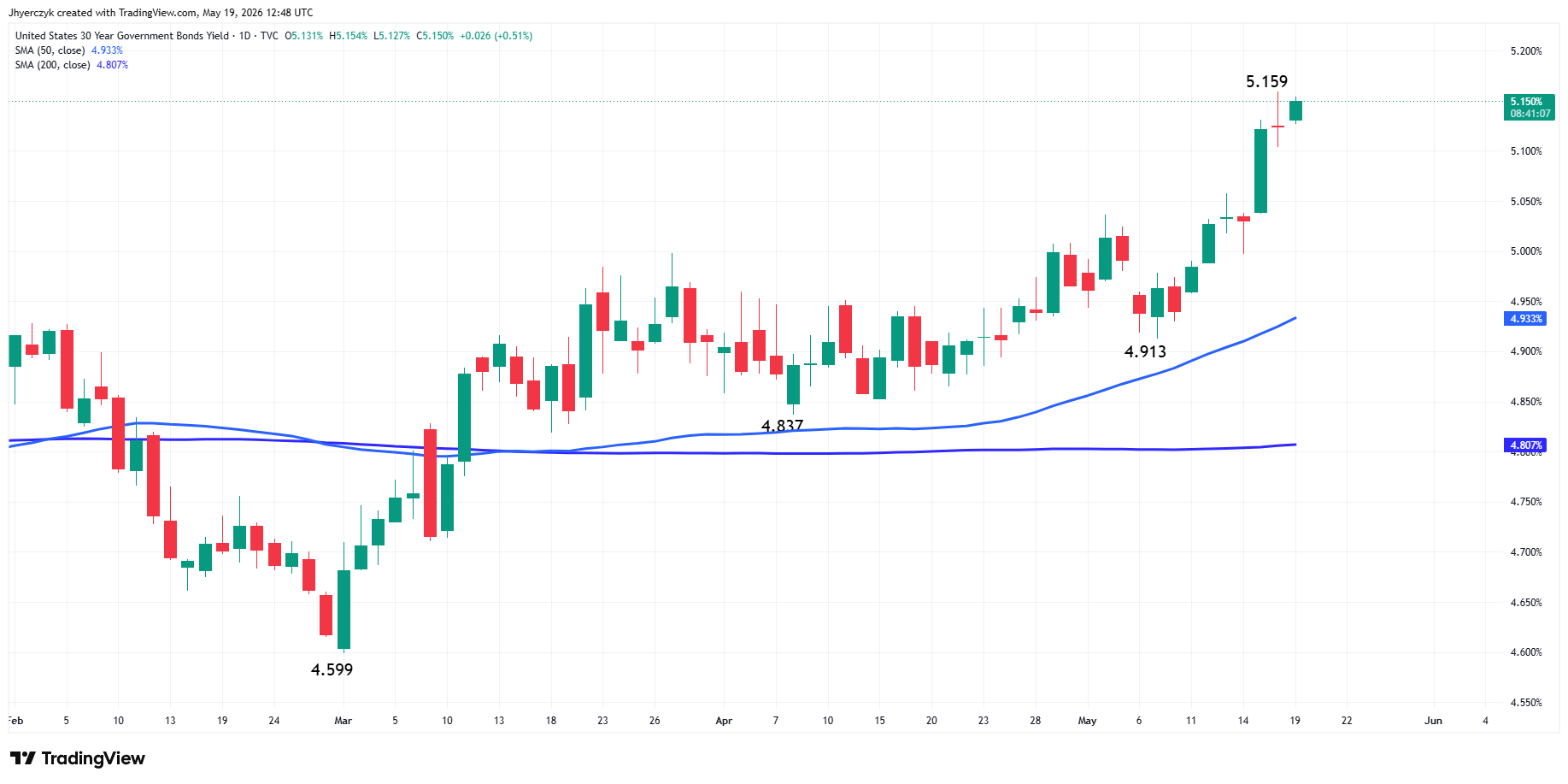
The 30-year Treasury yield is sitting near 5.15% and the 10-Year U.S. Treasury yield is at its highest since early 2025. That is not a yield market pricing in rate cuts. Traders spent months building positions around an easing cycle and last week’s inflation data broke that trade. Rate hike odds are back on the table now. Growth stocks are the most exposed because higher discount rates hit future earnings first and hardest. The bond market repriced the Fed outlook last week and the stock market is catching up to it Tuesday.
Iran Military Action Called Off, Energy Prices Ease
West Texas Intermediate crude oil fell 0.4% and Spot Brent crude dropped 1% after President Trump said planned military action against Iran would not move forward following requests from regional leaders. Elevated energy prices had been running alongside inflation concerns all month and contributing to the yield move. The pullback gives the market a little room to breathe on that front. Yields are still the main problem for equities right now and crude backing off does not change that story by itself.
Home Depot Beat the Number. Customers Are Still Stalling.
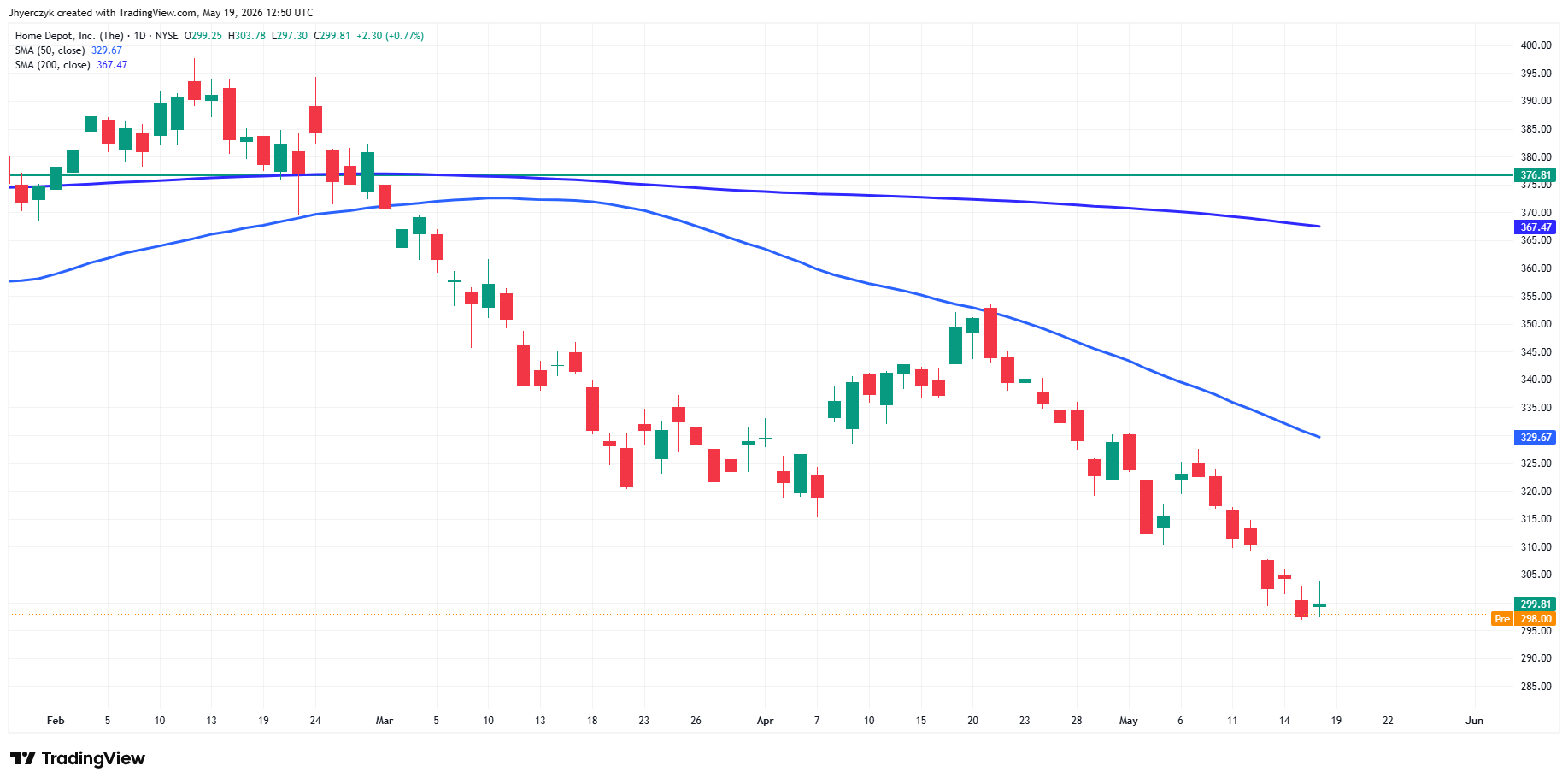
Home Depot topped earnings and revenue expectations and reaffirmed full-year guidance. Sales climbed nearly 5% from a year ago. Management said the core homeowner customer is still spending. The way I see it, the headline number is covering up some real weakness underneath it. Comparable sales missed estimates. Comparable transactions are still declining.
Customers are still putting off the big projects and elevated mortgage rates are the reason. The company has been pushing harder into its professional customer business through acquisitions and distribution expansion. That is where the growth is because the homeowner side is not delivering it.
Stocks in the News
Blackstone and Alphabet both gained after announcing a major artificial intelligence infrastructure investment partnership. Amer Sports beat on earnings and revenue and moved higher. Money is still finding its way into AI-related themes even on a day when chip stocks are selling off. That is a split worth watching.
What to Watch
Three things are unresolved going into the rest of this session and beyond. Chip weakness either stabilizes here or it spreads into broader technology selling and takes the indexes with it. Treasury yields either keep climbing as inflation stays sticky, or they ease off if oil stays contained. The third is the Federal Reserve. Rate expectations shifted hard last week and traders who had been positioned for cuts are now hedging against hikes. That combination, elevated yields plus a leadership group under pressure plus a market that already priced in a lot of good news, points toward consolidation rather than a resumption of the rally that got us here.
The key level on June E-mini S&P 500 Index futures is the retracement zone at 7456.75 to 7476.50. Bulls need that zone to hold as a base for any push higher. If it fails, the next meaningful support cluster runs from 7369.75 down to 7309.75. A break below 7335.75 with conviction is what opens up a run toward 7153.50. That is the level that matters most today.
More Information in our Economic Calendar.