Mixed Midday Session as Tech Gains Offset Banking Weakness
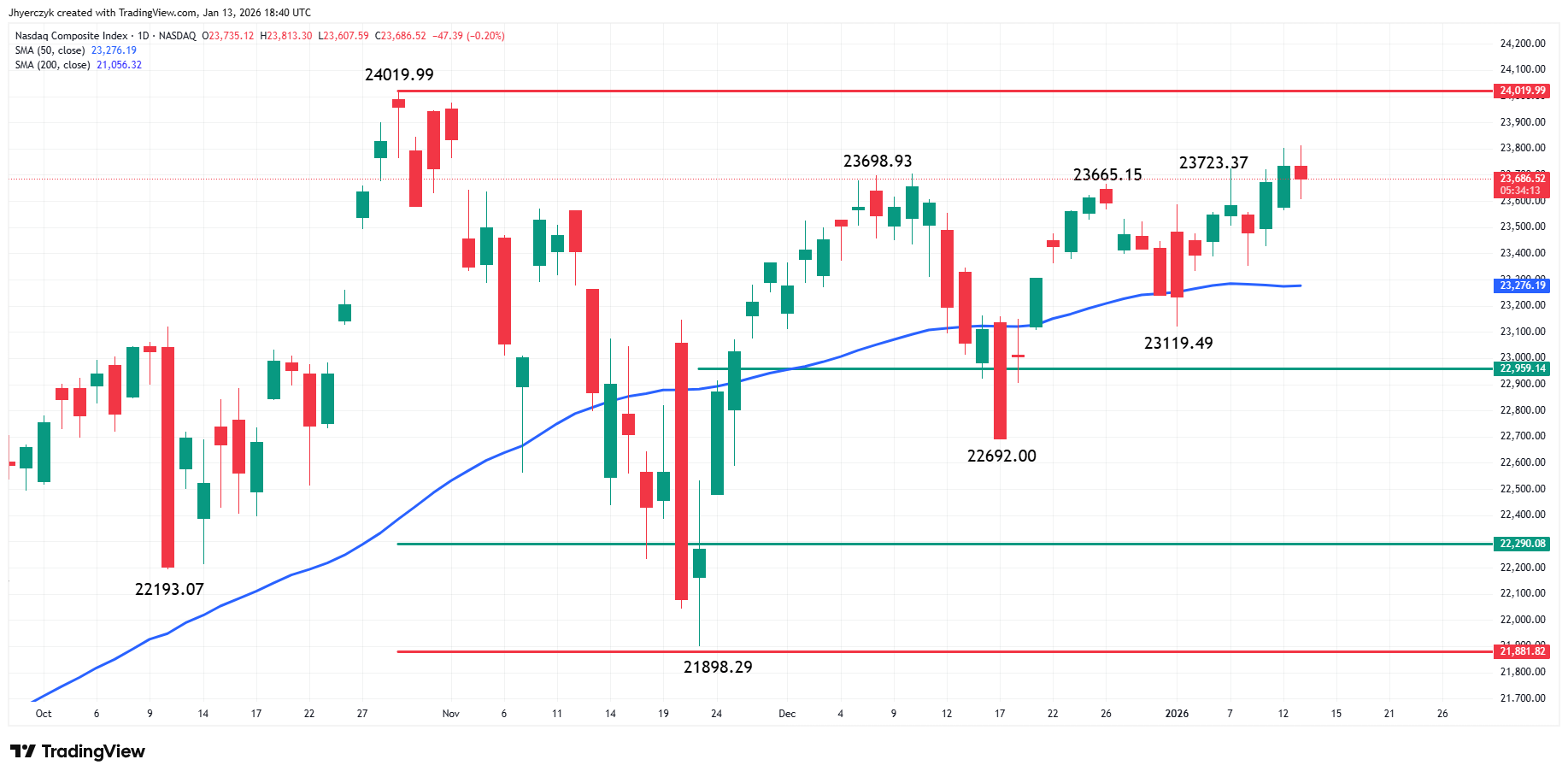
The major U.S. stock indexes are lower at the midsession, with the Nasdaq-100 finally lower after bucking the trend with a modest gain most of the session, led by surges in Advanced Micro Devices and Intel. The start of earnings week hasn’t boded well for the Dow Jones Industrial Average, with JPMorgan a drag after a 3% drop.
At 18:57, the Dow Jones Industrial Average is trading 49253.08, down 337.12 or -0.68%. The S&P 500 Index is at 6951.42, down 25.85 or -0.37% and the Nasdaq Composite is trading 23648.795, down 85.109 or -0.36%.
Chip Stocks Rally on KeyBanc Upgrade—30%+ Upside Cited
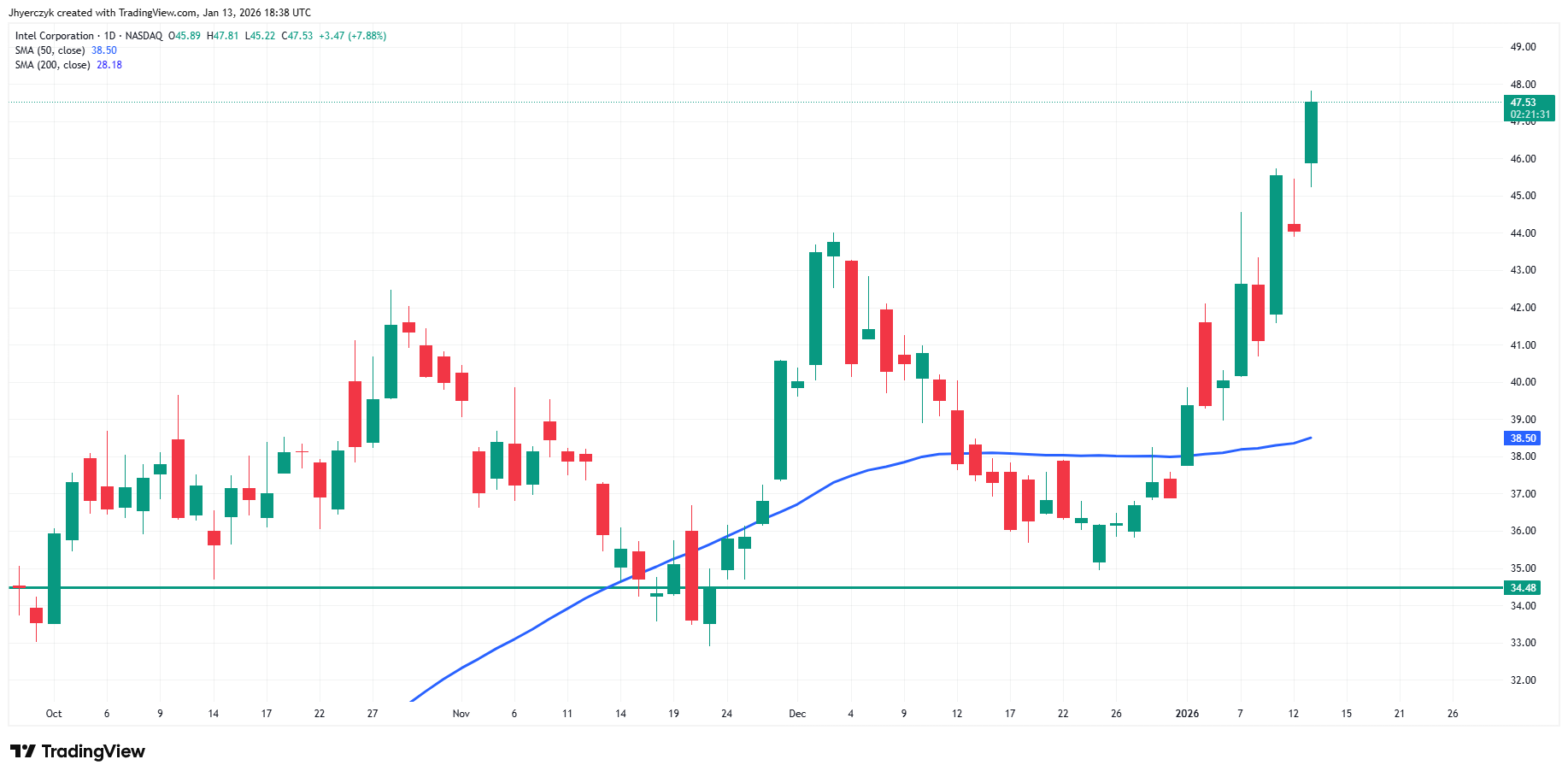
Intel and AMD are both higher at the midsession, helped by an upgrade from KeyBanc to overweight. The analysts said both companies have upside of more than 30% thanks to a memory chip supercycle and outsized data center demand.
JPMorgan Slides 3% on Investment Banking Fee Miss
JPMorgan Chase, the largest bank in the U.S., fell more than 3% and is trading near session lows at the midsession. Investors dropped the stock in reaction to lower investment banking fees, which missed expectations.
Retail and Healthcare Stocks Show Mixed Results
Fast-casual chain Chipotle Mexican Grill retreated more than 3% after reaffirming its 2025 guidance, which indicates a low single-digit percentage decline in comparable store sales.
Drug distributor Cardinal Health raised full-year guidance, sending shares nearly 4% higher. In the same sector, Moderna shares jumped more than 14% after the company’s CEO projected the company’s 2025 sales to land at roughly $1.9 billion, topping the midpoint of its early guidance. Option Care Health, a provider of at-home or non-hospital infusion services, jumped 10% on initial guidance and buyback authorization of $1 billion.
S&P 500 Price Forecast
Every new S&P 500 analysis as it publishes, today's technical signal and key levels, live price — on one page.
See all S&P 500 forecastsEnergy Sector Surges as Trump Escalates Iran Tensions
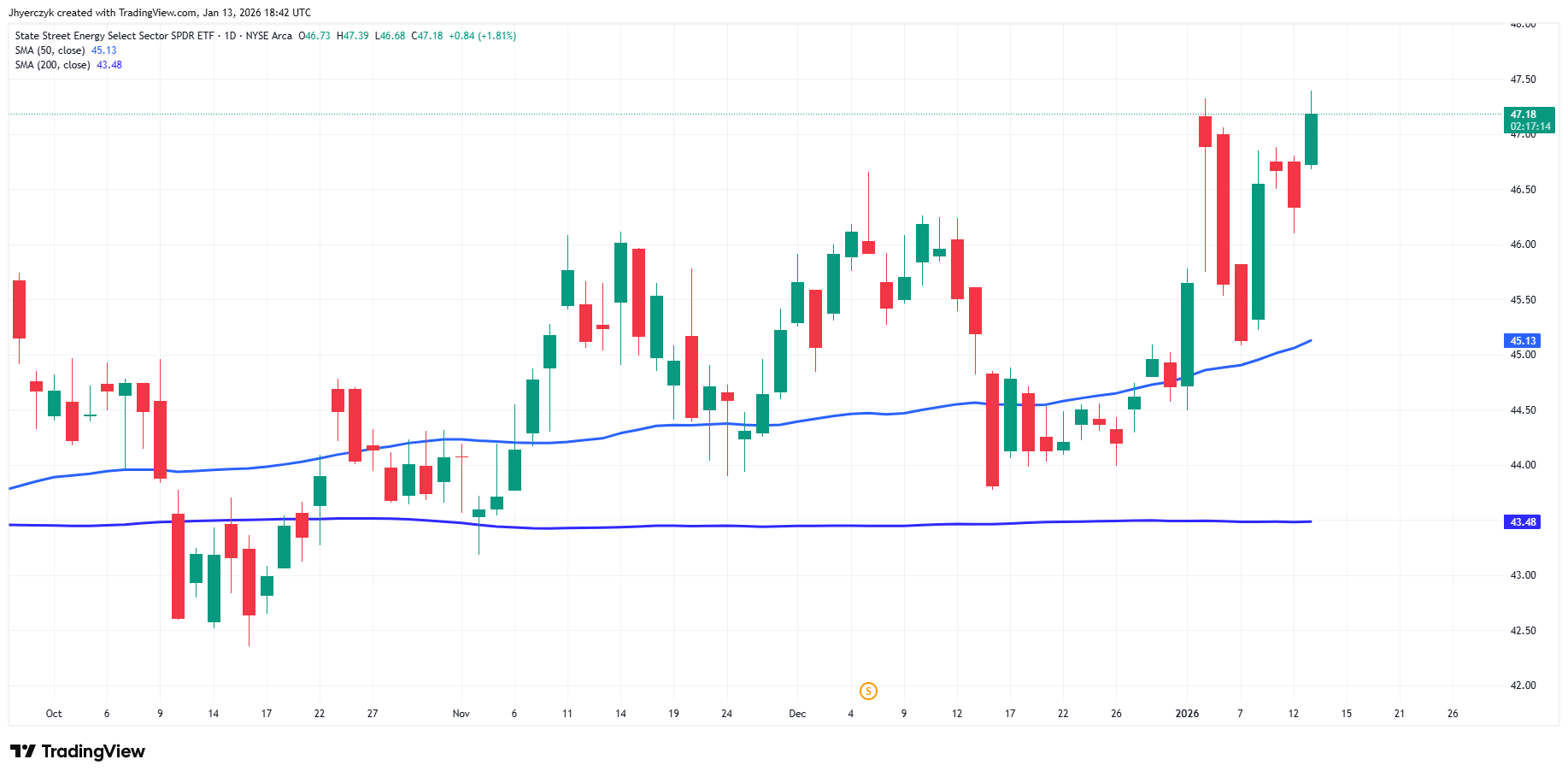
Energy-related shares rose as oil prices jumped after Trump canceled all meetings with Iran, a top OPEC producer, and told protesters that “help is on its way.” The announcement comes just one day after he said any country doing business with Iran will be subjected to a 25% tariff “on any and all business being done” with the U.S., CNBC reported.
CPI Data Beats Expectations—Fed Rate Cut Path Uncertain
In economic news, the stock market received a boost, at least on paper, before turning negative earlier Tuesday after the December CPI report showed that core CPI, excluding food and energy, rose 0.2% on the month and 2.6% on the year, below the 0.3% and 2.8%, respectively, that economists polled by Dow Jones had estimated, according to CNBC.
Market Outlook: Good Inflation News But Fed Pause Expected
Looking ahead, any time the CPI comes down, stocks benefit because it gives the Fed more room to cut rates. My assessment is the inflation news is good. However, the CPI data did not give the Fed what it needs to cut interest rates later this month. It also opens the door for further cuts down the road at times that are uncertain right now.
Trump Policy Uncertainty Could Trigger Major Selloff
My biggest concern is Trump. He has thrown a lot of variables out there lately, and I think investors are getting a little overloaded, creating some uncertainty about government policy. We all know how the market works: if there is too much uncertainty the professionals can’t hedge away, then their only choice will be to sell and move to cash until they get some clarity. Some of the variables include the Powell investigation, Venezuelan takeover, Iran intervention, Greenland invasion, and the Supreme Court decision on tariffs. Sensory overload could cause a massive selloff like it did in April 2025 when Trump announced the start of tariffs.
More Information in our Economic Calendar.