



Dow Climbs 292 Points as Tech Stocks Rebound on Partial Tariff Relief

U.S. stocks staged a late-session recovery Monday, with the Dow Jones Industrial Average gaining 292 points, or 0.8%, in a volatile day of trading. The S&P 500 and Nasdaq Composite added 0.9% and 0.6% respectively, with tech names leading initial gains after President Donald Trump’s tariff exemptions sparked investor optimism. However, comments suggesting the exemptions might not be permanent capped enthusiasm.

What Drove the Early Tech Rally?
Markets initially surged after the administration excluded smartphones, computers, and semiconductor components from the latest tariff rules, according to updated U.S. Customs and Border Protection guidance.
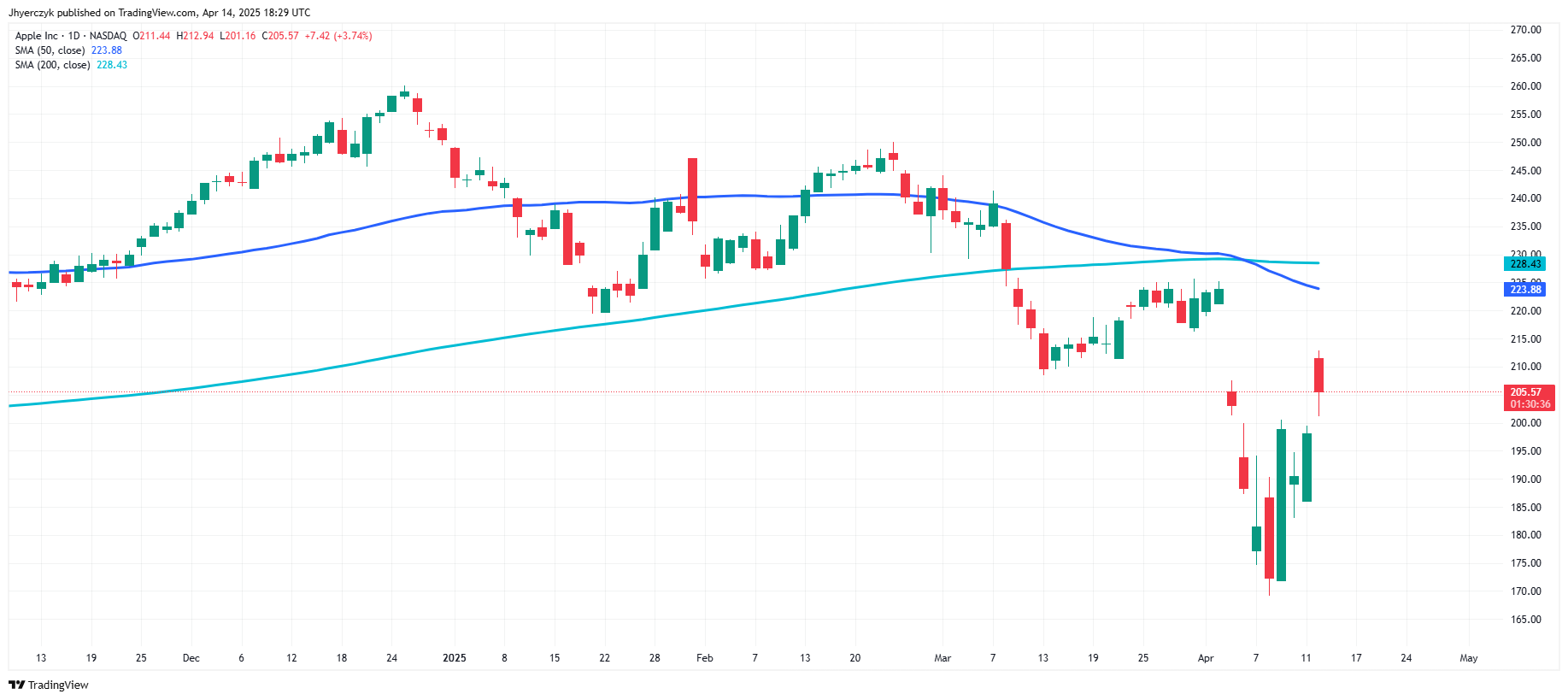
Apple led the charge, rising 3.5%, with Dell up more than 4% and Intel gaining nearly 5%. Even China-based tech firms traded in the U.S. saw strong advances—Alibaba and PDD rose over 5%, while JD.com and Baidu added 4% and 3% respectively.
Despite the strong moves, the tech sector didn’t sustain its early momentum. The Technology Select Sector SPDR Fund (XLK) ended less than 1% higher as mega-cap names like Meta, Amazon, and Nvidia slipped. Investors recalibrated after Trump clarified that these products would still fall under a different tariff classification, not entirely free from penalties.
Did Autos And Industrials Join The Rebound?
Yes, auto stocks jumped after Trump hinted at policy adjustments to support U.S. carmakers. Ford and GM each climbed more than 3%, while Stellantis added 2.8%. Industrials also showed relative strength, buoyed by renewed hopes that certain sectors may benefit from phased tariff enforcement.
NASDAQ 100 Price Forecast
Every new NASDAQ 100 analysis as it publishes, today's technical signal and key levels, live price — on one page.
See all NASDAQ 100 forecastsMeanwhile, Palantir shares rose 4% following NATO’s announcement of a major AI system acquisition, and Goldman Sachs added over 2% after topping Q1 earnings expectations.
Are Markets Stabilizing After Last Week’s Volatility?
While Monday’s gains provided some relief, they followed one of the most volatile weeks in recent memory. Last week, the CBOE Volatility Index (VIX) spiked above 50, and despite a midweek surge on Trump’s temporary 90-day tariff reprieve, all major indexes remain notably lower. The S&P 500 is down 4% since the tariff rollout, with the Dow and Nasdaq off 4.4% and 4.8% respectively.
What Should Traders Watch Next?
Uncertainty around tariff policy remains the dominant theme, with traders eyeing additional clarifications from the White House. The market is also bracing for key earnings reports this week and watching for economic indicators that could influence Federal Reserve policy. Until more clarity emerges, sharp intraday swings are likely to persist.
More Information in our Economic Calendar.


