Stocks Push Higher as April Opens With Peace Talk Optimism
The major U.S. stock indexes are higher at the mid-session on Wednesday as April began with expectations of easing tensions between the U.S. and Iran. This improved shift in investor sentiment pushed the benchmark S&P 500 Index up 1%, the tech-weighted Nasdaq Composite 1.6% and the blue chip Dow Jones Industrial Average up 418 points or 0.9%.
Technical Outlook
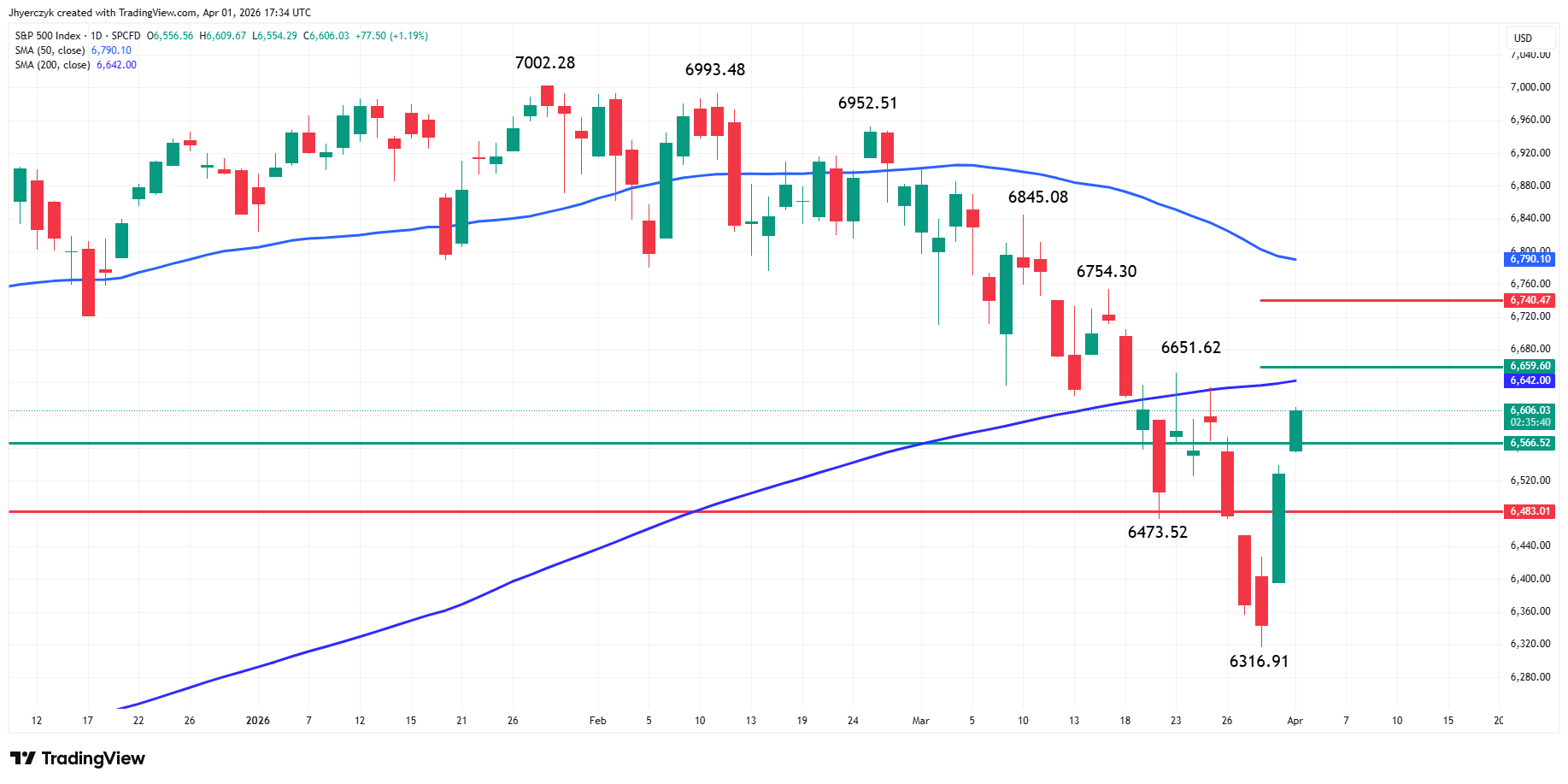
Technically, the S&P 500 Index (SPX) is sharply higher and upside momentum has been building since the market crossed to the strong side of a key 50% level at 6566.52. Traders are now targeting the 200-day moving average at 6642.00 and the short-term retracement zone at 6659.00 to 6740.50. This zone falls just in front of the 50-day moving average at 6790.00. Unless there is a major shift in the fundamentals, I think sellers are going to return following a test of 6642.00 to 6740.50. Furthermore, I’d like to see a better support base built. The spike bottom, followed by a short-covering rally doesn’t usually last very long. But a support base would indicate the presence of real buyers.
WTI Oil Below $100 and Iran Signals Openness to a Deal
Contributing to the strength was a drop in crude oil prices, which eased concerns over possible runaway inflation and the elimination of any chance of a Fed rate cut in 2026. West Texas Intermediate (WTI) crude fell 1% to just below $100 per barrel and Brent crude slipped 1% to above $102, reflecting expectations of a possible ceasefire. Stocks were given a further boost as optimism grew after reports that Iran signaled openness to ending the conflict. Meanwhile, investors are still reacting to President Trump’s remarks suggesting military involvement could wind down within two to three weeks.
Remember that the stock market discounts future events so the price action the past three days is impressive and optimistic. Nonetheless, some traders are expressing concerns over its staying power because there is no actual peace deal in place and oil prices remain elevated. Furthermore, there is still a wall of resistance to overcome in the form of major retracement zones and moving averages.
Powell Erased the Rate Hike Fear and the Data Backed Him Up
Fresh economic data is also supporting the market and this is important. Trump may have helped bring back the buyers, but ultimately, the direction of interest rates is the primary driver. Remember on Monday, when the stock market was pressing lows and Fed Chair Powell made remarks that essentially erased any chance of a rate hike. This was a major concern weighing on prices.
Dow Jones Price Forecast
Every new Dow Jones analysis as it publishes, today's technical signal and key levels, live price — on one page.
See all Dow Jones forecastsThe ISM manufacturing Index rose to 52.7 in March, beating expectations of 52.4, with production increasing to 55.1 and supplier deliveries to 58.9. However, inflation pressures showed up as the prices index jumped sharply to 78.3. In other news, retail sales rose 0.6% in February, above the 0.5% estimate, while core sales excluding autos gained 0.5%. All together, this was seemingly good news as even with higher inflation, consumers were still spending.
Energy Is the Only Sector Sitting Out the Rally
The rally is broad based. Communication services led the way up 2.42%, followed by industrials at 2.12% and technology at 1.64%. Energy was the only sector in the red, falling 4.04% as oil prices pulled back. St. Louis Fed President Alberto Musalem added to the cautious tone, saying rates should stay steady given a highly uncertain backdrop. Heading into the second half of the session traders will be watching for any fresh geopolitical updates or policy signals.
More Information in our Economic Calendar.